Every cat parent meets it eventually: you go to scoop the litter box and find a soft, smelly puddle instead of a tidy clump. Diarrhoea is one of the most common reasons cats end up at the vet, and most of the time it's mild and short-lived. But sometimes it's the first sign of something that needs attention fast — and in Malaysia's warm, humid climate, a dehydrated cat can go downhill quicker than you'd expect.
This guide breaks down what causes cat diarrhoea, the warning signs that mean "vet now", and what you can safely do at home while you watch and wait.
Is It Just an Upset Tummy, or Something Serious?
The honest answer: a single soft stool from a cat who is otherwise eating, drinking, and behaving normally is usually nothing to panic about. As the veterinary team at VCA Animal Hospitals explains, one isolated bout often clears up on its own within a day or two.
The picture changes with repetition. If your cat has two or more bouts of diarrhoea in a short span, that's your cue to contact a vet rather than wait it out. The reason is simple: diarrhoea drains fluid and electrolytes fast, and a small cat doesn't have much reserve. What looks like a minor tummy upset on Monday can become a genuinely dehydrated, lethargic cat by Tuesday.
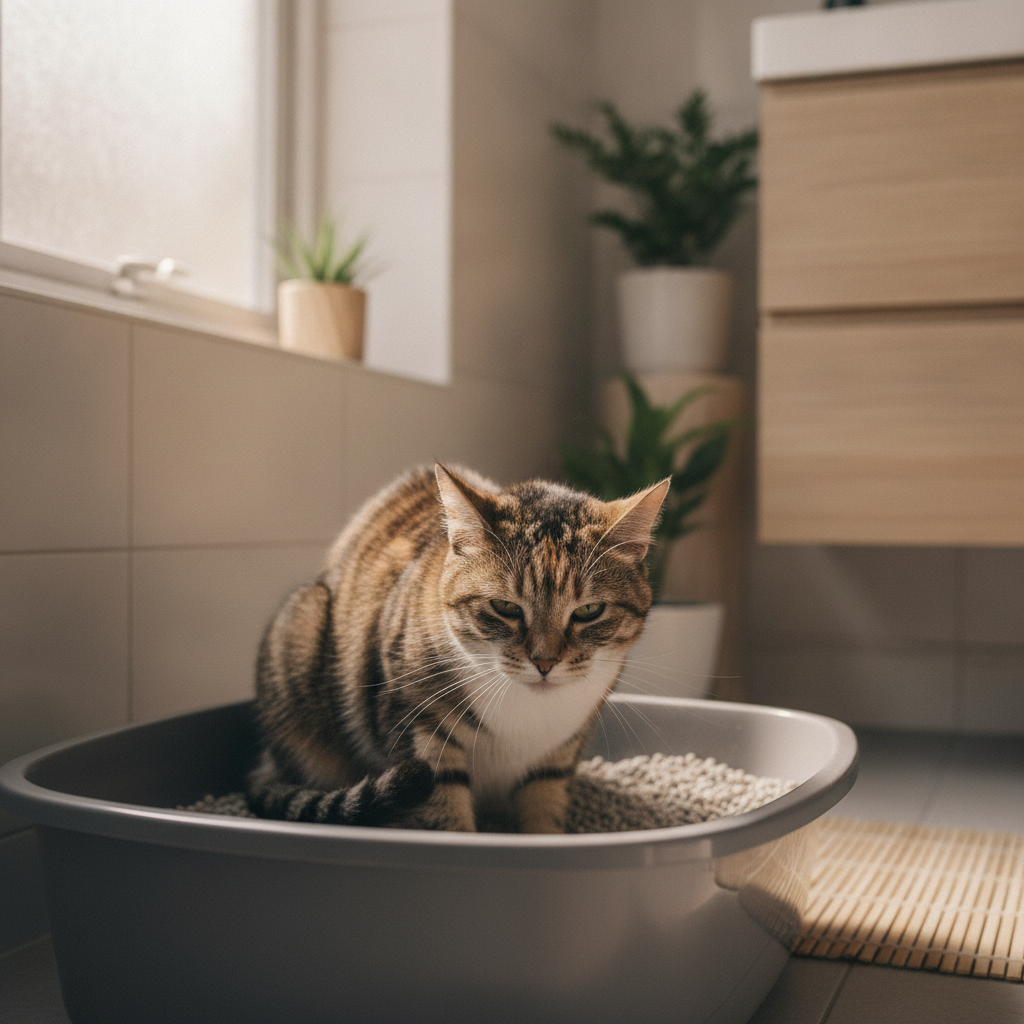
It helps to actually look at what's in the box before you scoop. Colour and consistency tell a story — and our cat poop health guide walks through what normal versus abnormal stool looks like in detail. This is one quiet advantage of a low-dust, well-clumping litter: changes in your cat's output are obvious instead of buried.
The Most Common Causes of Cat Diarrhea
Diarrhoea is a symptom, not a disease — it's your cat's gut reacting to something. The usual suspects:
Sudden diet changes. This is the number one avoidable cause. Switching food abruptly — a new brand, a new protein, even a different batch — can upset the gut flora. PetMD notes that food intolerances and rapid diet changes are among the most frequent triggers. Always transition to new food over 7–10 days. If you're unsure whether a human food your cat sneaked is safe, our can-my-cat-eat checker is a quick sanity test.
Intestinal parasites. Roundworms, hookworms, coccidia and Giardia are classic culprits, especially in kittens and outdoor or rescued cats. Toxins. Many houseplants common in Malaysian homes are toxic — see our toxic and safe plants guide — and ingesting them can trigger vomiting and diarrhoea.
Infections. Viral and bacterial infections can inflame the gut, and they spread easily in multi-cat homes and shelters. Stress. Cats are sensitive creatures; a house move, a new pet, renovation noise, or even a rearranged room can show up as a loose stool. Underlying disease. In older cats, chronic diarrhoea can point to conditions like inflammatory bowel disease, hyperthyroidism, or organ problems, which is why persistent cases always warrant a check-up. The Cornell Feline Health Center stresses that chronic or recurring diarrhoea — lasting more than two to three weeks — should always be investigated rather than managed indefinitely at home.
Kittens deserve special mention. A wormy, pot-bellied kitten with diarrhoea is extremely common in Malaysia's rescue and stray population, and because kittens dehydrate dangerously fast, what's a "monitor at home" situation in a healthy adult is a "see the vet promptly" situation in a young kitten.
The Malaysian Angle: Parasites, Heat and Humidity
Diarrhoea isn't climate-neutral, and a few things make it a particularly local concern here.
First, parasites thrive in warmth and moisture. One striking example: a study in the Klang Valley documented a high infection rate of Tritrichomonas foetus — a protozoan parasite that causes stubborn, recurring large-bowel diarrhoea — among local cats, as reported on Veterinary Partner. It's frequently mistaken for a simple tummy bug and can linger for weeks. If your cat has chronic, slimy diarrhoea that won't quit, mention this possibility to your vet.
Second, our heat accelerates dehydration. A cat losing fluids through diarrhoea in a non-air-conditioned Malaysian flat is racing the clock more than a cat in a temperate country. That's why the "watch and wait" window is shorter here — keep fresh water everywhere and watch hydration closely (more on spotting dehydration in our cat hydration and urinary health guide).
Third, humidity means food spoils faster. Wet food left out in the tropical heat for a few hours can turn, and spoiled food is a fast track to an upset gut. Don't leave wet food sitting out all day.
Red Flags: When to See the Vet Right Away
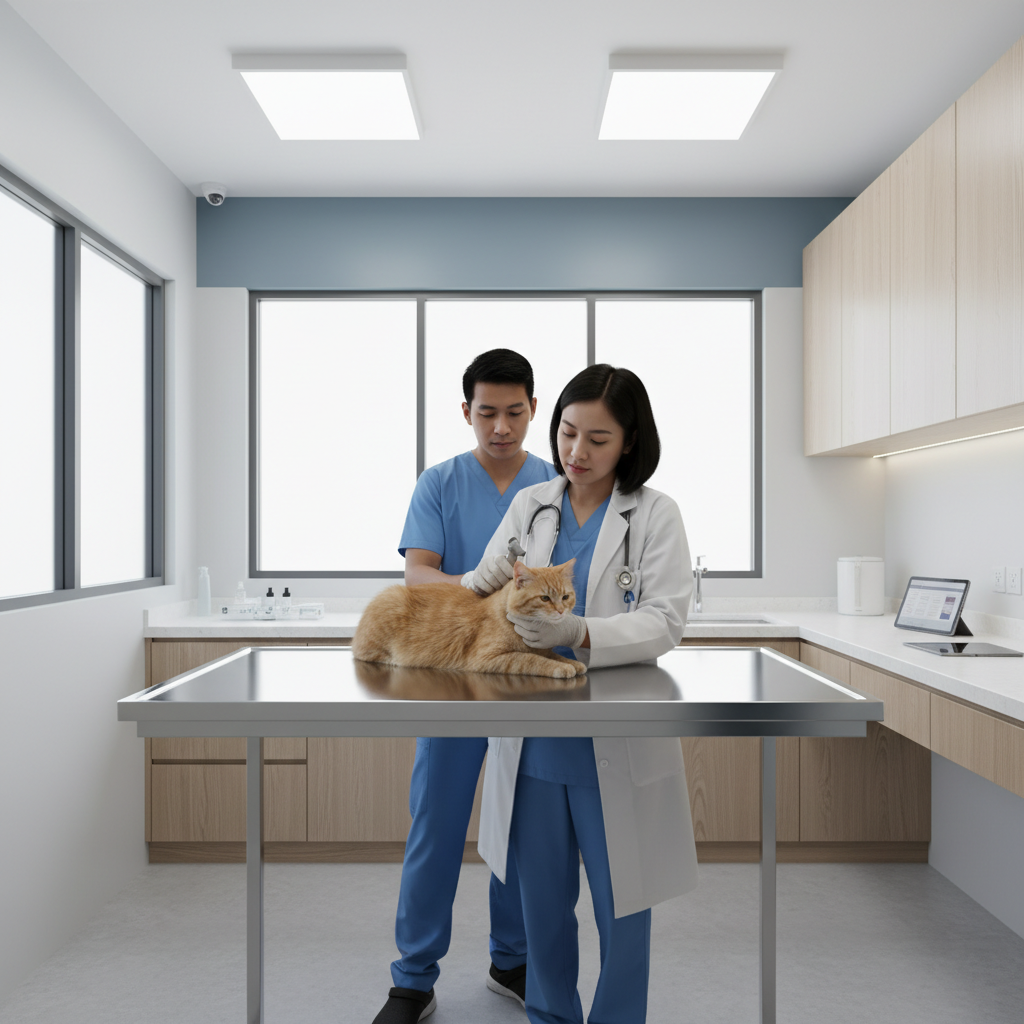
Most diarrhoea is mild. But some signs mean you should stop monitoring and get to a vet — same day, or emergency clinic after hours. Per Pet Health Network and general veterinary guidance, treat these as urgent:
Get veterinary help now if you see:
- Blood in the stool (bright red streaks, or black tarry stool), or a lot of mucus
- Diarrhoea plus repeated vomiting
- Straining and passing only small amounts of watery stool — this can signal a painful blockage and is an emergency
- Signs of dehydration: lethargy, sunken eyes, tacky gums, or skin that stays "tented" when gently lifted
- A kitten, senior, or already-sick cat with any diarrhoea — they have far less reserve
- Diarrhoea lasting more than 24–48 hours, or that keeps coming back
- Loss of appetite, fever, a painful belly, or obvious weakness
When in doubt, call. A two-minute phone conversation with a clinic is free peace of mind, and vets would much rather hear from you early than treat a severely dehydrated cat later.
What You Can Safely Do at Home
If your cat is bright, alert, and it's a mild, one-off case — and you've ruled out the red flags above — here's the sensible home approach while you monitor:
Keep water available everywhere. Hydration is the priority. Multiple bowls, fresh water, maybe a pet fountain to encourage drinking.
Don't starve your cat. Old advice said to withhold food; current thinking favours offering small amounts of a bland, easily digestible meal. Ask your vet what they recommend for your specific cat.
Hold off on diet experiments. Now is not the time to introduce a new food. Keep things boring and consistent.
Ask about probiotics and fibre. For mild cases, vets sometimes suggest a feline probiotic or a fibre supplement to help firm things up and rebalance gut bacteria — veterinary guidance via Chewy notes these as common supportive measures. Use a cat-specific product and check with your vet on dosing rather than guessing.
The one hard rule: never give human medication. Many over-the-counter human anti-diarrhoea drugs are dangerous or outright toxic to cats. Do not improvise — what's safe for you can poison your cat. The same goes for "leftover" antibiotics from a previous illness; the wrong drug can make diarrhoea worse and mask the real problem.
Track it. Note how many bouts, the colour, whether there's blood or mucus, and whether your cat is eating and drinking. Logging frequency with a tool like our poop frequency checker gives your vet exactly the information they need if things don't improve.
Prevention: Diet, Deworming and a Clean Litter Box
You can't prevent every bout, but you can stack the odds in your cat's favour.
Stick to a steady diet and transition any changes slowly. Stay on top of deworming — routine parasite control is one of the highest-value things you can do, especially in our climate. If you're not sure when your cat is next due, our deworming schedule tool helps you keep track, and our flea and parasite guide covers safe products. Keep toxic plants out of reach and don't leave wet food out in the heat.
Finally, the unglamorous hero of early detection: the litter box. The sooner you notice a change, the sooner you can act — and that's much easier with a clean, low-dust, firmly clumping litter where soft stool and colour changes stand out instead of disappearing into dust and old clumps. A genuinely natural, low-dust option like Liger Premium Tofu Cat Litter makes daily monitoring effortless, and you can work out how much your household needs with our litter calculator. A clean box you actually look into every day is one of the simplest early-warning systems you have.
Diarrhoea is usually a passing nuisance, not a crisis. Know the red flags, keep your cat hydrated, never reach for human medicine, and when something feels off, trust your gut and call the vet. Your cat can't tell you how it feels — but the litter box usually can.