Copper, gold, green, hazel, and that startling sapphire blue — a cat's eyes can be every bit as striking as its coat. But what actually decides their colour? Why is every kitten born blue-eyed? And why do some white cats have one blue eye and one gold? The answers come down to a single pigment, a clever trick of light, and a couple of genes worth knowing about — especially one with a real health twist that every owner of a white cat should understand.
This is part of our cat colours and coat patterns guide, the hub for everything about how cats get their looks.
How Eye Colour Actually Works
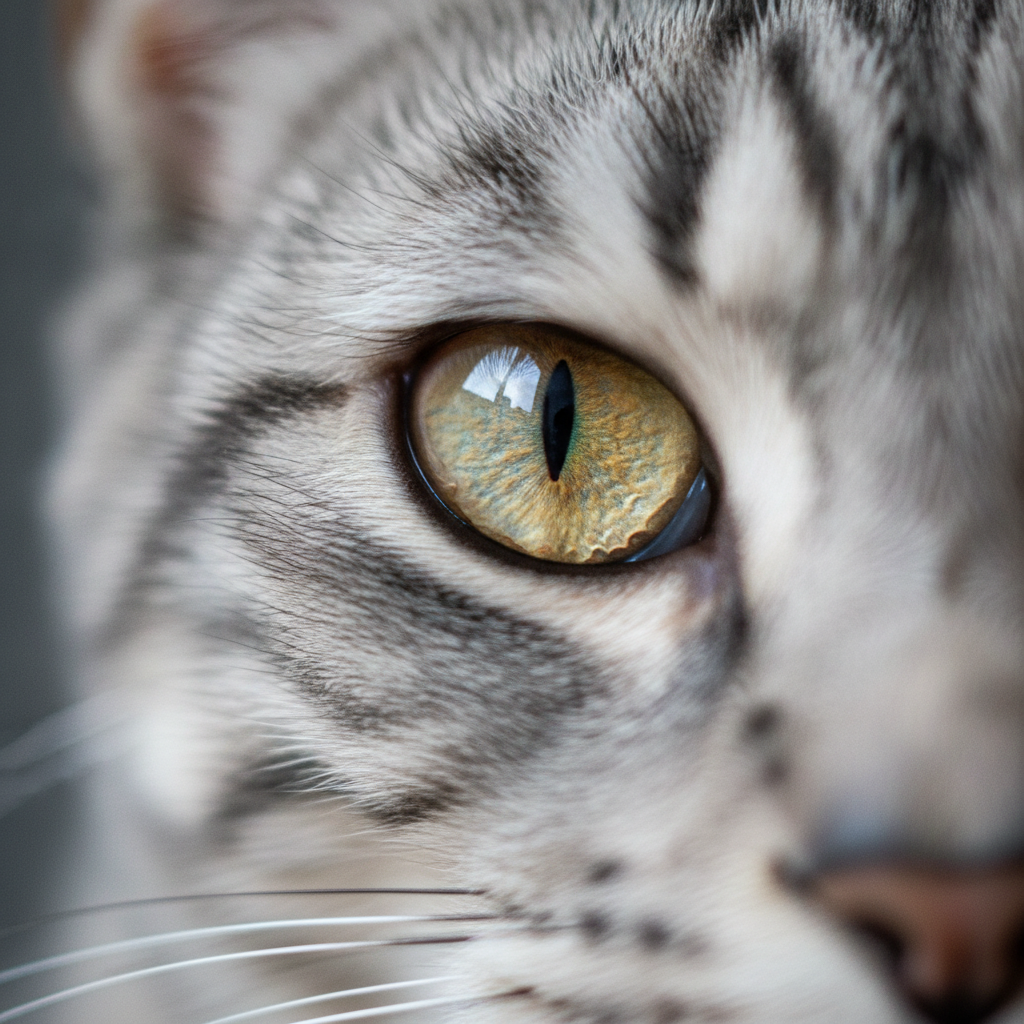
A cat's eye colour is set by one thing: the amount of melanin (pigment) packed into the front of the iris by cells called melanocytes. The more melanin, the darker and warmer the eye — lots gives deep copper and orange, a moderate amount gives gold and amber, and a little gives green or yellow. There's no such thing as "blue pigment," though. Blue eyes contain almost no melanin at all; they look blue for the same reason the sky does — a structural trick where the iris scatters light and reflects back the short, blue wavelengths. It's not paint, it's physics. The two pigment cells doing the colouring are the very same melanocytes that colour a cat's coat, which is why eye and coat colour occasionally travel together — but they're tuned by largely separate genes, so the pairing is more of a loose tendency than a fixed rule.
Why Every Kitten Is Born With Blue Eyes
Here's a fact that surprises most cat parents: all kittens are born with blue eyes. That's because their iris melanocytes haven't switched on yet — no pigment means the default structural blue. Over the following weeks, as those cells begin producing melanin, the true adult colour gradually develops. Eyes usually settle into their permanent shade by around 12 to 16 weeks of age, though in some cats the colour keeps deepening for a few months more. So if you've got a young kitten, the colour you see at eight weeks may still be on its journey — a green- or amber-eyed adult very often starts out blue-eyed. As International Cat Care notes, this newborn blue is a developmental stage every kitten passes through, not a permanent trait. The one exception is the cat that stays blue-eyed for life — and that, as we'll see, is a clue to its genetics rather than just a slow start.
The Eye-Colour Spectrum: Copper to Green
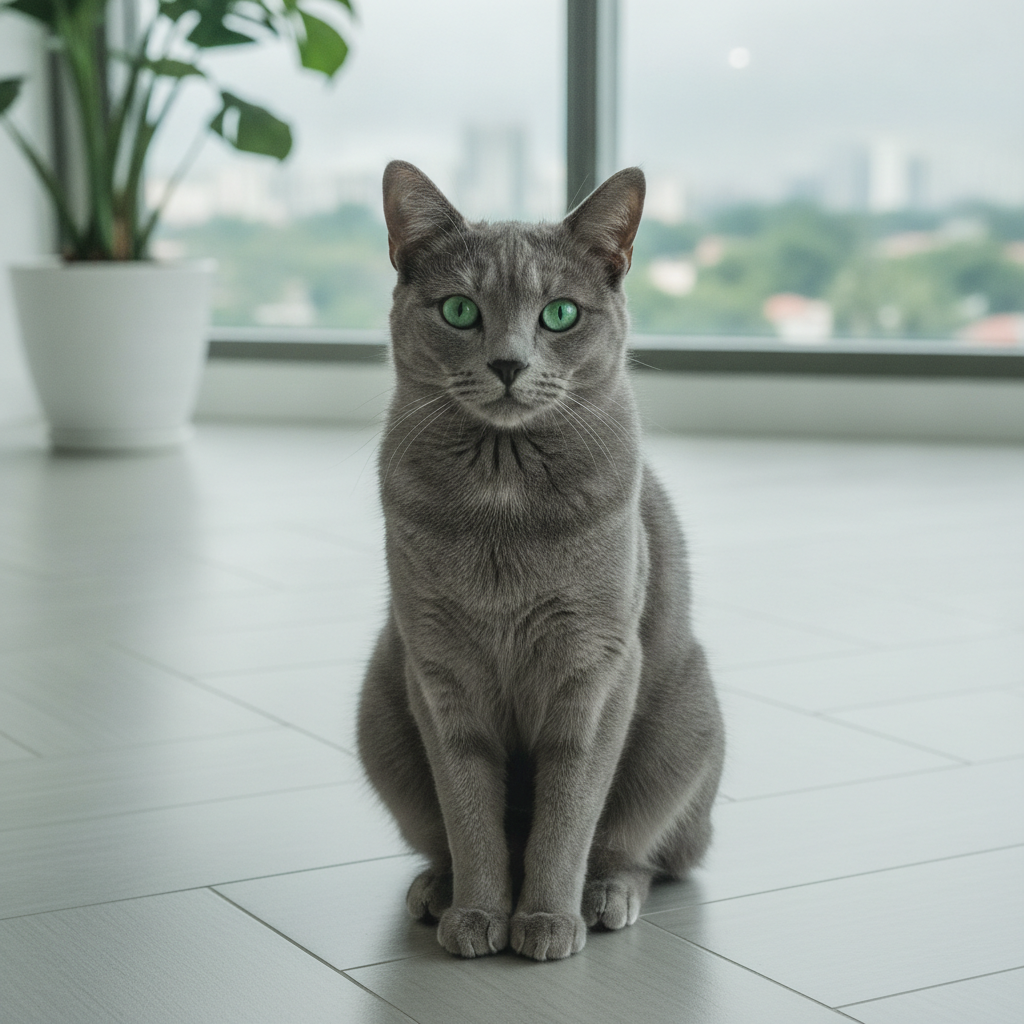
Selective breeding has stretched the feline eye-colour range further than you'd see in stray cats, where greens and yellows dominate. At the deep end sit the rich coppers and oranges of British and Persian cats; in the middle, the golds and ambers; at the light end, vivid greens (think of the brilliant green-eyed kampung cats you'll spot all over Malaysia). Intensity is largely a breed-influenced trait — pedigree standards often call for a specific eye colour to match the coat — but in mixed cats it's simply down to how much pigment those iris cells happen to lay down. There's even a cat-show scale for it: judges grade eye colour by intensity, prizing the deepest, most saturated coppers and the clearest greens. For the rest of us, the lovely takeaway is that there's no "better" eye colour — a kampung cat's bright green gaze is every bit as much a marvel of pigment and light as a pedigree's show-ring copper. Eye colour can also appear to shift slightly with lighting and age, but the underlying pigment is set for life once those iris cells finish their work in kittenhood.
Why Siamese Cats Have Blue Eyes
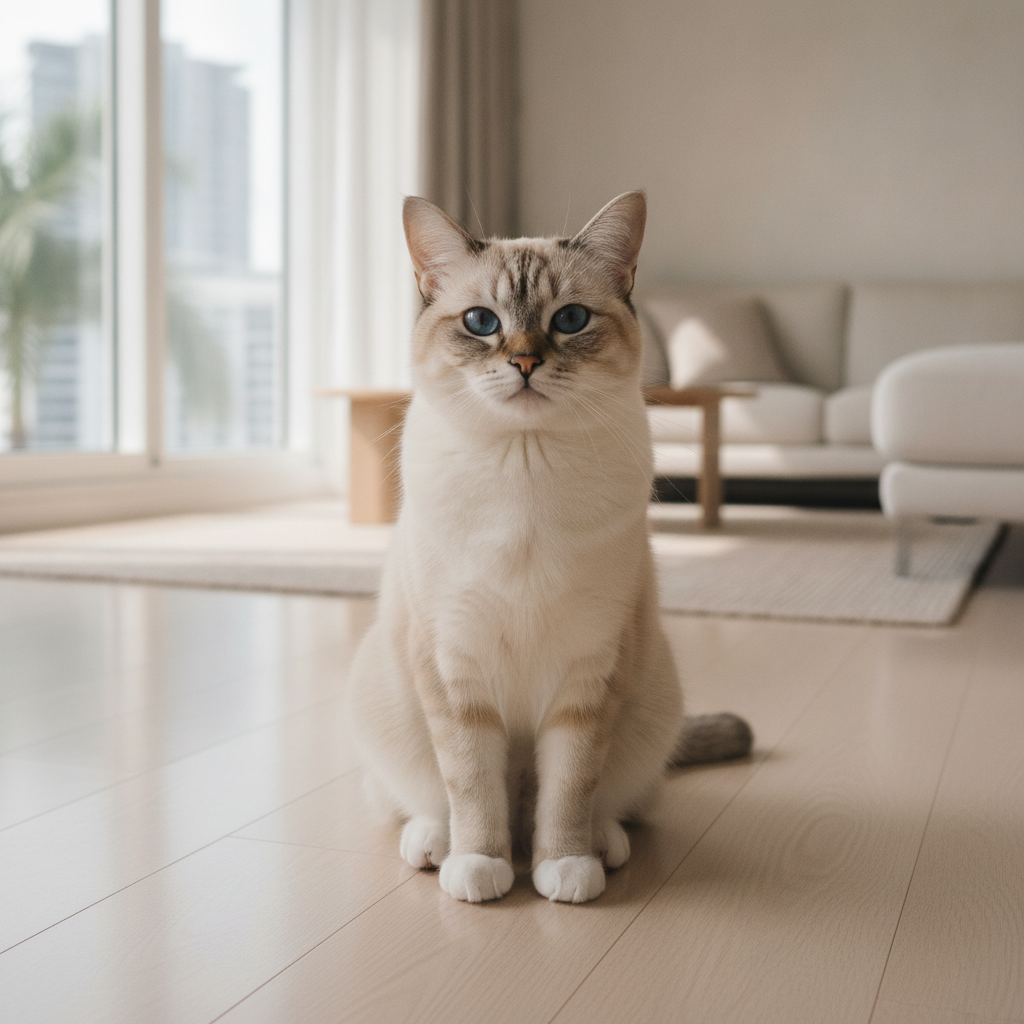
The piercing blue eyes of a Siamese aren't a coincidence — they come bundled with the colourpoint coat (pale body, dark face, ears, paws and tail). Both are caused by the same temperature-sensitive form of the gene that controls pigment (a type of partial albinism). This version of the enzyme only works properly in cooler areas of the body, which is why the "points" are dark and the warm core is pale — and the same mutation prevents pigment forming in the iris, leaving it structurally blue. So a colourpoint cat's blue eyes are a package deal with its coat, a neat link explained in the science of cat coat genetics. It's also why colourpoint kittens raised in a warm climate like Malaysia's can end up with paler points than their cooler-climate cousins — the same temperature sensitivity at work. Importantly, this blue is the harmless, vision-normal kind; it isn't linked to the deafness risk that the separate dominant-white gene carries.
Odd-Eyed Cats: The Magic of Heterochromia
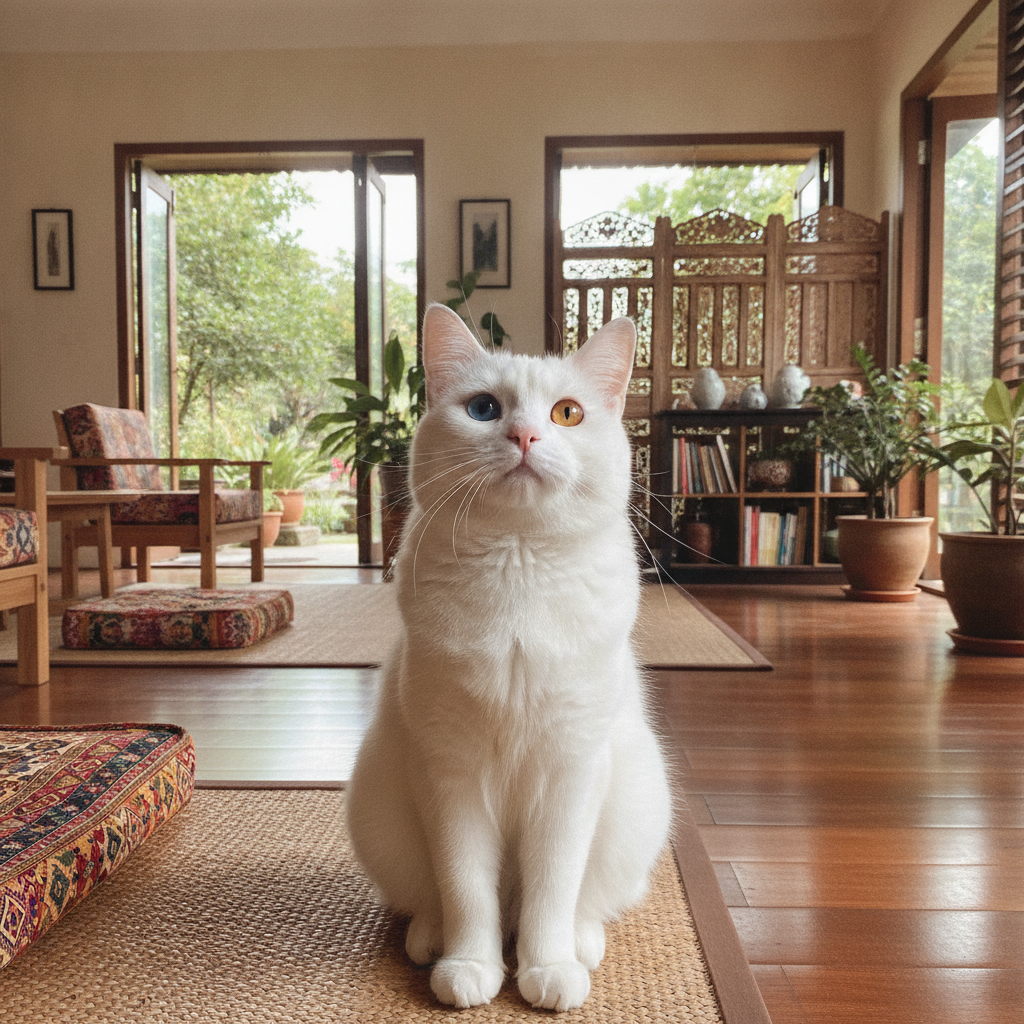
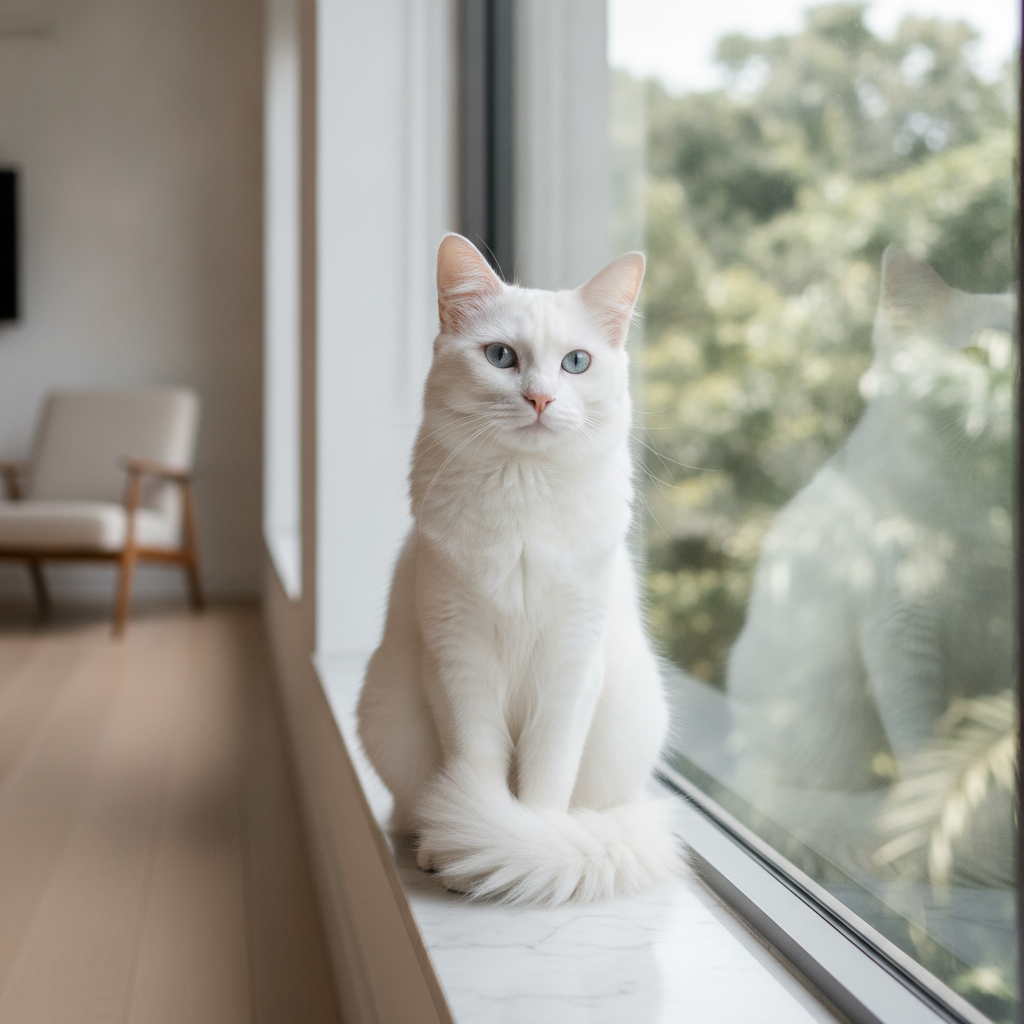
Some cats have two different-coloured eyes — usually one blue and one green, gold or copper. This is called heterochromia, and it's most common in white or mostly-white cats. It happens when the white spotting or dominant-white gene stops pigment cells from reaching one eye during development, leaving that eye blue while the other develops normally. You can even get sectoral heterochromia, where a single eye is part-blue, part-gold — a tiny wedge of one colour in a sea of another. It's purely cosmetic and doesn't affect the cat's vision, as documentation of odd-eyed cats confirms — but as we'll see, in white cats it can be a visible clue to something worth checking. Odd-eyed white cats are so prized in some cultures that, in Turkey, the odd-eyed Van and Angora are considered national treasures. Beautiful as they are, the two-toned gaze is really just pigment that reached one eye and not the other.
The Blue-Eyes-and-Deafness Link
This is the one genuinely important health point in this whole topic, so it's worth being precise. The dominant white (W) gene — the one that makes a cat all-white — can also prevent pigment cells reaching the eyes (giving blue eyes) and the inner ear, where those same cells are essential for hearing. The result is a well-documented link between white coats, blue eyes and congenital deafness. According to veterinary sources including the Cornell Feline Health Center, the figures are striking: white cats with two blue eyes have roughly a 65–85% chance of being deaf, those with one blue eye around 40%, and white cats with non-blue eyes about 17–22%. For an odd-eyed white cat, deafness — if present — often affects only the ear on the blue-eyed side. This only applies to all-white cats; a tuxedo or any coloured cat with blue eyes is not at this raised risk. A deaf cat can live a wonderful life indoors — it just needs to be kept safe from traffic and approached where it can see you, so you don't startle it awake. A simple vet hearing check (or the at-home test of a loud clap from behind, out of sight) can confirm it. None of this is a reason to avoid a white or odd-eyed cat; it's just useful to know so you can give a deaf cat the safe, indoor life it needs. Veterinary guides such as VCA's pet health library have good practical advice on living happily with a deaf cat.
Does Eye Colour Match the Coat?
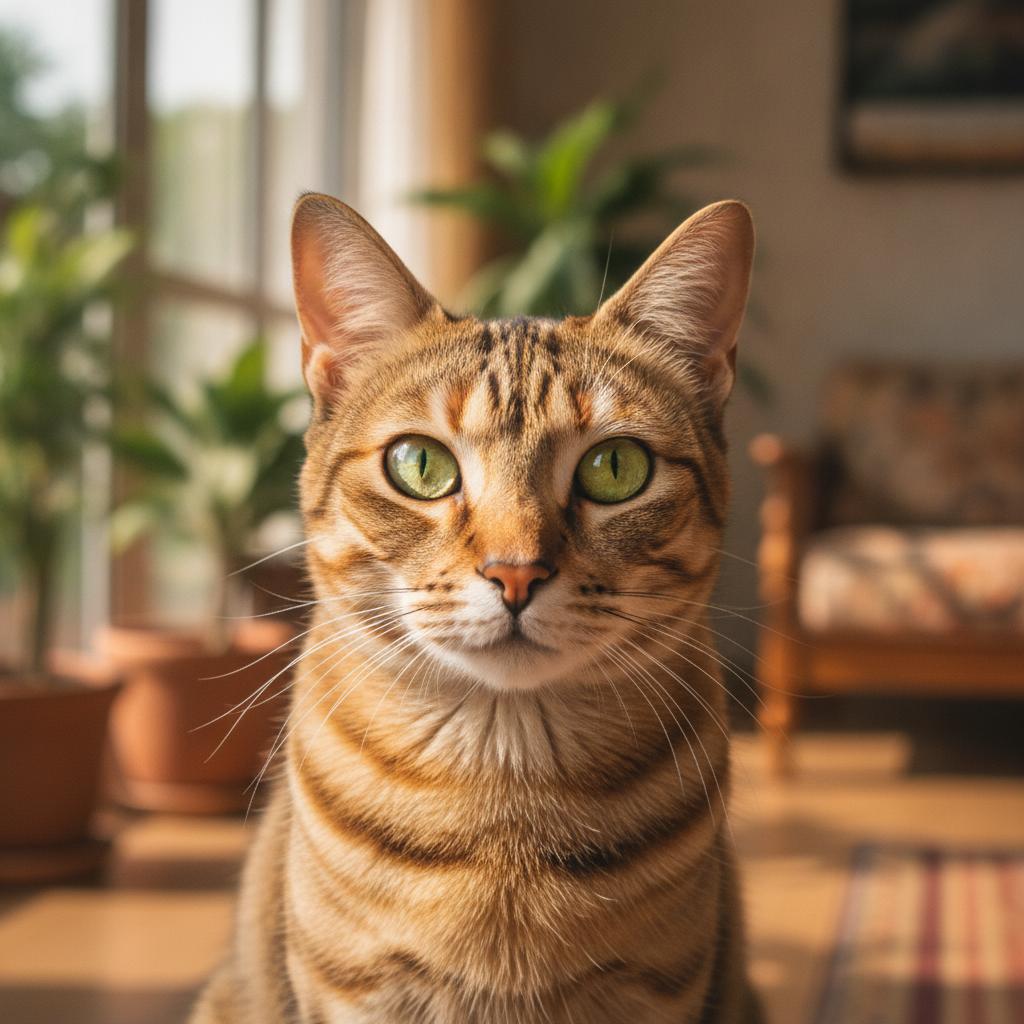
Loosely, and with big exceptions. Eye colour and coat colour are controlled by largely separate genes, so a black cat can have copper or green eyes, and a ginger cat can have gold or green. The strong, reliable links are the special cases: colourpoint cats (always blue eyes) and the white-coat/blue-eye/deafness connection above. Everything else is more of a gentle tendency than a rule — which is exactly why a cat's eyes are worth admiring as their own small marvel, quite apart from the coat. Curious which breed your bright-eyed cat might be? Try our cat breed identifier.
Caring for Your Cat, Whatever Its Eyes
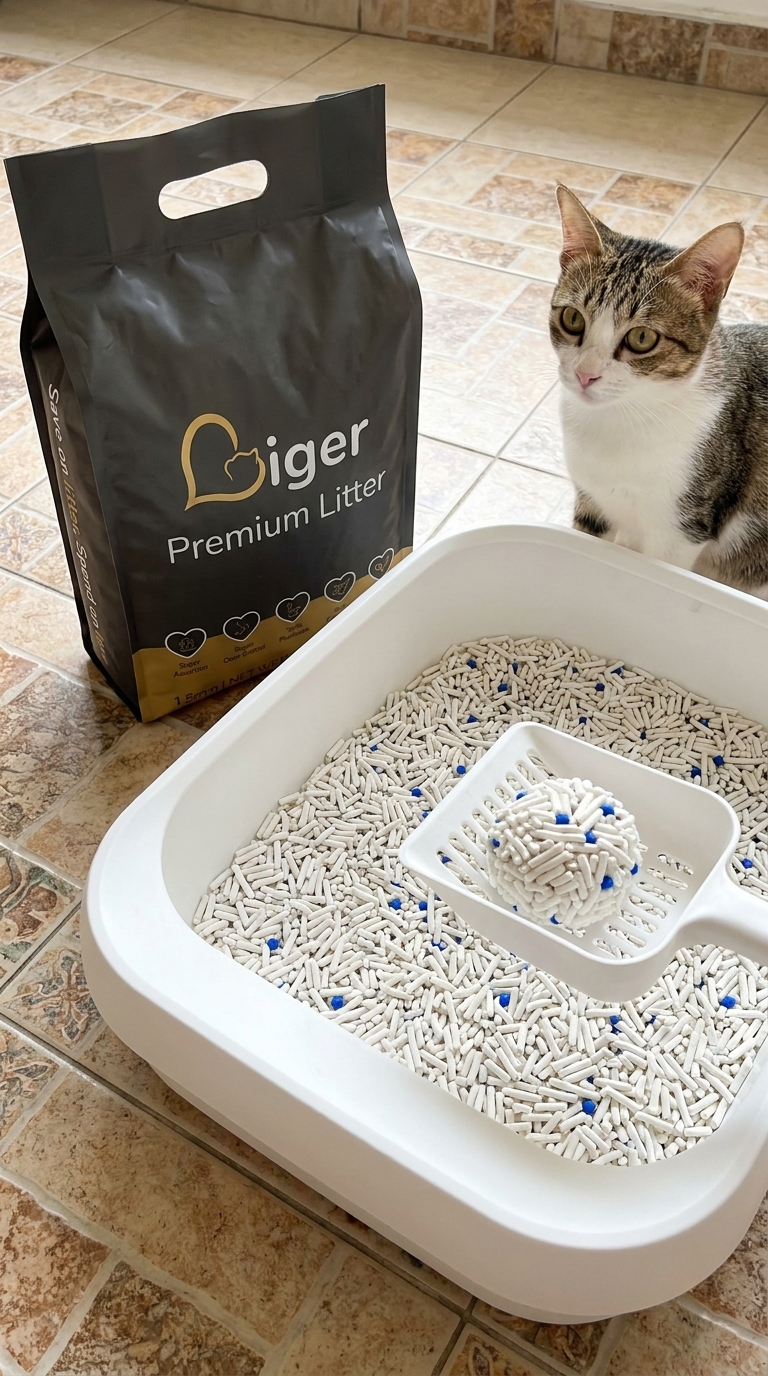
Eye colour needs no special care — but a couple of eye health basics matter for every cat: watch for any redness, squinting, cloudiness or discharge, and see a vet promptly if they appear, since eye problems can worsen fast. Beyond that, the usual essentials keep any cat thriving regardless of eye colour: good food, regular vet checks, enrichment and a clean, low-dust litter box (airborne dust can irritate sensitive eyes, and watery eyes are common in flat-faced breeds like Persians). A natural, food-grade litter like Liger Premium Tofu Cat Litter keeps fine dust down and the box fresh between scoops — from RM21.90 for a single 2 kg pack to RM169 for the 10-pack (about RM8.45/kg), free shipping in Peninsular Malaysia (current Liger pricing, as of May 2026). Size your supply with the litter calculator.
Keep exploring how cats get their looks: dive into black cats, calicos and tuxedos, or head back to the colours and patterns hub. And if those gorgeous eyes still need a name to match, our cat name generator can help.
Curious what colours your two cats could produce? Try our kitten coat colour predictor — it predicts coat colours from both parents using real genetics.