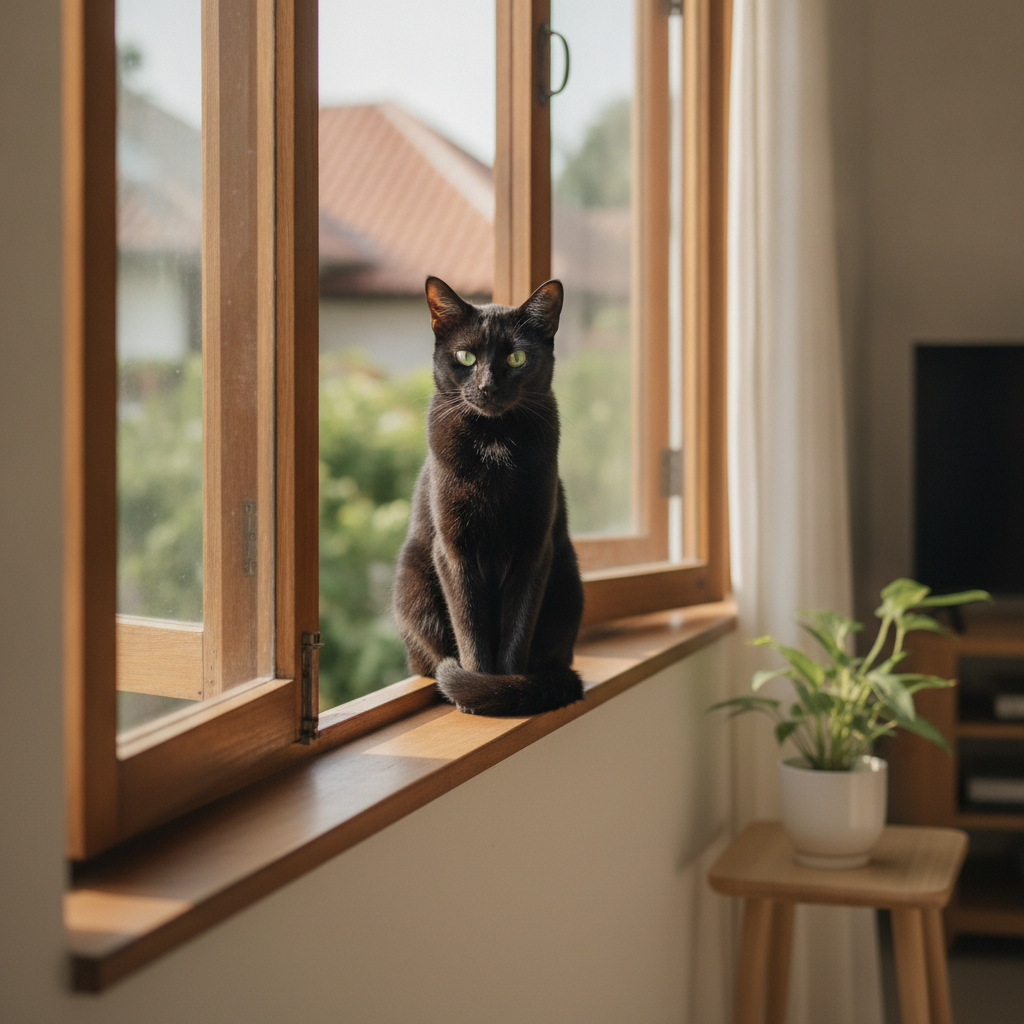
Few cats carry as much cultural baggage as the black cat. Depending on where you stand on the map, that glossy dark coat means terrible luck, wonderful luck, witchcraft, or wealth on its way. The truth underneath is far simpler — and far kinder: a black cat is the result of one tidy genetic recipe, and is no more mysterious (or unlucky) than a tabby. Here's the science behind that glossy coat, the superstitions from around the world (including a distinctly Malaysian one), and the very real cost those old beliefs still impose on black cats today.
This is part of our cat colours and coat patterns guide. As ever: black is a colour, not a breed — black cats turn up across pedigrees and all through Malaysia's kampung cat population.
The Genetics of a Solid Black Cat
A solid black coat takes two ingredients working together. First, the cat must produce eumelanin, the black-brown pigment (the dominant B gene handles this). Second — and this is the key — the cat must be non-agouti, carrying two copies of the recessive "a" gene (genotype a/a). The agouti gene is the master switch that normally lets the tabby pattern show; switch it off, and the stripes are suppressed, flooding the whole coat with even, solid colour. Put simply: a black cat is a tabby with the pattern turned off. You can read more in the science of cat coat genetics.
It's worth noting what black is not: it isn't the orange gene (that lives on the X chromosome and makes ginger and tortie cats), and it isn't affected by white spotting unless the cat also carries that separate gene — in which case you'd get a black-and-white tuxedo instead. A truly all-black cat has none of those modifiers: just eumelanin, switched to solid. And if the dilution gene is present in two copies, that same black softens to a smoky blue-grey — the coat of a "blue" cat is genetically black at heart, as the science of cat colours explains.
The Hidden Tabby and the Sun-Rusted Coat
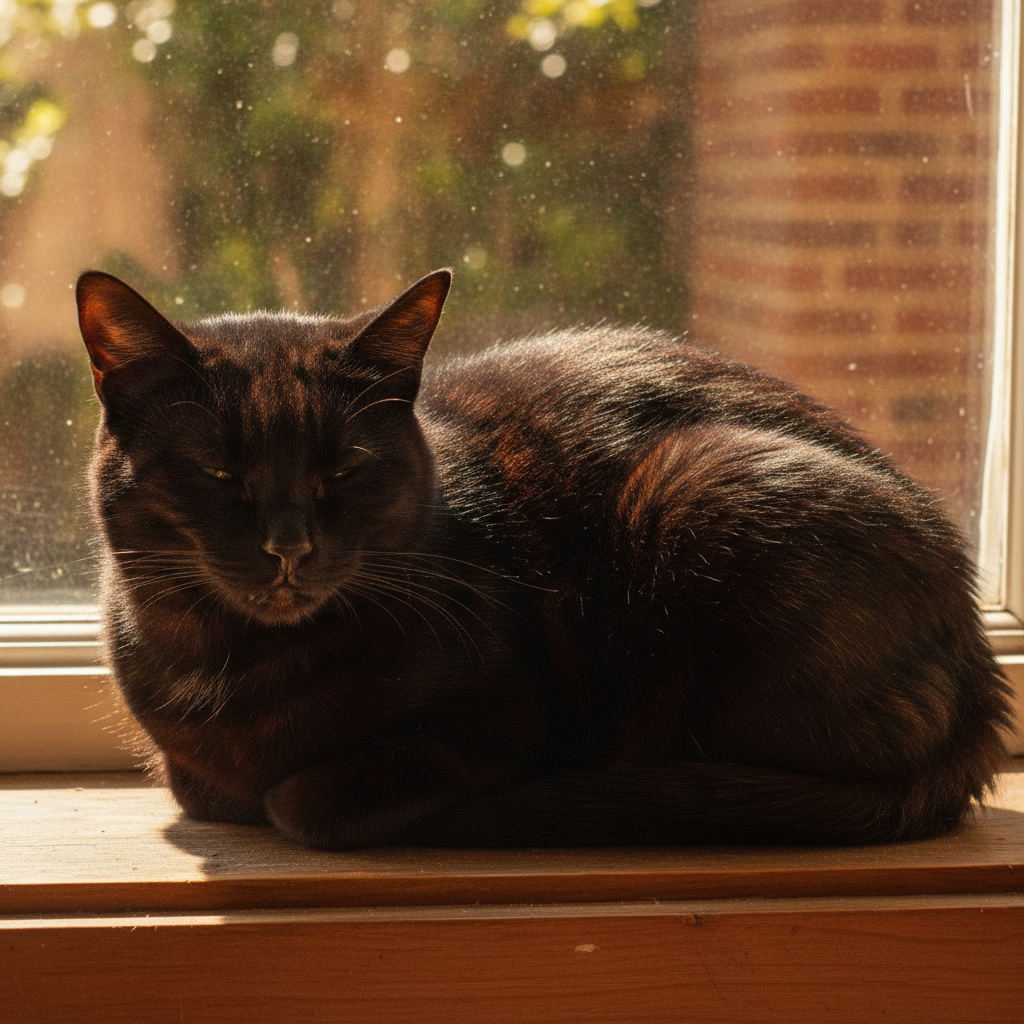
Because every black cat is genetically a tabby underneath, that pattern never truly disappears — it just hides. In bright sunlight, or on a kitten, you can often spot faint "ghost" tabby stripes shimmering through the black. And here's a charming quirk: black coats can "rust." Lots of sunbathing (easy to come by in Malaysia), or sometimes a tyrosine-related nutritional shortfall, can tint a black coat a reddish-brown, especially along the back and tail. It's usually harmless and grows out, though a sudden rusty cast is worth mentioning to your vet in case diet needs a tweak. Either way, your "black" cat may quietly reveal she was a tabby all along. Kittens are especially prone to showing those ghost markings, which often fade as the solid adult coat comes in — so a "tabby" kitten can grow into a jet-black cat, and a black kitten can keep a hint of stripe forever. If the rusting is patchy or comes with other changes like a dull, brittle coat, it's worth a vet chat to rule out a dietary or thyroid issue rather than simple sunbathing.
Black Cats and Bad Luck: Where the Myth Came From
The Western fear of black cats has a dark and specific history. In 1233, the papal bull Vox in Rama formally linked black cats to the devil, and during the witch-hunt centuries that followed they were branded the "familiars" of witches — companions of the supernatural. A black cat crossing your path became an omen of bad luck, and the association stuck so hard it still echoes through Halloween imagery and horror films today, centuries after anyone seriously believed in witches' familiars. None of it, of course, has anything to do with the cats themselves — they were victims of human fear, not causes of misfortune. Historians even argue the medieval persecution of cats backfired tragically: fewer cats meant more rats, and more rats may have helped plague spread faster. The superstition that was supposed to protect people quite possibly endangered them — a sobering footnote to a myth that still shadows black cats nearly eight centuries later.
...But Lucky Almost Everywhere Else
Travel a little and the omen flips entirely. In much of Britain, a black cat crossing your path is good luck, and a black cat at a wedding is said to bless the marriage. Scottish lore welcomes a strange black cat on the porch as a sign of coming prosperity. In Japan, black cats are considered especially lucky — thought to ward off evil spirits and, for single women, to attract good suitors. Sailors' wives once kept black cats at home believing they'd keep their husbands safe at sea. Same cat, opposite meaning — proof that the "luck" was always in the eye of the culture, never the coat.
Black Cats in Malaysia
Malaysia has its own black-cat folklore, distinct from the Western version. The best-known belief warns that a black cat should never be allowed to jump over a dead body, as it is said to risk the corpse reanimating — a superstition still taken seriously enough in some communities that cats are kept well away during a wake. It's a striking example of how the same coat colour collects completely different stories around the world. Whatever the local legend, Malaysian shelters and rescuers will tell you the same practical truth: black cats make wonderful, affectionate companions and are often the last to be adopted. In a multicultural country like ours, a single black cat might be seen through Malay, Chinese, Indian and Western lenses all at once — lucky to one neighbour, ominous to another — which is the clearest possible sign that the meaning lives in us, not in the cat.
Black Cat Bias: The Real-World Cost
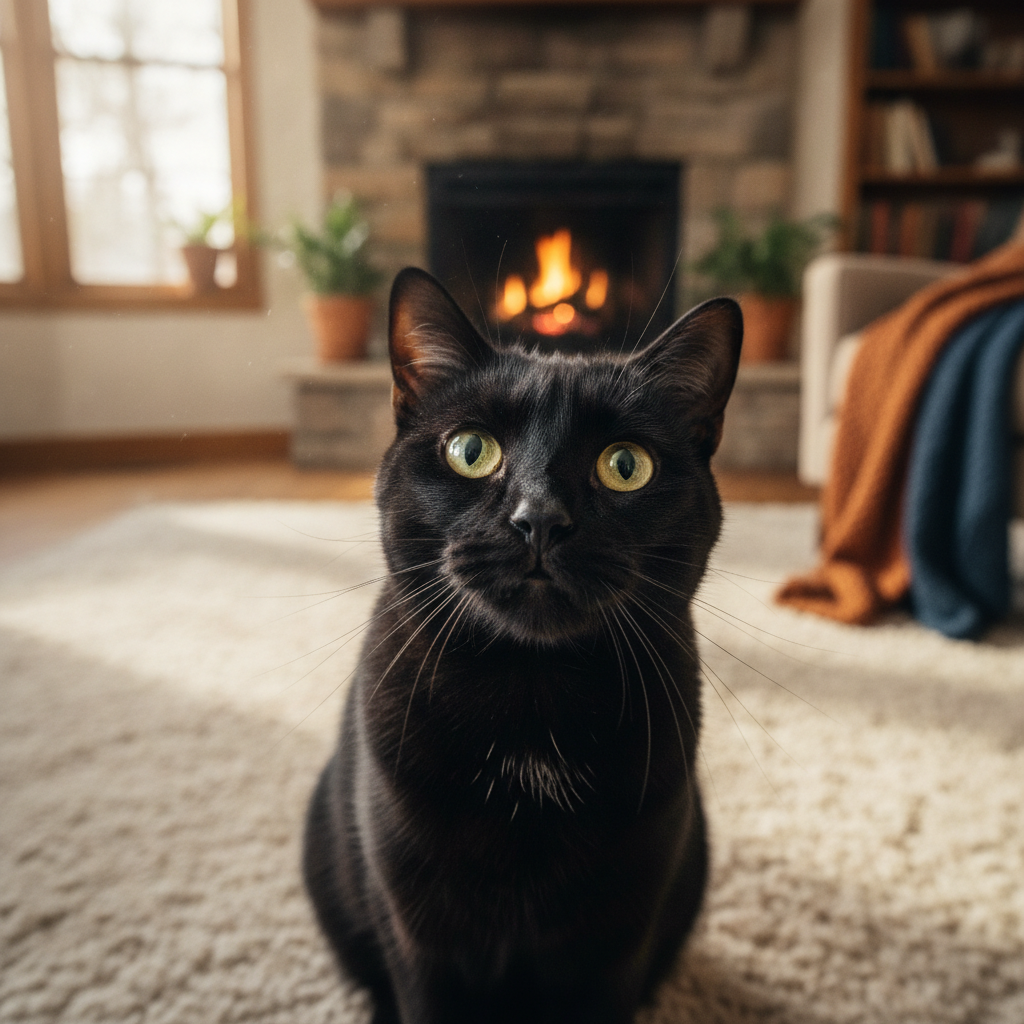
This is where old superstition stops being harmless fun. "Black cat bias" is a documented pattern in which black cats are adopted less often and wait longer in shelters than other colours — and in some studies face higher euthanasia rates as a result. Part of the problem is even practical: black cats are genuinely harder to photograph well, so their adoption listings catch fewer eyes. The good news, as welfare groups including the ASPCA have shown, is that this bias is beatable. Better photography, "house panther" marketing that celebrates their sleek looks, and waived adoption fees all measurably lift black cat adoptions. If you're choosing a cat, a black one is a wonderful — and frequently overlooked — choice. Shelters worldwide now run "Black Cat Appreciation" days (17 August) and "house panther" campaigns precisely to counter the bias, and they work. There's a quiet irony here too: the very qualities superstition once feared — that sleek, shadowy, mysterious look — are exactly what make a black cat so striking curled up on a sunlit sofa. Adopting the cat everyone else walked past is its own kind of good luck.
Are Black Cats Actually Healthier?
Here's a genuinely interesting open question, framed honestly because the science isn't settled. The same genes that produce black coats (in the ASIP/MC1R pigment pathway) overlap with genes involved in immune function, leading researchers to hypothesise that melanism might confer some resistance to certain diseases — a possible evolutionary advantage that could explain why black is such a common coat. It's a fascinating idea, and there's some suggestive evidence, but it remains unproven in domestic cats. Some have even speculated the resistance angle could one day inform human medicine, but that's firmly in "watch this space" territory. So enjoy it as a "maybe," not a fact: per Cornell's Feline Health Center, there's no reason to choose (or avoid) a black cat for its health, and like every cat, hers depends far more on care, diet and vet visits than on coat colour.
Caring for Your Black Cat
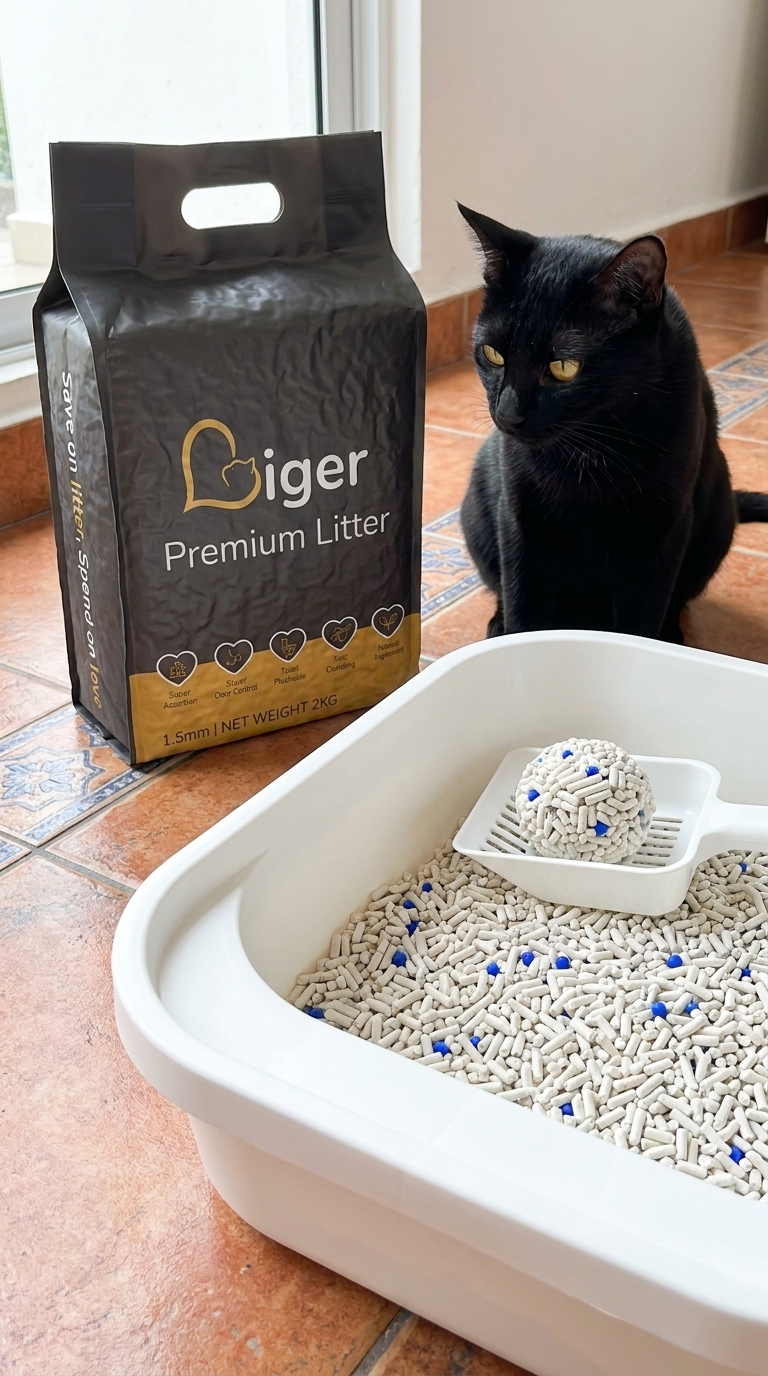
A black cat needs nothing special — just the universals: good food, vet checks, enrichment and a clean litter box. One small tip unique to dark cats: that glossy coat shows dust and litter tracking more than most, so a low-dust litter genuinely helps keep her looking sharp. A natural, food-grade litter like Liger Premium Tofu Cat Litter throws off minimal fine dust and clumps firmly so the box stays fresh between scoops. It runs from RM21.90 for a single 2 kg pack to RM169 for the 10-pack (about RM8.45/kg), free shipping in Peninsular Malaysia (current Liger pricing, as of May 2026); size your supply with the litter calculator.
And about that "aloof, standoffish black cat" stereotype? Like every colour-personality myth in this guide, it simply isn't real — temperament comes from genetics, early socialisation and environment, as International Cat Care stresses, not the colour of the fur. Keep exploring coats at the colours and patterns hub, or if your little house panther still needs a name, our cat name generator has plenty of bewitching options.
Curious what colours your two cats could produce? Try our kitten coat colour predictor — it shows whether black kittens are likely and what hidden colours could surface.