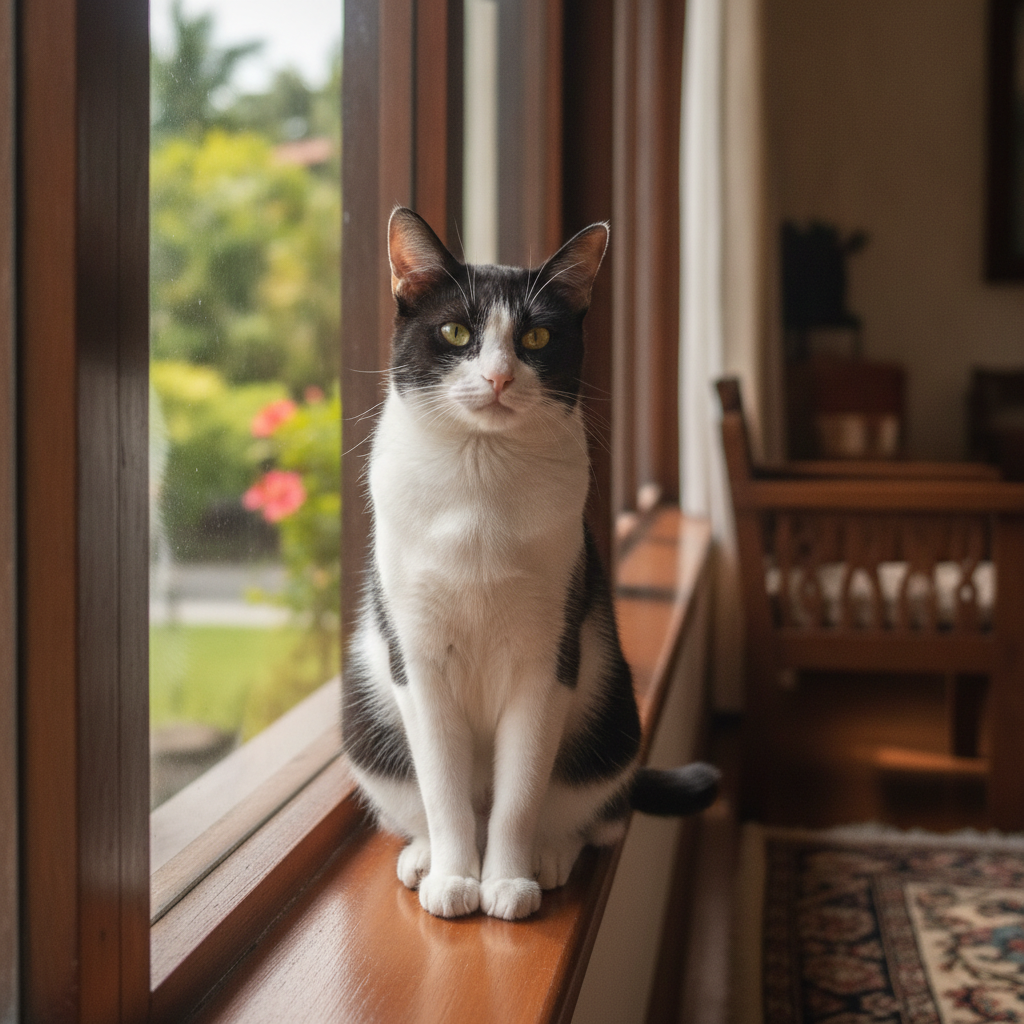
Some cats just look permanently dressed for a black-tie dinner. Tuxedo cats — black coats with crisp white chest, belly and paws — carry themselves with such dapper dignity that people swear they're smarter and more charming than the average moggy. The truth, as usual, is part lovely genetics and part affectionate myth. Here's how that little formal suit is made, why "tuxedo" isn't a breed, why they're not mostly male, and whether "tuxitude" is real.
This is part of our cat colours and coat patterns guide. Spoiler: tuxedo is a bicolour pattern, not a breed — you'll find tuxedos in pedigrees and all through Malaysia's kampung cats.
What Is a Tuxedo Cat?
A tuxedo is simply a cat with a mostly-black coat and a neat patch of white on the chest and belly, usually with white paws — the "shirt, bow tie and spats" look that earns the name. Crucially, it describes a pattern, not a type of cat: the formal-wear look can appear in countless breeds and, most commonly, in ordinary domestic cats. So a tuxedo's size, health, lifespan and temperament come from its actual breed and genetics, never from its black-and-white coat. To work out the cat under the suit, our cat breed identifier is a good start.
The "tuxedo" name is purely descriptive — it caught on because the markings look so much like a man's evening suit: a black jacket over a white dress shirt, often finished with white "spats" on the feet and sometimes a black "bow tie" splash at the throat. Some tuxedos even sport a few black spots on the chin or lip that fans affectionately call a "moustache." None of it is a separate breed standard; it's just the most photogenic way a common gene happens to land.
The Genetics: The White Spotting Gene
That white is the work of the white spotting gene (an allele, "S", of the KIT gene). Here's the clever part: white fur isn't a colour at all, it's an absence of colour. Pigment-producing cells (melanocytes) start life near the cat's back during embryonic development and migrate down and outward to cover the body. The white spotting gene slows or stops that migration, so the cells never reach certain areas — and wherever they don't arrive, the fur grows white. Because the cells start at the top and run out of time before reaching the extremities, white reliably lands on the belly, chest, paws and chin first. That developmental quirk is exactly why a tuxedo's white shows up as a bib and socks, as detailed in the science of bicolour cats.
It's worth pausing on how elegant that is. The black areas are simply where pigment cells arrived on schedule and did their job; the white areas are blank canvas the cells never colonised. Underneath the black, the cat could be carrying any colour or pattern instruction at all — solid black, or a hidden tabby, or even orange — the white spotting gene doesn't care what it's interrupting, it only removes pigment cells from the picture. That's why you can have a ginger-and-white or a tabby-and-white tuxedo just as easily as the classic black version, a point well catalogued by veterinary labs like the UC Davis Veterinary Genetics Laboratory.
From Tuxedo to Cow Cat: Grades of White
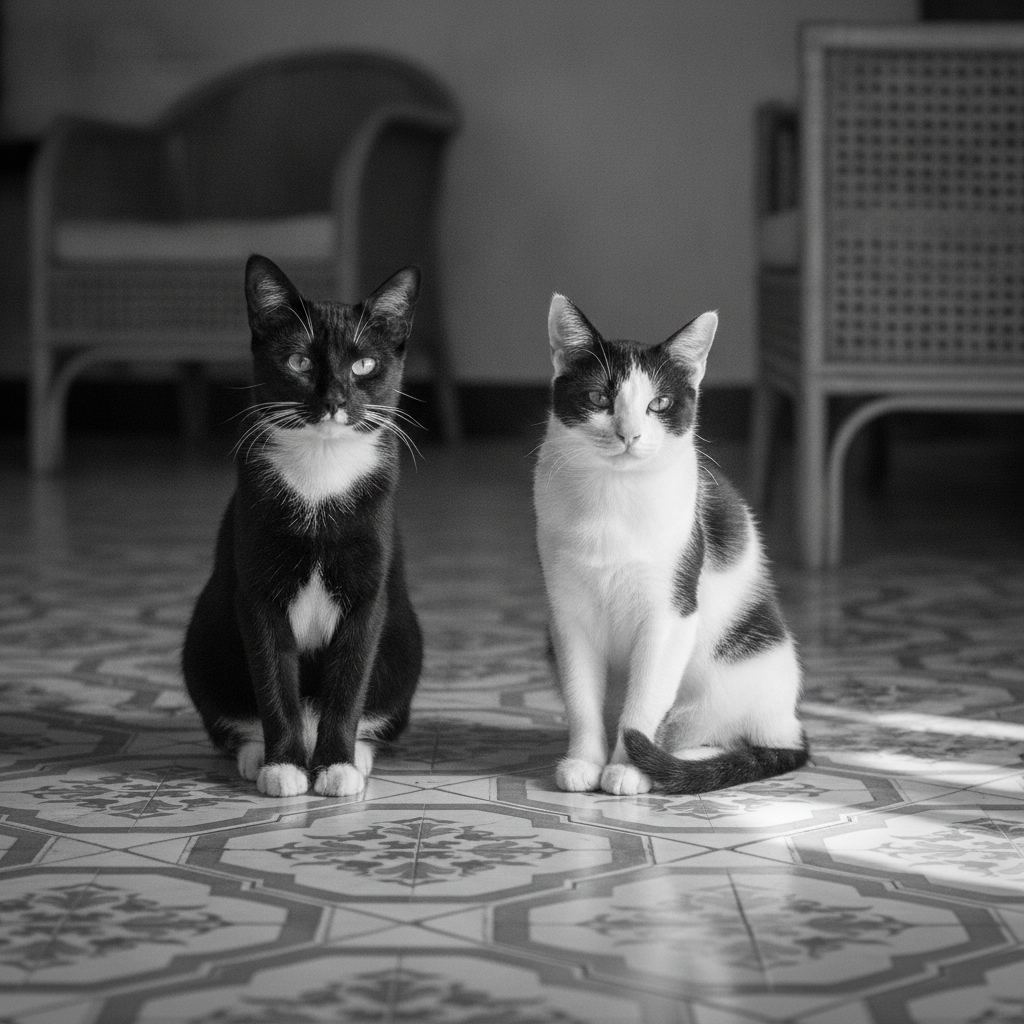
The white spotting gene works like a dial, not a switch — the more strongly it's expressed, the more white you get:
- Low grade: just a tiny white "locket" on the chest, or a true tuxedo (white bib and paws on a black cat).
- Medium grade: the bold black-and-white "cow cat" or "magpie" look, with large irregular patches.
- High grade: mostly-white cats — the "van" pattern (colour only on head and tail) and the "harlequin" (a few large coloured patches on white).
Cat registries even score this on a numbered scale, from a "grade 1" solid coat with maybe a few stray white hairs all the way up to a "grade 10" almost-entirely-white cat. A true tuxedo sits low on that scale — just enough white for the formal-wear effect, not so much that the black loses its grip. It's the same dial that, turned higher, produces the bold "cow" cats and, higher still, the elegant van cats; one gene, a whole wardrobe of looks.
So a tuxedo and a nearly-all-white cat can carry the very same gene, just turned up or down. It also means no two bicolour cats are marked exactly alike — the migration is partly random, giving every tuxedo a one-off arrangement of spots, "moustaches" and mismatched socks. This randomness is also why two tuxedo parents can produce kittens ranging from a tiny chest locket to a near-solid coat to a mostly-white cat: they're passing on the spotting gene, but not the exact placement. Breeders aiming for a perfectly symmetrical "show" bicolour know this all too well — nature rarely draws a straight line, and the charm of a tuxedo is precisely that slightly wonky, hand-painted look.
Are Tuxedo Cats Always Black and White?
Not at all. While black-and-white is the classic, the same white spotting can overlay almost any colour. You'll see grey-and-white ("blue tuxedo"), ginger-and-white, and even tortoiseshell-and-white — though once a tortie has enough white, we usually call her a calico instead. The "tuxedo" label really just means a dark coat with that formal bib-and-paws white placement, whatever the base colour. And unlike the orange or tortie patterns, the white spotting gene isn't sex-linked — it sits on a regular (autosomal) chromosome, so tuxedo cats are split evenly between males and females. The common belief that most tuxedos are male is simply a myth — it likely got tangled up with the (true) fact that solid black and orange cats skew male, but the white spotting that makes a tuxedo plays no favourites with sex at all.
The Tuxedo Myth: Smart and Charming?
Tuxedo owners are fiercely loyal to the idea of "tuxitude" — that their cats are unusually intelligent, mischievous and charismatic. It's a delightful notion, but the honest answer is that it's folklore, not science. There's no evidence that the white spotting gene has anything to do with intelligence or temperament. As International Cat Care and the Cornell Feline Health Center consistently note, personality is shaped by genetics, early socialisation and environment — not coat pattern. The "smart tuxedo" reputation probably owes more to their sharp, expressive looks (and a few very famous examples) than to any real brain boost. There's a tidy logic to it: a high-contrast black-and-white face makes a cat's eyes and expressions easier for us to read, so we project alertness and cleverness onto them — the same way the colours of cat coats reliably trip up our perceptions, as the science of cat colours reminds us. Want to actually understand your cat's quirks? That's our cat behaviour guide, not its dinner jacket.
Famous Tuxedo Cats
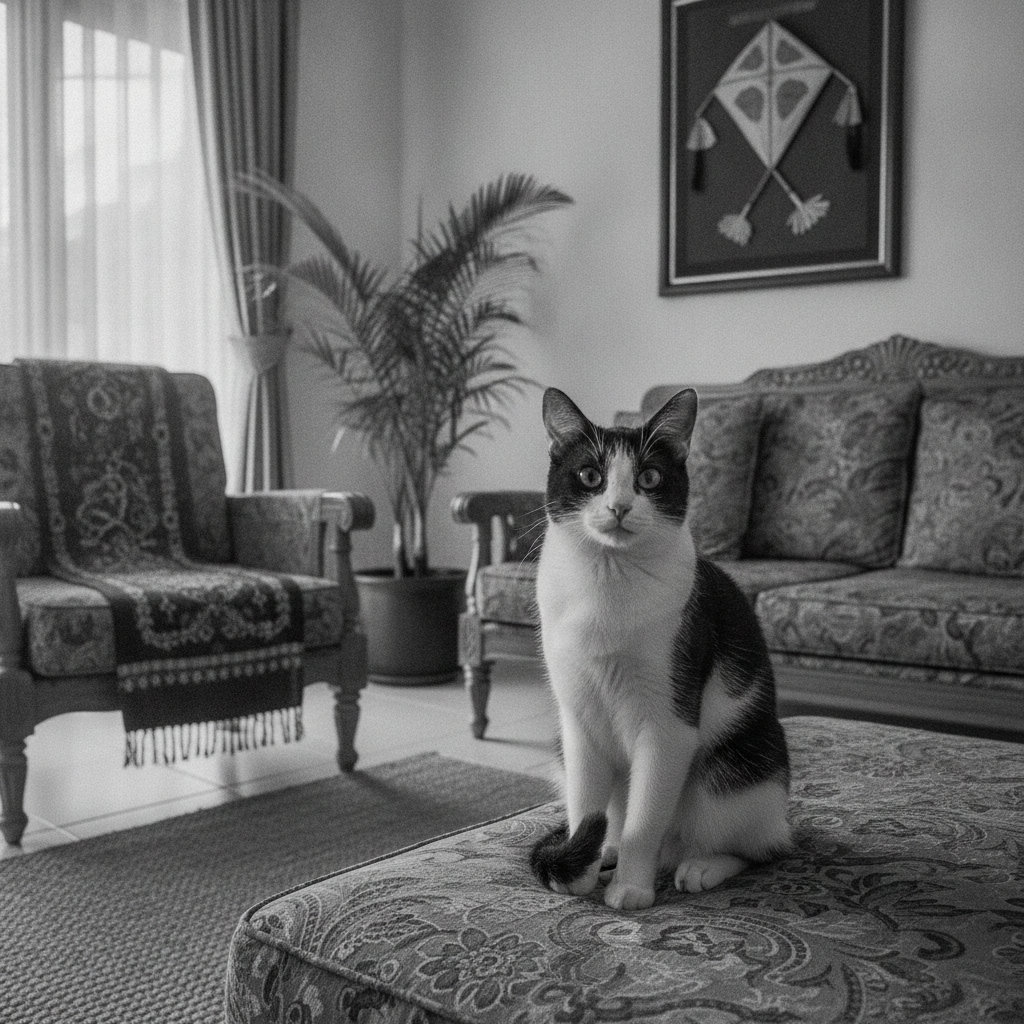
Part of the tuxedo's charming reputation comes from sheer star power. Sylvester the Cat and Felix the Cat — two of cartoon history's most famous felines — are both tuxedos. So was Socks, the Clinton family's cat, who became one of America's best-known "First Pets" in the 1990s. Beyond the screen, a tuxedo cat named Tuxedo Stan even ran a tongue-in-cheek campaign for mayor of Halifax, Canada, to raise money for stray cats. From children's cartoons to the White House to the ballot box, the black-and-white cat has long been cast as the clever, dapper character — which is exactly how a coat pattern quietly grows itself a personality myth. The cats, of course, are blissfully unaware of their distinguished public image; they just happen to be wearing the outfit for it.
Caring for Your Tuxedo
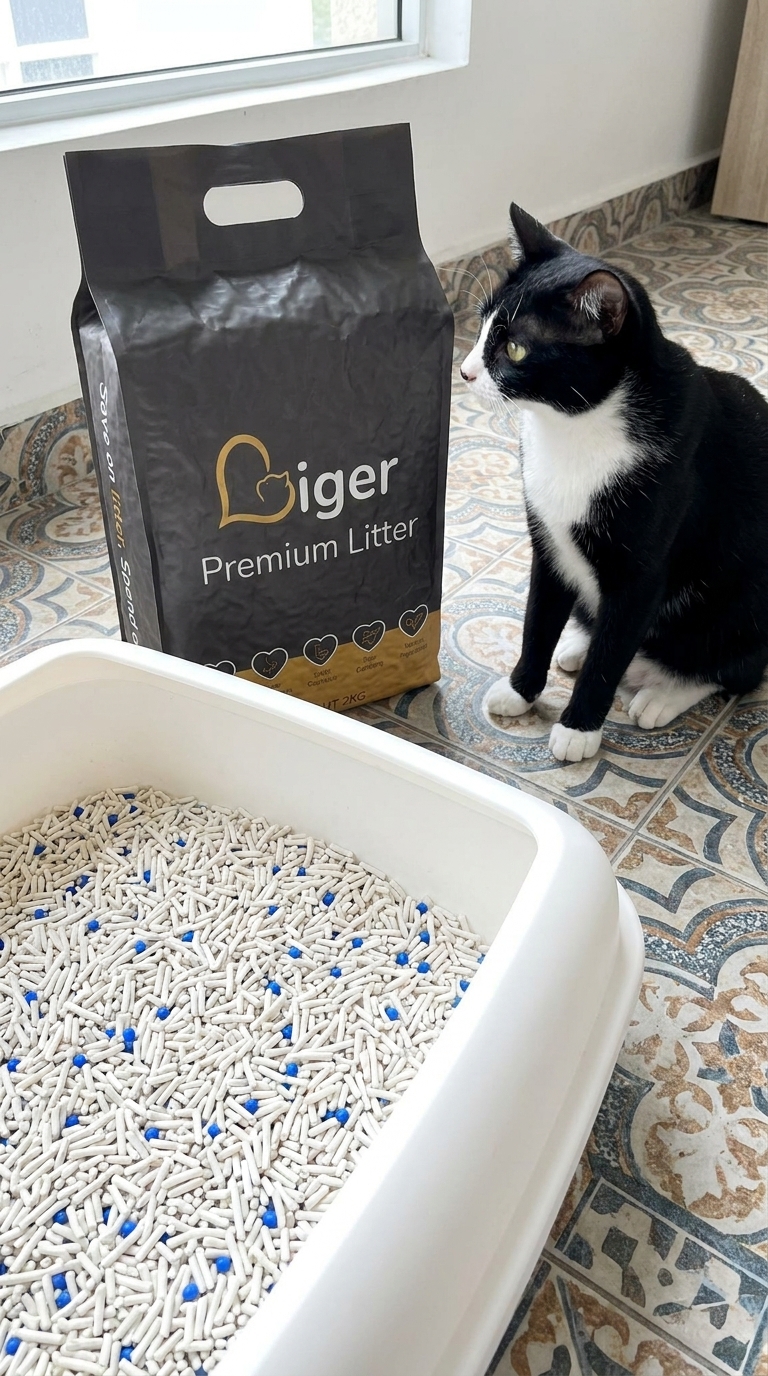
A tuxedo needs nothing special — the dapper coat is purely cosmetic, and bicolour cats are as healthy as any other (the deafness risk linked to all-white cats with blue eyes doesn't apply to ordinary black-and-white bicolours, which is a common worry worth putting to rest). Good food, vet checks, enrichment and a clean litter box keep that suit immaculate, and a tuxedo ages on the same timeline as any other cat of its breed. One practical tip for a half-white cat: litter tracking and dust show up clearly on both the white and black, so a low-dust litter genuinely helps. A natural, food-grade litter like Liger Premium Tofu Cat Litter keeps fine dust off the coat and the box fresh between scoops. It runs from RM21.90 for a single 2 kg pack to RM169 for the 10-pack (about RM8.45/kg), free shipping in Peninsular Malaysia (current Liger pricing, as of May 2026); size your supply with the litter calculator.
Keep exploring coats: see the all-or-nothing world of black cats, the patchwork of torties and calicos, or head back to the colours and patterns hub. And if your dapper gentleman (or lady) still needs a name, our cat name generator has suitably classy options.
Curious what colours your two cats could produce? Try our kitten coat colour predictor — it shows the colour odds (though exact white markings stay unpredictable).