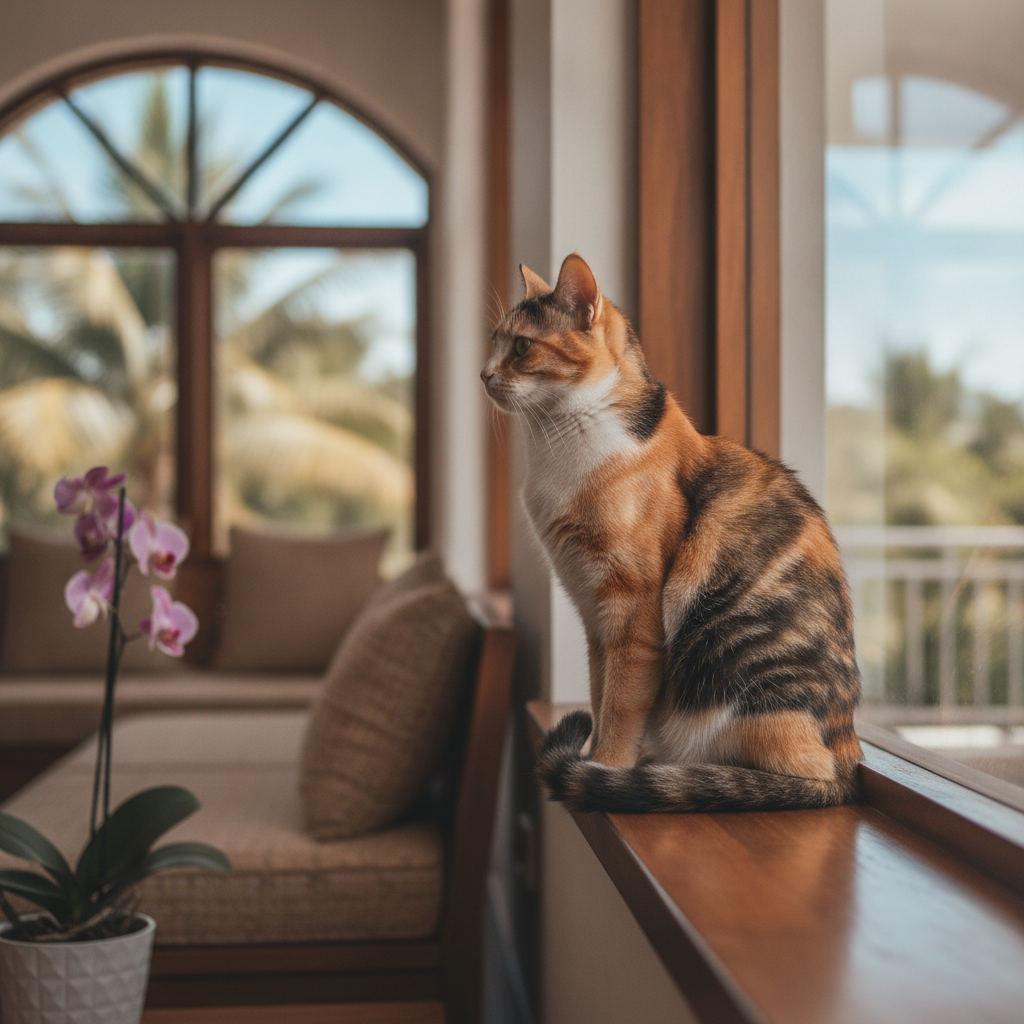
Calico cats are walking good-luck charms in a tricolour coat — splashes of orange, black and white that no two cats share. They're so beloved they're the official state cat of Maryland and the inspiration for Japan's famous maneki-neko, the raised-paw "beckoning cat" you see in shop windows everywhere. But the most fascinating thing about a calico isn't her looks; it's that she's almost certainly a "she." Here's the genetics behind that lopsided sex ratio, and an honest look at the personality everyone swears calicos have.
This is part of our cat colours and coat patterns guide. Quick heads-up: calico is a colour pattern, not a breed — you'll spot calicos in pedigree cats and very often among Malaysia's kampung cats.
What Exactly Is a Calico Cat?
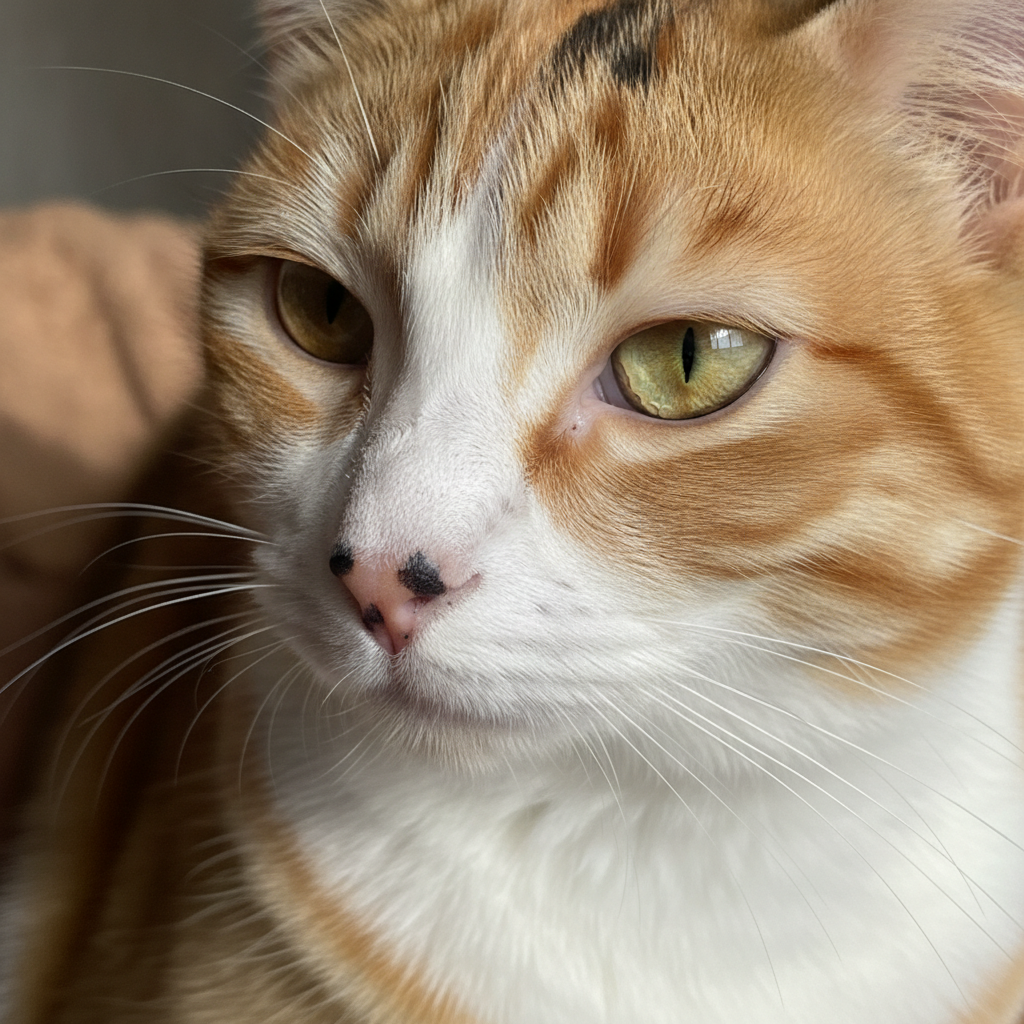
A calico has three colours in clear, distinct patches: orange, black (or their diluted versions) and white. That white is the defining feature — it's what separates a calico from a tortoiseshell, which blends orange and black with little or no white. The more white a calico carries, the bolder and more separated her colour blocks tend to be. Because the pattern can turn up in almost any breed or in a moggy, "calico" describes a coat, not a type of cat. To work out the breed underneath, try our cat breed identifier or browse the cat breeds guide.
The three colours come from just two pigments plus an absence: eumelanin makes the black (and its browns), phaeomelanin makes the orange (and cream), and the white is simply skin where no pigment cell ever arrived. So a calico isn't "three colours of paint" so much as two pigments interrupted by blank canvas. The proportions vary endlessly — some calicos are mostly white with a few bold splashes (sometimes called "calico van"), others are densely coloured with just a white bib and boots. Every combination is normal, and none of it hints at breed, health or temperament.
The Genetics: Why Calicos Are Almost Always Female
The orange-versus-black decision is made by a gene on the X chromosome. Females have two X chromosomes (XX), males have one X and one Y (XY). A female can carry "orange" on one X and "black" on the other — and a remarkable process called X-inactivation brings both to the surface. Very early in development, every cell randomly and permanently switches off one of its two X chromosomes; cells that silenced "black" grow orange fur, and vice versa, creating a patchwork mosaic, as detailed in the science of X-inactivation.
Add a third, separate gene — the white spotting gene (S) — which blocks pigment cells from reaching parts of the coat, and you get patches of pure white over the mosaic. Orange + black + white = calico. A male, with only one X, can be orange or black but not both, which is why an estimated 99.9% of calicos are female. It's one of the most elegant examples of sex-linked genetics in any animal.
The molecular detail is just as neat. The shut-down is triggered by a gene called Xist, which physically coats the doomed X chromosome and compresses it into an inert bundle (a "Barr body"). The timing of that switch-off decides the look: flip it early and the colour cells multiply into big bold blocks; flip it late and you get a finer, more peppered mix. Layer the white-spotting gene on top — itself ranging from a few white toes to a mostly-white cat — and you can see why every calico's coat is a genuine one-off, as the science of cat coat colours explains.
The 1-in-3,000 Male Calico
Male calicos exist, but they're genuine rarities — roughly 1 in 3,000. Almost all of them carry an extra X chromosome (XXY, a feline version of Klinefelter syndrome), which supplies the two X chromosomes the mosaic needs. The trade-off: these males are nearly always sterile. Even rarer routes include chimerism, where two embryos fuse into one cat. So if you meet a tomcat in a calico coat, you've met a true one-in-thousands cat — a vet can confirm it with a chromosome test. Sadly, the same XXY quirk that creates him often brings health complications and that near-universal infertility, which is why male calicos have never been bred into a "line" — nature simply doesn't allow it. Their rarity once made them prized: in parts of the world a male calico was thought to bring exceptional luck, and historically fetched a high price.
Calico vs Tortoiseshell vs Tabby
These three trip everyone up. The simple rule:
- Calico: orange, black and white in distinct patches.
- Tortoiseshell: orange and black marbled together, little to no white — full story in our tortoiseshell guide.
- Tabby: a striped, swirled or spotted pattern (with the signature "M") rather than a set of colours; it can even appear within a calico's coloured patches — see tabby patterns.
There's also the lovely dilute calico, where a dilution gene softens the colours to grey ("blue"), cream and white — same recipe, pastel palette. A "caliby" is simply a calico whose coloured patches also show tabby striping. The easiest way to remember it: white is the dividing line. Same orange-and-black mosaic underneath; add white and a tortie becomes a calico. The calico coat is therefore best thought of as "tortoiseshell-and-white" — which is exactly what cat registries officially call it.
Do Calicos Have a Personality?
Ask any calico owner and you'll hear about "calico attitude" — sassy, spirited, opinionated, fiercely loyal. It's a charming idea, but here's the honest answer: it's folklore, not established science. The one study people point to, a 2015 University of California, Davis survey of 1,274 owners, found calico and tortoiseshell females were reported as slightly more aggressive toward humans — but the differences were tiny (around 2.5 versus 2.0 out of 20), based on owners' subjective impressions, and a correlation never proves a colour gene causes a personality. The study's own authors warned against using it to pick or reject a cat.
The veterinary consensus, including International Cat Care, is firm: temperament is shaped by genetics, early socialisation between 2 and 7 weeks and environment — not coat colour. Researchers even use a "Feline Five" personality model precisely because colour predicts nothing reliable. Enjoy the legend; judge the cat in front of you. Why does "calico attitude" feel so real, then? Two reasons. Calicos are almost all female, so some of what gets labelled "sass" is simply ordinary female-cat behaviour wearing a colourful nickname. And once you expect a diva, you notice and remember every grumpy moment that fits — classic confirmation bias. A calico raised with gentle, early handling is just as likely to be a soppy lap cat as a firecracker.
Calicos Around the World
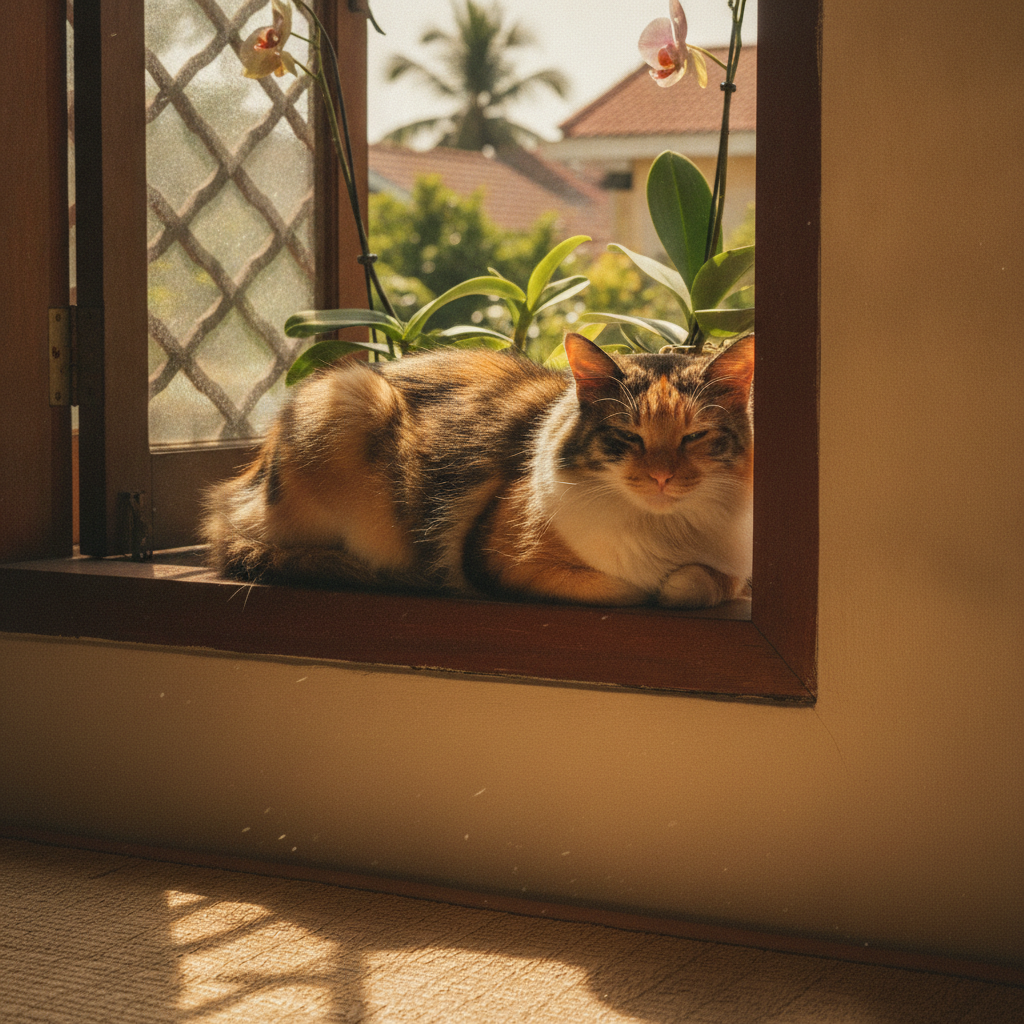
Few cats are so universally considered lucky. In Japan, the tricolour mi-ke ("three-fur") cat is the model for the maneki-neko, the raised-paw figurine believed to beckon fortune into shops and homes; sailors across several cultures once kept calicos and torties aboard, trusting them to ward off storms and bad spirits on long voyages. In the United States, calicos are nicknamed "money cats," and Maryland named the calico its official state cat. That blend of dazzling rarity — remember, each coat is genetically unrepeatable — and worldwide good-luck status is a big part of why calicos are so cherished. Here in Malaysia, where so many community and kampung cats wear calico and tortoiseshell coats, that beckoning-cat symbolism feels right at home: a tricolour cat curled up by the door has long felt, to many households, like a small piece of good fortune that chose to stay.
Caring for Your Calico
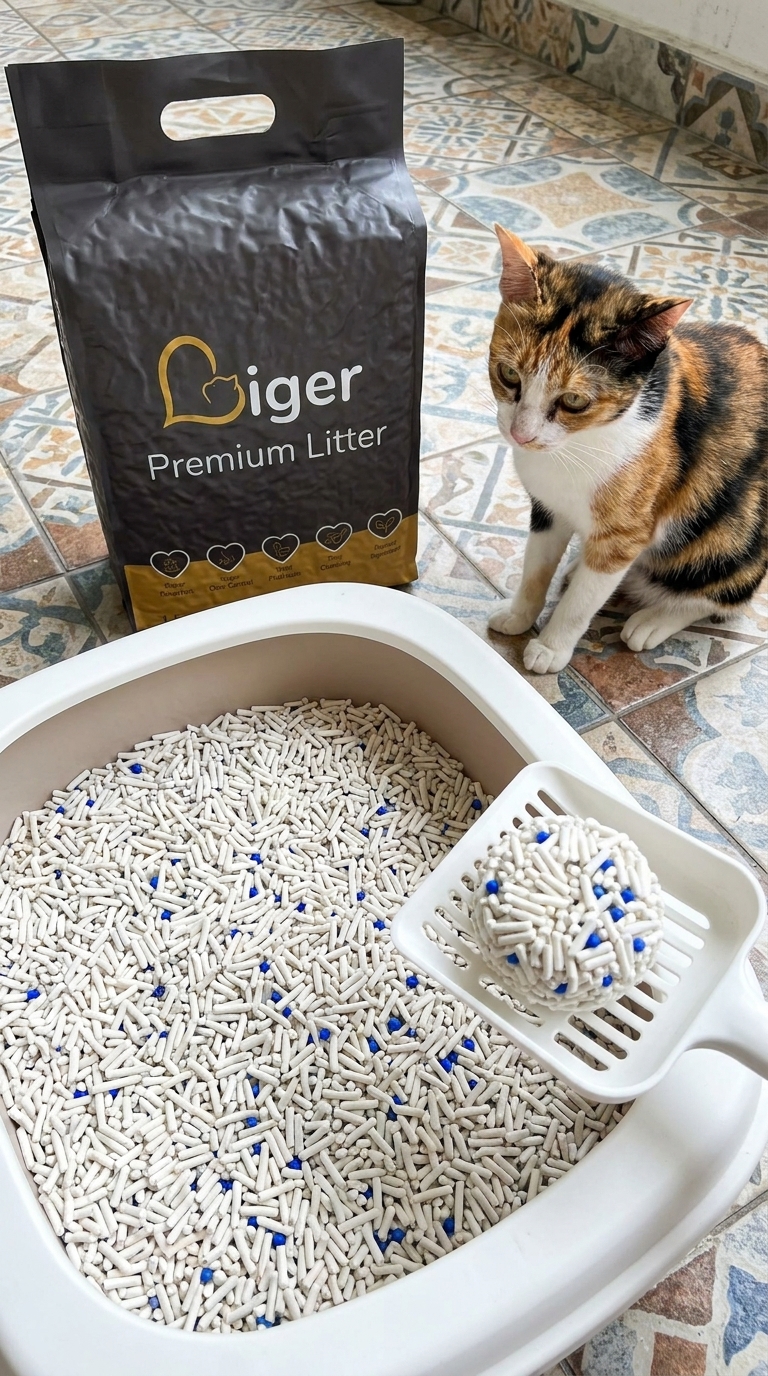
Reassuringly, a calico needs exactly the same care as any cat — her tricolour coat comes with no special requirements, and colour says nothing about her health, grooming needs or lifespan. Good food, vet checks, enrichment and a clean litter box keep her thriving, and she'll age on the same timeline as any other cat of her breed and build. The one exception worth knowing: a male calico, because of his XXY genetics, may need a little extra veterinary attention over his life — but for the overwhelmingly female calico population, colour is purely cosmetic. To show that striking coat at its best, a tidy, low-dust set-up helps: a natural, food-grade litter like Liger Premium Tofu Cat Litter keeps fine dust off her fur and the box fresh between scoops. It runs from RM21.90 for a single 2 kg pack to RM169 for the 10-pack (about RM8.45/kg), free shipping in Peninsular Malaysia (current Liger pricing, as of May 2026); size your supply with the litter calculator.
Keen to keep exploring? Meet the calico's close cousins in our tortoiseshell and orange cat guides, or return to the colours and patterns hub. And if your lucky lady still needs a name, our cat name generator can help.
Curious what colours your two cats could produce? Try our kitten coat colour predictor — it shows the genetic odds of a calico kitten.