Your cat's first vet visit does more than tick off a vaccine — it sets the baseline for every health decision that follows. Done well, it's also where you stop guessing and start partnering with someone who can tell you exactly what your cat needs and when. This guide walks you through preparing for a calm visit, what the vet actually does, the questions worth asking, and what it all costs in Malaysia.
It pairs naturally with the rest of our preventive care guide and the kitten first-year timeline — this is the appointment where that whole plan gets personalised to your cat.
Why the First Visit Matters So Much
Cats are experts at hiding illness — an instinct from their wild ancestors, where looking weak was dangerous. By the time something is obvious, it's often advanced. A first visit creates a health baseline (weight, body condition, organ sounds, dental state) that every future check measures against, so subtle changes get caught early. It's also where your vet drafts a personalised plan for vaccines, parasite control, neutering and diet — and where a calm, positive experience teaches your cat that the clinic isn't something to dread. AAHA/AAFP guidelines treat this foundational visit as the cornerstone of lifelong feline care. Whether you've adopted a pedigree kitten, taken in a rescue, or inherited a friend's cat, the first appointment is where its individual health story begins on paper — and the earlier that record starts, the more useful it becomes over the years.
Getting There Calm: Carrier and Stress Prep
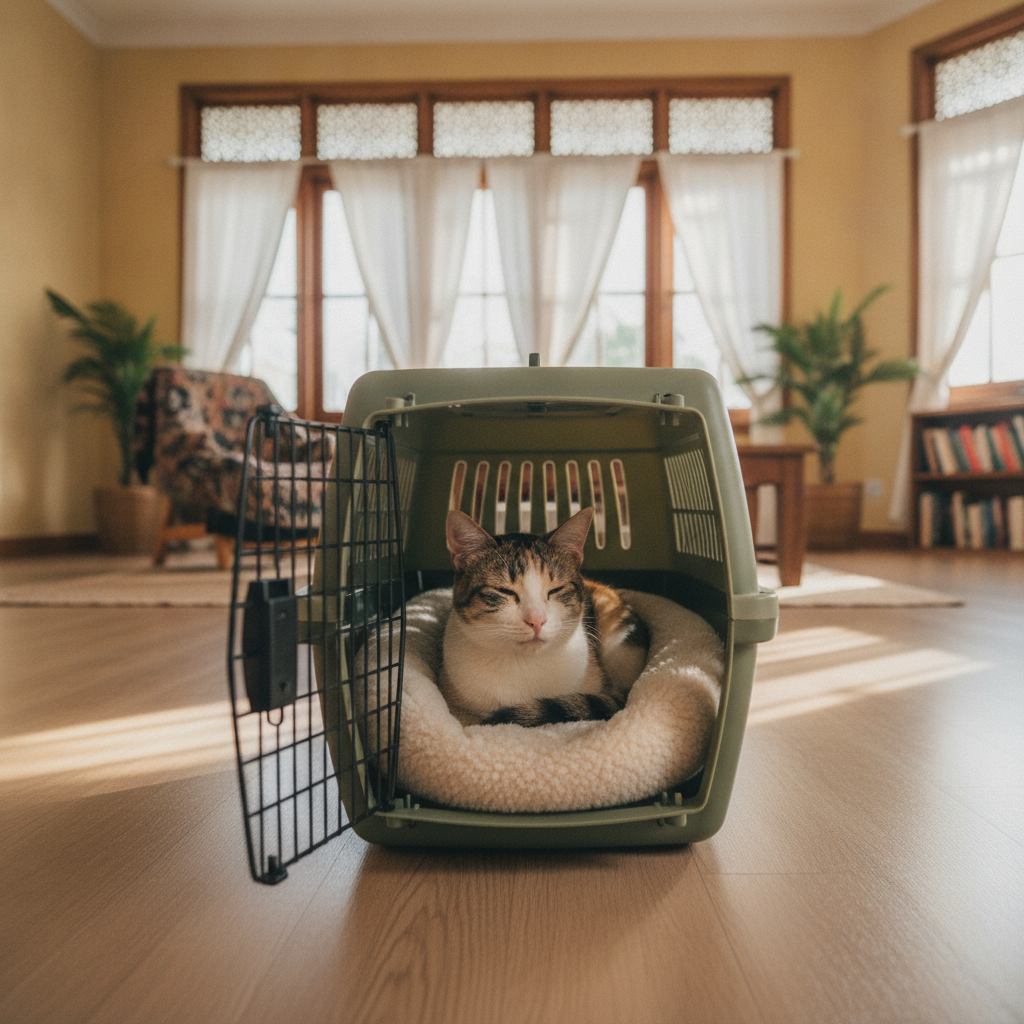
For most cats the carrier means "something bad is coming". Flipping that association is the single biggest thing you can do for a smooth visit. Vets recommend a hard-sided carrier that opens from both the top and front and can be taken apart, so an anxious cat can stay in the familiar bottom half during the exam. Leave the carrier out at home for days or weeks beforehand with bedding, treats or meals inside so entering it feels normal.
On the day, VCA Hospitals suggests spraying a synthetic feline pheromone (like Feliway) on the bedding ~30 minutes before leaving, covering the carrier with a towel to block scary sights, and securing it with a seatbelt. Stay calm yourself — cats read our stress. For deeply anxious cats, ask your vet about pre-visit medication such as gabapentin given at home. Our full guide to carrier-training for stress-free vet visits covers the step-by-step.
A simple trick that pays off long-term: take your cat on a few short car rides that end back at home with a treat, so it learns the car doesn't always mean the vet. Carry the carrier level and supported from the bottom rather than swinging it by the handle, and keep your own movements slow. The goal is to arrive with a cat that's wary but workable, not one that's already panicking before the exam even begins.
What to Bring and Prepare
A little prep makes the appointment far more useful. Put together a simple "visit kit":
- Any previous medical records or adoption paperwork, and a list of any medications.
- A fresh fecal sample (less than 12 hours old) for parasite screening.
- A written list of your questions (see below) so nothing's forgotten.
- Notes on your cat's litter box habits — how often it urinates and defecates, and any changes in volume, consistency or straining.
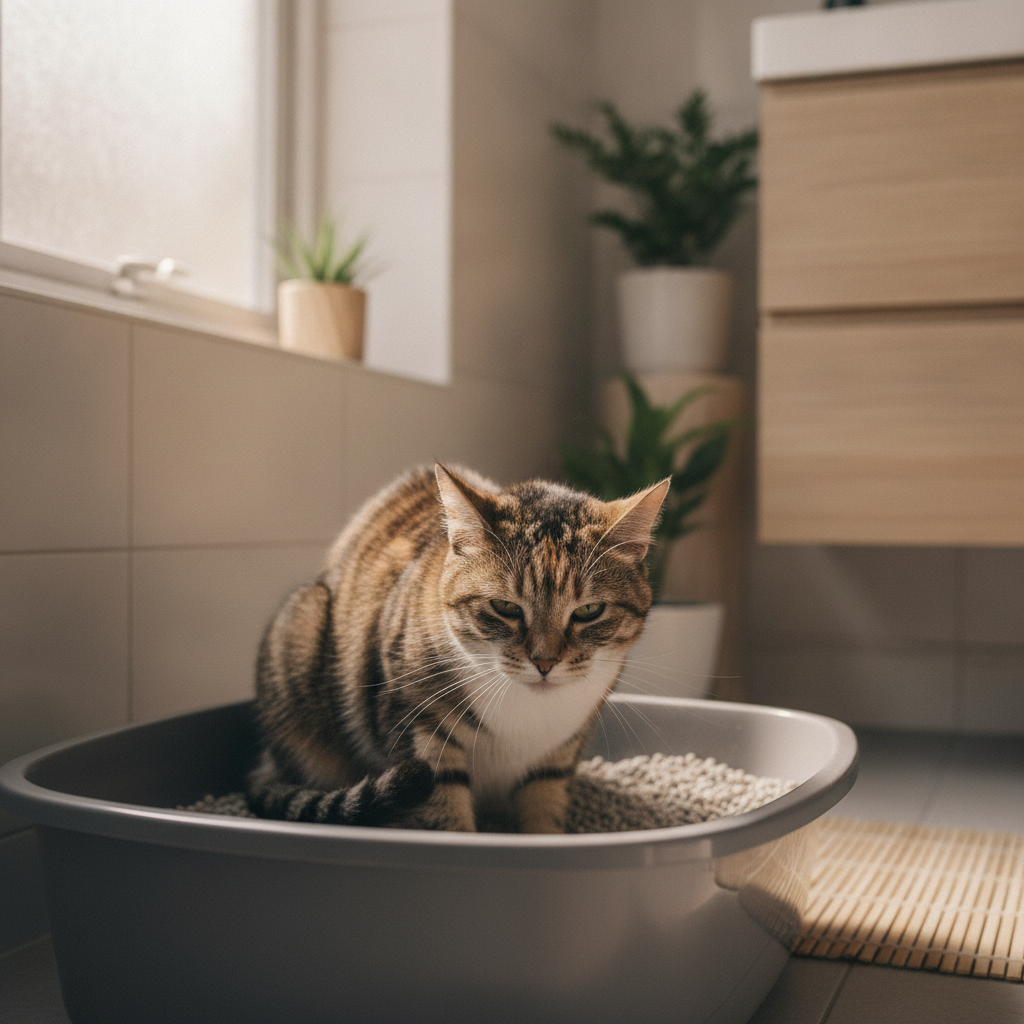
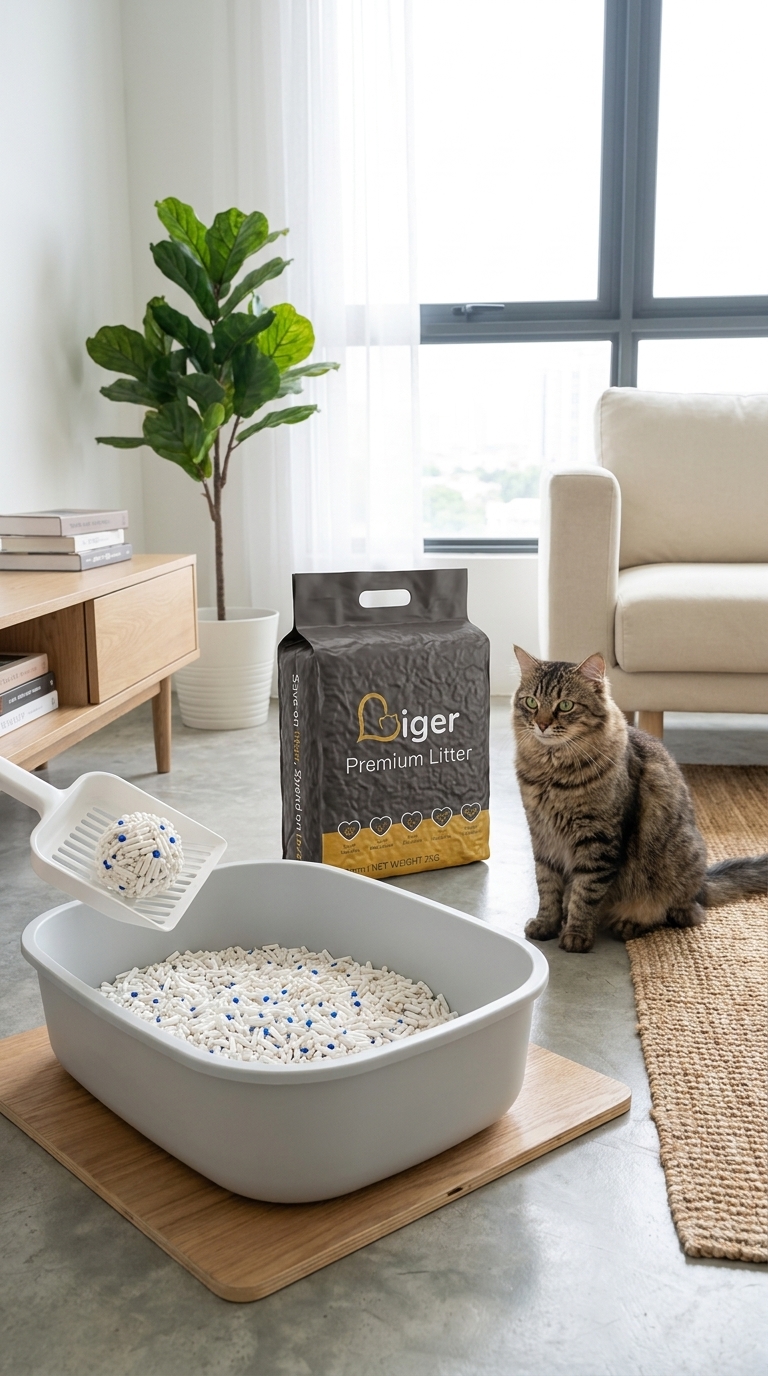
That last point is more important than owners realise. Your vet will ask about litter box habits, because changes there are often the earliest sign of trouble — urinary issues, kidney problems, constipation or parasites all show up in the box before a cat "looks" sick. You can only report accurately if you can actually see what your cat produces. We use Liger Premium Tofu Cat Litter at home partly for this: the natural soybean pellets clump firmly and are low-dust, so daily scooping doubles as a health check and a fresh stool sample is easy to collect. A 2kg pack is RM21.90, scaling to RM169 for the 10-pack (RM8.45/kg) with free shipping in Peninsular Malaysia (current Liger pricing, as of May 2026). The new cat owner checklist helps you gather everything else before the visit, and the litter calculator sizes your supply.
The Nose-to-Tail Exam and New-Cat Tests
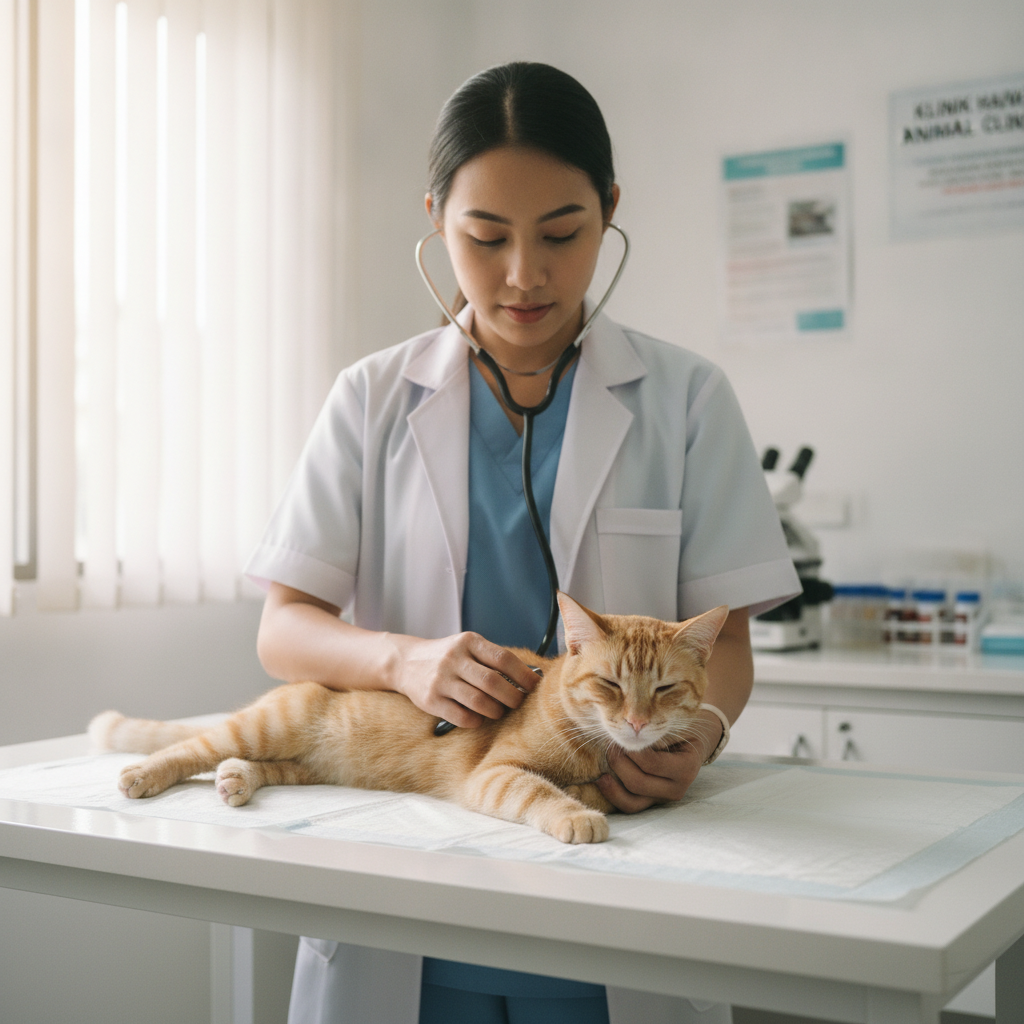
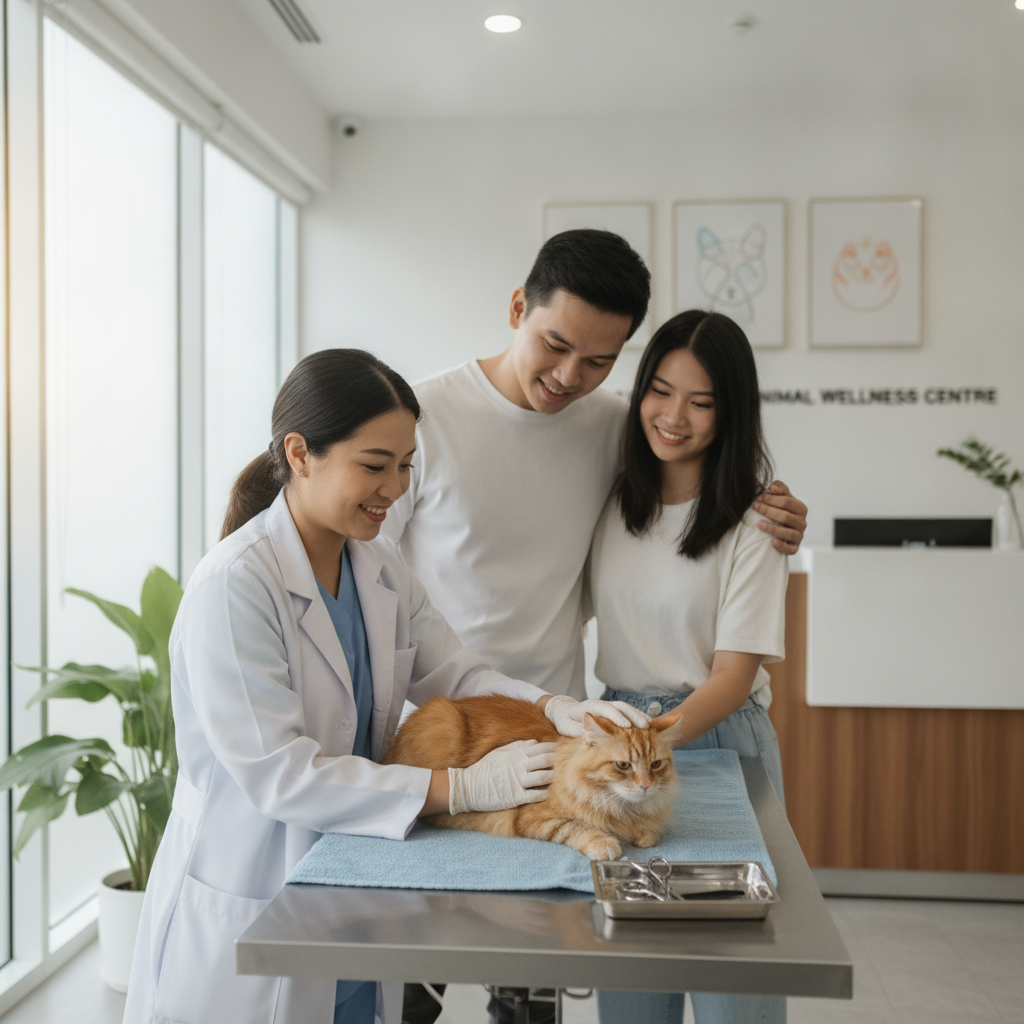
The visit starts with a history chat — where your cat came from, indoor or outdoor, other pets, diet, and any concerns. Then comes the hands-on nose-to-tail physical exam, per VCA Hospitals:
- Vitals & condition: weight, temperature, heart and breathing rate, body and muscle condition scores.
- Head: eyes for redness or discharge, ears for debris or mites, mouth for tartar, gum inflammation and bad teeth.
- Chest & abdomen: listening to the heart for murmurs and the lungs for abnormal sounds, then gently feeling the belly for organ size, pain or masses.
- Skin & coat: checking for fleas, ticks, lumps or excessive shedding.
For a brand-new cat, expect two key tests: a fecal exam for intestinal worms, and a blood test for FeLV and FIV (feline leukaemia and immunodeficiency viruses). AAFP and AAHA recommend testing every new cat for these retroviruses, since knowing the status early shapes everything from vaccination to how it lives with other cats. For kittens, your vet may suggest monthly fecal checks through the most vulnerable early months. This first visit is usually also where the FVRCP vaccine series and deworming begin — and a good vet will use treats and gentle handling to keep the whole thing as low-stress as possible, building a positive association for next time. The general guidance for kitten health reinforces starting this preventive groundwork early.
The Questions Every Owner Should Ask
You're your cat's advocate, so come ready to ask. The high-value questions, drawn from PetMD and AAFP guidance:
- Vaccines: "What's the right long-term vaccination plan for my cat's lifestyle?" (indoor vs outdoor changes it.)
- Parasites: "Given we're in Malaysia, what are the biggest parasite risks and the best year-round prevention?"
- Spay/neuter: "When do you recommend neutering, and what are the benefits?" (Usually around 4–5 months — see our spay/neuter guide.)
- Diet & weight: "What and how much should I feed for a healthy weight, and how do I keep my cat hydrated?"
- Microchip: "Can we microchip my cat, and when?" (Often done during the neuter.)
Don't be shy about the small stuff either — how to brush teeth, how to trim nails, whether your cat's weight is healthy, or how to introduce a new pet. The first visit is a rare block of unhurried expert time, and an indoor cat's needs genuinely differ from an outdoor one's. Write the answers down — this plan is the backbone of your cat's care for the year ahead, and it's far easier to follow a written schedule than to remember a rushed conversation.
What It Costs in Malaysia
Good news: feline care here is genuinely affordable, with routine prices often 50–70% lower than in Singapore — enough that some Singaporean owners cross to Johor Bahru for vet services. For perspective, a basic consultation in Singapore runs about S$40–S$120 (roughly RM140–RM420), versus a standard RM35–RM80 here. A first visit (consultation plus the core FVRCP vaccine) typically runs RM75–RM200 at a private clinic, or RM45–RM80 at a government DVS clinic. Treat these as ranges — actual fees vary by clinic, city and vaccine brand.
| Item | Private clinic | Government (DVS) clinic |
|---|---|---|
| Standard consultation | RM35 – RM80 | RM30 – RM50 |
| Core FVRCP vaccine | RM40 – RM120 | RM15 – RM30 |
| First visit (estimate) | RM75 – RM200 | RM45 – RM80 |
Remember the first visit is the start of a short series — kittens need boosters every 3–4 weeks until around 16 weeks, and each visit has a charge, so ask whether the clinic offers a discounted "kitten package". FeLV/FIV testing and a fecal exam may add to the first bill but are worth it for the baseline.
How Often After This? Checkups by Life Stage
Once the kitten series is done, the rhythm settles by age. Don't drop annual visits just because your cat seems healthy — that's exactly when a quiet problem is cheapest to catch.
| Life stage | Age | How often |
|---|---|---|
| Kitten | Up to 1 year | Every 3–4 weeks until 16–20 weeks |
| Adult | 1–10 years | Annual wellness exam |
| Senior | 11+ years | Every 6 months (semi-annual) |
Senior cats get more frequent visits because age-related diseases — kidney disease, hyperthyroidism, arthritis, diabetes — creep in quietly; proactive senior care often adds bloodwork and urinalysis to catch them before symptoms show. Between visits, keep an eye on the warning signs that a cat is sick.
The Bottom Line
Prepare for calm (carrier conditioning, a towel, maybe a pheromone), bring a fecal sample and your questions, and treat the first visit as the start of a partnership rather than a one-off. Expect a thorough nose-to-tail exam plus FeLV/FIV testing, budget RM75–RM200 privately (less at a DVS clinic), and lock in the long-term plan for vaccines, parasites, neutering and diet. Then keep to the life-stage checkup schedule. For the complete preventive roadmap, head back to our cat preventive care hub.