Here's a number that should change how you think about worming: a 2022 parasitology survey of cats in the Klang Valley found that 73% were infected with at least one intestinal parasite, with hookworms in 63% of samples and zoonotic roundworms in 26%. Malaysia's year-round heat and humidity make it one of the worst environments on earth for worms — there's no winter freeze to break the cycle. This guide lays out a clear, age-based deworming schedule built on CAPC, ESCCAP and WSAVA guidance, adapted for our tropical reality.
This is the preventive-schedule companion to our deep dive on identifying cat parasites (what the worms look like and how to spot them) and part of the broader cat preventive care guide. Here we focus on one thing: how often to deworm, and with what.
Why Deworming Isn't Optional in Malaysia
In temperate countries, cold winters kill off free-living parasite stages in the soil, giving cats natural low-risk seasons. Malaysia has no such reprieve. Average temperatures of 23–33°C and humidity often above 80% let worm eggs develop into infective larvae continuously, all year, and the moisture stops them drying out. Layer on a large free-roaming community-cat population seeding the environment with eggs, and you get the high infection rates local surveys keep finding. The practical takeaway: in Malaysia, deworming is a routine maintenance task, not a once-in-a-while reaction to seeing worms.
The 73% figure isn't a one-off, either. Earlier Malaysian surveys found broadly similar or higher burdens — a 2014 study of rural Peninsular cats reported an 89.3% overall prevalence, and a 2015 Klang Valley study found 57.9%. Across a decade of data, the message is consistent: a large share of cats here are carrying worms at any given time.
This matters for people too. The parasites involved are zoonotic. Toxocara cati (roundworm) can cause visceral and ocular larva migrans in humans, and hookworm species like Ancylostoma ceylanicum — confirmed common in the region — can cause creeping skin eruptions and even establish gut infections in people. Regular feline deworming is genuinely a household public-health measure, especially with children around.
The Worms You're Actually Fighting
Three groups make up the bulk of feline intestinal parasites here:
- Hookworms (Ancylostoma spp.) — the most common in Malaysian surveys (63% prevalence). They latch onto the gut wall and feed on blood, which can cause anaemia, especially in kittens.
- Roundworms (Toxocara cati) — the second most common (26%). Kittens often get these straight from their mother's milk, which is why deworming starts so young. Western College of Veterinary Medicine notes the migrating larvae can also affect humans. The region even has its own species, Toxocara malaysiensis, first described in domestic cats here — a reminder that local parasite fauna doesn't always match overseas textbooks.
- Tapeworms (Dipylidium caninum) — the classic "rice grain" segments. Cats almost always get them by swallowing an infected flea while grooming, which is why VCA Hospitals stresses that flea control and tapeworm control are inseparable.
For a visual guide to telling these apart in your cat's stool, see our parasite identification guide. TroCCAP — the Tropical Council for Companion Animal Parasites — publishes guidelines written specifically for hot, humid regions like ours.
The Deworming Calendar by Age
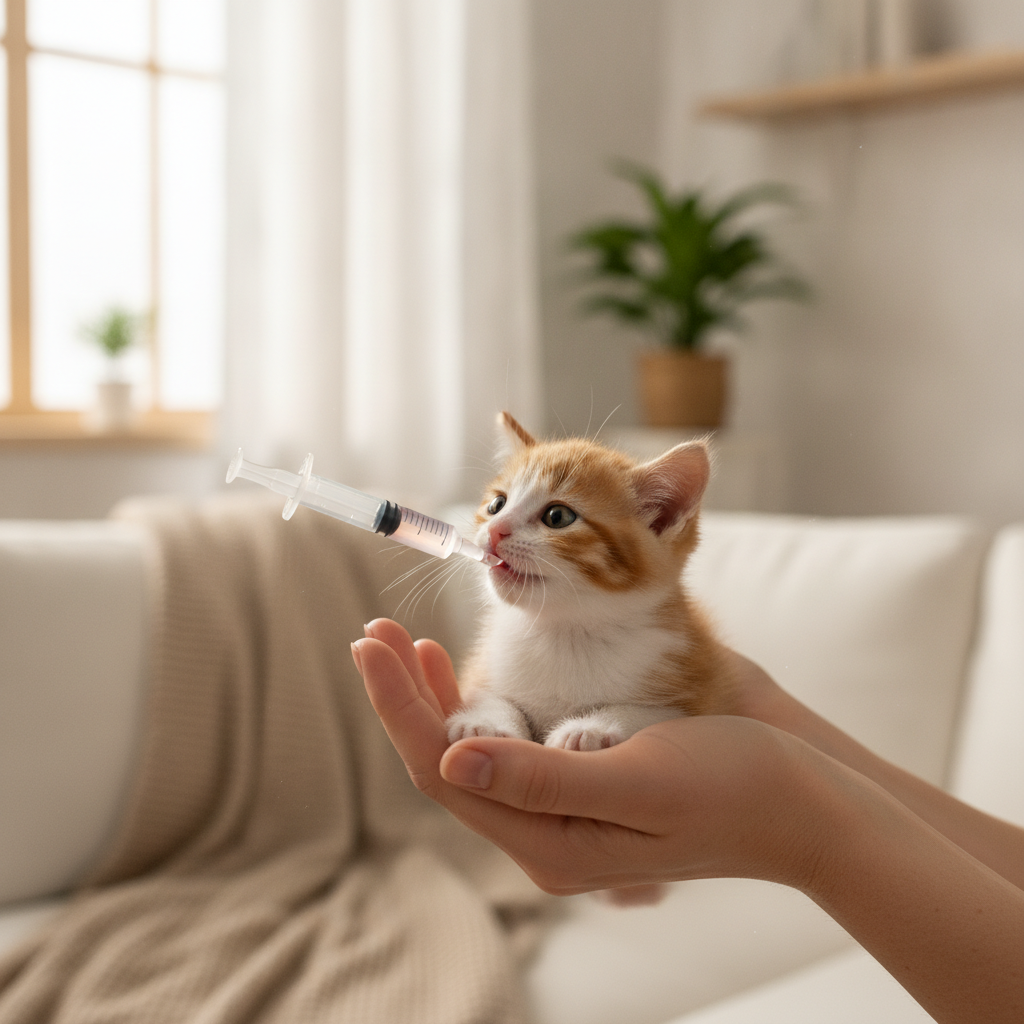
The backbone of the schedule comes from the Companion Animal Parasite Council (CAPC) and ESCCAP, adapted for Malaysia's constant parasite pressure. Kittens get an aggressive fixed schedule; adults shift to a risk-based one.
| Life stage / risk | Age | Deworm how often | Why |
|---|---|---|---|
| Kitten | 2 to 12 weeks | Every 2 weeks | Clears worms passed from the mother before they shed eggs |
| Adolescent | 3 to 6 months | Monthly | High environmental exposure during the exploring phase |
| Adult — low risk (strictly indoor) | 6 months+ | Every 3 months (quarterly) | Baseline against eggs carried into the home |
| Adult — high risk (outdoor / hunts / multi-pet) | 6 months+ | Monthly | Constant reinfection from a contaminated environment |
Note how young it starts: deworming begins at 2 weeks of age, repeating every 2 weeks until 12 weeks, then monthly until 6 months. A nursing queen should usually be dewormed alongside her litter. After 6 months, even the most pampered indoor cat should be on at least a quarterly schedule — in Malaysia's climate, "twice a year" is the bare floor, not the target. Plan the full kitten sequence using our kitten first-year health timeline, and use the deworming schedule tool to set reminders.
Choosing a Dewormer: Ingredients & Products
Dewormers (anthelmintics) work by targeting the worm's biology. Because cats are often infected with several worm types at once, broad-spectrum products that combine ingredients are usually the practical choice. The three workhorse active ingredients:
- Pyrantel (pamoate/embonate) — paralyses roundworms and hookworms so they're passed out in the stool. Poorly absorbed from the gut, so it acts right where the worms live.
- Praziquantel — the go-to for tapeworms; it makes the worm's membrane leaky to calcium, causing paralysis and breakdown.
- Fenbendazole — a broad-spectrum benzimidazole covering roundworms, hookworms, whipworms and some tapeworms.
Common combination products reflect this. A standard Drontal for Cats tablet pairs pyrantel embonate with praziquantel to hit both worms and tapeworms in one dose; per the product summary, it's dosed at one standard tablet per 4 kg of body weight. For cats that refuse tablets, a spot-on like Profender (emodepside + praziquantel) is applied to the skin at the base of the skull and is suitable from 8 weeks of age in kittens over 1 kg.
The single most important rule: dose by current body weight, never by guesswork. Under-dosing leaves worms behind and breeds resistance. Weigh your cat (or have the clinic do it) and confirm the dose — our cat weight calculator helps you track it. Always confirm the product and dose with your vet, particularly for kittens, pregnant queens, or unwell cats.
"But My Cat Never Goes Outside"

The belief that indoor cats don't need deworming is the costliest myth in this whole topic. Indoor living lowers the risk — it doesn't remove it. Sticky, hardy Toxocara and hookworm eggs hitch a ride into your home on shoe soles, bags and clothing, then get deposited on floors your cat walks across and later grooms off its paws. Even potting soil for your indoor plants can harbour roundworm eggs.
Then there's hunting — indoors. Malaysia's warm homes host cockroaches, geckos and the occasional rodent, all of which can carry worm larvae. A cat that pounces on a cockroach or lizard can pick up an infection without ever stepping outside. And the flea connection seals it: if your cat ever has a flea, the risk of tapeworm follows. That's why year-round flea and parasite prevention belongs in the same plan as deworming.
Deworming and Flea Control Are One Job
It's worth stating plainly because so many owners treat them separately: the most common cat tapeworm, Dipylidium caninum, is transmitted almost exclusively through fleas. A cat grooms, swallows an infected flea, and develops a tapeworm. You can deworm perfectly on schedule and still see tapeworm segments reappear if the fleas aren't dealt with. So pair your deworming calendar with consistent flea prevention — our guides to flea and tick prevention and getting rid of an active flea problem cover both sides. You can also run a quick check with the flea & worm checker.
Spotting Worms and Monitoring at Home
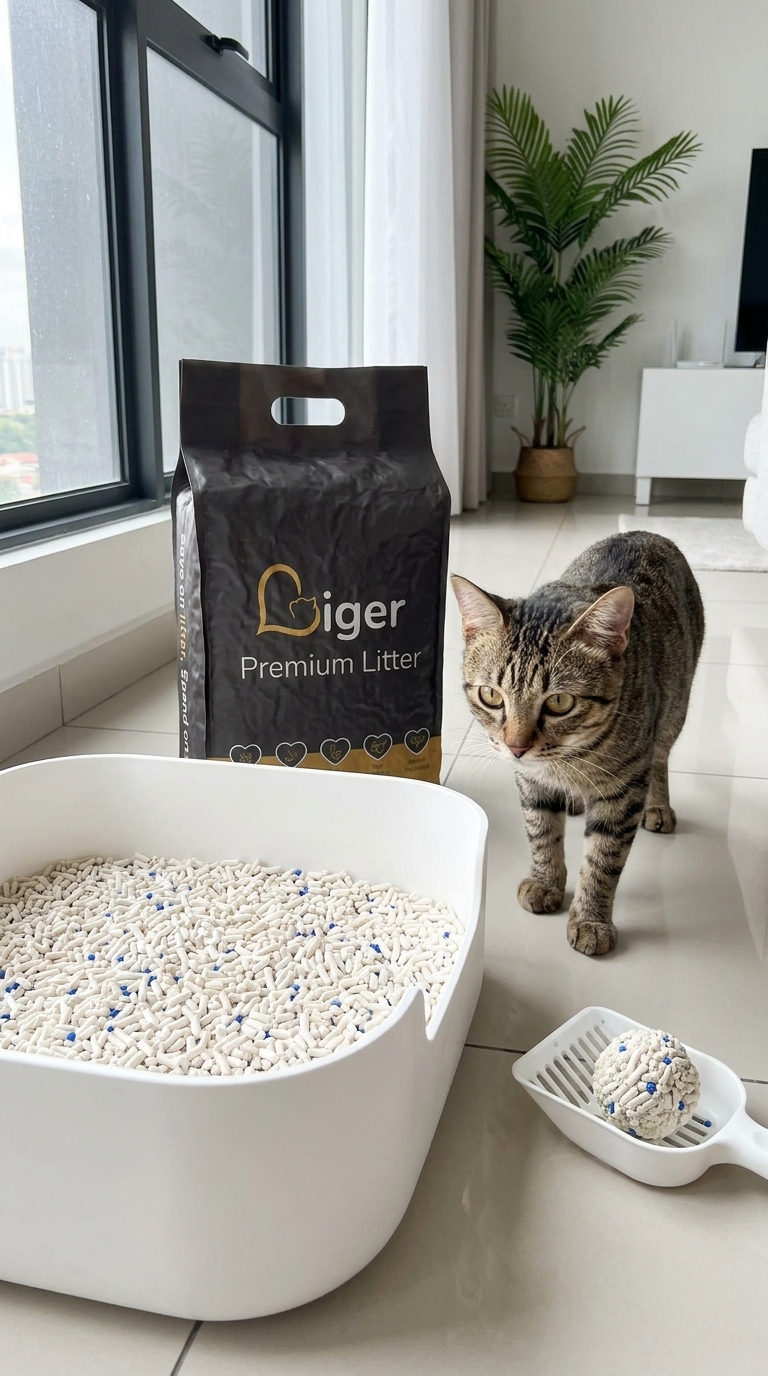
Routine deworming is prevention, but your litter box is the surveillance system. Tapeworm segments look like moving rice grains around the anus or in fresh stool; roundworms can appear spaghetti-like in vomit or faeces; hookworm infection more often shows up as dark, tarry stool or a gradually anaemic, lethargic cat. Many of these signs overlap with the broader warning signs that a cat is sick — when in doubt, get a fresh faecal sample to your vet.
This is exactly where day-to-day litter habits pay off. Spotting a worm segment or a change in stool quality is far easier in a clean, low-dust, well-clumping litter where the waste sits on top and stays intact for inspection. We use Liger Premium Tofu Cat Litter in our own multi-cat home for that reason — the natural soybean pellets clump firmly so a quick daily scoop doubles as a health check, and the low dust keeps things cleaner for cats already dealing with a gut upset. A 2kg pack is RM21.90, scaling to RM169 for the 10-pack (RM8.45/kg, the best value) with free shipping in Peninsular Malaysia (current Liger pricing, as of May 2026). Size your household's supply with the litter calculator, and track stool patterns with the poop frequency checker.
The Bottom Line
Deworm kittens every two weeks from 2 to 12 weeks, monthly to six months, then keep adults on at least a quarterly schedule — monthly if they go outside, hunt, or live with pets that do. Always dose by body weight, choose a broad-spectrum product with your vet, and treat flea control as part of the same job. In a climate that lets parasites breed all year, consistency is what protects both your cat and your family. Next, line it up with your cat's vaccination schedule for a complete preventive plan.