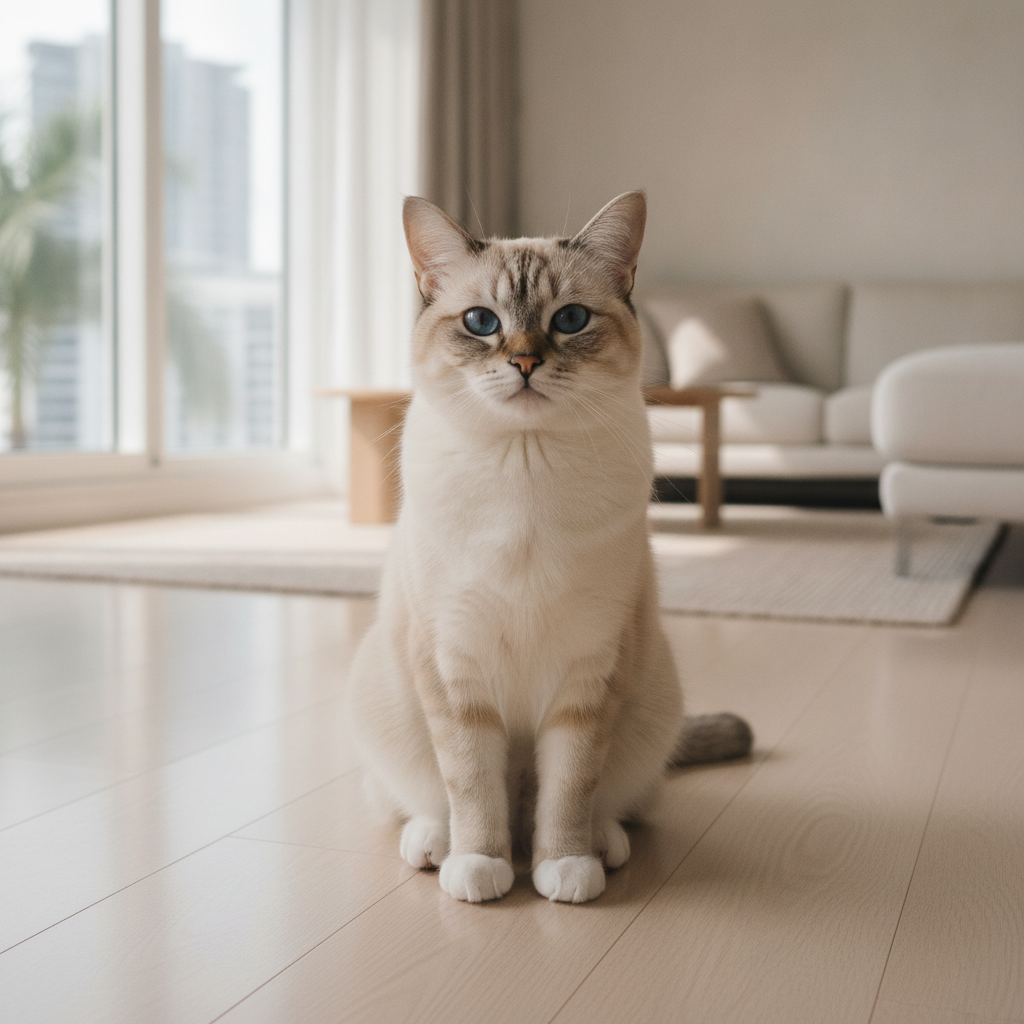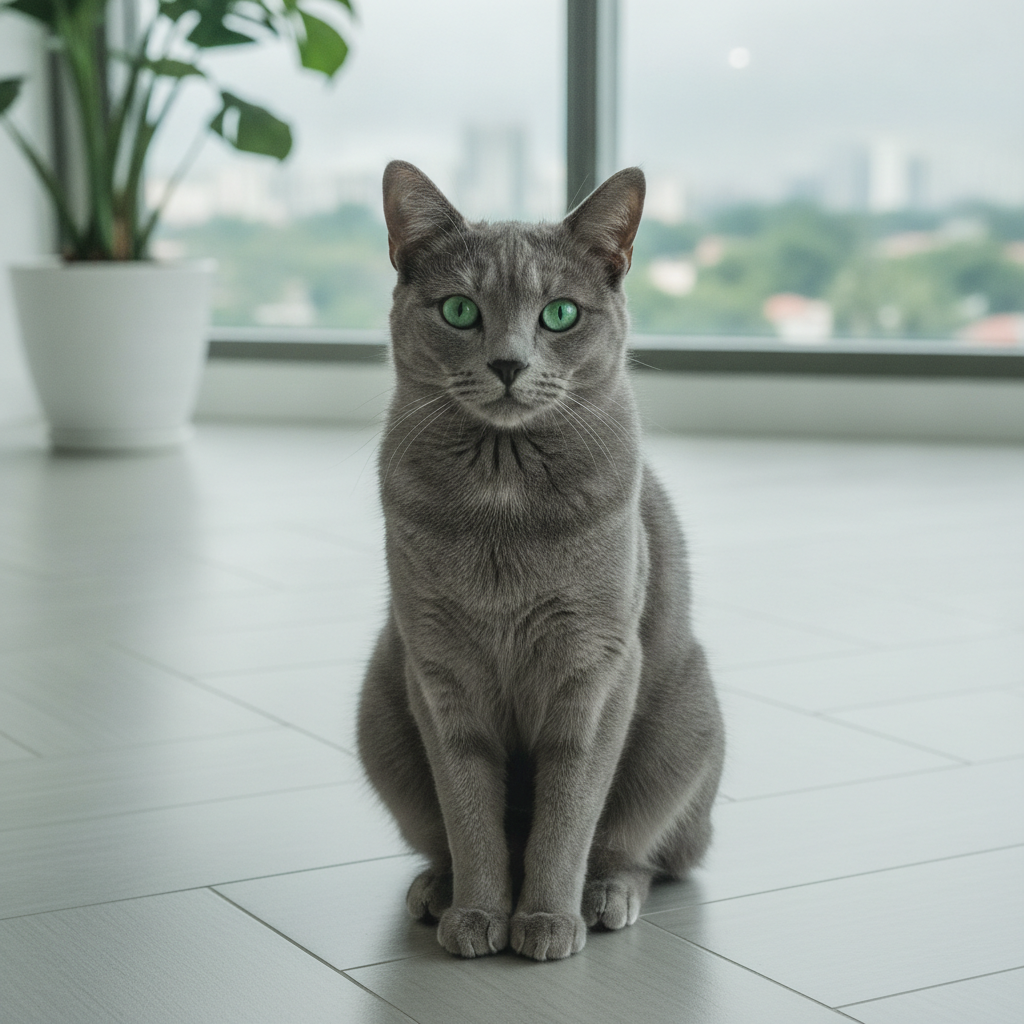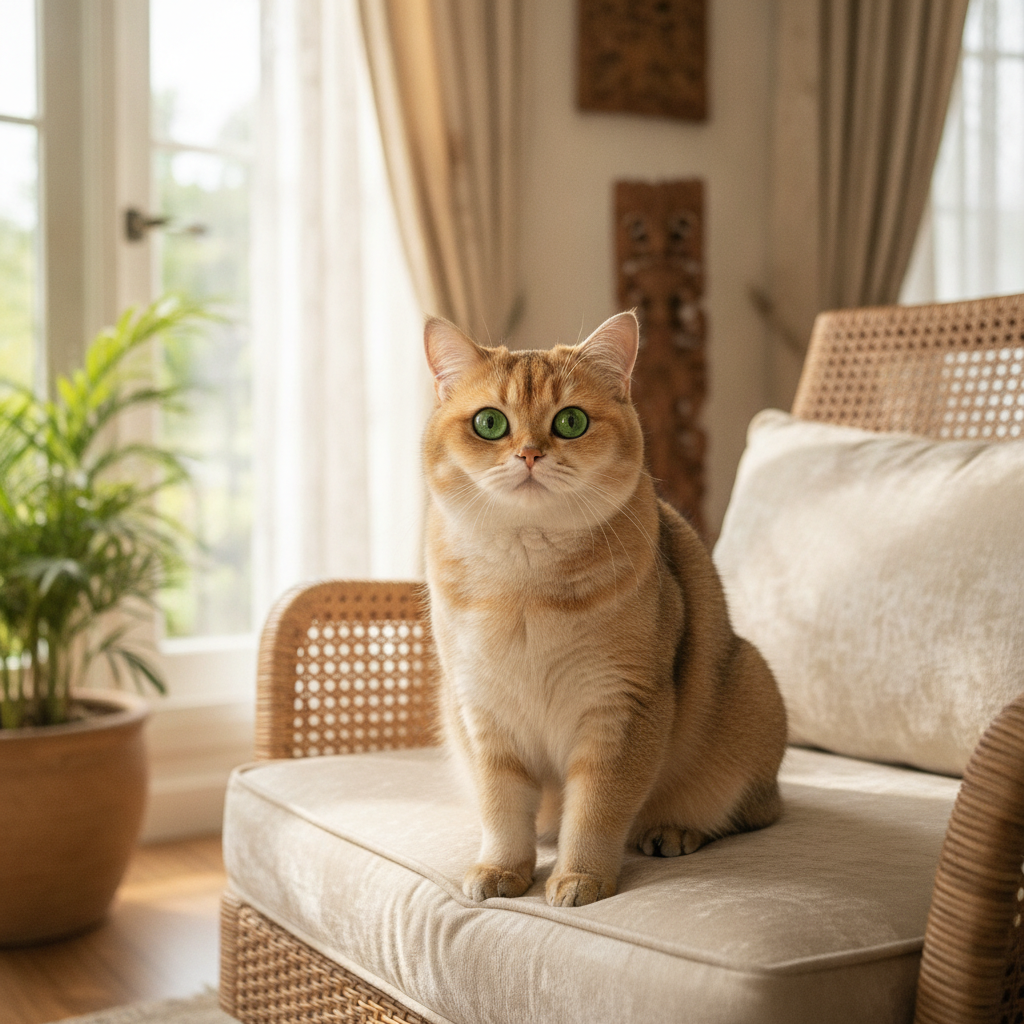
Scroll Malaysian cat Instagram for five minutes and you'll meet one: a round teddy-bear face, big green eyes, and a coat that looks dipped in warm honey. The Golden British Shorthair has exploded in popularity — and with searches for it running into the thousands every month, plenty of would-be owners are wondering what makes this cat so special (and so pricey). Here's the full story: the surprisingly complex genetics behind that golden glow, how it differs from the classic blue "BSH", what it costs, and how to care for one in our climate.
New to the breed entirely? Start with our British Shorthair guide for Malaysia — this article zooms in on the golden variety specifically.
What Exactly Is a Golden British Shorthair?
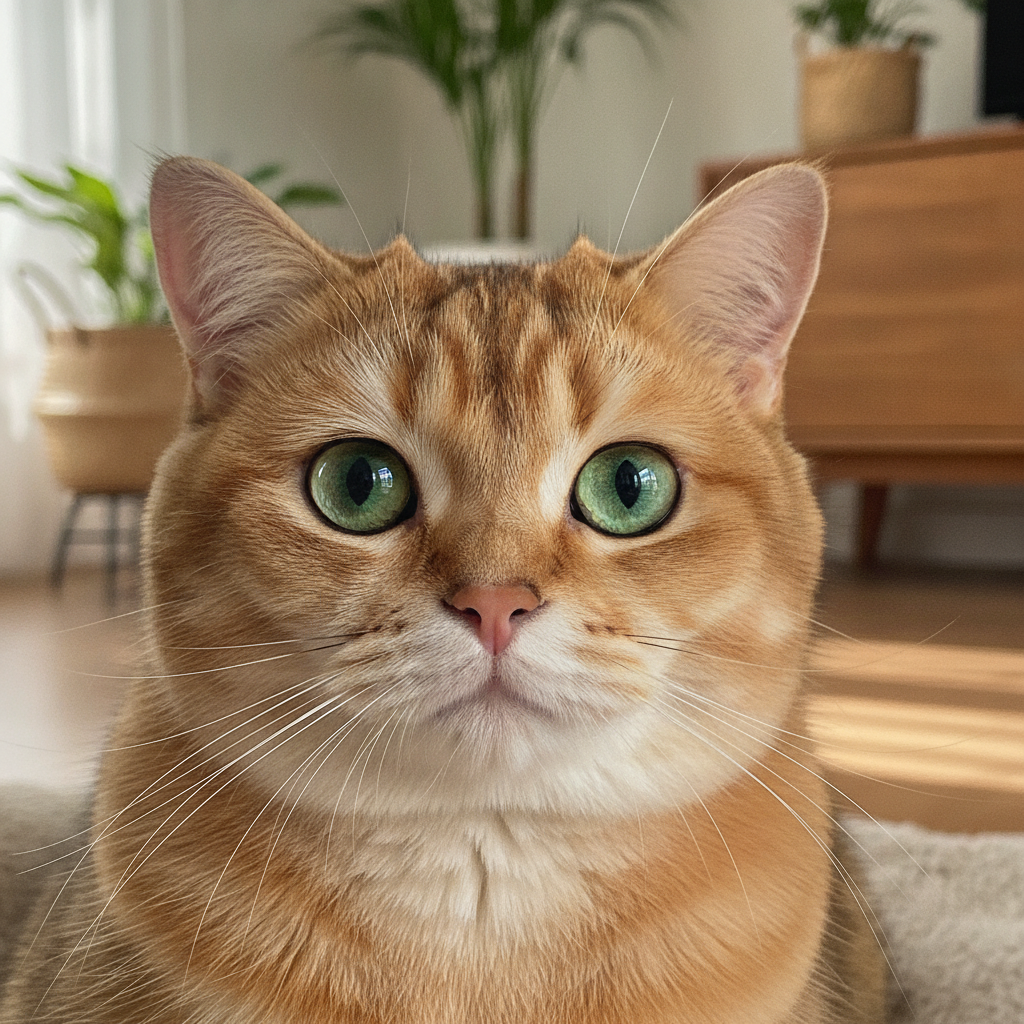
A Golden British Shorthair is the same beloved breed — same stocky build, plush coat and famously calm "four-feet-on-the-floor" temperament — just wearing a spectacular coat colour. Instead of the classic solid blue-grey, a golden has a warm apricot-to-honey undercoat with delicate black tipping on the ends of the hairs, which is what gives it that shimmering, sun-kissed look. The other giveaway is the eyes: goldens are required to have green or blue-green eyes, never the deep copper of a blue BSH. It's not a separate breed and not a different cat in personality — it's a British Shorthair in a rare and gorgeous coat.
The Genetics: Why Golden Is So Rare
Here's the part most sellers gloss over. "Golden" isn't a simple colour — it's a modified tabby pattern that needs three genetic ingredients to line up at once:
- The Agouti gene (A/-) — produces the banded "ticked" hairs all tabbies have.
- The Wideband gene (Wb, linked to the CORIN gene) — widens the warm pale band on each hair and pushes the dark pigment up to just the tip, creating that solid-gold-with-tipping effect.
- No silver Inhibitor gene (i/i) — crucially, the cat must lack the dominant silver gene; that's the only genetic difference between a golden and its silver cousin. The silver gene bleaches the warm tones away, so breeding gold means breeding the silver out.
Because all three have to align, golden litters are hard to produce consistently — which is a big part of why they're rare and expensive. Many golden lines actually trace back to silver breeding programmes where breeders deliberately selected away the inhibitor gene. The colour itself was introduced long ago via Persian outcrossing after the breed's numbers crashed in the World Wars, then refined into a standard by dedicated breeders in Russia and Europe. There's a related quirk worth knowing if you're shopping: in some silver cats the inhibitor gene doesn't fully do its job, letting warm reddish pigment "tarnish" through the silver — a hint of the hidden golden potential underneath, and a reminder of just how closely the two colours are related. None of this changes the cat's care or character one bit; it's purely about the coat, but it explains why a reputable breeder can charge a premium for getting that delicate genetic recipe to land.
Golden Shaded vs Golden Chinchilla
Not all goldens look identical, and the difference comes down to how much dark tipping sits on each hair. Golden Shaded (EMS code ny11) has tipping over roughly the top third of the hair, giving a deeper, more defined golden coat. Golden Chinchilla or Tipped (ny12) has only the faintest dusting of tipping at the very ends, producing the lightest, most ethereal pale-gold look. It's thought the number of Wideband gene copies a cat carries nudges it one way or the other. Both are recognised by major registries like the Cat Fanciers' Association, and newer golden variations keep gaining official status as the colour's popularity grows.
How It Differs from the Classic Blue British Shorthair
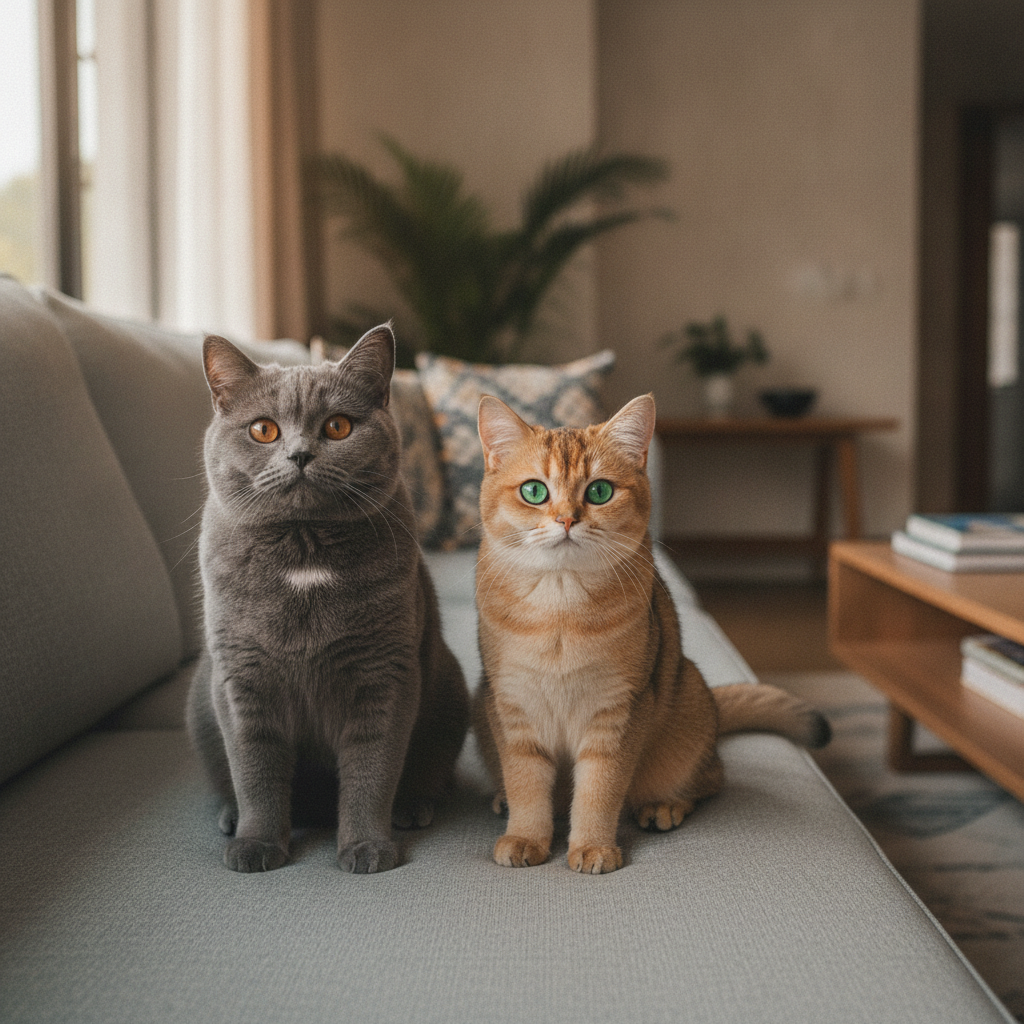
Side by side, the two are easy to tell apart — but only on looks. The classic Blue BSH has a solid, even blue-grey coat and deep copper or gold eyes. The Golden BSH has that warm tipped apricot coat and green or blue-green eyes. Underneath, though, they're the same cat: identical body type, identical grooming needs, and the same gentle, undemanding personality that the breed is loved for. If you adore the BSH temperament and simply prefer the golden look, you're not signing up for any different a pet — just a more expensive coat. For a full head-to-head against another popular breed, see our Persian vs British Shorthair comparison.
The Price Premium: Why Goldens Cost More
Goldens sit firmly at the top end of British Shorthair pricing, and the premium is real. Internationally, golden kittens from reputable breeders typically cost several times more than standard colours, with top show-quality lines commanding the highest prices of all. In Malaysia you'll likewise find goldens priced well above blue BSH kittens. Why? Genuine genetic rarity, surging social-media-fuelled demand, and — importantly — the cost of ethical breeding: a responsible breeder invests in health screening (more on that below) and that investment is baked into the price. Treat a suspiciously cheap "golden BSH" with deep suspicion; it's a classic target for backyard breeders cutting health corners and selling under-socialised or unwell kittens to cash in on the trend. Remember too that the social-media glow is doing some of the selling — that flawless feed photo is a styled, well-lit moment, not a promise about the cat's health or the breeder's ethics. Slow down, ask the screening questions, and meet the kitten and its parents in person before any money changes hands. For how the whole breed's pricing stacks up, see our cat breed price guide.
Health: Same Teddy Bear, Same Watch-Points
Good news and a caution: a golden coat does not make a cat any healthier or any sicker — goldens carry exactly the same hereditary risks as every British Shorthair. The two to know are Hypertrophic Cardiomyopathy (HCM), a heart-muscle disease with a reported prevalence around 8.5–15% in the breed, and Polycystic Kidney Disease (PKD). VCA Hospitals explains how serious HCM can be, which is exactly why the premium you pay should buy peace of mind: insist on a breeder who does annual echocardiogram heart screening and DNA tests for PKD, and asks to see the results. That paperwork is the single best protection for your cat — and your wallet — over its lifetime. PetMD's British Shorthair profile lists the same hereditary concerns, and a useful rule of thumb applies: if a breeder gets defensive when you ask to see HCM and PKD screening results, walk away. The breed is also prone to obesity, so the everyday job of portion control and play matters just as much as the genetics — a fat golden is a golden heading for joint and heart trouble it didn't need.
Care, Grooming and That Coat in Malaysia's Heat
Caring for a golden is the same as any British Shorthair, with two Malaysia-specific notes. First, grooming: that dense double coat only needs a brush once or twice a week (more during shedding seasons) — it's low-maintenance compared to a Persian, and the golden colour actually deepens and develops as a kitten matures, so don't panic if a young kitten looks paler than the parents. Second, the heat: like all British Shorthairs, that plush coat means a golden really should live in an air-conditioned home, as Royal Canin notes the breed prefers cooler comfort. Keep it indoors, keep it cool, feed a good diet to avoid the breed's tendency to gain weight, and brush weekly — that's the whole routine.
Keeping a Premium Cat's Space Clean
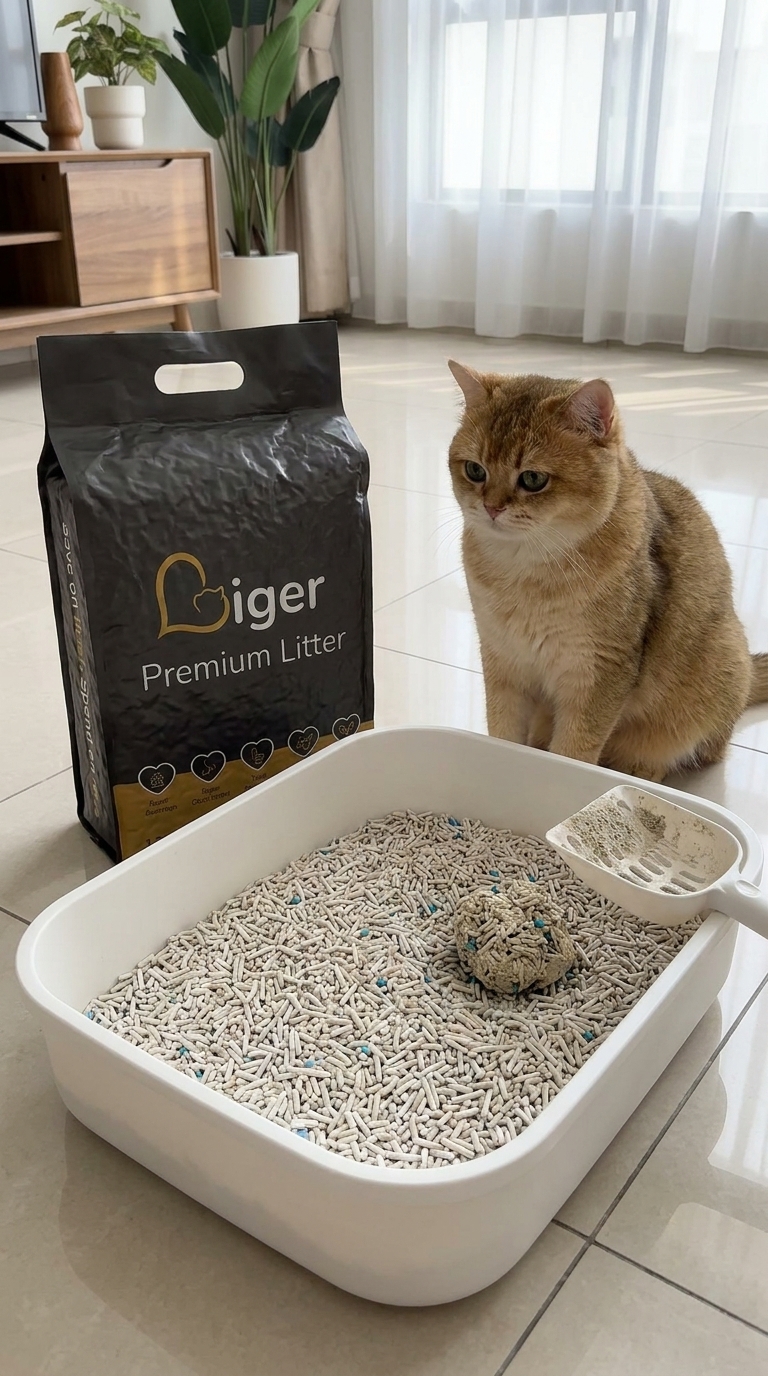
When you've invested in a pampered indoor golden, the small daily details matter — and litter is one of them. A pale, plush coat shows every speck, and dust from a cheap clay litter both clings to that fur and recirculates in a sealed, air-conditioned room. A clean, low-dust litter keeps both your cat and your home looking their best. Liger Premium Tofu Cat Litter is made from natural plant starch, clumps firmly so you scoop cleanly, controls odour at the source, and is genuinely low-dust — less to settle on that golden coat or float through your air-con. It's flushable and Halal too, for an easy, tidy routine befitting a cat this photogenic.
The economics are kind even for a premium pet: a single 2 kg pack is RM21.90, while the 10-pack (20 kg) works out to RM8.45/kg — about 23% cheaper per kilo, with free shipping across Peninsular Malaysia (current Liger pricing, as of 2026). Work out exactly what your cat needs each month with the litter calculator. Because however much you paid for that golden glow, the everyday care — good food, a cool room, and a clean tray — is what keeps it shining. Compare it against every other option in our cat breeds in Malaysia guide before you commit — because a golden coat is a wonderful bonus, but it should never be the only reason you choose a cat to share the next fifteen years with.