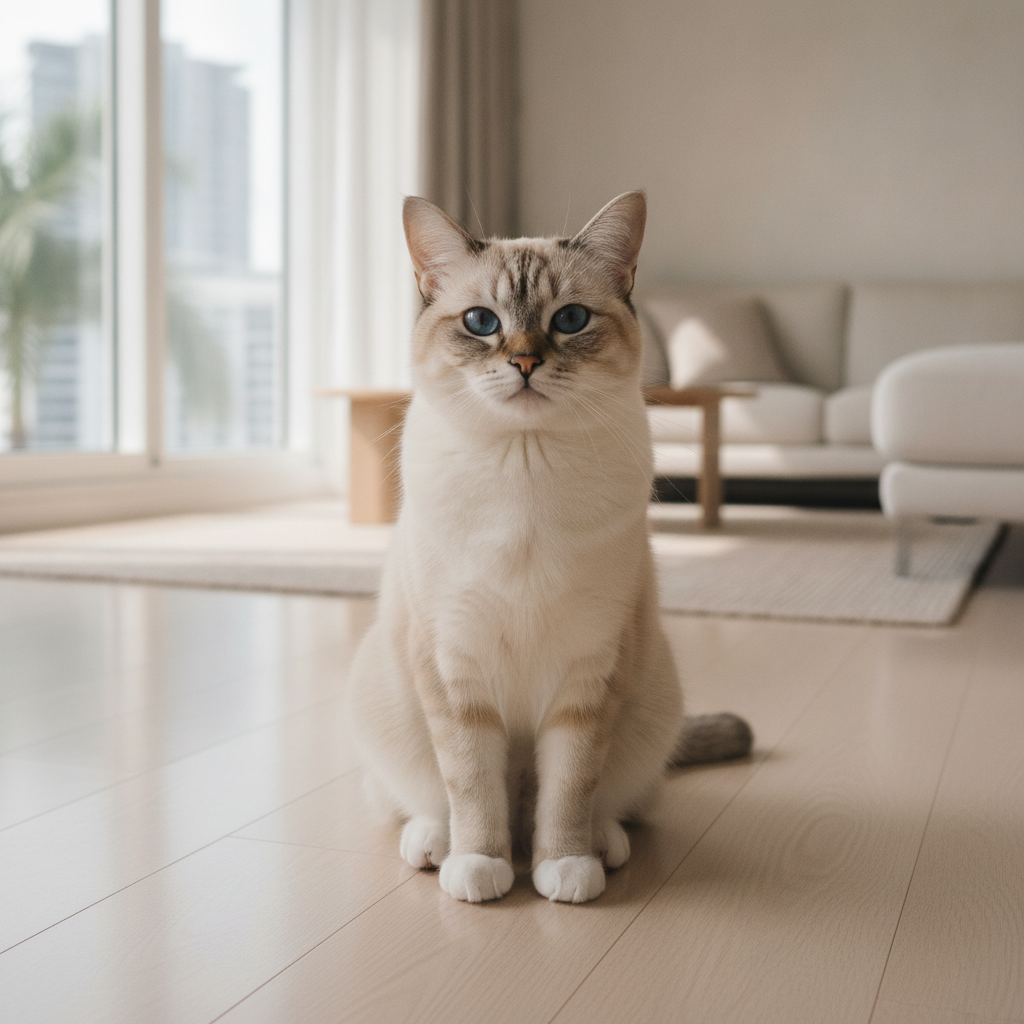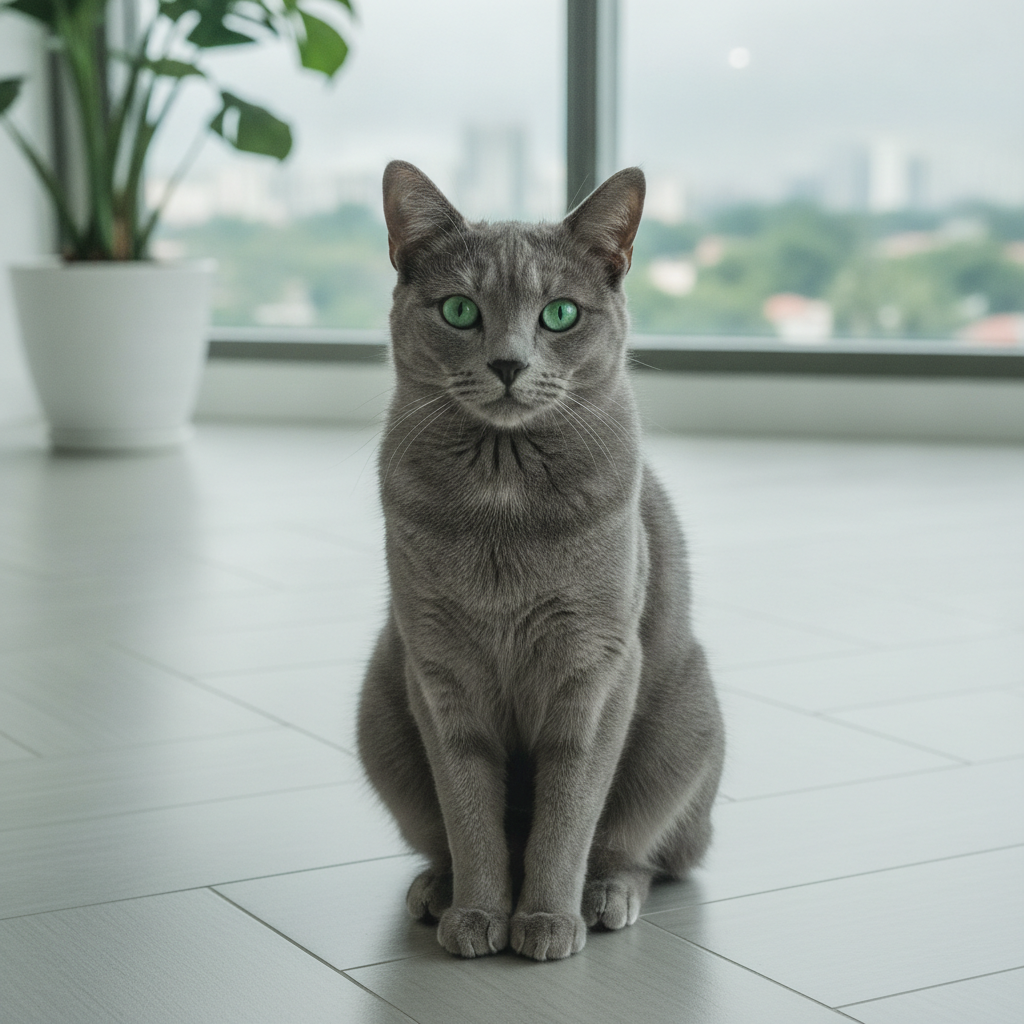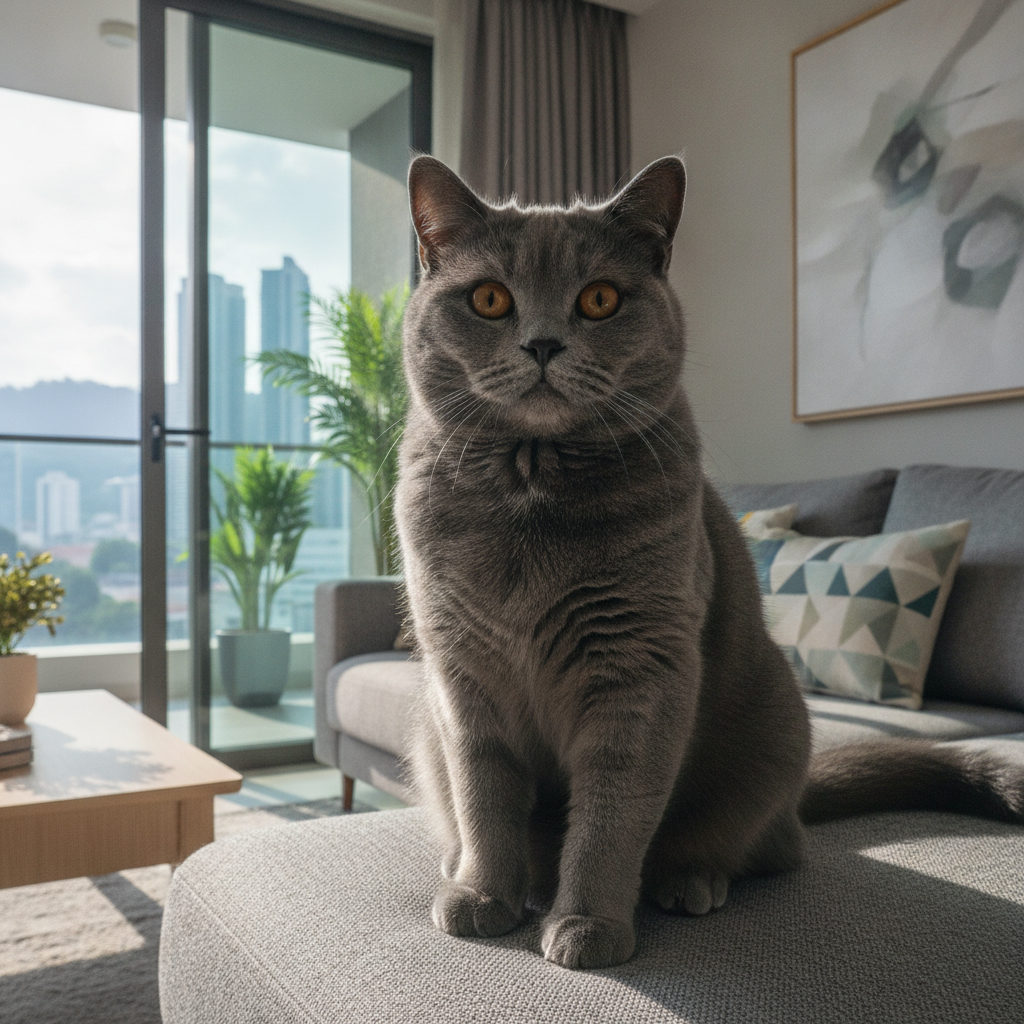
If Malaysia had a national pedigree cat, it would be the British Shorthair. That round face, those big copper eyes, the dense "British Blue" coat, and a famously calm, undemanding personality have made it the country's most popular purebred. It's a brilliant choice for apartments and first-time owners — but "easy-going" doesn't mean "no maintenance." This breed has two big vulnerabilities in Malaysia: the heat, and its own appetite. Here's the honest guide.
Comparing breeds? See where the British Shorthair fits in our complete cat breeds in Malaysia guide.
Why British Shorthairs Rule Malaysia
The British Shorthair has been a fixture since the local cat fancy was formalised in 1971. The appeal is obvious: they're calm, independent, sturdy, and affectionate without being clingy — happy to share your space rather than demand your lap. The breed's history as Britain's oldest natural cat breed is well documented. As Royal Canin describes, they're easygoing and patient, which makes them excellent with children and other pets and well-suited to apartment living. They're a low-drama cat for a busy household — which is exactly why they top the charts here.
Keeping That Plush Coat Cool
That gorgeous double coat was built for the cool British Isles, not the Malaysian tropics. In our heat, a British Shorthair is at real risk of overheating, so a consistently cool, ideally air-conditioned indoor environment matters more than owners expect.
Learn this one rule: a cat panting is never normal. Unlike dogs, cats don't pant to cool down routinely — open-mouth breathing in a British Shorthair signals heat stress or a medical emergency and warrants an immediate vet call. Provide cool retreats, fresh water everywhere, and never leave one in a non-air-conditioned room during the hottest part of the day.
The #1 Risk: Obesity and Portion Control
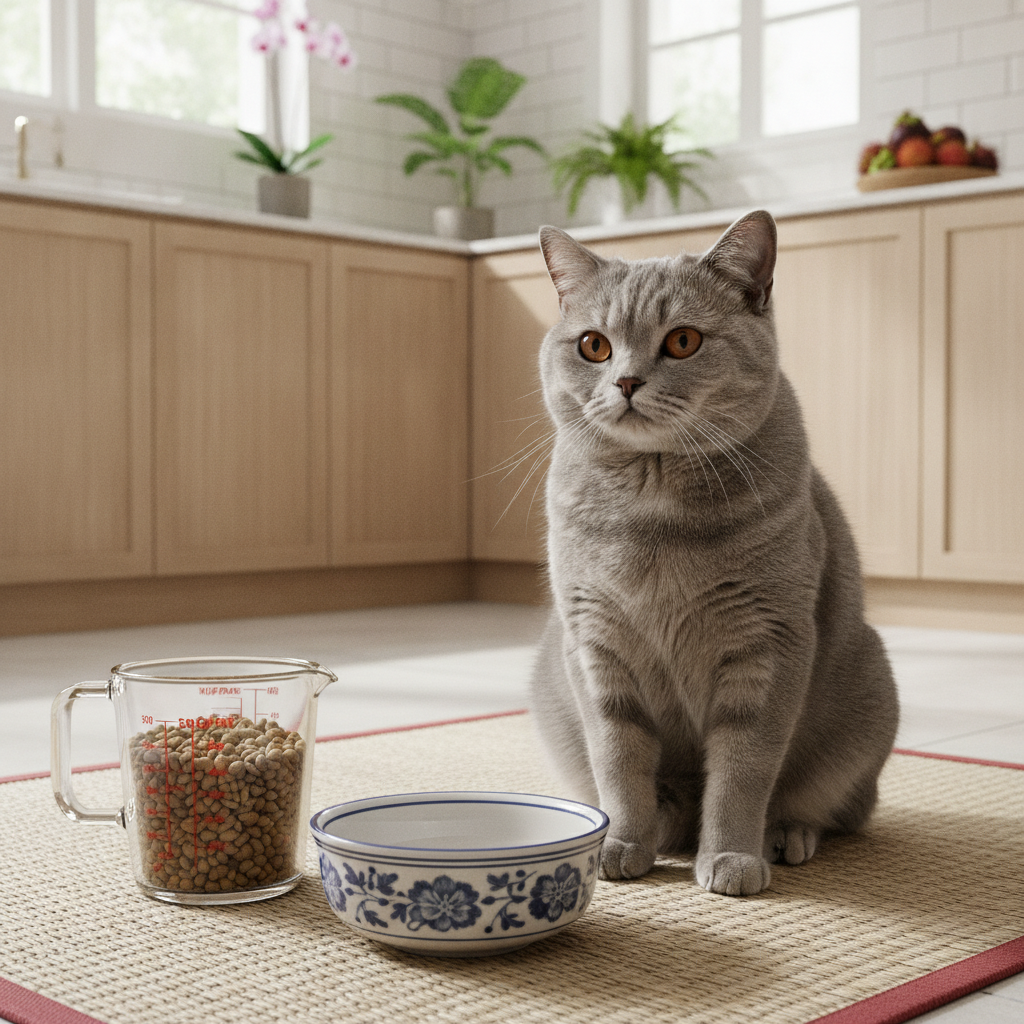
Here's the issue every British Shorthair owner underestimates: obesity is the breed's most common preventable health problem. Combine a naturally placid, low-energy temperament with a hearty appetite and free-feeding, and the weight piles on fast. And obesity isn't cosmetic — it drives diabetes, joint problems, and a shortened life.
The fix is strict portion control, not free-feeding. Aim to keep your cat within a healthy range (roughly 5–8kg for males, 3.5–5.5kg for females), measure meals rather than topping up a bowl, and keep them active with play. Our cat weight calculator helps you check where your cat sits, and our guide on how much to feed your cat sets sensible portions. A British Shorthair will happily eat itself unhealthy — your job is to be the gatekeeper.
Health Screening: HCM and PKD
The breed is genetically predisposed to two conditions worth screening for. Hypertrophic Cardiomyopathy (HCM) — the most common feline heart disease — is significant enough in British Shorthairs that we wrote a dedicated British Shorthair heart health guide; VCA Hospitals explains how it thickens the heart muscle, and an echocardiogram screening runs about RM300–600. Polycystic Kidney Disease (PKD), which VCA Hospitals explains causes kidney cysts, can be checked via ultrasound for around RM150–350, and good lifelong hydration helps protect the kidneys (see getting your cat to drink enough water).
The takeaway: buy only from a breeder who provides health clearances for the parent cats. With good care and screening, a British Shorthair can live a long 12–20 years — see our cat lifespan by breed guide.
Grooming, Shedding and Litter
Good news after all those warnings: grooming is easy. The short, dense coat needs only weekly brushing most of the year (a bit more during seasonal sheds) to remove loose fur and reduce hairballs. As WebMD notes, they're low-maintenance on the coat front — one reason they're so beginner-friendly.
On litter, a British Shorthair's needs are straightforward, but two things help. Because they're prone to weight gain and can get a little lazy about the litter box, keep it spotless and easy to access so there's no excuse to avoid it. And a low-dust, firmly-clumping litter keeps cleanup quick and lets you monitor their output (useful for catching the urinary or kidney issues the breed can face). A natural tofu litter like Liger Premium Tofu Cat Litter is low-dust and clumps tightly; size your household's monthly need with our litter calculator.
Price and Avoiding Scams in Malaysia (2026)
For 2026, a pet-quality British Shorthair from a registered breeder runs about RM2,500–6,000, with show-quality animals exceeding RM12,000. Rare colours like golden command a premium.
The high demand has unfortunately bred scams. The clearest red flag: a "British Shorthair" advertised under RM1,200 is highly suspect — likely no health screening, a misrepresented mixed kitten, or an outright scam. Protect yourself: deal only with breeders registered with bodies like CFA or TICA, insist on HCM and PKD clearances for the parents, meet the kitten in person, and never pay a deposit on a cat you've only seen in photos. For how the British Shorthair compares to every other breed on price and lifelong cost, see our cat breed price guide for Malaysia.
The British Shorthair earns its #1 spot: calm, handsome, hardy, and genuinely easy to live with. Keep it cool, keep it lean, screen for the breed's heart and kidney risks, and you'll have a dignified, affectionate companion for up to two decades. Still choosing? Browse the full Malaysia cat breeds guide to be sure it's your match.