Walk through any Malaysian neighbourhood and you'll meet cats everywhere — the street-smart kucing kampung sunning itself by the kedai runcit, and, increasingly, plush pedigrees peeking out of condo windows. Cat ownership here has quietly boomed; cats are now Malaysia's second most popular pet, and many of us proudly call ourselves "cat parents" to our anak bulu.
But choosing a cat is a 12-to-18-year commitment, and not every breed thrives in our hot, humid climate or compact homes. This guide walks through the most popular cat breeds in Malaysia for 2026 — real RM prices, honest temperament and health notes, and which ones actually cope with the tropical heat. Use it as your map; each breed links to a deeper guide.
Malaysia's Cat Landscape: Kampung Cats and Pedigrees
Malaysia's cat scene splits into two worlds. On one side is the kucing kampung — the local domestic shorthair, a mixed-ancestry cat celebrated for being hardy, climate-adapted, and endlessly characterful. On the other is the growing market for pedigrees like the British Shorthair and Persian, often seen as a modern lifestyle statement.
Pedigree cat culture here isn't new — the Malaysia Cat Club was founded back on 17 November 1971, when owning a Persian or Siamese was an elite hobby. What's changed in 2026 is the "pet humanisation" trend pushing owners to spend more on premium food, healthcare and enrichment, alongside a powerful "adopt, don't shop" movement that has rightly elevated the humble kampung cat. Both paths are valid — this guide gives equal weight to both.
The 10 Most Popular Cat Breeds in Malaysia
Based on search demand, breeder activity and market trends, here are the ten cats Malaysians look for most — roughly in order of popularity:
- Kucing Kampung (Domestic Shorthair) — the most common cat overall: hardy, climate-proof, low-cost, and wonderfully varied in personality.
- British Shorthair — the #1 pedigree: a stocky, plush, easy-going cat with that famous "British Blue" coat, described by Royal Canin as calm and undemanding. Great for apartments. Read our full British Shorthair guide for Malaysia.
- Persian — a long-coated, flat-faced classic; sweet and quiet but high-maintenance and heat-sensitive. See the Persian care guide for Malaysia.
- Bengal — a striking, leopard-spotted bundle of energy that needs serious daily play.
- Maine Coon — the "gentle giant", huge and friendly. Details in our Maine Coon guide for Malaysia.
- Scottish Fold — those folded ears come from a genetic condition that causes lifelong joint problems (more below).
- Ragdoll — famously placid and affectionate; goes limp when cuddled. See the Ragdoll guide for Malaysia.
- Siamese — intelligent, intensely social and very vocal.
- Munchkin — short-legged and cute, but the mutation carries spinal/joint risks.
- Sphynx — the hairless specialty cat, needing regular bathing and sun protection.
Not sure what you've already got? If you adopted a mixed kitten and are curious about its heritage, our cat breed identifier can give you a fun, educated guess.
How Much Each Breed Costs in Malaysia (RM)
Acquisition cost is where the two worlds diverge most sharply — a pedigree can cost more than 30× a kampung cat's adoption fee. These are typical 2026 ranges; lineage, age, colour and breeder reputation all move the number.
| Breed | Typical price (MYR) |
|---|---|
| Kucing Kampung (adoption) | Free – RM500 |
| Siamese | RM1,500 – RM4,000 |
| Persian | RM800 – RM5,000 |
| Bengal | RM900 – RM5,000 |
| Munchkin | RM2,000 – RM5,000 |
| Sphynx | RM3,000 – RM8,000 |
| Scottish Fold | RM2,000 – RM8,000 |
| Ragdoll | RM3,500 – RM10,000 |
| British Shorthair | RM1,200 – RM12,000 |
| Maine Coon | RM3,000 – RM15,000 |
Remember the sticker price is the small part. Pedigrees often carry higher lifelong costs through grooming and breed-specific health conditions. For the full breakdown — including ongoing annual upkeep and what drives the price — see our cat breed price guide for Malaysia 2026, or estimate your own with the cat breed cost calculator.
The Tropical Heat Test: Which Breeds Cope
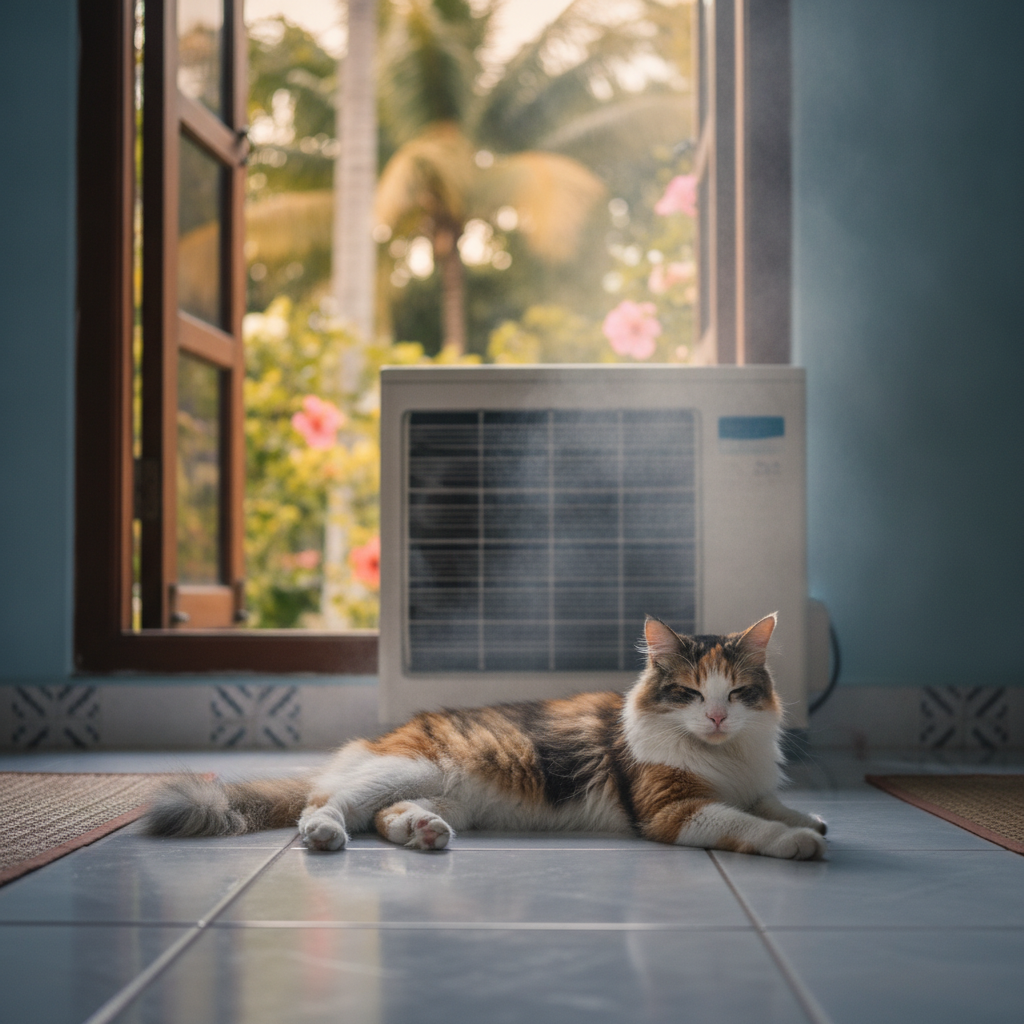
This is the question most overseas breed guides completely ignore — and it's the one that matters most here. Malaysia is hot and humid year-round, and some breeds simply aren't built for it.
Long-haired breeds — Persian, Maine Coon, Ragdoll — carry dense, insulating coats that evolved for cold climates. In our heat they're prone to overheating, and for these cats air-conditioning is realistically a necessity, not a luxury.
Flat-faced (brachycephalic) breeds like the Persian face a double risk. Their squashed facial structure can cause Brachycephalic Obstructive Airway Syndrome (BOAS), and because cats cool themselves partly by panting, heat and humidity make those breathing difficulties dangerous — raising the risk of heatstroke, as veterinary resources like Joii Pet Care explain.
The clear winners for our climate are short-coated, longer-muzzled cats: the Siamese, Bengal, Sphynx (with sun protection) and — best of all — the kucing kampung, which is genetically tuned to exactly this environment. If you set your heart on a fluffy breed, just go in clear-eyed about the cooling and grooming commitment.
Apartment and Condo Suitability
Most Malaysians keep cats in apartments, and the good news is that most popular breeds adapt well — with caveats. Low-to-moderate-energy cats like the Persian, Ragdoll and British Shorthair are natural apartment dwellers.
The high-energy crowd needs more from you. A Bengal demands 30–60 minutes of interactive play daily or it turns destructive; a Maine Coon needs vertical space and climbing structures for its size; a Siamese needs near-constant social interaction. Whatever the breed, an under-stimulated indoor cat is an unhappy one — our guide to indoor cat enrichment in a Malaysian condo covers how to keep any cat busy in tight space. Bringing a cat into a home that already has a dog? Read cats and dogs living together first.
Health and Ethics: What Responsible Owners Should Know
Some of the most "Instagrammable" breeds carry built-in suffering, and a responsible buyer should know this before falling for a photo.
Every Scottish Fold's folded ears come from osteochondrodysplasia (SFOCD) — a cartilage and bone disorder that causes progressive, painful arthritis in every cat with the trait, which is why charities like Cats Protection discourage breeding them. The Munchkin's short legs similarly stem from a mutation linked to spinal and joint problems. Even the popular plush breeds have predispositions: British Shorthairs, Ragdolls, Maine Coons, Bengals and Sphynxes are all prone to Hypertrophic Cardiomyopathy (HCM), the most common feline heart disease (WebMD flags it specifically in large breeds) — we cover it in depth in our British Shorthair heart health guide.
The encouraging flip side: mixed-breed cats, thanks to their wider gene pool, tend to live longer — around 14 years versus about 12.5 for purebreds. You can compare typical lifespans in our cat lifespan by breed guide. As one veterinarian quoted by PetMD put it, "the priority when picking a new pet should always be to ensure it will have a healthy, happy life as free from pain as possible."
Adopt or Shop? The Case for the Kucing Kampung
In Malaysia, the buy-vs-adopt decision can't be separated from the country's large stray population. Adopting a kucing kampung from a shelter — often for a small fee covering vaccination and sterilisation — directly relieves that pressure and gives a deserving cat a home.
And practically, the kampung cat is hard to beat: genetically diverse (so less prone to inherited disease), perfectly heat-adapted, low-grooming, and every bit as loving. Three of our own crew — Ping'An, Lucky and our tabby Tiger — are proof that "free" cats make extraordinary companions. None of this is to shame anyone who buys a pedigree; it's simply to say the local cat deserves a serious look first.
Whatever You Choose: Setting Your Cat Up to Thrive
Breed determines a few things — coat care, energy, heat tolerance — but the foundations of a happy cat are universal. Whichever cat joins your family, you'll need the same starter kit: a good diet, a vet you trust, enrichment, and a clean, well-placed litter setup. Our new cat owner checklist walks you through everything for the first few weeks.
Litter deserves a special mention, because it's the one chore you'll do every single day — and the right choice changes with the cat. Long-haired breeds like Persians and Maine Coons track litter into their coats and across the floor, so a low-dust, low-tracking litter makes a real difference; a natural, firmly-clumping option such as Liger Premium Tofu Cat Litter keeps grooming and cleanup manageable, and being plant-based it's gentler if a curious cat investigates it. Work out how much your household will go through with our litter calculator.
Choosing a cat in Malaysia is a wonderful decision — just make it with your head as well as your heart. Match the breed to your home, your climate and your honest capacity to care, and you'll have a companion for the next decade and more. Whether that's a show-quality Ragdoll or a rescued kampung kitten, the love you'll get back is exactly the same.