"How much is a cat?" is the first question most Malaysians ask — and the most misleading. The sticker price on a kitten is just the deposit on a 12-to-18-year commitment. This guide gives you the real numbers for 2026: what each popular breed costs to buy in Ringgit, exactly what makes the same breed swing by thousands, what adoption costs instead, and the bigger figure almost nobody mentions — the annual cost of actually keeping a cat fed, littered, and healthy.
For each breed's temperament and care, pair this with our complete cat breeds in Malaysia guide.
What a Cat Costs in Malaysia 2026: The Quick Answer
Two numbers matter, and they're very different:
- Upfront (acquisition): from under RM300 to adopt a healthy kucing kampung, up to RM17,000+ for a champion-lineage pedigree.
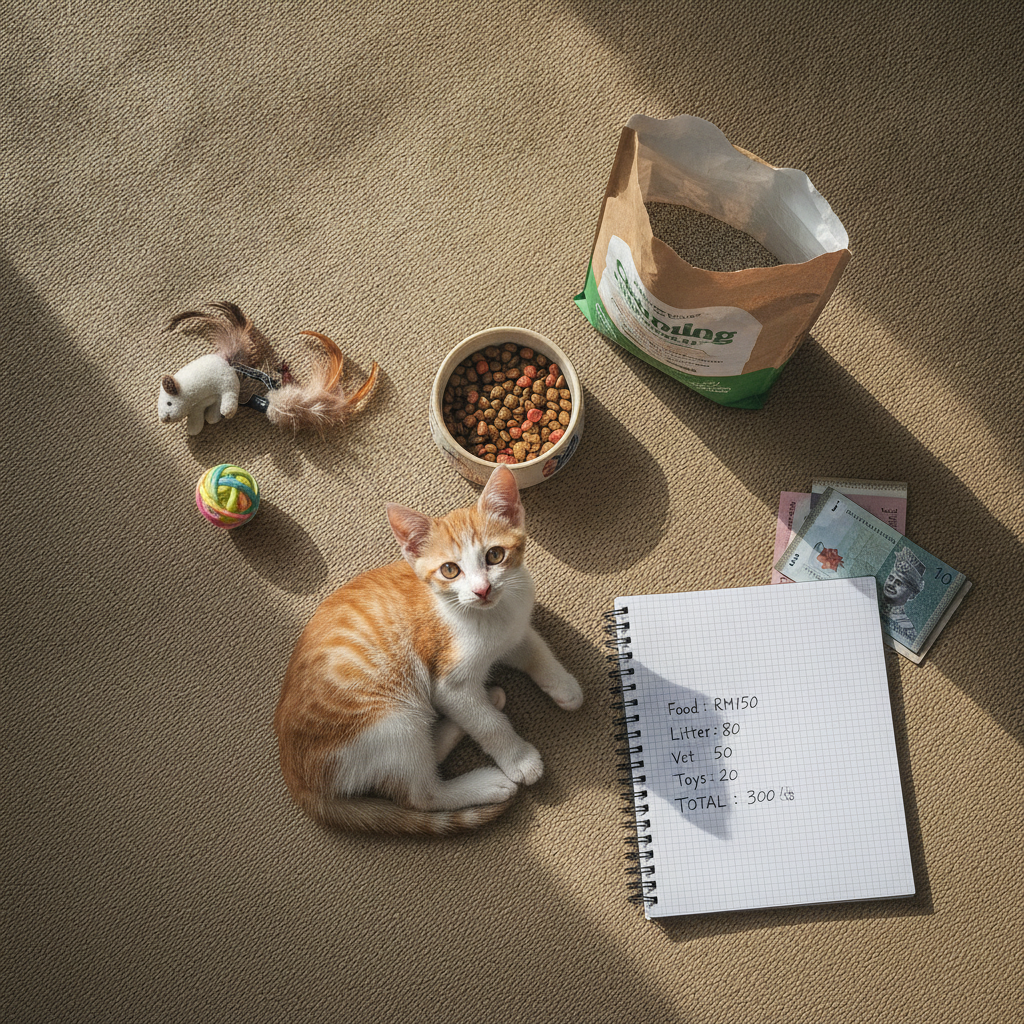
- Ongoing (per year): roughly RM900–5,550 for routine food, litter and vet care for one cat — every year, for life — before any emergencies.
There's also a one-time setup cost in the first weeks — a carrier, a litter box and litter, food and water bowls, a scratching post, a bed, toys, and the first vet visit. For a sensible starter kit that's typically a few hundred Ringgit, though you can spend far more on fancy cat trees and automatic gadgets. It's a small slice of the lifetime total, but worth planning so the early weeks aren't a scramble.
Pet prices are climbing too: driven by inflation and the "pet humanisation" trend, purebred kitten prices are projected to rise 10–20% by 2026. Budget for the lifetime, not the kitten.
Purebred Prices, Breed by Breed (RM)
Here are the projected 2026 acquisition ranges for the nine most popular purebreds in Malaysia, from a registered breeder:
| Breed | 2026 price (MYR) | Full guide |
|---|---|---|
| British Shorthair | RM2,500 – 6,000 | BSH guide |
| Persian | RM800 – 5,000 | Persian guide |
| Ragdoll | RM3,000 – 14,000 | Ragdoll guide |
| Maine Coon | RM3,000 – 17,000+ | Maine Coon guide |
| Bengal | RM3,000 – 8,000 | Bengal guide |
| Sphynx | RM2,500 – 7,500 | Sphynx guide |
| Munchkin | RM2,000 – 5,000 | Munchkin guide |
| Siamese | RM800 – 3,000 | Siamese guide |
| Exotic Shorthair | RM2,000 – 6,000 | Exotic guide |
The Maine Coon and Ragdoll sit at the top; the Siamese and Persian can be surprisingly affordable at the entry level. Bear in mind these are ranges from reputable sources — the same breed will be cheaper from a backyard breeder and dearer for a show-quality or rare-colour kitten, which is exactly what the next two sections unpack. Want a tailored estimate including setup and first-year costs? Try our cat breed cost calculator.
What Drives the Price: Lineage, Quality and Breeder
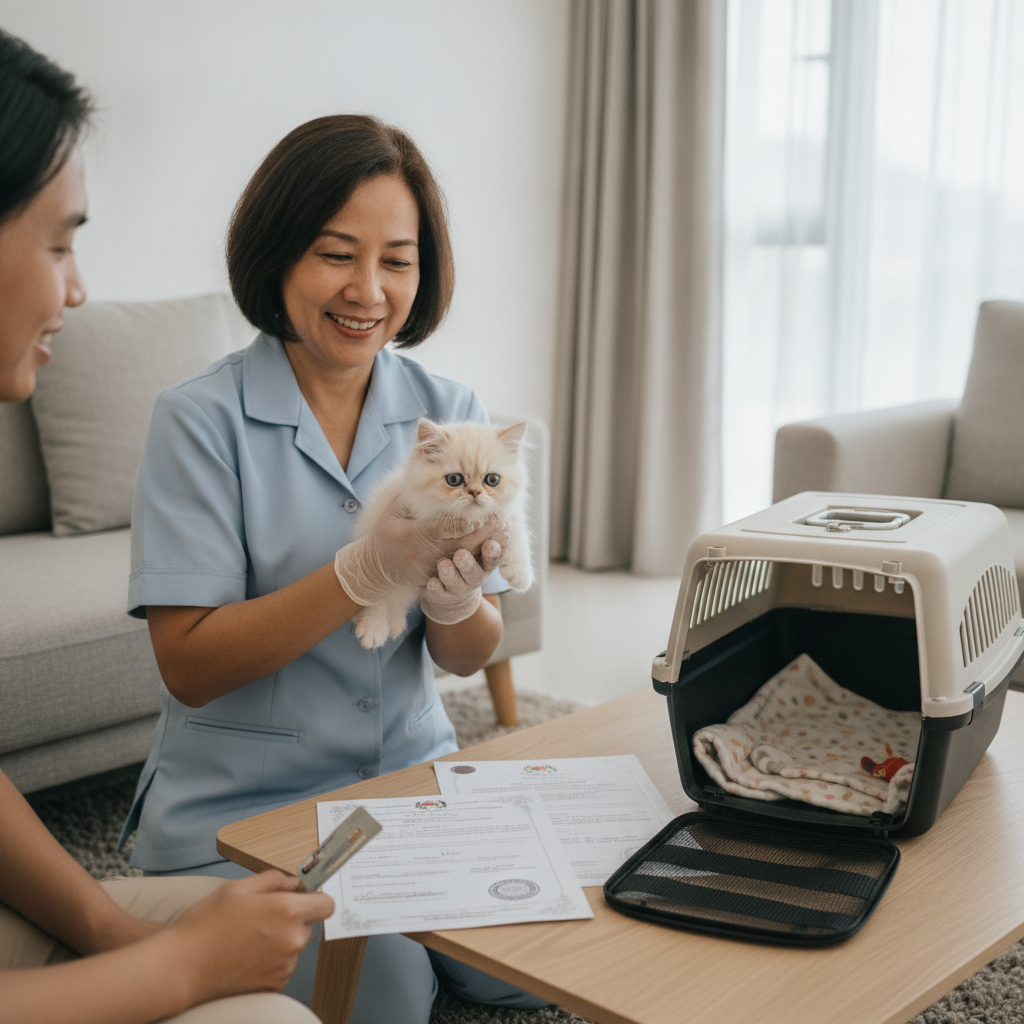
Why does one British Shorthair cost RM2,500 and another RM12,000? Three factors do most of the work.
Pedigree papers. The biggest driver is documented ancestry, validated by registries like TICA, CFA or WCF. Those papers are proof of pure lineage and the prerequisite for premium prices — a cat without them is worth far less, papers or no claims.
Pet-quality vs show-quality. Within the same litter, breeders separate "show-quality" cats (perfectly matching the breed standard, champion bloodline, eligible to breed and compete) from "pet-quality" ones (purebred but with minor cosmetic imperfections). The gap is large: a show-quality British Shorthair with a champion line runs RM6,000–12,000, while a pet-quality kitten from the very same breeder is RM2,500–6,000. For a companion cat, pet-quality is exactly right — you're paying less for a "flaw" you'll never notice.
Breeder reputation. An ethical, registered breeder who does genetic health screening, full veterinary care and proper socialisation charges more — and is worth every Ringgit. A Maine Coon from a registered breeder is typically RM3,000–7,000; a "backyard breeder" version might be listed at RM1,500–3,000, but those kittens often lack health clearances, aren't well socialised, and may not even be purebred. The rule: a pedigree priced well below the normal range isn't a bargain, it's a warning.
Colour and Age: Why the Same Breed Varies So Much
Two more factors swing the price within a single breed. The first is colour and markings. In British Shorthairs, the classic solid grey "British Blue" is the baseline; rarer colours command a steep premium:
| Colour / Pattern | Rarity | Price (RM) |
|---|---|---|
| British Blue | Common | RM2,000 – 5,000 |
| Silver Tabby | Uncommon | RM3,000 – 6,000 |
| Golden / Lilac | Rare | RM4,000 – 8,000 |
| Cinnamon | Very rare | RM5,000 – 10,000 |
A genetically rare colour like Cinnamon can add up to RM5,000 over a common Blue from a comparable lineage — you're paying for scarcity, not health or temperament.
The second is age. In the purebred market, youth commands the highest price; kittens are dearest because of demand and the intensive care breeders invest in the first 12–16 weeks. Value then depreciates fast: a retired adult British Shorthair might be rehomed for just RM800–2,000, and one Malaysian pet shop dropped a Ragdoll from RM3,800 as a kitten to RM1,200 at two years old — nearly 70% off. If you're flexible on age, adopting an adult pedigree is one of the best-value moves in the whole market.
The Affordable Alternative: Adopting a Kucing Kampung
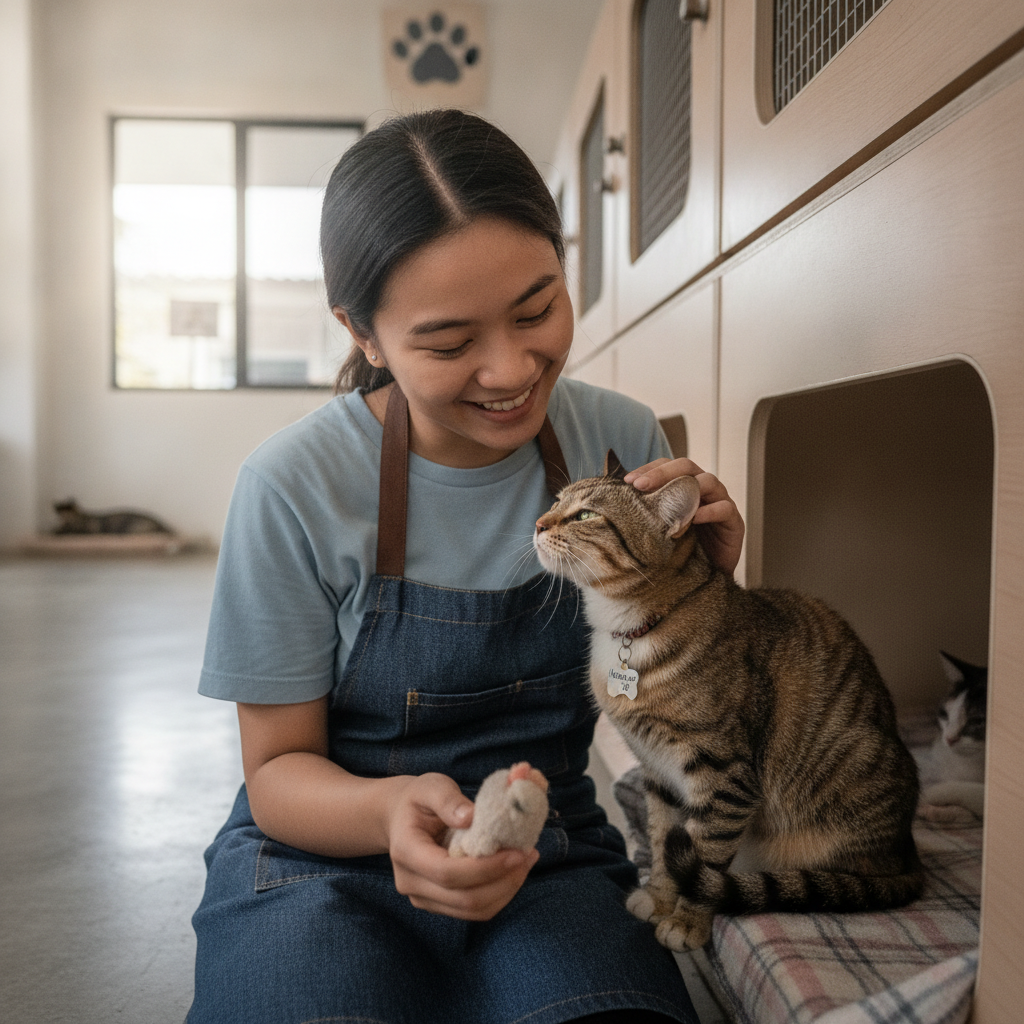
If budget matters — and even if it doesn't — adoption is the smart, ethical choice. Shelters charge a nominal, not-for-profit fee that's far below any pedigree, and it almost always bundles in veterinary care that would otherwise cost you hundreds:
| Shelter | Fee (RM) | Typically includes |
|---|---|---|
| SPCA Selangor | 280 (flat) | Neuter, 1st vaccination, deworming, carrier |
| PAWS Malaysia | 80 adult / 100 kitten | Neuter, vaccinations, deworming, microchip |
| SPCA Penang | 100 – 300 | Includes a deposit refunded on proof of neutering |
| Second Chance (SCAS) | 200 | Covers the neutering cost |
So a "free" street kitten often works out more expensive once you've paid for sterilisation and vaccination yourself. Adoption also gives a home to a cat that needs one, and the local kucing kampung is genetically hardy and superbly climate-adapted. Details on the process — application, interview, agreement — are in the SPCA Selangor programme and our kucing kampung guide.
The Bigger Number: Annual Cost of Owning a Cat
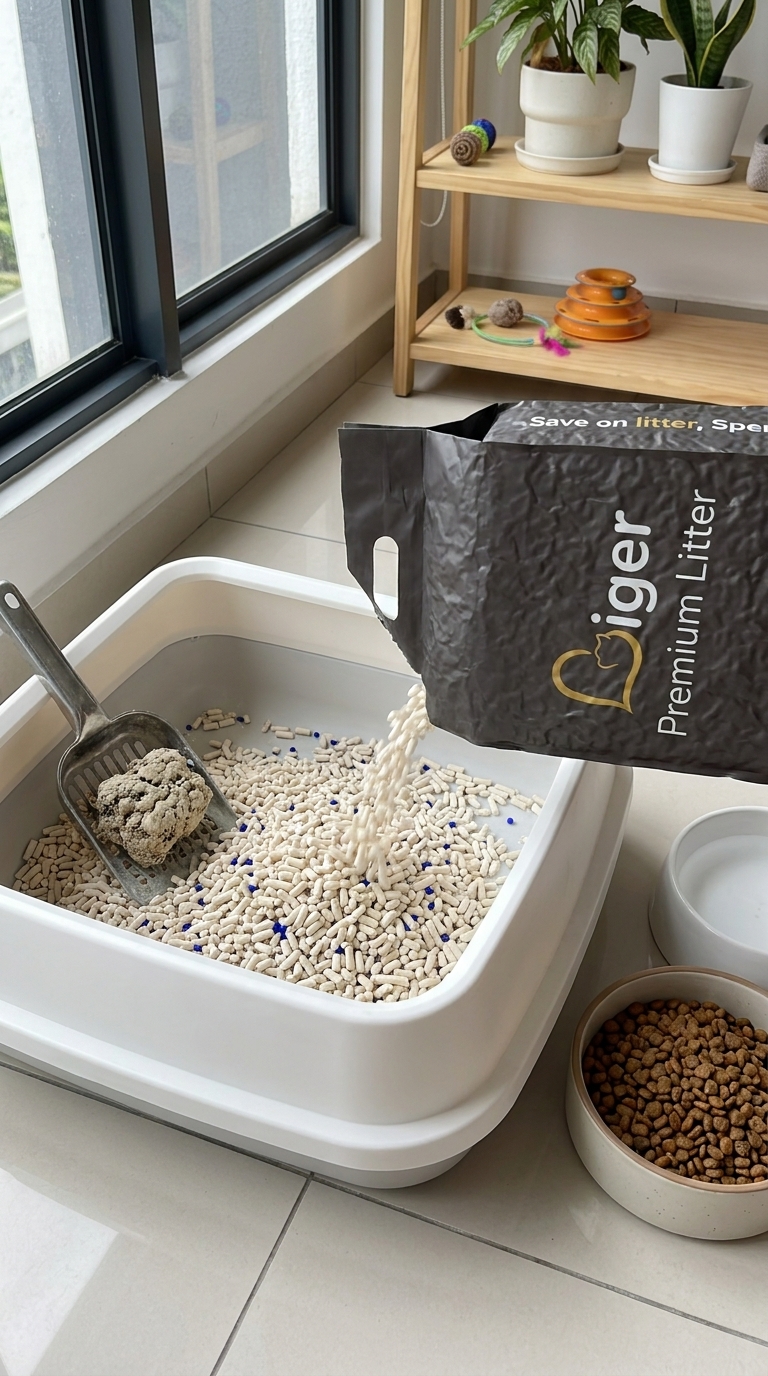
This is the figure that actually shapes your budget. Whatever your cat cost to acquire, routine care runs roughly RM900–5,550 per year for a single healthy cat, covering:
- Food — usually the biggest line item, especially a quality or wet-food-led diet.
- Litter — a constant monthly cost. As a worked example, a single cat gets through roughly 8–10kg of litter a month; with Liger Premium Tofu Cat Litter at RM8.45/kg in the 10-pack (down from RM10.95/kg for a single pack, as of May 2026), that's a predictable RM70–85 a month. Buying in bulk is the simplest way to cut this line — size it exactly with our litter calculator.
- Preventive vet care — annual checkups, vaccinations, deworming and flea control; small, predictable, and far cheaper than the illnesses they prevent.
On top of routine care, keep an emergency fund of RM2,000–5,000. A serious accident or illness can easily exceed RM5,000 — a urinary blockage alone is a life-threatening emergency needing hospitalisation. Breed-specific conditions add predictable extra cost too: a Scottish Fold's joint disease, or a Persian's polycystic kidney disease.
An increasingly popular alternative to a self-funded emergency fund is pet insurance, which is now widely available in Malaysia. For a monthly premium it can cover a chunk of accident and illness bills, smoothing out the financial shock of a major diagnosis — particularly worth considering for the flat-faced and large breeds that carry known, expensive health risks. Whichever route you choose, the principle is the same: have a plan for the bill before it arrives, not after. New owner? Our new cat owner checklist covers the full first-year setup.
Red Flags and Ethical Sourcing
Whether you adopt or buy, protect yourself and the cat:
- For pedigrees, insist on documented health screening of the parents (HCM, PKD, hip dysplasia depending on breed) and registration papers.
- Always meet the kitten and the breeding environment in person — never pay a deposit for a cat you've only seen in photos.
- Walk away from anyone selling kittens under 12 weeks, or who can't answer health questions, or whose price is suspiciously low.
- Think hard about breeds with built-in suffering — the Scottish Fold's osteochondrodysplasia means lifelong joint pain and cost.
The Bottom Line: Budgeting for a Cat
Cat ownership is a long-term financial commitment that dwarfs the purchase price. Add it up honestly: the acquisition cost (or adoption fee), a first-year setup of a few hundred Ringgit, RM900–5,550 every year after that, and an emergency fund on standby. Source ethically from a registered breeder or a shelter, choose a breed whose health and care costs you can genuinely sustain, and the price tag becomes the least memorable part of a decade-plus of companionship. Start with our cat breeds in Malaysia guide to find the right match, or weigh how long different breeds live in our cat lifespan by breed guide. Get the budgeting right up front, and you set yourself — and your cat — up for a happy decade together.