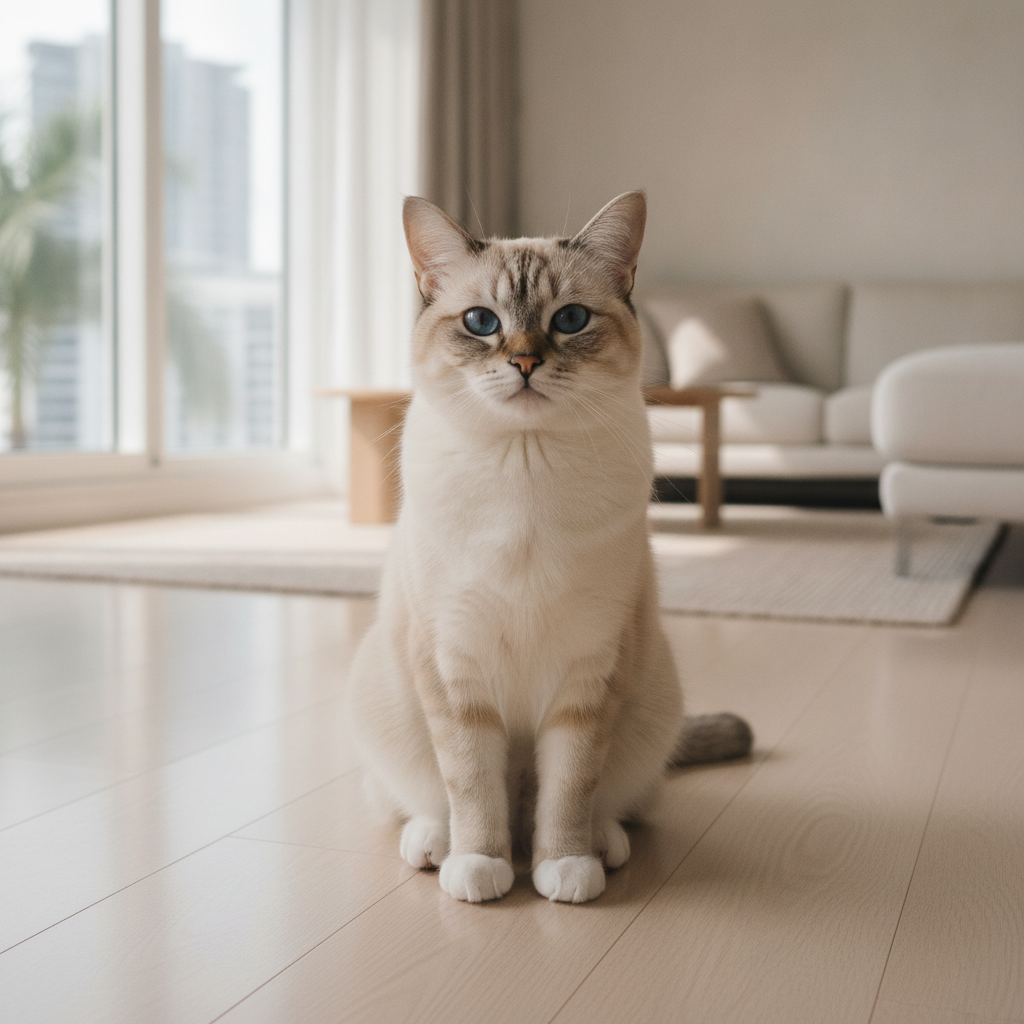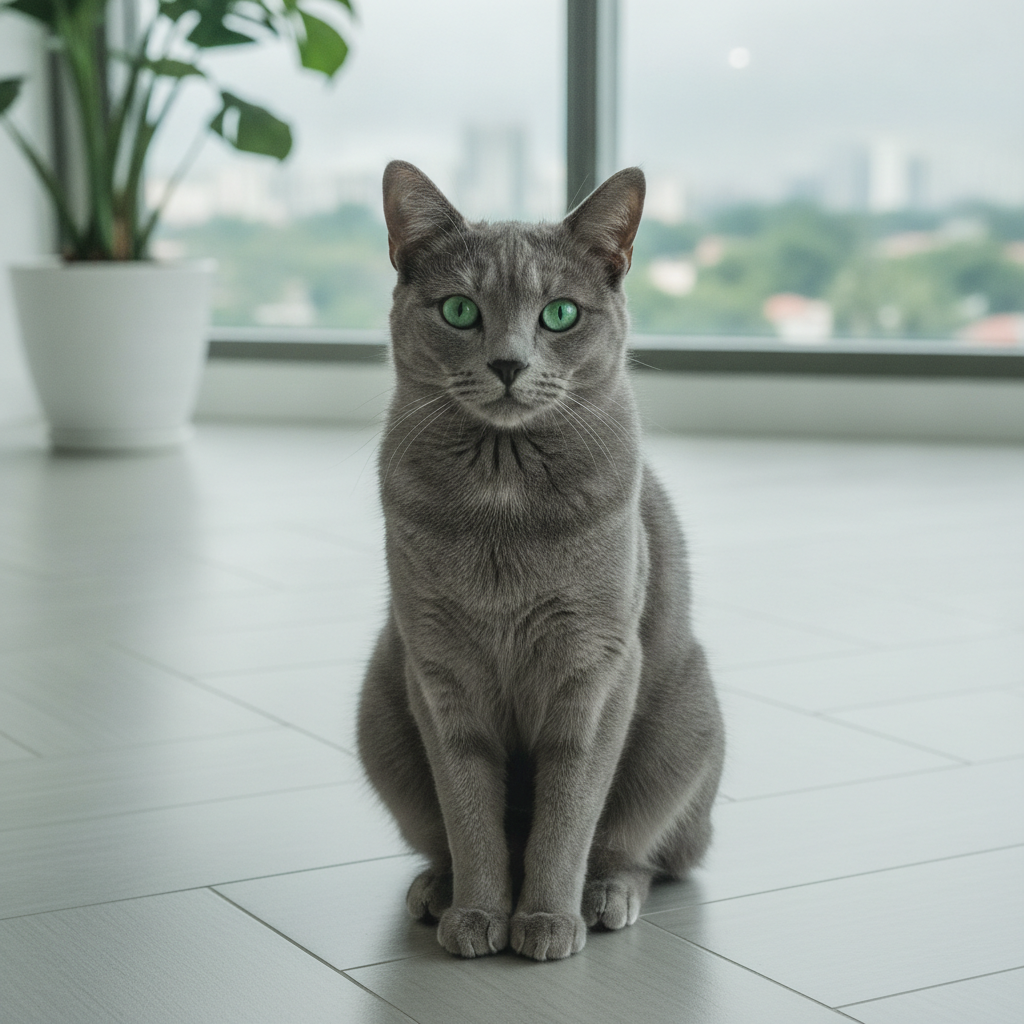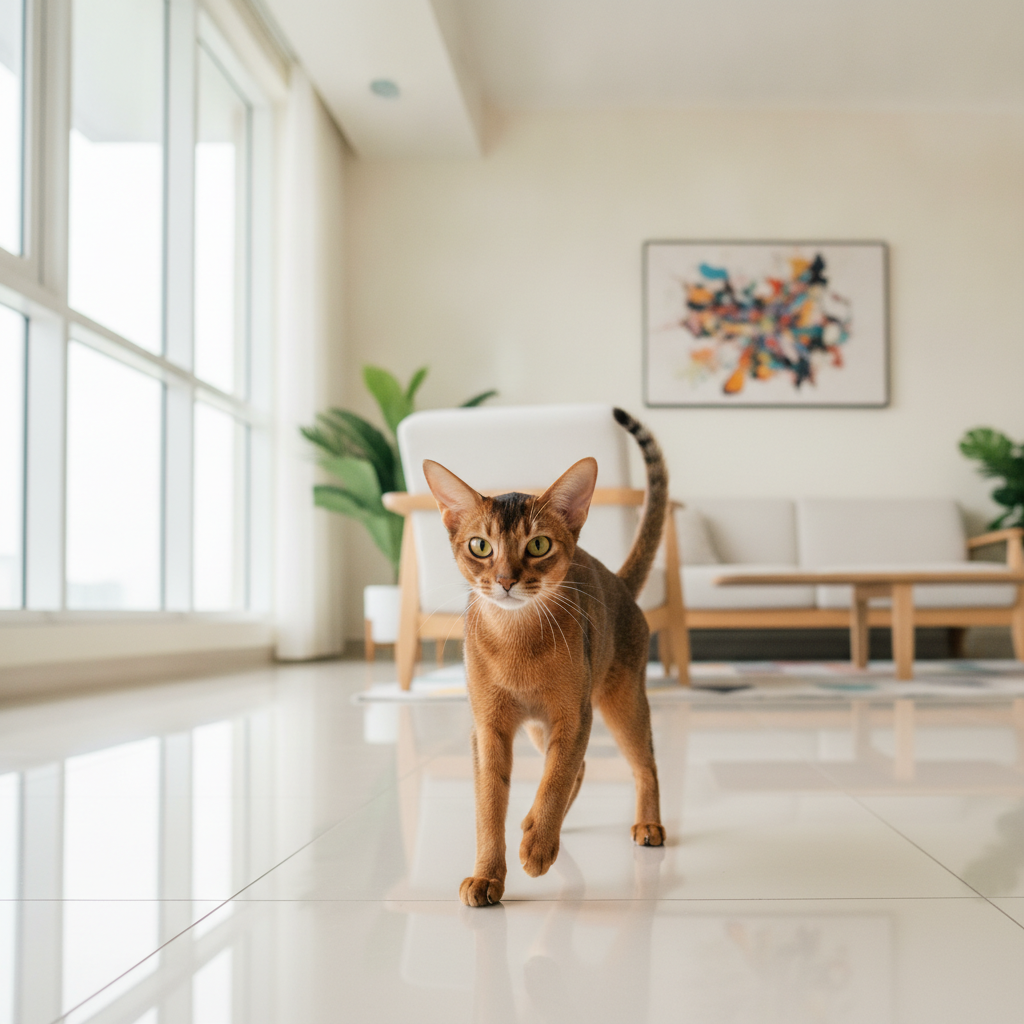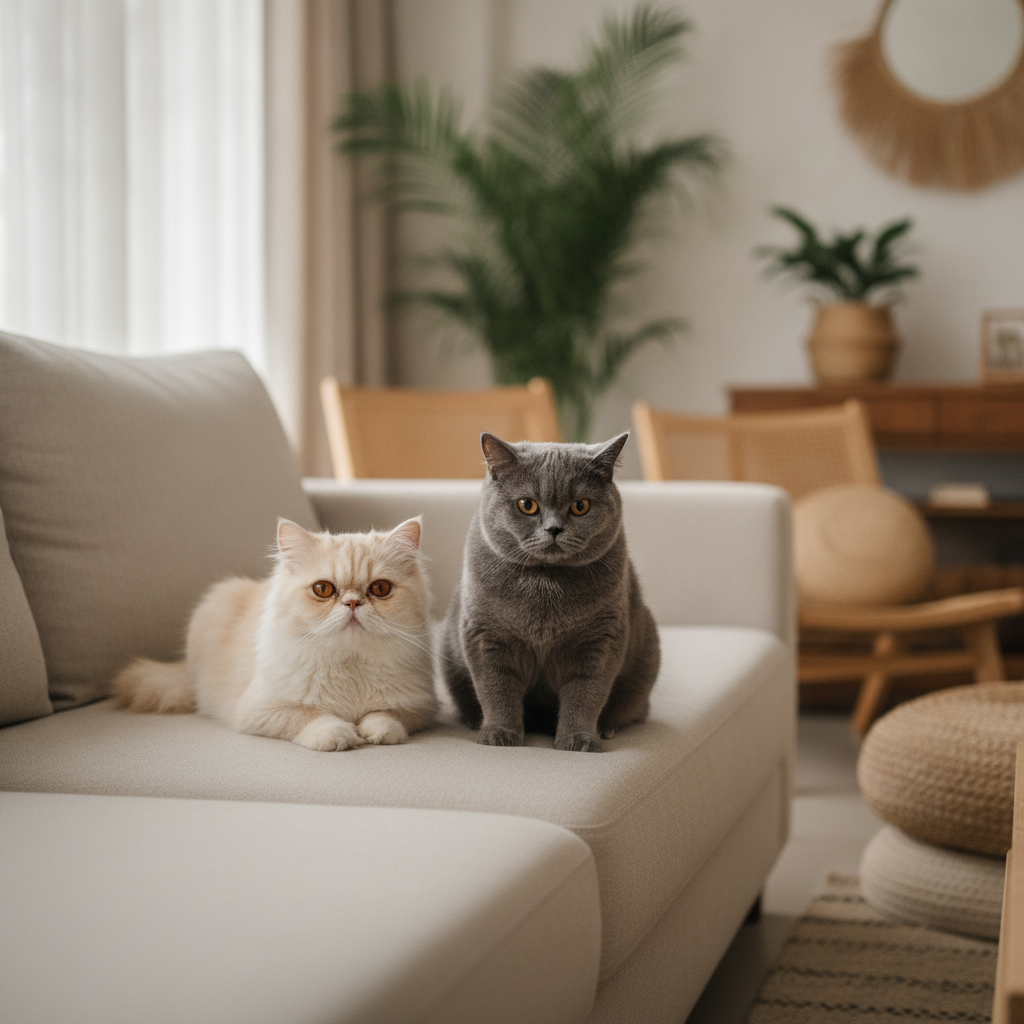
They're the two cats every first-time owner in Malaysia seems to fall for: the glamorous, squashy-faced Persian and the round-cheeked teddy-bear British Shorthair. Both are calm, both are gorgeous, both make brilliant indoor companions. But behind those similar vibes sit two very different commitments — one of them far kinder to a beginner in a hot, humid climate. This is the honest, side-by-side comparison: temperament, grooming, health, heat tolerance, price, and a clear verdict for a Malaysian home.
Want the full picture on each? We've got a dedicated Persian cat guide and British Shorthair guide — this article is where they go head to head.
The Quick Verdict for a Malaysian First-Timer
Let's not bury the lede: for most first-time owners in Malaysia, the British Shorthair is the easier, safer, more forgiving choice. It's robustly built, needs only a weekly brush, and copes far better with our heat. The Persian is a wonderful cat, but it's a high-maintenance, health-fragile breed whose flat face genuinely struggles in tropical humidity — a demanding pick for someone learning the ropes. That said, the "right" answer depends on how much daily time, money and air-conditioning you can realistically commit — so don't take the verdict on faith. Here's the full detail behind it, point by point, so you can weigh it against your own home and routine.
Temperament: Devoted Lap Cat vs Independent Companion
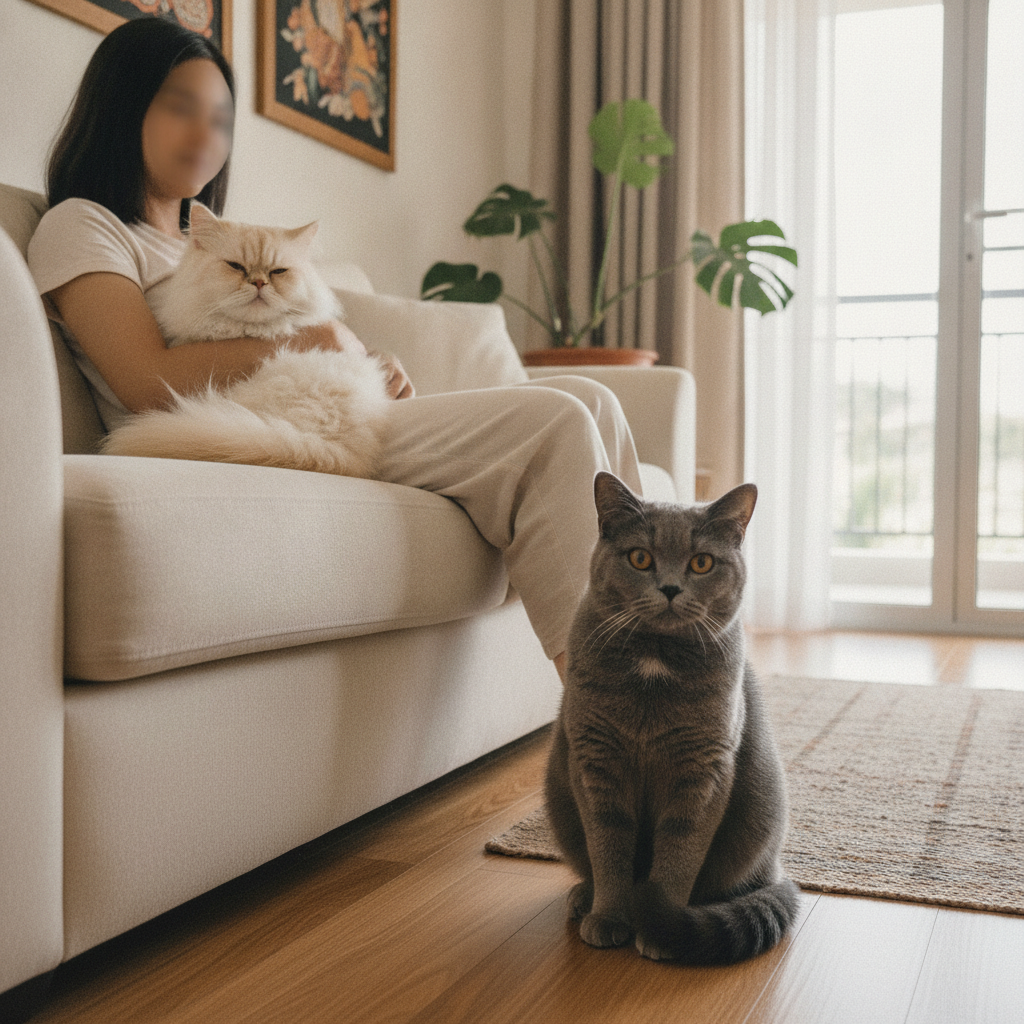
Both breeds are calm, but they love you differently. The Persian is the quintessential lap cat — sweet, gentle, and happiest when it's being held or stroked. It craves a quiet, predictable routine and can get genuinely stressed by noise or change, often bonding hardest with one person. The British Shorthair is affectionate in a more reserved, four-feet-on-the-floor way: it'll follow you room to room and sit near you rather than on you, but it dislikes being scooped up and is perfectly happy entertaining itself while you're at work. For a household that's out during the day, the independent BSH copes without separation anxiety; the more emotionally dependent Persian would rather you were home. Note too that the BSH only grows into its famously placid temperament around three to five years of age — kittenhood is livelier than the memes suggest. Royal Canin's British Shorthair profile sums it up well: an easygoing, undemanding cat that suits a calm home and a busy owner alike. For a first-timer, that emotional resilience is gold — you get to learn the basics of cat care without tiptoeing around a highly sensitive animal that reads every change in the household as a crisis.
Grooming: A Daily Marathon vs a Weekly Brush
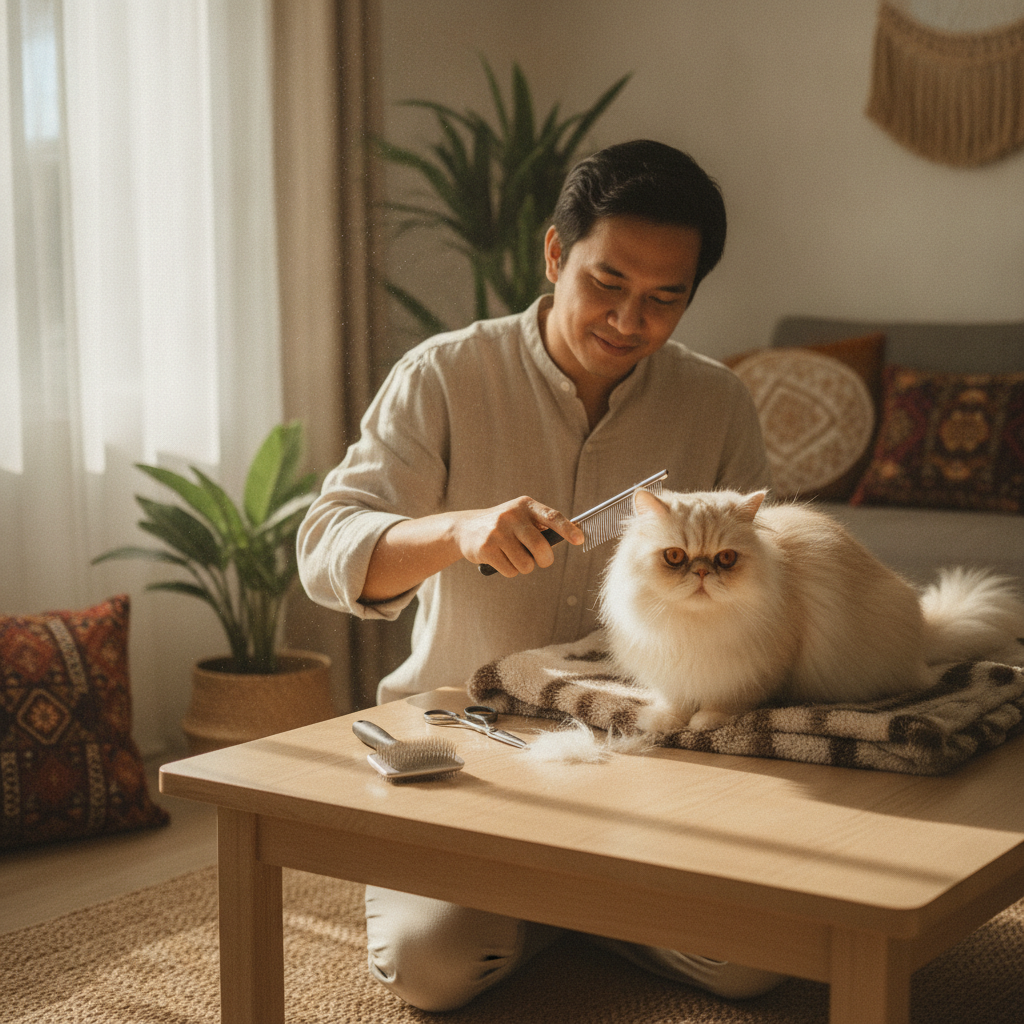
This is the single biggest practical difference, and the one new owners most underestimate. The Persian's long double coat must be brushed thoroughly every single day — skip a few days and it mats painfully behind the ears, under the legs and on the belly, often needing a professional groomer or a "lion cut" to fix. On top of that, its weepy flat-faced eyes need gentle cleaning once or twice daily to prevent tear stains and skin infections, plus a bath every 6–12 weeks. The British Shorthair? A brush once or twice a week handles its short, plush coat, baths are rarely needed, and there's no daily eye routine. If you can't promise that daily Persian commitment for the next 15 years, the choice makes itself.
It's worth being concrete about what "daily" really means. A proper Persian groom is two tools and ten-plus minutes: a wide-toothed comb to tease out tangles, then a slicker brush through the dense undercoat, paying special attention to the friction zones where mats form fastest. Add the eye-wipe routine and you're committing real time every morning, rain or shine, holiday or workday. The British Shorthair's weekly once-over, by contrast, is the kind of low-effort upkeep a busy household actually keeps up with — and a grooming routine you'll genuinely maintain beats an ideal one you abandon by month two.
Health: Where the Persian Pays for Its Looks
Selective breeding gave both cats their signature looks — and some serious baggage. The Persian carries the heavier load:
- Brachycephalic (flat-faced) problems. A UK study found nearly 65% of Persians suffer at least one disorder linked to their facial structure. The squashed skull causes Brachycephalic Obstructive Airway Syndrome (BOAS) — restricted breathing that, as International Cat Care details, also brings eye and dental troubles.
- Polycystic Kidney Disease (PKD). Historically up to 49% of Persians carried this inherited kidney-failure condition. Ask any Persian breeder for proof of PKD-negative parentage.
The British Shorthair is far hardier. Responsible breeders' genetic screening has cut the PKD mutation in the breed to around 0.99%. Its main watch-point is Hypertrophic Cardiomyopathy (HCM), a heart condition also seen in many breeds — so buy from a breeder who heart-screens. The charity Cats Protection goes further on the flat-faced issue, openly campaigning against breeding ever-flatter faces precisely because of the suffering BOAS causes — a useful reality check before you pick a breed for its looks. Overall, though, the BSH is the more robust, lower-risk cat, and PetMD's Persian profile is candid about how much extra care the Persian's body needs.
The Malaysian Heat Factor: This One's Decisive
Here's where our climate tips the scales hard. Malaysia runs 23–33°C year-round with humidity often above 80%, and that's brutal for a flat-faced cat. A Persian's compromised airway makes panting — a cat's emergency cooling method — far less effective, so it's genuinely prone to heatstroke here. Keeping one safe means committing to an air-conditioned room essentially around the clock, plus that dense coat trapping heat and inviting humid-weather skin infections. The British Shorthair, while not a tropical breed and still happiest with AC, has a short coat and a normal muzzle, so it copes much more comfortably. If your home isn't reliably cool, a Persian isn't just harder work — it's a welfare risk.
Watch for the warning signs in either breed on a hot day: open-mouth panting, drooling, restlessness or a cat sprawled flat hunting for a cool tile. Panting is always abnormal in cats and means trouble. The Persian simply hits that danger zone far sooner and far harder than the British Shorthair, which is why so many Malaysian Persian owners end up running the air-con as a non-negotiable monthly bill rather than a luxury.
Price and Running Costs in Malaysia
Neither is a budget cat. As rough 2026 market guides (not Liger figures), pet-quality Persians and British Shorthairs both typically land in the low-to-mid thousands of ringgit, with rare colours climbing far higher — be very wary of suspiciously cheap "purebreds", which usually signal a backyard breeder. But the sticker price is only the start: factor in the Persian's professional grooming, daily eye-care supplies, and the higher odds of vet bills for BOAS or PKD management versus the BSH's lower upkeep. For a fuller breakdown, see our cat breed price guide for Malaysia, and remember the running costs — food, litter, routine vet — outweigh the purchase price over a cat's life.
Litter and Daily Care: What Both Breeds Need
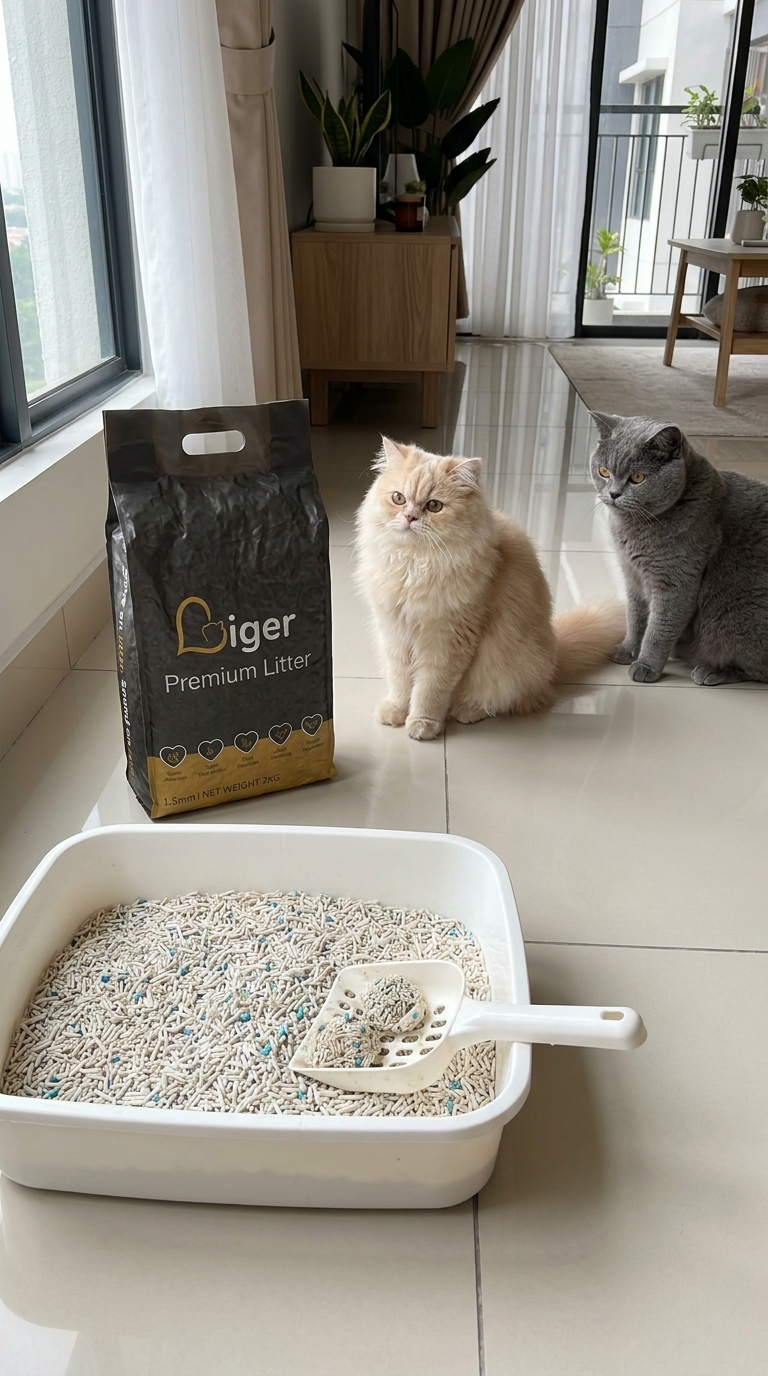
Whichever you pick, both are indoor cats that spend their lives near a litter tray — so litter quality matters for your home's air and your cat's comfort. It matters double for a Persian: a flat-faced cat already fighting to breathe in our humidity shouldn't also be inhaling clouds of litter dust. Liger Premium Tofu Cat Litter is made from natural plant starch, genuinely low-dust, and clumps firmly so you scoop cleanly and control odour without constant full changes. It's flushable and Halal too — easy on a busy grooming routine. For long-haired Persians especially, a litter that doesn't cling to fur and track everywhere is a small daily mercy — fewer pellets caught in those belly feathers means less mess to comb out and less tracked across your floor.
On price, a single 2 kg pack is RM21.90, while the 10-pack (20 kg) drops to RM8.45/kg — about 23% cheaper per kilo, with free shipping across Peninsular Malaysia (current Liger pricing, as of 2026). Work out your monthly usage with the litter calculator before you stock up.
The Verdict: Which Should You Choose?
If you're a first-time owner in Malaysia, go British Shorthair. It gives you the calm, affectionate, photogenic cat you fell for, minus the daily grooming marathon, minus the worst of the health lottery, and — crucially — with a real fighting chance in our heat. Choose a Persian only if you genuinely have the time for daily brushing and eye care, the budget for grooming and vet costs, and an air-conditioned home you can keep cool day and night; in return you get one of the most affectionate lap cats alive. Both deserve a loving home — just be honest about which one fits your life, because the cat lives with that choice every single day. Still torn? Browse our full cat breeds in Malaysia guide to see how they stack up against other options before you commit to either.