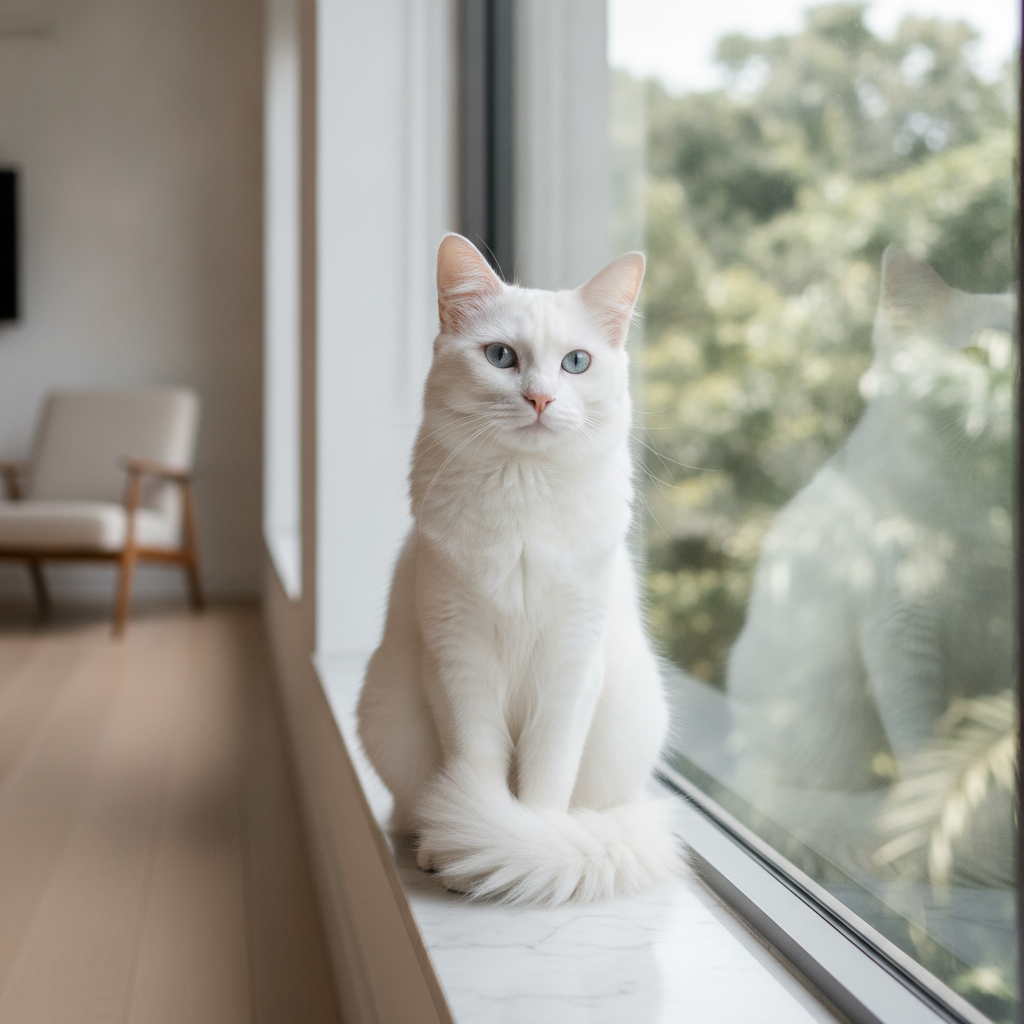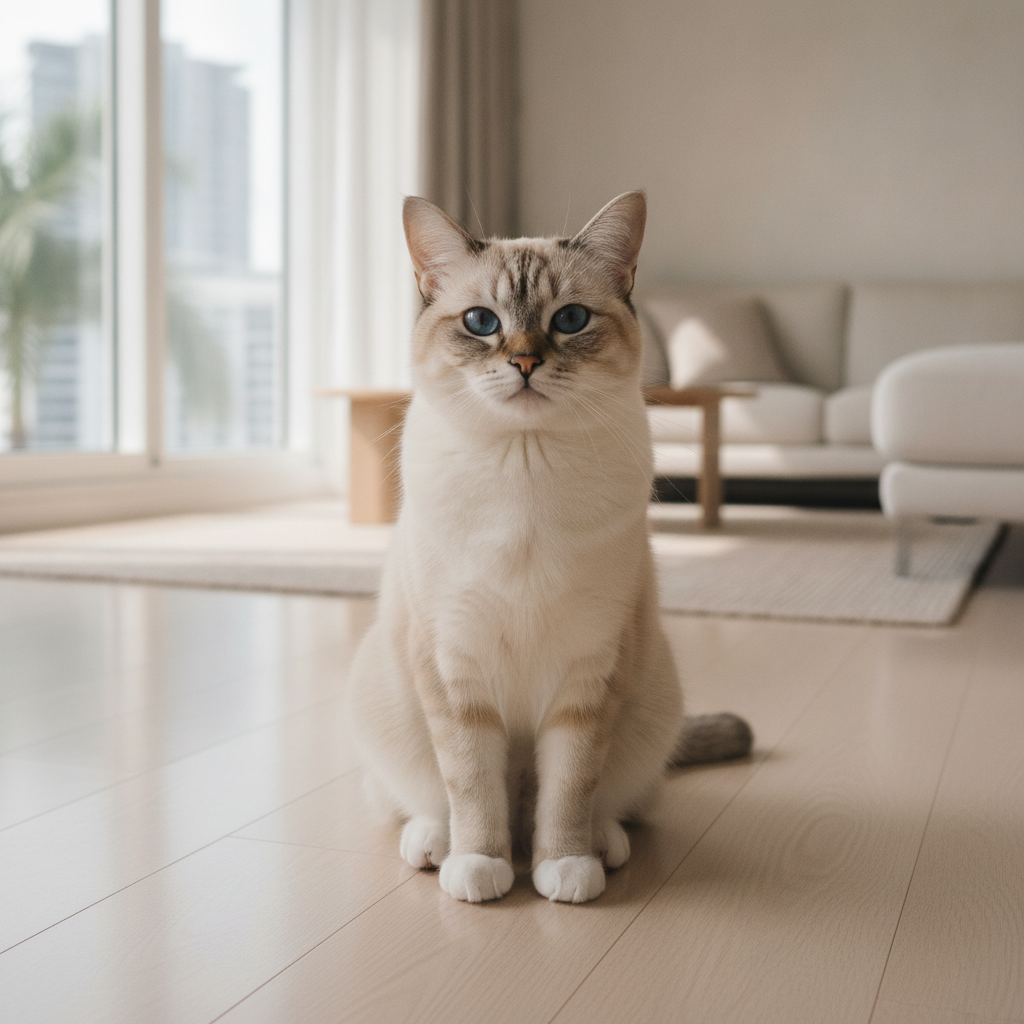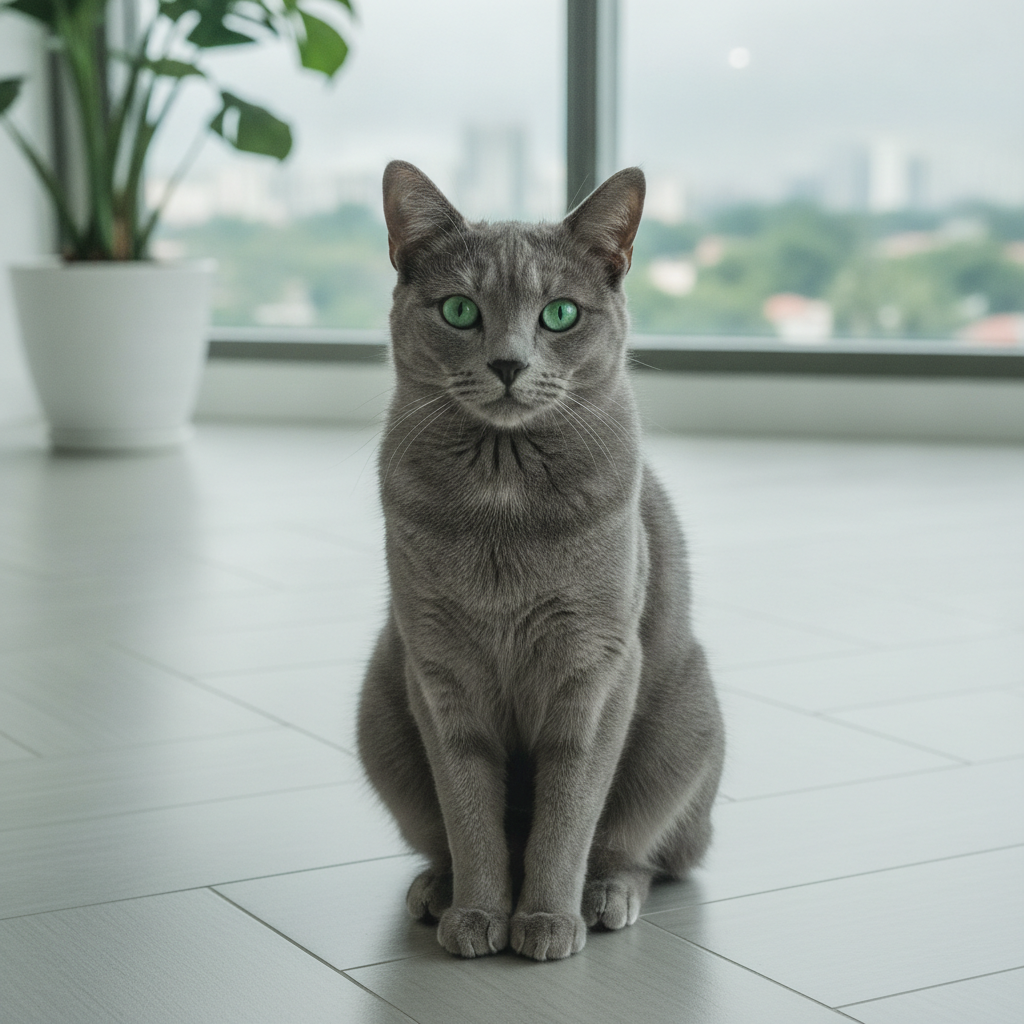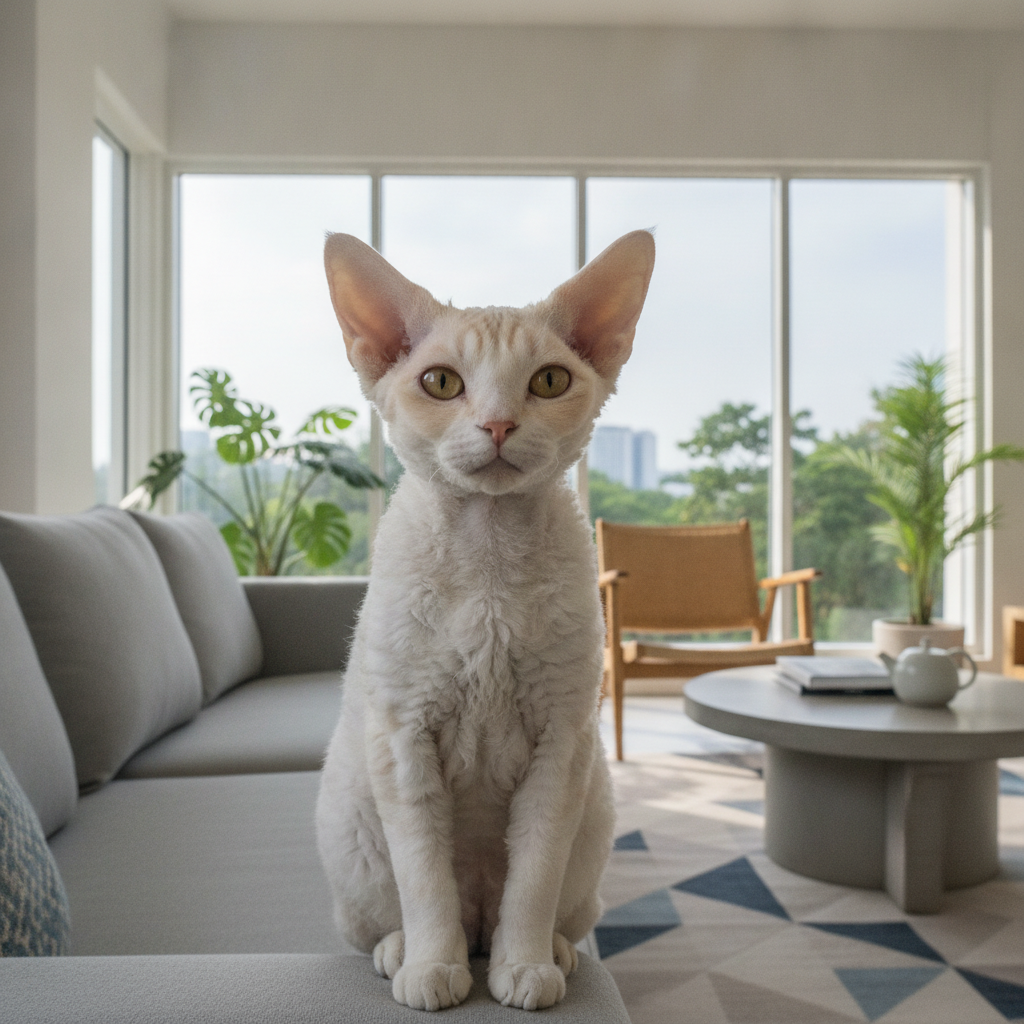
If you have ever seen a Devon Rex in person, you will understand why people stop mid-sentence and stare. It looks like a pixie borrowed a cat suit: a tiny wedge-shaped head, cheekbones that could cut glass, and ears so enormous they seem to belong on a different animal entirely. Then it scrambles up your arm, parks itself on your shoulder, and starts chirping at you — and any remaining dignity is gone. This is the Devon Rex: one of the most eccentric, affectionate, and frankly hilarious cat breeds in existence.
The Devon Rex is still relatively uncommon in Malaysia, which makes finding good local information tricky. Before we dive in, if you are still comparing breeds, our complete 2026 guide to cat breeds in Malaysia gives you the full landscape. Come back here once you are ready to go deep on the pixie cat.
One Kitten, One Gene: The Story of Kirlee
The entire Devon Rex breed traces back to a single kitten. In 1960, near an abandoned tin mine in Buckfastleigh, Devon, England, a cat enthusiast named Beryl Cox noticed something unusual in a stray tortoiseshell's litter — a brownish-black male with a coat of soft, tight curls. She adopted him and called him Kirlee.
Because the Cornish Rex, another curly-coated breed, had emerged just a decade earlier in the neighbouring county of Cornwall, everyone assumed Kirlee was a variant of the same thing. He was sent to Cornish Rex breeder Brian Stirling-Webb to strengthen the gene pool. The result was a surprise: every kitten in every litter came out straight-coated. In genetics, two cats sharing the same recessive curling gene should produce only curly offspring. The straight-coat litters were definitive proof that Kirlee's curls came from a completely different gene — what researchers would later designate "Gene II Rex" to distinguish it from the Cornish Rex's "Gene I Rex."
A dedicated breeding programme followed, using selective back-crossing to fix the recessive gene in a new population. Britain's Governing Council of the Cat Fancy officially recognised the Devon Rex as a distinct breed in 1967. The Cat Fanciers' Association in the United States followed, granting it separate breed status in 1979 and championship status in 1983. According to Wikipedia's Devon Rex entry, which draws on multiple registry sources, Kirlee was neutered in 1964 and lived as a household pet until his death in 1970. Every pedigreed Devon Rex alive today traces its lineage directly back to him.
The Elfin Look: Ears, Eyes and That Extraordinary Coat
The Devon Rex is a small to medium cat, typically weighing 2.7 to 4.1 kg, with a body that is deceptively muscular for its fine frame. What commands attention first are those ears: according to the CFA breed standard, they must be set very low on the head, remarkably wide at the base, with the outer base extending beyond the line of the wedge-shaped skull. The effect is distinctly bat-like, and intentionally so. The large, oval eyes slope toward those ears, and the full cheekbones and whisker pads complete a face that breeders call "elfin" or "pixie-like."
The coat is the breed's biological signature. It is fine, soft, and wavy — the classic "rexed" texture — but critically, it is genetically unrelated to the Cornish Rex coat. A Devon Rex crossed with a Cornish Rex produces straight-coated kittens, because the two recessive genes cancel each other out rather than combining. The wavy effect is most visible on the back, flanks, and tail where the fur is longest. The cat sheds very little, but the coat is fragile: over-brushing breaks the delicate strands and causes bald patches. Royal Canin's breed profile at royalcanin.com notes that gentle, minimal grooming is the correct approach — a soft-bristle brush or damp cloth once a week, never a stiff brush.
Temperament: A Monkey in a Catsuit
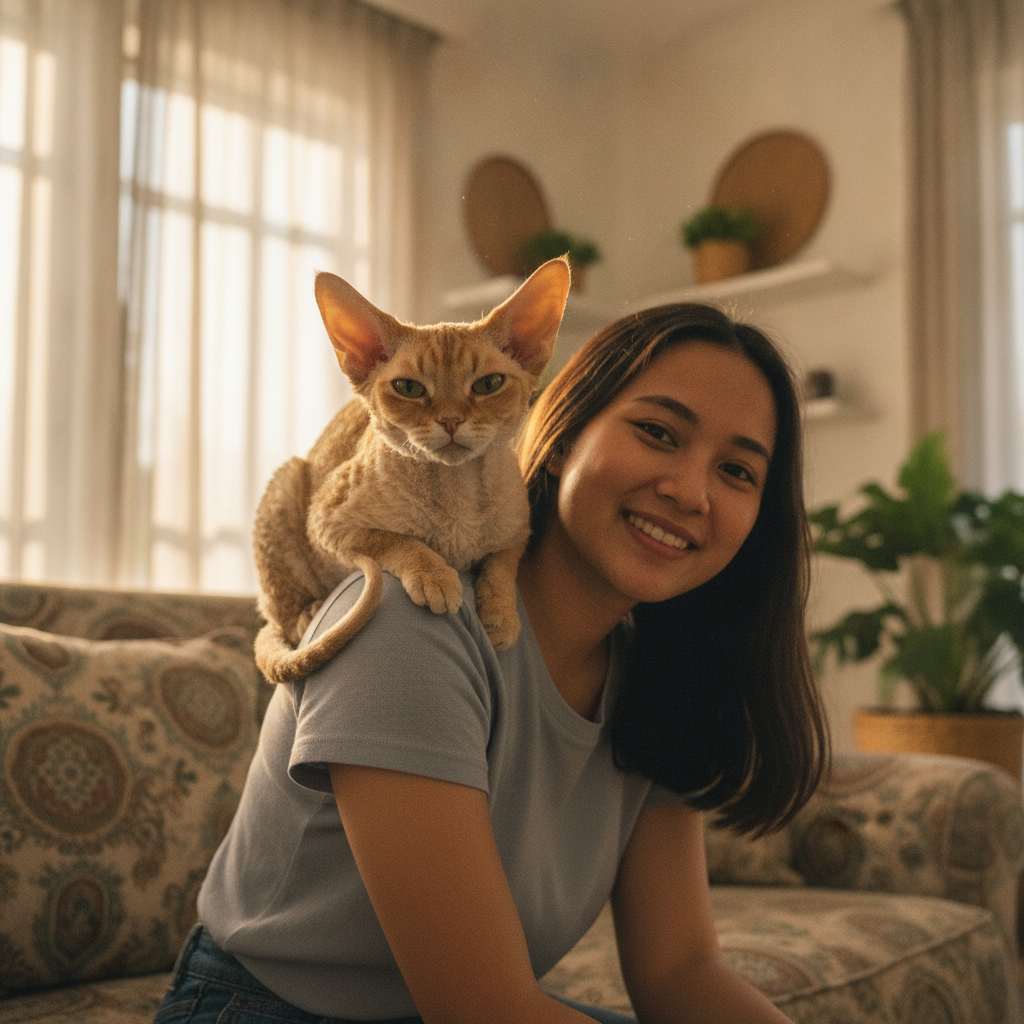
Breeders have described the Devon Rex as "part cat, part dog, part monkey," and spending ten minutes with one makes that feel like an understatement. The dog-like qualities are real: Devon Rex cats form intense bonds with their humans, follow their favourite person from room to room, and have been known to learn fetch. They are highly trainable, motivated by interaction and play in a way most cats simply are not.
The monkey element shows up in their acrobatics and mischief. A Devon Rex will scale a bookshelf, walk a curtain rail, perch on a door, and survey the room from height before deciding to drop into your lap — uninvited, as if this is normal. They are not content to watch; they participate in everything. Cooking, typing, sleeping — all of these become collaborative activities. PetMD's Devon Rex profile at petmd.com describes them as "velcro cats" that demand to be involved in household life.
This is not a breed for busy owners who are out most of the day. Devon Rex cats can develop real separation anxiety when left alone for long periods. They thrive in homes with another pet or humans who work from home. Families with children generally work well — the Devon Rex is patient and playful enough to hold its own. If you want to compare social needs and lifespan across breeds, our cat lifespan by breed guide for Malaysia puts the Devon Rex's 9–15 year range in context.
Busting the Hypoallergenic Myth
This is perhaps the most persistent misconception about the Devon Rex, and it matters enough to address head-on. Because the Devon Rex sheds very little and has such a thin, sparse coat, it is frequently marketed as "hypoallergenic." This is misleading at best.
Cat allergies in humans are triggered primarily by a protein called Fel d1, which is produced in the cat's saliva and skin glands — not its fur. The Devon Rex produces Fel d1 in normal amounts. The lower shedding does reduce the amount of Fel d1-coated hair drifting around a room, which can mean reduced symptoms for some mildly allergic people, but it is not a guaranteed safe choice for anyone with a true cat allergy. Anyone with a history of cat allergies should spend meaningful time with the individual cat before committing — no breed, including the Devon Rex, is truly hypoallergenic. Our dedicated guide on hypoallergenic cat breeds in Malaysia covers this topic properly if you need more detail before making a decision.
Devon Rex in Malaysia's Heat and Humidity
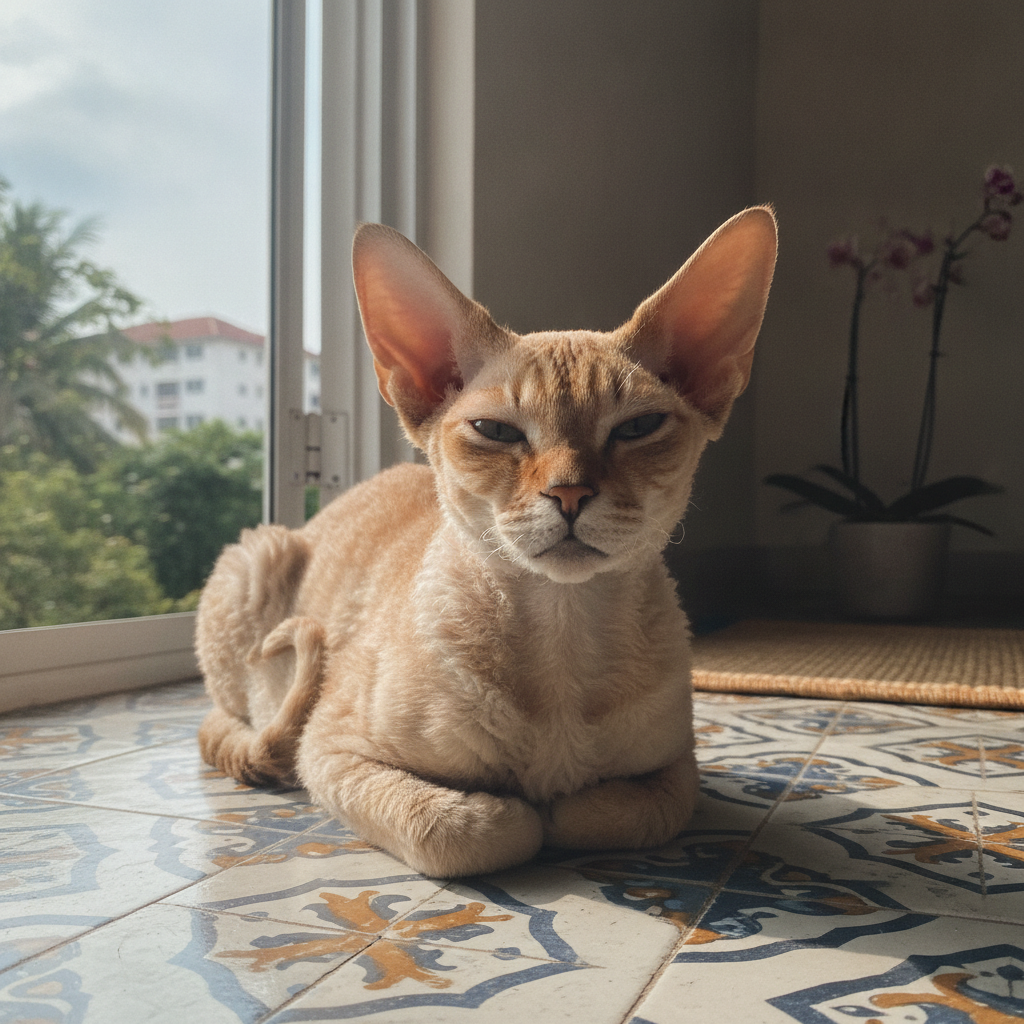
The Devon Rex's thin, single-layer coat is a double-edged sword in our climate. On one hand, it does not trap body heat the way a British Shorthair or Persian coat does — the breed is naturally better suited to warmer indoor environments than cold-weather breeds. On the other hand, that sparse coat provides almost no protection from direct sun, making light-coloured Devon Rex cats vulnerable to sunburn if they spend time near windows with direct exposure. Limit sun access, especially between 10am and 4pm.
The bigger risk is actually the air conditioning. Malaysian apartments often run aircon at 20–22°C, and a Devon Rex — with almost no coat to insulate itself — can get genuinely cold at those temperatures. Watch for shivering, seeking warm spots compulsively, or sleeping pressed against appliances. Providing a fleece blanket or a cat cave in the air-conditioned room is not pampering; it is basic welfare for this breed. Our roundup of best cat breeds for Malaysia's hot climate explains how the Devon Rex compares against breeds with more natural climate adaptation.
Humidity creates a separate problem: it feeds the Malassezia yeast that the Devon Rex is already predisposed to. The breed's sparse coat cannot fully absorb the natural sebum the skin produces, leaving an oily film on the skin surface. In our 80–90% relative humidity, that environment is ideal for fungal overgrowth. Regular baths with a gentle, vet-approved shampoo — roughly once every three to four weeks — help manage this. The large ears accumulate wax quickly and need weekly cleaning with a cat-safe ear cleaner to prevent yeast or bacterial infections. This is not optional maintenance; for the Devon Rex, ear neglect leads to real health problems.
Litter and Daily Indoor Care for Your Devon Rex
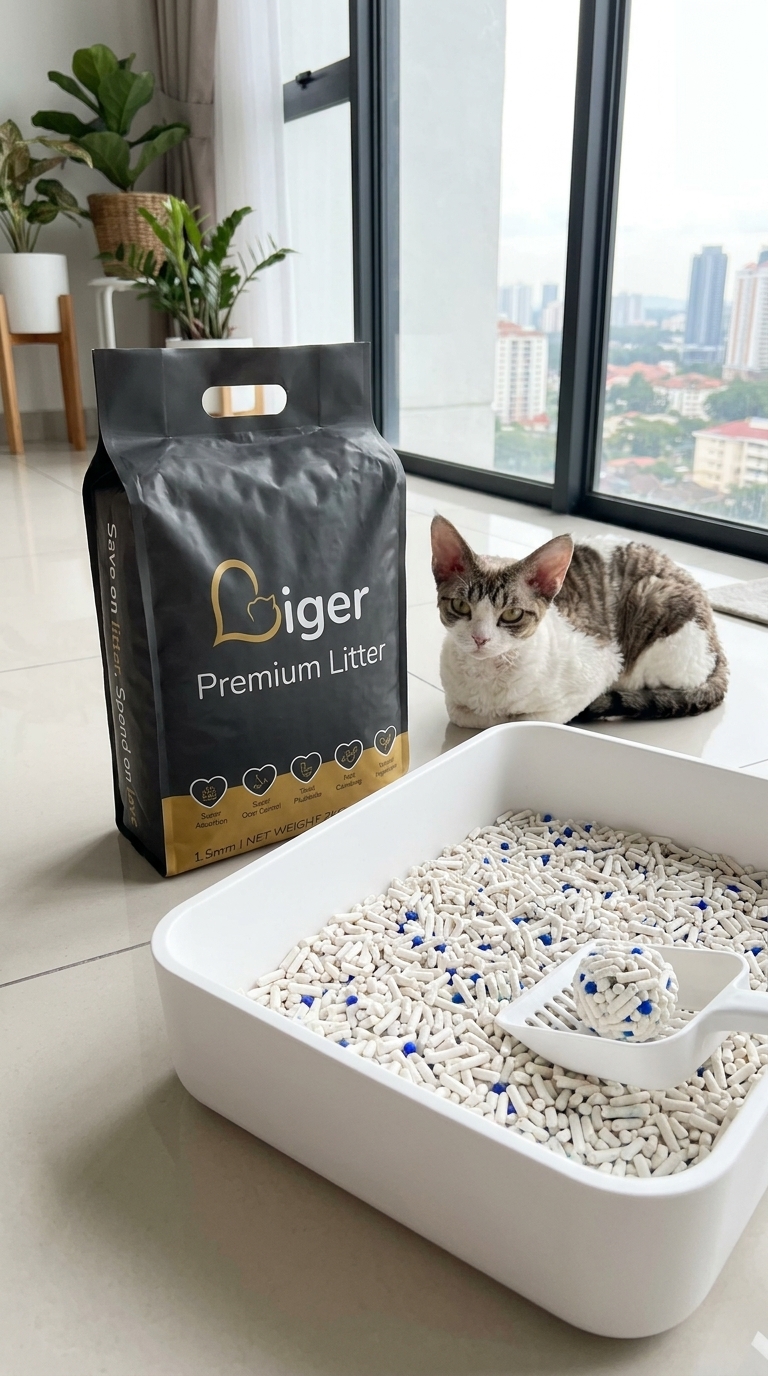
Devon Rex cats are full-time indoor cats in Malaysia. They have no coat protection against outdoor hazards, they overheat in direct sun, and their close-bonding temperament makes outdoor free-roaming genuinely stressful for them. That means litter quality is not a peripheral consideration — it is a daily health decision.
Because the Devon Rex is already prone to skin and ear irritation, airborne litter dust is a genuine concern. Conventional clay litters kick up fine silica dust every time the cat digs, and in a sealed, air-conditioned apartment, that dust lingers. Liger Premium Tofu Cat Litter is made from compressed tofu soy fibre, which produces very little dust when the cat digs — a meaningful advantage for a breed with sensitive skin and large open ears that funnel airborne particles inward. It clumps firmly for easy scooping, controls odour naturally, and is flushable, making daily litter management cleaner and faster.
Current 2026 Liger pricing: RM21.90 for a single pack (2 kg), RM53.90 for 3 packs, RM89 for 5 packs, and RM169 for the 10-pack (20 kg total, working out to just RM8.45 per kg). Free shipping applies across Peninsular Malaysia. To work out how much litter a Devon Rex actually needs per month — they are small but dig enthusiastically — use our litter calculator.
Health Risks Every Devon Rex Owner Must Know
The Devon Rex is a breed that demands proactive veterinary engagement. Several serious hereditary conditions run through the breed's lines, and ignoring them is not a viable strategy.
Hereditary Myopathy (Devon Rex Myopathy / Congenital Myasthenic Syndrome): This is the most breed-specific and serious condition. It is caused by a mutation (c.1190G>A) in the COLQ gene and is inherited as an autosomal recessive trait — a kitten needs two copies of the mutated gene, one from each parent, to be affected. Signs typically appear between three and 23 weeks of age: generalised muscle weakness, a characteristic high-stepping front-limb gait, and the inability to hold the head up normally (ventroflexion of the neck). Weakness of the oesophageal muscles can cause megaoesophagus, creating a serious risk of aspiration pneumonia. A published screening study in NIH PubMed Central found that approximately 2% of Devon Rex cats carry the COLQ variant. Critically, a definitive DNA test exists. Responsible breeders must screen all breeding cats; ask for certificates before buying.
Hypertrophic Cardiomyopathy (HCM): HCM causes progressive thickening of the heart muscle, reducing the heart's ability to pump effectively and leading to congestive heart failure, arterial thromboembolism, or sudden death. The complication in the Devon Rex specifically is that — unlike in Maine Coons or Ragdolls — the causative genetic mutations for HCM have not been isolated in this breed, so no DNA test currently exists. This means screening relies on echocardiograms performed by a veterinary cardiologist, ideally annually for breeding cats. Many affected cats show no symptoms until the disease is advanced. VCA Hospitals' guide to feline HCM explains what to expect from cardiac screening.
Patellar Luxation: This is a congenital orthopedic condition where the kneecap dislocates from its normal groove, suspected to stem from a hereditary malformation of the hip joint in this breed. Mild cases produce an intermittent skipping gait and may be managed conservatively; severe cases require surgery.
Malassezia Dermatitis and Hereditary Baldness: The oily-skin predisposition described above can progress to a genuine Malassezia yeast infection if not managed — itchy, smelly, and uncomfortable for the cat. Separately, some Devon Rex carry a recessive gene for hereditary hypotrichosis (baldness), producing thin hair or symmetrical bald patches from birth or shortly after. Affected cats should not be bred. For context on how these conditions affect breed longevity, see our breed lifespan guide.
What a Devon Rex Costs in Malaysia (2026)
Devon Rex cats are genuinely uncommon in Malaysia. The breed requires dedicated specialist breeders who understand the COLQ DNA testing requirements and cardiac screening protocols, and very few local breeders operate at that standard. As rough 2026 market guidance (not Liger figures), a registered Devon Rex kitten from a reputable breeder currently falls in the RM3,000 to RM7,000 range, with show-quality lines and cats from health-screened parents pushing toward the higher end. Be cautious of sellers who cannot show COLQ test certificates or who price well below this range — they almost certainly have not done the screening.
Factor in the ongoing costs honestly. Year-round flea and parasite prevention (Malaysian warmth means this is never seasonal), regular cardiac checks, ear cleaning supplies, a low-dust litter, and the social commitment this breed requires all add up. A Devon Rex that receives proper care has a lifespan of 9 to 15 years — and that is a long relationship worth getting right from the start. For a full comparison of acquisition and lifetime costs across breeds, our 2026 cat breed price guide for Malaysia and our hypoallergenic breed guide are good next reads. If the Devon Rex's price feels steep, our breed price comparison will show you what else is in the same range — and what the tradeoffs look like. The Devon Rex is an uncommon, high-maintenance breed that rewards the right owner with an extraordinarily close bond. If that sounds like you, this pixie cat will be worth every ringgit.