If you share your home with a Persian, Ragdoll, Maine Coon or any fluffy mixed-breed, you already know the enemy: that hard little knot of fur behind the ear or in the armpit that seemed to appear overnight. Mats feel like a cosmetic annoyance. They are not. A tight mat pulls constantly on your cat's skin, traps moisture and bacteria underneath, and at its worst fuses into a painful shell that restricts how your cat moves. This guide shows you how to safely de-mat a long-haired cat — and, just as importantly, the one thing you must never do.
This is a companion to our complete home grooming guide; if you specifically want help choosing brushes and combs, see our breakdown of deshedding tools by coat type.
Mats Aren't Cosmetic — They Hurt
A mat forms when loose, shed undercoat tangles with the living guard hairs and isn't combed out. Left alone, it tightens. According to VCA Hospitals, that knot pulls painfully on the delicate skin and seals off the area underneath — no air, trapped moisture, oils and dead skin — which becomes a breeding ground for bacteria, fungal patches and parasites. When individual mats fuse into a solid, felt-like casing stuck flat against the body, that's called "pelting", and it's a genuine welfare emergency: the pelt can restrict movement, pull skin from different areas together, and hide raw, infected sores. The skin beneath is inflamed and fragile. So no — this isn't about looking scruffy. It's about pain.
Why Your Humid Malaysian Home Makes Mats Worse
Here's the local twist most guides ignore. High humidity makes the outer cuticle of each hair strand swell and roughen, so strands snag on each other far more readily — mats form faster in our climate than in dry temperate countries. Add the year-round shedding that indoor, air-conditioned tropical cats do, and the raw material for matting is constant.
As PetMD explains, a healthy cat's own meticulous grooming is its first line of defence against tangles — so anything that interrupts self-grooming lets the coat deteriorate fast. Some cats are at much higher risk because they can't groom themselves properly:
- Overweight cats can't twist to reach their lower back and hindquarters.
- Senior or arthritic cats find the contortions of self-grooming painful.
- Cats with dental pain avoid licking because it hurts.
And mats are self-perpetuating: once a knot forms, your cat can't groom that spot, so trapped oil and dandruff cement more loose hair into it, and it grows tighter and more painful — a vicious cycle that only your comb breaks. A sudden burst of matting in a cat that used to keep itself tidy is worth a vet check, because it often signals an underlying health problem.
The One Rule That Saves Vet Bills: Never Use Scissors
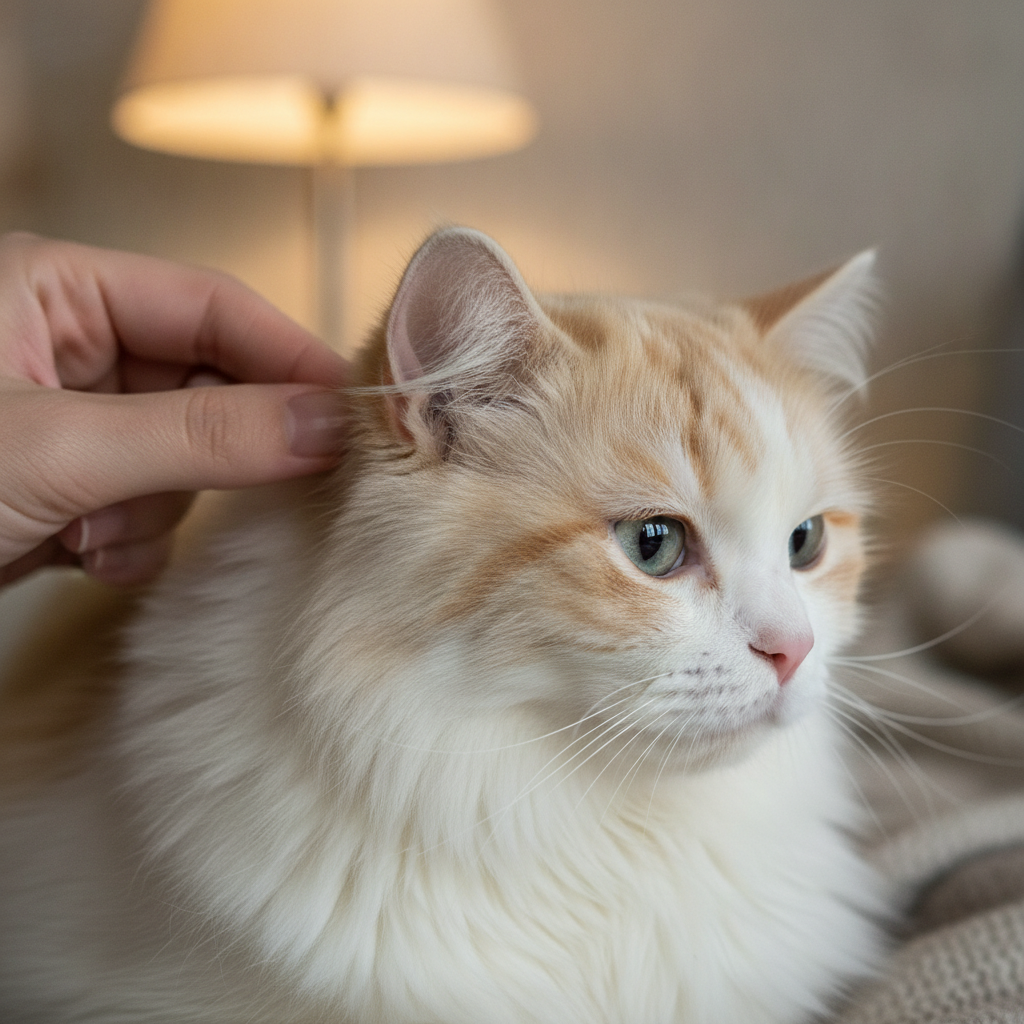
This is the single most important thing in this article. Never cut a mat out with scissors. A cat's skin is thin and remarkably elastic, and as a mat tightens it pulls a fold of skin up into the base of the knot — completely hidden, indistinguishable from the fur. One snip and you slice through that hidden skin fold, causing a deep laceration that bleeds heavily, often needs stitches, and can tear wider as the cat moves.
The "I've done it for years and never had a problem" mindset is exactly the trap. Vets who treat these wounds hear that line constantly — right before they stitch up a cat whose owner finally misjudged one mat. Prior success doesn't lower the risk; it just means the accident hasn't happened yet. Every mat is a different shape, and the danger is present on every single attempt. Veterinary guidance is unanimous on this. Put the scissors away — for good.
Your Safe De-Matting Toolkit
For minor, loose tangles, the right tools break a mat apart without pulling skin:
- Fingers + cornstarch: your first move. A pinch of cornstarch or baby powder absorbs the oils gluing hairs together, helping you tease the tangle apart by hand. A cat-safe detangling spray works too.
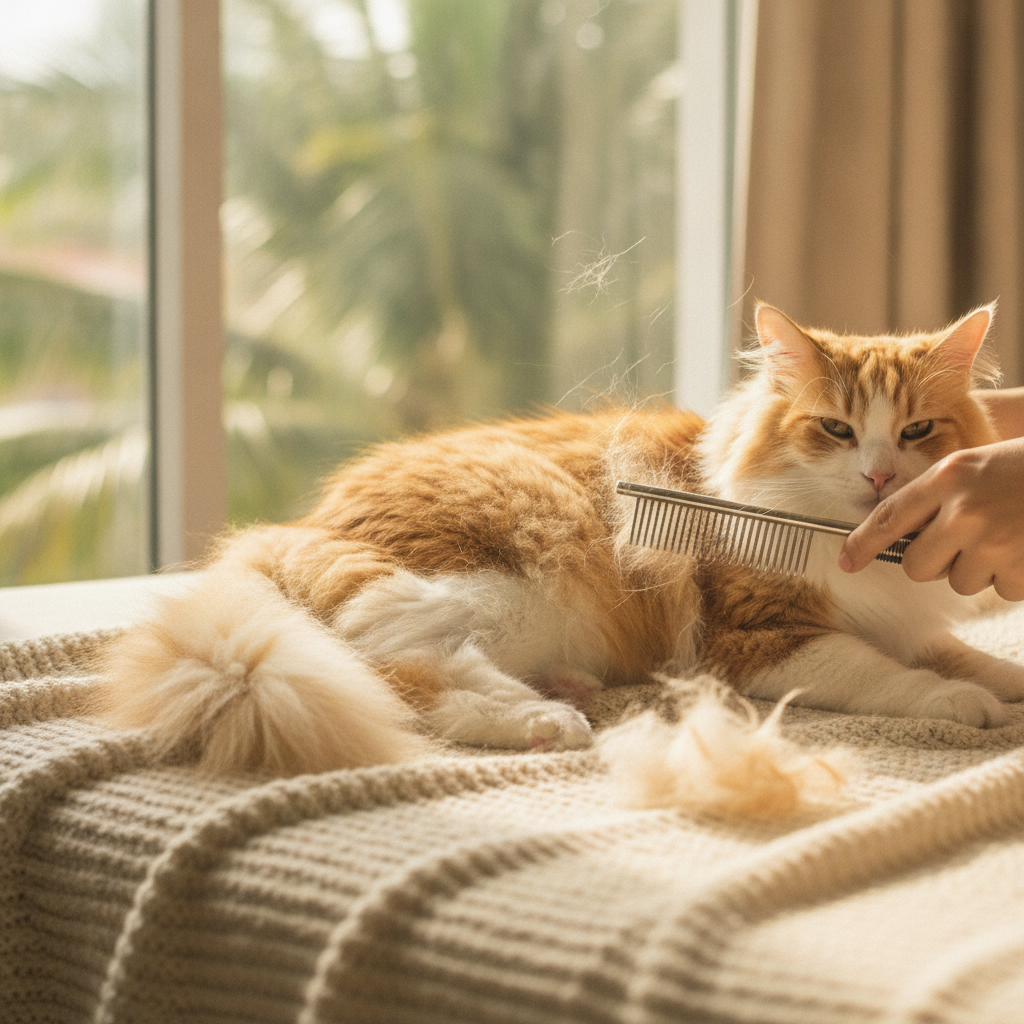
- Wide-tooth metal comb: for working the outer edges and combing through once the mat is broken up.
- Dematting comb/rake: serrated blades with rounded, skin-safe tips that cut through tangles in short strokes.
- Mat splitter: a single sharp blade to slice a dense knot into thin strips — powerful, but use with real caution, always blading away from the skin.
One critical "don't": never wet a matted coat. Water makes mats shrink and tighten, turning a workable tangle into concrete. Keep grooming sessions short — five to ten minutes, ending on treats — so your cat never learns to dread the comb.
How to De-Mat a Minor Tangle, Step by Step
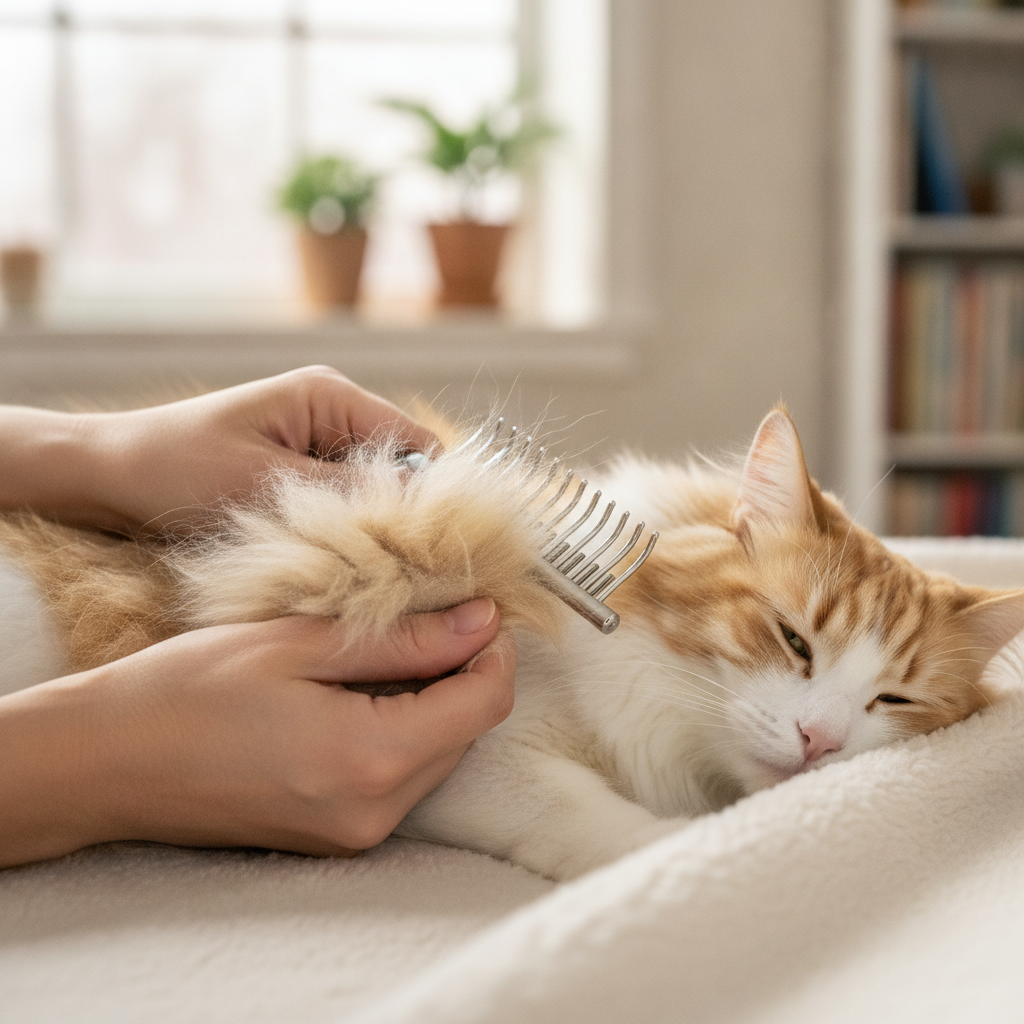
Once you've confirmed the mat is loose enough (see the comb test below), work calmly:
- Prep it. Dust the mat with cornstarch and gently separate it from surrounding fur with your fingers.
- Secure the base. This is the step that prevents pain: with your free hand, hold the matted fur flat against the body right where it meets the skin. Now any tension is absorbed by your hand, not your cat's skin.
- Work outside-in. Always start at the outer tips of the mat and ease inward toward the base. Never try to force a comb through the dense centre.
- Use gentle strokes. Short, light passes with the dematting comb, or a slow sawing motion with a mat splitter, always directed away from the skin.
- Comb out and reward. Finish with a wide-tooth comb through the freed fur, then treats and praise.
Avoid the armpits, belly and groin unless you're very confident — the skin there is loose and easy to nick. If your cat tenses, hisses or struggles, stop. No mat is worth your cat's trust or a trip to the emergency vet.
When to Stop and Call a Pro (Pelting, Lion Cut, Sedation)
The decision is simpler than it feels — run this quick checklist:
- The comb test: can you slide a wide-tooth comb between the mat and the skin? If no, it's too tight for home removal — stop and book a professional.
- Coverage: a few small mats are manageable; widespread matting or a solid pelt is too long and painful to do on an awake cat.
- The skin: any redness, sores, foul smell or swelling under a mat is a medical issue — see your vet, not a groomer, first.
- Behaviour: hissing, growling, biting = your cat is in pain or terrified. Stop immediately.
For a pelted coat, the kindest fix is a therapeutic shave — the "lion cut" — done by a professional groomer or vet. Trying to hand-detangle a pelt is excruciating; shaving gives instant relief. Because removing a pelt is uncomfortable and frightening, vets often use sedation to keep the cat calm and pain-free, weighing the small anaesthetic risk against the very real suffering of the matting. After a shave, remember the shaved skin has lost its UV shield, so keep your cat out of direct sun. Cats Protection stresses that a cat's comfort and welfare must always come before how the coat looks — a slightly uneven shave is far kinder than a painful, drawn-out detangling battle.
Prevention: A Daily Comb and Less Litter in the Coat
You'll never out-cut a matting problem; you prevent it. The ASPCA and every cat-care authority agree the single best defence is a short daily grooming session for long-haired cats. The technique that actually works is the two-step "comb test": brush the coat with a slicker first, then run a metal greyhound comb right down to the skin through every section — armpits, belly, groin, behind the ears, and the ruff. The comb catches the tiny hidden knots a brush skims over. Catch them daily and they never become mats. (If your cat fights the brush, our guide on managing shedding and the Persian-specific tips in our Persian care guide both help.)
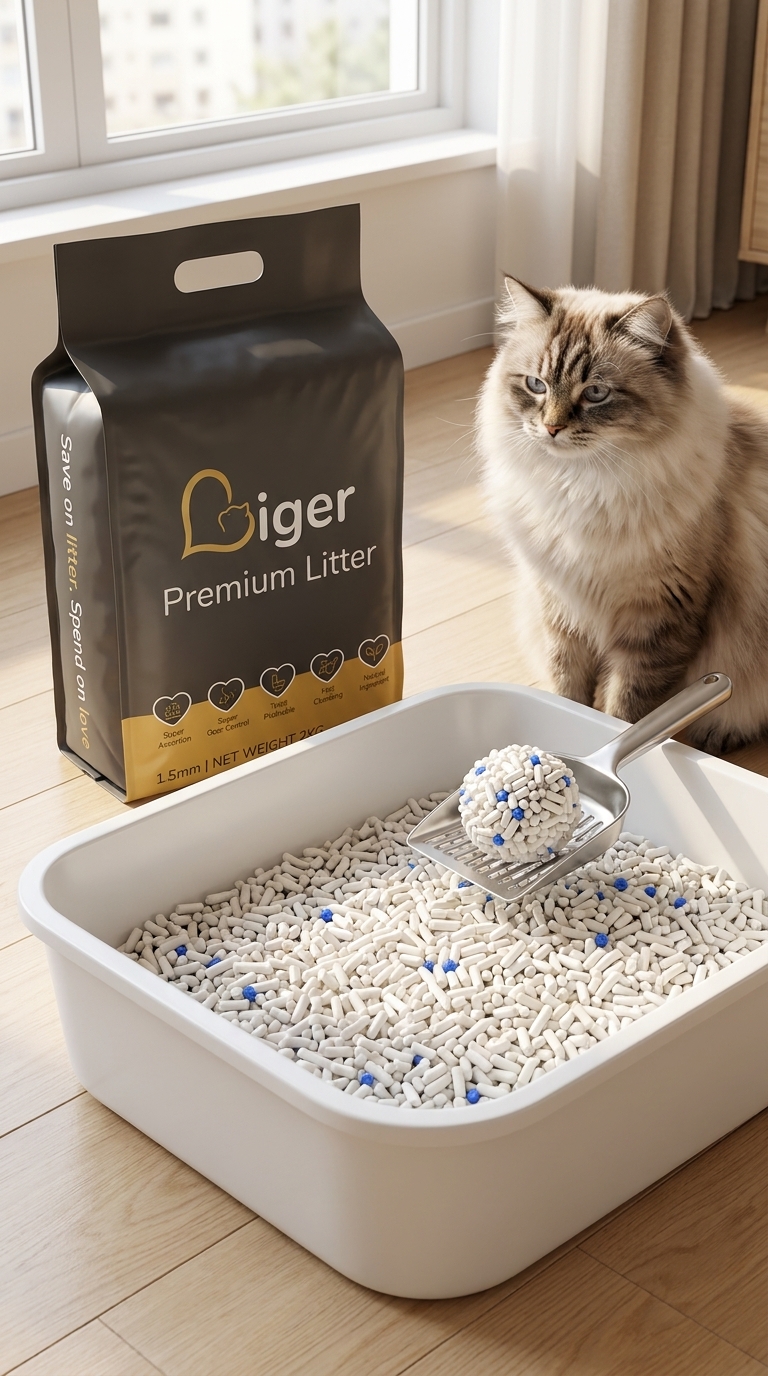
Here's the litter link long-haired owners feel daily: dusty, clingy litter that sticks to a fluffy belly and back legs becomes a nucleus for the next mat, and it's one more thing you have to comb out. A low-dust, firm-clumping litter leaves far less residue in the coat. We use Liger Premium Tofu Cat Litter for exactly this reason — soft soy-based pellets that are low-dust and don't powder into long fur, while clumping hard so the box stays clean. Current pricing (as of May 2026): RM21.90 for 2kg, RM53.90 for 3 packs, RM89 for 5, and RM169 for the 10-pack (about RM8.45/kg, free West Malaysia shipping). Size it with the litter calculator, or compare fines using our dust-level comparison. Pair a low-tracking litter with a sanitary trim around the back end (clippers, never scissors), and you've removed two of the biggest mat triggers at once.
Daily comb, no scissors, know when to call a pro. Do those three things and your long-haired cat stays comfortable — pelt-free, pain-free, and a lot happier on grooming day.