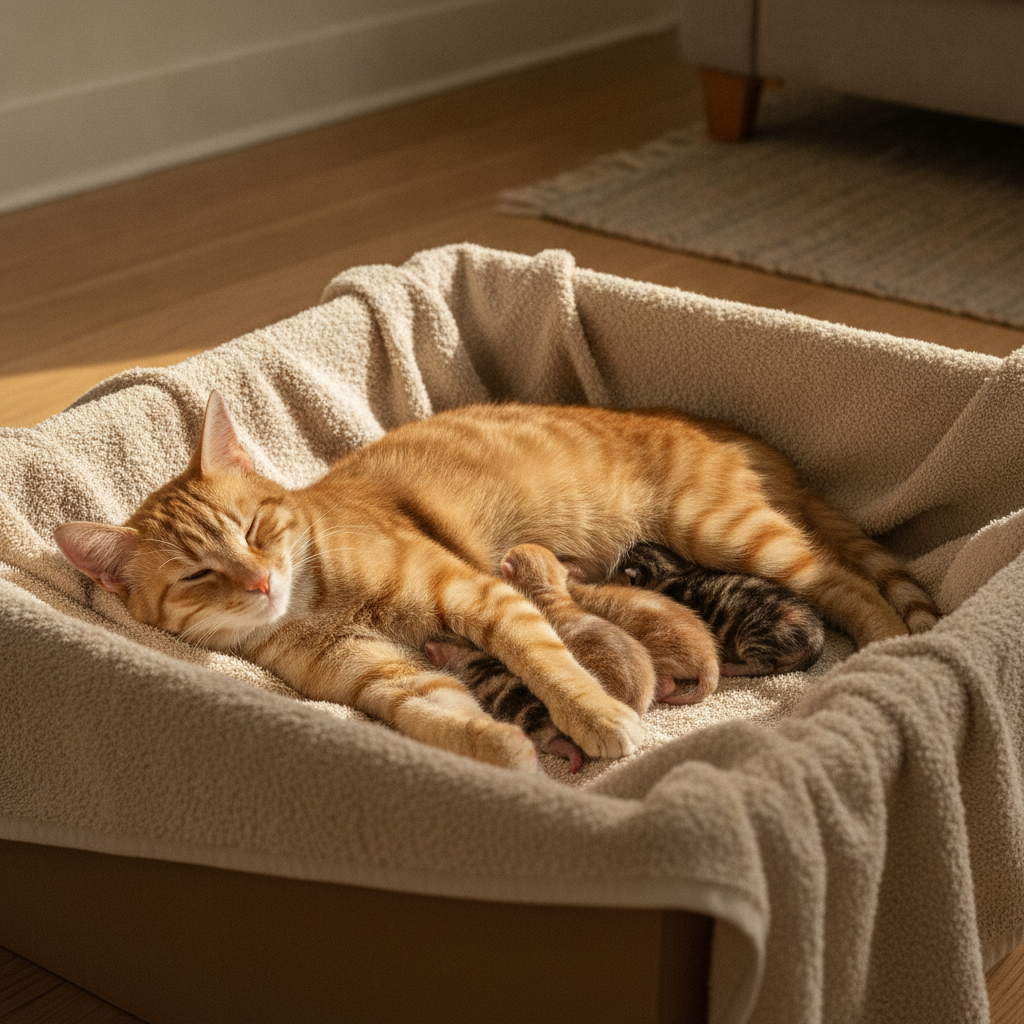
The kittens have arrived, mum is exhausted but proud, and a soft chorus of squeaks is coming from the box in the corner. The birth was the dramatic part — but the few weeks that follow are where the real, quiet work of raising a litter happens, and where attentive owners make the biggest difference. A nursing mother cat (queen) is running her metabolism at full throttle, and newborn kittens are utterly helpless. This guide covers the mother's care and the neonatal basics: feeding, the nest, milk supply, weight tracking, and the emergencies you must never miss.
If you've just been through the birth, our cat giving birth guide covers the delivery itself, and the whole journey sits in the complete pregnancy and birth guide.
The First Weeks: What a Nursing Queen Needs
Lactation is the single most demanding stage of a cat's life — more taxing than pregnancy itself. The queen's job for the first three to four weeks is almost entirely warmth, milk and stimulation; the kittens can't even regulate their own body heat or toilet themselves yet. Your job is to remove every obstacle: keep her superbly fed and hydrated, keep the nest warm and clean, and watch the whole family daily for the first sign of trouble. Get those right and most queens raise a healthy litter with little fuss.
Feeding the Nursing Queen
A nursing queen's calorie needs can double or triple normal adult levels, peaking around three to four weeks when the kittens' demand is highest. You simply cannot meet that on a standard maintenance diet — keep her on a high-quality kitten or growth formula, the same food she had in late pregnancy. The Royal Canin guidance and AAFCO standards point to a diet with at least 30% crude protein on a dry-matter basis, which lets her produce rich milk without burning through her own muscle.
Practical feeding rules for the nursing weeks:
- Free-choice feeding: leave dry kitten food available 24/7 so she can graze whenever she needs to. With wet food, offer several fresh meals a day.
- Water, water, water: her milk is about 78% water, so constant fresh water is directly tied to her milk supply. Multiple bowls help.
- Don't supplement calcium on your own. A balanced kitten food already covers it, and adding calcium can paradoxically trigger eclampsia (more on that below). Only supplement if your vet tells you to.
The Nest: Warm, Clean and Calm
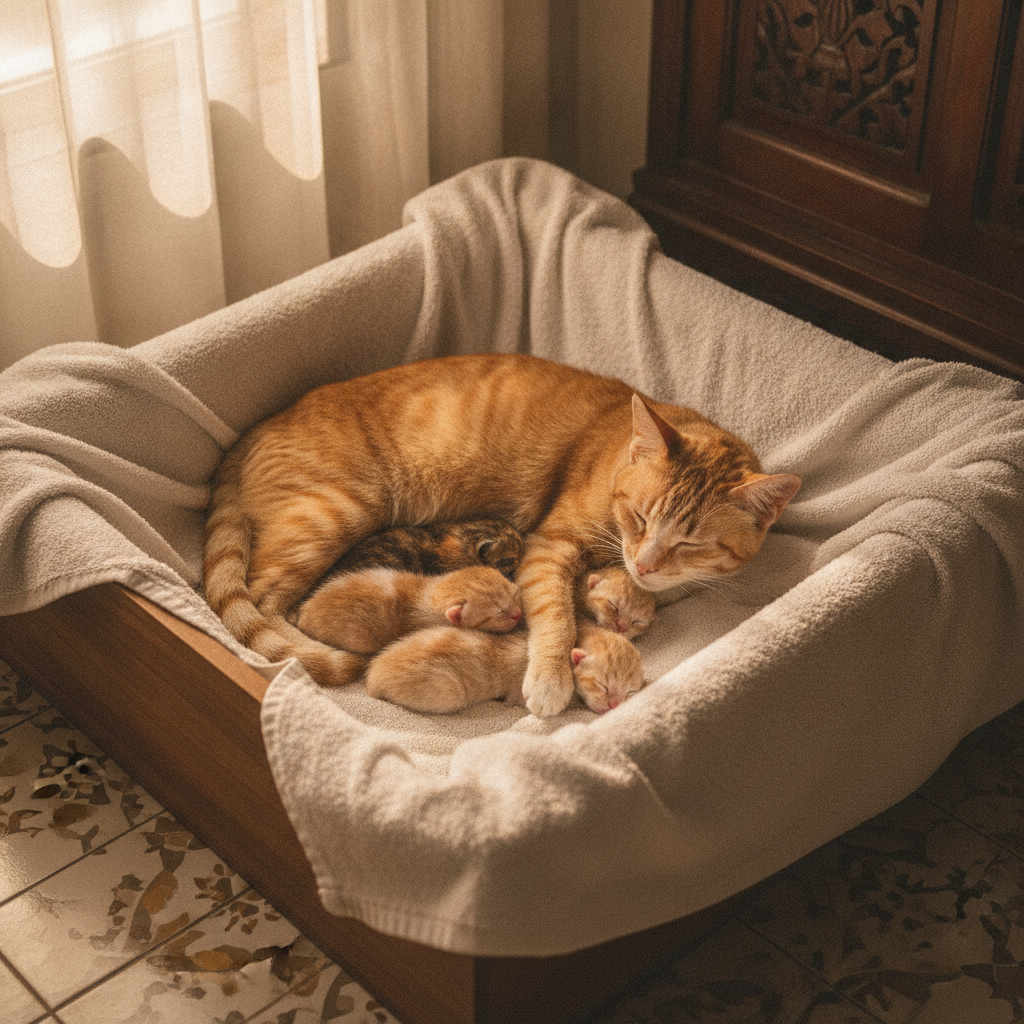
Newborn kittens can't keep themselves warm, and chilling is a leading cause of newborn death. The nest needs a carefully managed temperature that steps down as they grow:
| Kitten age | Nest temperature |
|---|---|
| Week 1 (0–7 days) | 29.5–32°C (85–90°F) |
| Week 2 (8–14 days) | 26.5–29.5°C (80–85°F) |
| Week 3 | ~26.5°C (80°F) |
| Week 4 | ~24°C (75°F) |
Use a pet-safe heat pad under half the box only, so the family can move off the heat if too warm — never place kittens directly on a heat source. On hygiene: change soiled bedding daily, spot-clean to minimise stress, and wash your hands before and after handling. Avoid strong-smelling cleaners — the queen and kittens bond by scent, and harsh chemicals disrupt that. Keep the room quiet and low-traffic so she can rest and nurse without stress.
Is She Making Enough Milk?
You can't measure milk directly, so you read it through the kittens. Well-fed kittens are quiet, sleep between feeds, and have round, full bellies. Kittens who cry constantly, look restless, or nurse endlessly without settling may not be getting enough. The single most reliable signal, though, is on the scale — which is the next section. A devoted queen will lie on her side, purr while nursing, actively herd kittens to the teats, and lick each one's bottom after feeds to make them toilet — newborns genuinely cannot urinate or defecate on their own for the first weeks, so this grooming is life-sustaining, not just cleaning. International Cat Care notes a settled, attentive mother who stays close to the nest is the best sign all is well. If she's ignoring the litter, constantly moving them, or refusing to nurse, treat it as a possible medical problem and check her over. One more thing about her appetite: her food consumption often keeps climbing past the milk peak, sometimes maxing out around six to seven weeks when the kittens are big but still nursing — so don't be surprised if she's eating astonishing amounts well into the litter's second month.
Tracking Newborn Kitten Weight
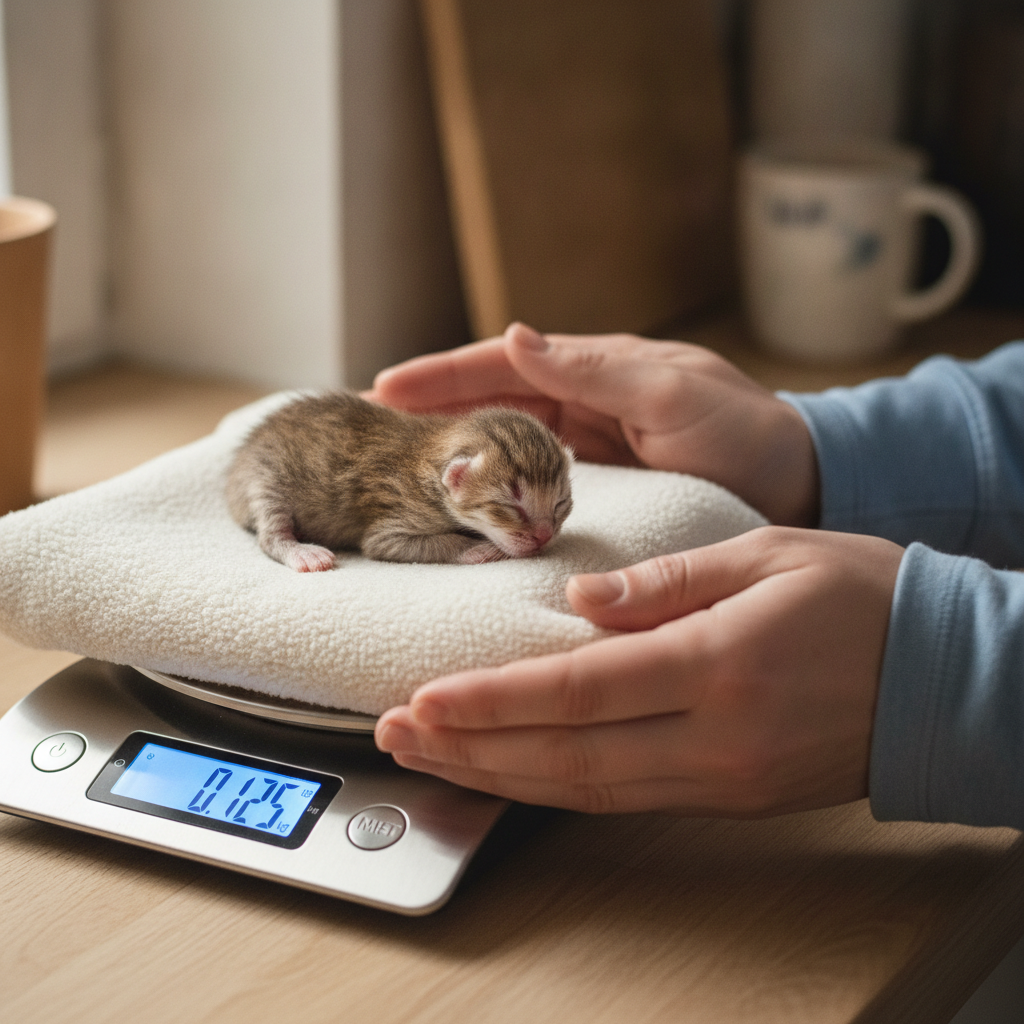
A gram kitchen scale is the most powerful tool you own in these weeks. Weigh every kitten at the same time each day and write it down. The benchmarks, per PetMD and shelter-medicine guidance:
- Birth weight: usually about 85–115 grams (a broader healthy range is 70–140 g).
- Daily gain: roughly 7–14 grams per day.
- Milestone: a kitten should double its birth weight within 7–10 days, then gain about 100 g a week after that.
The red flag that overrides everything: a kitten that fails to gain for more than 24 hours, or loses weight, needs a vet now. A 'fading' kitten gives you very little time, and weight is usually the earliest — sometimes only — warning. Weaker kittens often get shouldered off the teat by stronger siblings, so a daily weigh-in catches the one quietly falling behind. You can track growth against norms with our cat weight calculator.
Postpartum Emergencies: Mastitis, Metritis and Eclampsia
Three postpartum conditions are genuine emergencies. Learn them so you can act fast.
- Mastitis — infection of a mammary gland. The gland turns hot, hard, swollen and painful, milk may look discoloured or bloody, and she may refuse to nurse because it hurts. Check her glands gently every day. Per the MSD Veterinary Manual framework, infected milk can also make kittens ill, so this needs prompt veterinary treatment.
- Metritis — a uterine infection, more likely after a difficult birth or a retained placenta, usually within the first week or two. The tell-tale sign is a foul-smelling, reddish-brown to pus-like vaginal discharge (a normal postpartum discharge does not stink), plus fever, lethargy and neglecting the kittens. VCA Animal Hospitals classes this as life-threatening — go straight to the vet.
- Eclampsia (milk fever) — a dangerous drop in blood calcium, most often two to four weeks after birth when milk demand peaks. Early signs are restlessness, panting, a stiff gait and muscle tremors or facial twitching, which can escalate fast to seizures and a high fever. This is a true emergency: stop the kittens nursing immediately and get her to a vet, who will give intravenous calcium. Do not try to give oral calcium during tremors — it doesn't work fast enough and risks aspiration.
A normal, non-smelly reddish discharge for up to a week after birth is fine. It's fever, foul smell, hard hot glands, or tremors that mean pick up the phone.
Toward Weaning: Handing Over to the Kittens
Around three to four weeks, the queen naturally starts the handover — spending more time off the nest and gently discouraging non-stop nursing, while the kittens' baby teeth appear and they get curious about her food. Full weaning is usually complete by eight to ten weeks, and kittens should stay with mum until at least eight weeks for important social learning. This guide stops at the queen's side of the story; the detail of kitten development, weaning gruel, and feeding by age belongs to its own guide — see our kitten feeding guide by age for the step-by-step. One rule worth repeating now: never give cow's milk, which upsets kitten tummies.
Keeping It Hygienic: Low-Dust Litter for Mum and Kittens
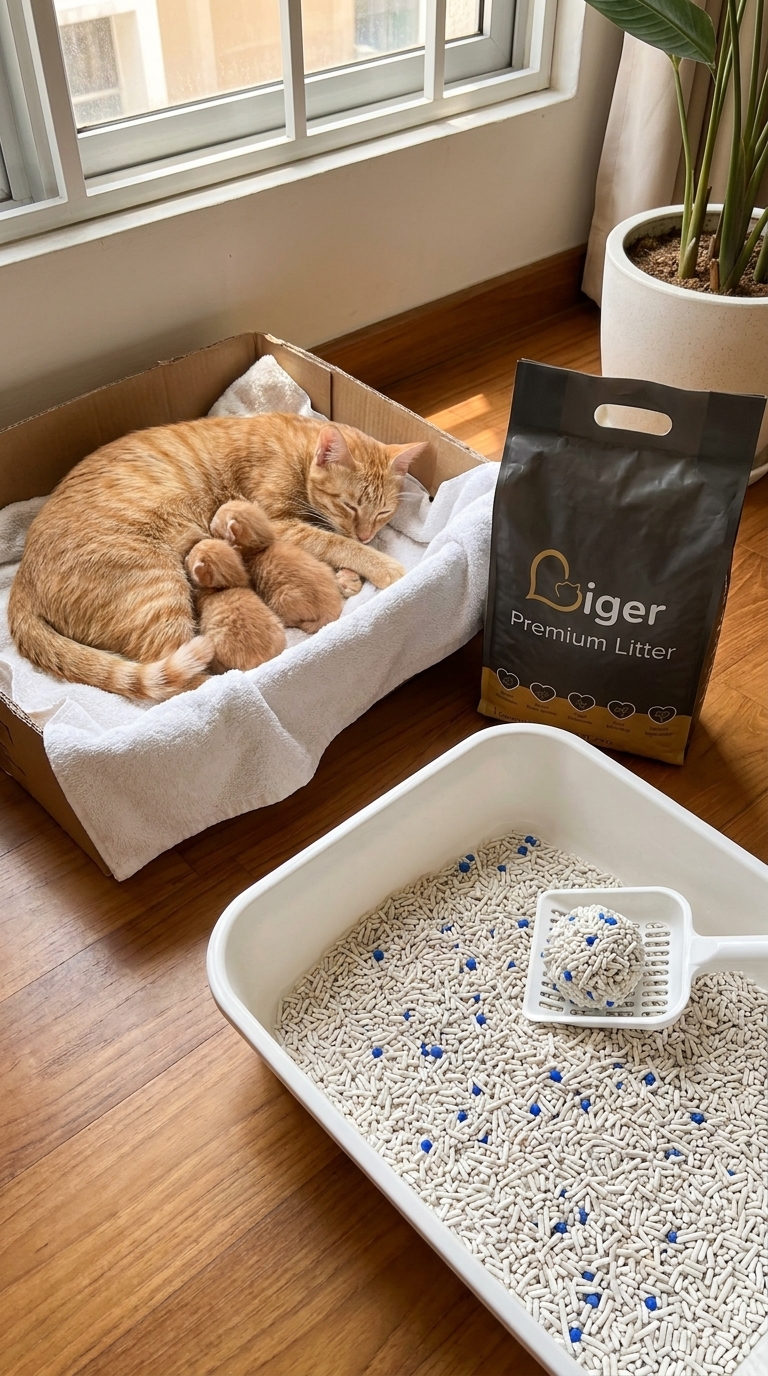
Hygiene is non-negotiable around newborns, and your litter choice is part of it. A postpartum queen uses the tray more, fragile kittens have developing lungs, and the whole family shares a small clean space — so a low-dust, easy-to-keep-spotless litter matters more now than at any other time. As kittens start exploring at three to four weeks, they'll also nose around the tray, so you want a litter that's natural and gentle if a curious kitten investigates. (Very young kittens should use non-clumping or kitten-safe litter; introduce regular litter as they grow.)
Liger Premium Tofu Cat Litter fits the nursing stage well: made from natural soy fibre, it's low-dust, clumps firmly so you can keep the tray immaculate with minimal effort, controls odour in our humid Malaysian weather, is flushable in small amounts, and is Halal-certified. The pricing is household-friendly: RM21.90 (1 pack, 2 kg), RM53.90 (3 packs), RM89 (5 packs) and RM169 (10 packs), which is about RM8.45/kg on the 10-pack (current Liger pricing). With a mother cat and a growing litter your usage jumps, so the bulk pack earns its keep — size it with the litter calculator. If you ever end up hand-raising an orphan, our newborn kitten care guide walks through bottle-feeding and warmth. Wondering whether this litter size was typical? See how many kittens do cats have. Most of all: weigh daily, watch mum's glands and mood, keep everything warm and clean, and call your vet at the first real red flag.