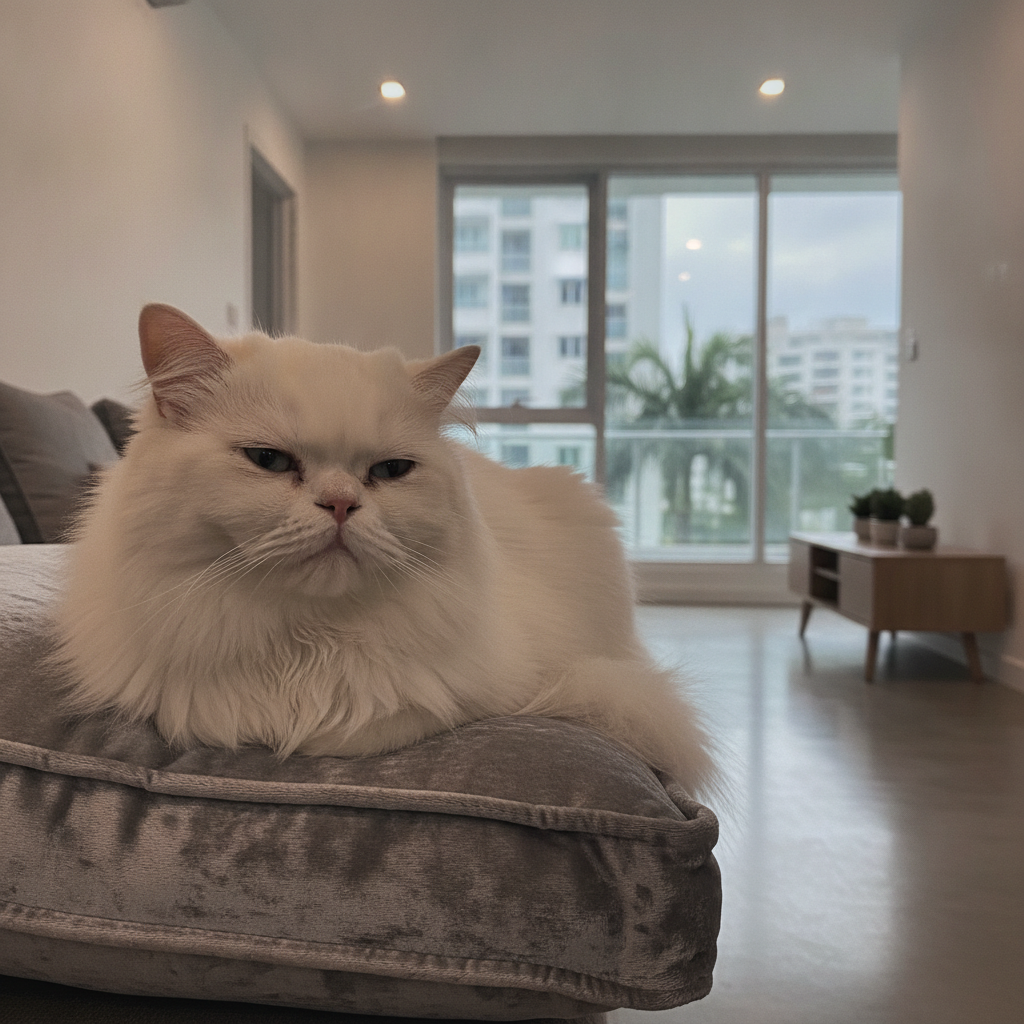
Few cats turn heads like a Persian — that flowing coat, the squashed teddy-bear face, the calm royal air. They've been beloved in Malaysia for decades (you'll still hear them called kucing parsi). But here's the honest truth most breeders won't lead with: the Persian is one of the highest-maintenance cats you can own, and our tropical climate makes it harder still. This guide is the realistic version — what it actually takes to keep a Persian happy and healthy in Malaysia, from daily grooming to the flat-face health risks and 2026 prices.
If you're still weighing breeds, start with our complete cat breeds in Malaysia guide to see how the Persian compares.
Is a Persian Right for Malaysia's Heat?
Persians were bred in cold climates, and their dense, double-layered coat — refined by 19th-century British fanciers, as documented in the breed's history — is built to trap heat. In Malaysia's year-round 30°C-plus humidity, that's a serious liability. On top of that, their flat (brachycephalic) face means they can't pant efficiently to cool down — so they're genuinely at risk of heat stress.
The blunt conclusion from veterinary guidance: a Persian in Malaysia needs to live strictly indoors in an air-conditioned environment. This isn't pampering — it's the difference between a comfortable cat and one quietly struggling. If you can't commit to keeping a room cool around the clock, a Persian is the wrong breed for your home, and a short-coated cat like a kucing kampung would be far kinder to keep. Be honest about this before you fall for the face.
Grooming: The Daily Commitment
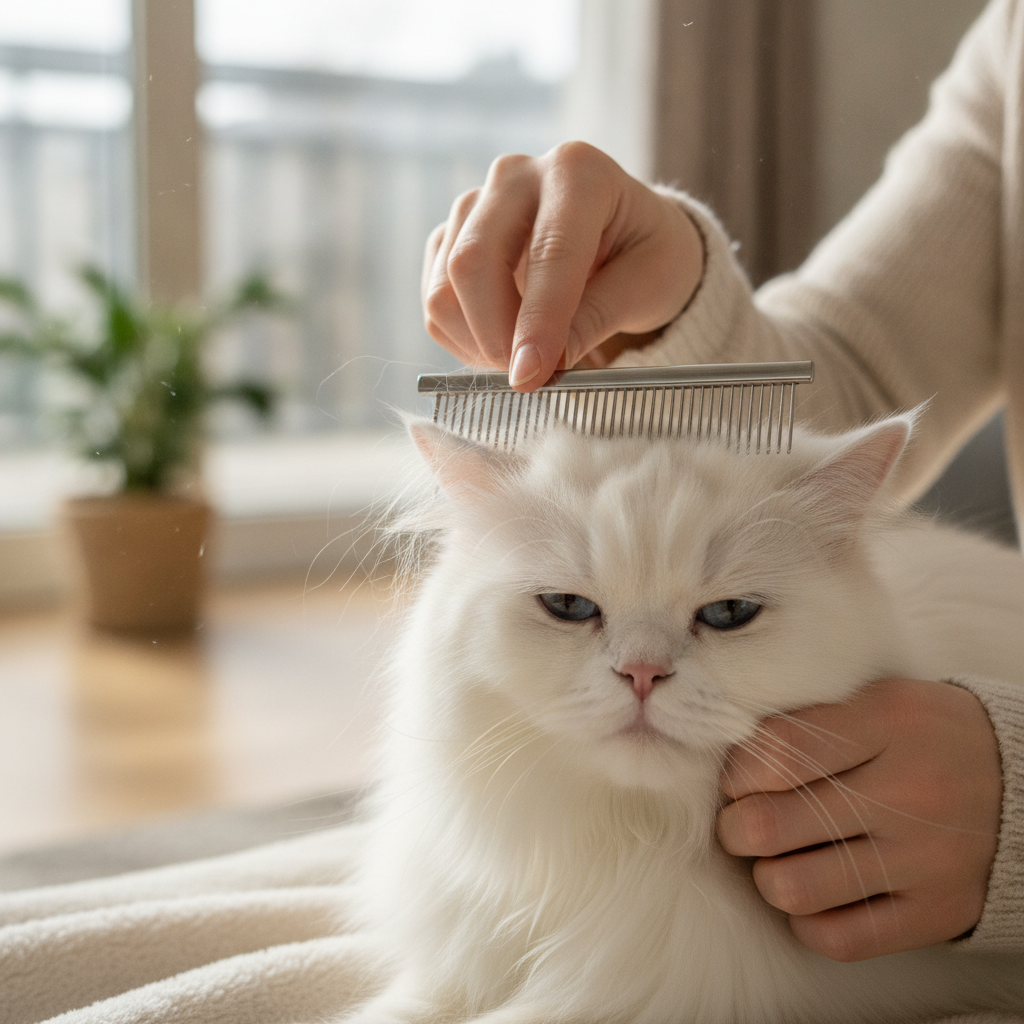
This is the deal-breaker for most people, so let's be clear: a Persian needs daily brushing, every day, for life. Skip it and the coat mats — and in our humidity, mats trap moisture against the skin and turn into fungal infections and painful "hot spots" fast.
As breed-care resources like PetMD and Royal Canin stress, the long coat needs working through right to the skin. The routine that works: a wide-toothed metal comb first to ease out tangles, then a slicker brush to lift the dense undercoat. Pay extra attention to the mat-prone zones — armpits, belly, and behind the ears. Caught a small mat early? Dust it with a little baby powder, work it with your fingers, and gently tease it apart with the comb rather than yanking. Many Malaysian owners also book a professional groom every 4–6 weeks (and some opt for a "lion cut" in the hottest months). Daily eye-cleaning is part of the deal too — more on that next.
The Flat-Face Problem: Breathing, Eyes and Teeth
That adorable flat face is the source of the Persian's biggest health burdens. The shortened skull causes Brachycephalic Obstructive Airway Syndrome (BOAS) — narrowed airways that make breathing harder and cooling even harder. In severe cases, corrective surgery to improve airflow can cost RM1,000–5,000. Watch for noisy breathing, mouth-breathing, or quick tiring; raise any of it with your vet.
The same flat structure malforms the tear ducts, so most Persians have constant eye tearing (epiphora). Wipe the eye area daily with a clean, damp cloth to prevent staining and skin infection. Their jaw shape also causes dental crowding (malocclusion), so brushing teeth and regular dental checks matter — dental disease is already one of the most common feline conditions, and crowded Persian jaws make it worse. The breed standard's "peke-face" look, which emerged around WWII, is exactly what drives these problems, so a slightly longer "doll-face" Persian is generally the healthier choice.
Other Health Risks: PKD and HCM
Beyond the face, two inherited diseases matter most. Polycystic Kidney Disease (PKD) was once found in over a third of Persians — as VCA Hospitals explains, cysts grow in the kidneys and can lead to kidney failure; ongoing management can run RM4,000–10,000+ a year. Hypertrophic Cardiomyopathy (HCM), the most common feline heart disease, is also a risk — the same condition we cover in our cat heart health guide.
The single most important thing you can do is buy from a breeder who genetically screens the parents for PKD and will show you the results. A reputable breeder welcomes that question. Good hydration also protects those kidneys long-term — see our advice on getting your cat to drink enough water. For typical breed lifespans (a Persian is usually 12–17 years), see our cat lifespan by breed guide.
Litter, Dust and Shedding for a Persian
Litter choice matters more for a Persian than for almost any other breed, for two reasons. First, that long coat and feathery paws track litter everywhere — granules cling to the fur and get carried across your floors and furniture. Second, a flat-faced cat with compromised airways is especially sensitive to dust; a dusty clay litter is the last thing those narrow nasal passages need.
That points firmly toward a low-dust, low-tracking, firmly-clumping litter. A natural tofu litter like Liger Premium Tofu Cat Litter ticks all three boxes — it runs very low on dust (kinder to a brachycephalic nose), its lightweight pellets track less into a long coat than fine clay, and it clumps firmly so daily scooping stays quick. As a plant-based litter it's also gentler if your meticulous self-groomer ingests a stray granule while cleaning its paws. Work out how much your household needs with our litter calculator. Pair the right litter with daily brushing and you'll keep both shedding and litter-tracking under control.
Price and Buying Responsibly in Malaysia (2026)
For 2026, a pet-quality Persian from a registered, ethical breeder typically runs RM1,500–4,000, while show-quality lines can exceed RM15,000. You'll also see cheaper Persians advertised, but a suspiciously low price often means no health screening, poor socialisation, or a kitten sold too young — which can cost you far more in vet bills later.
Buy responsibly: insist on documentation of negative PKD screening for both parents, meet the kitten in person, check for clear eyes and easy breathing, and never buy a kitten under 12 weeks. For a full breakdown of what every breed costs to buy and keep, see our cat breed price guide for Malaysia.
A Persian can be a wonderful, gentle companion for 15 years or more — but only for an owner who genuinely commits to the daily grooming, the air-conditioning, and the vet care its breeding demands. Go in with eyes open, set your home up properly, and your kucing parsi will reward you with that famously serene, affectionate presence. Not sure it's the breed for you? Our Malaysia cat breeds guide can help you find a better match.