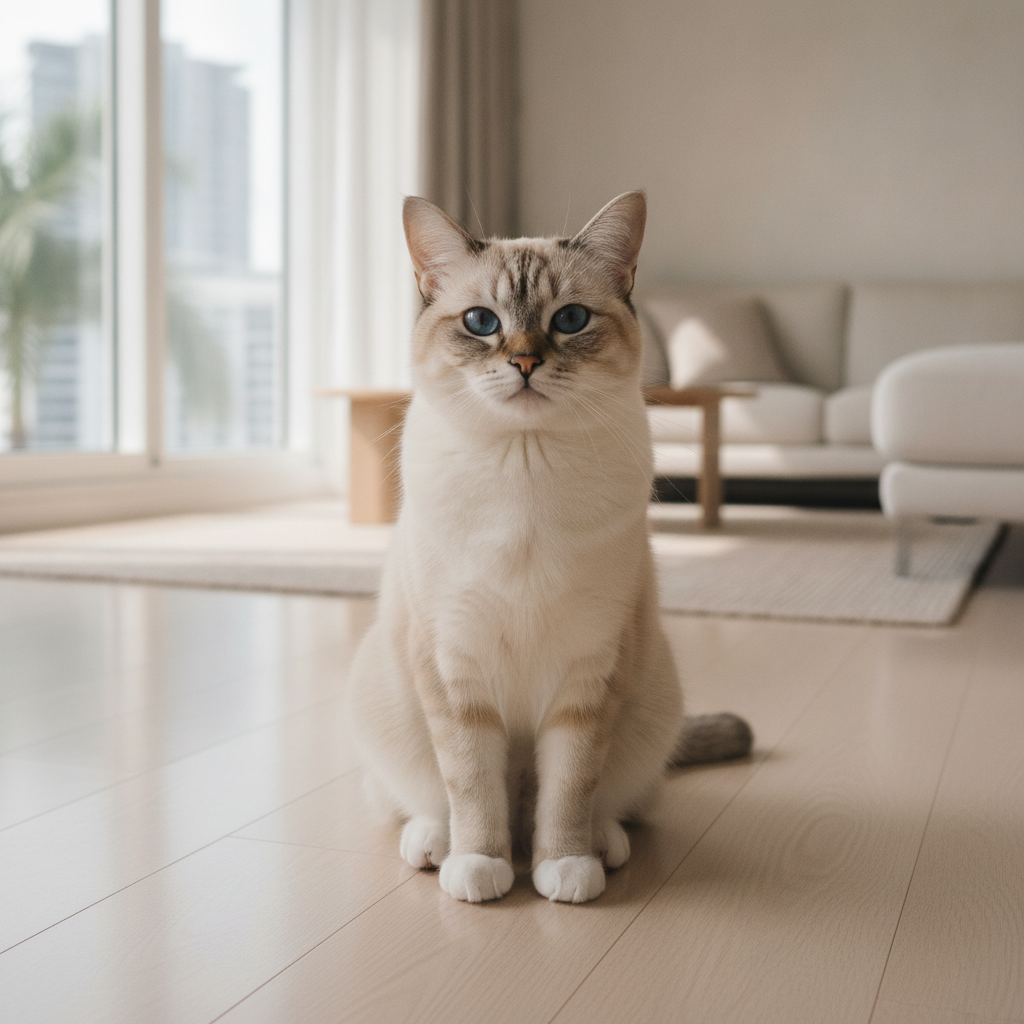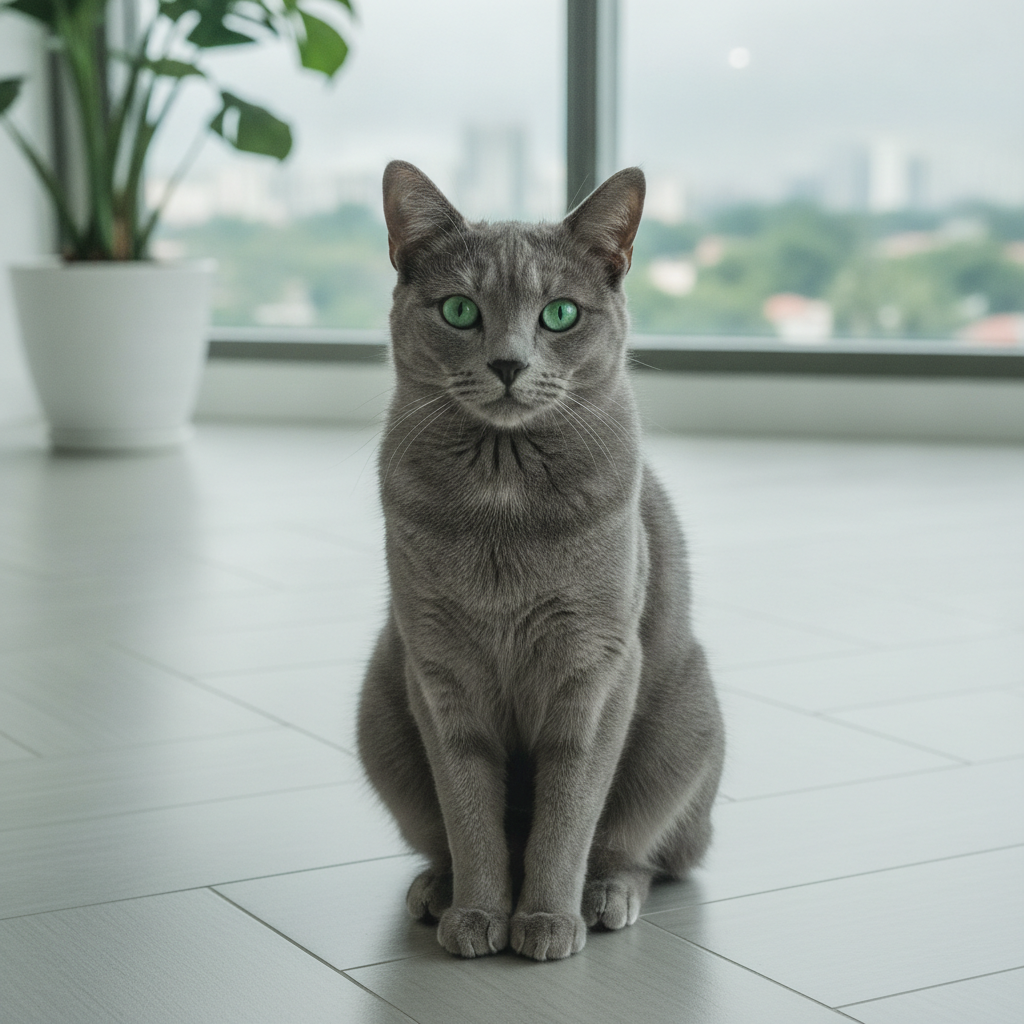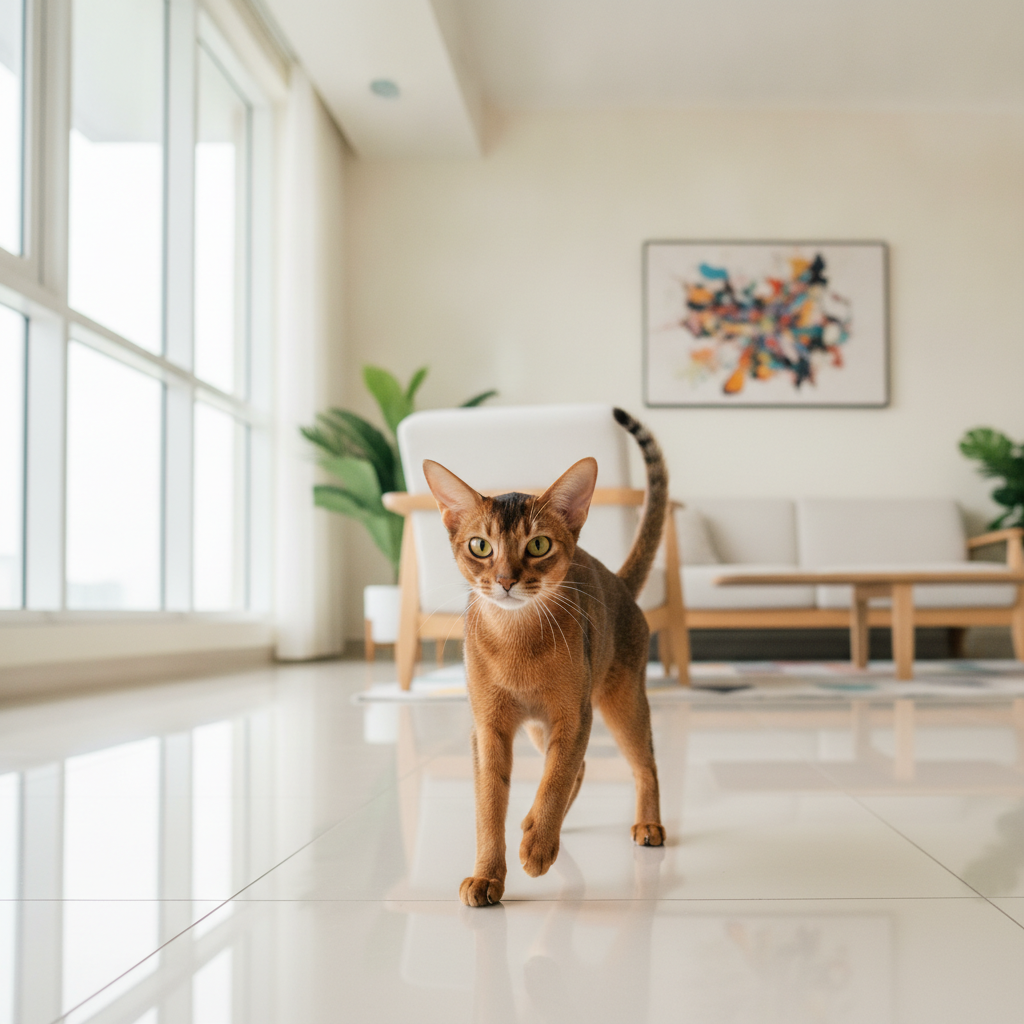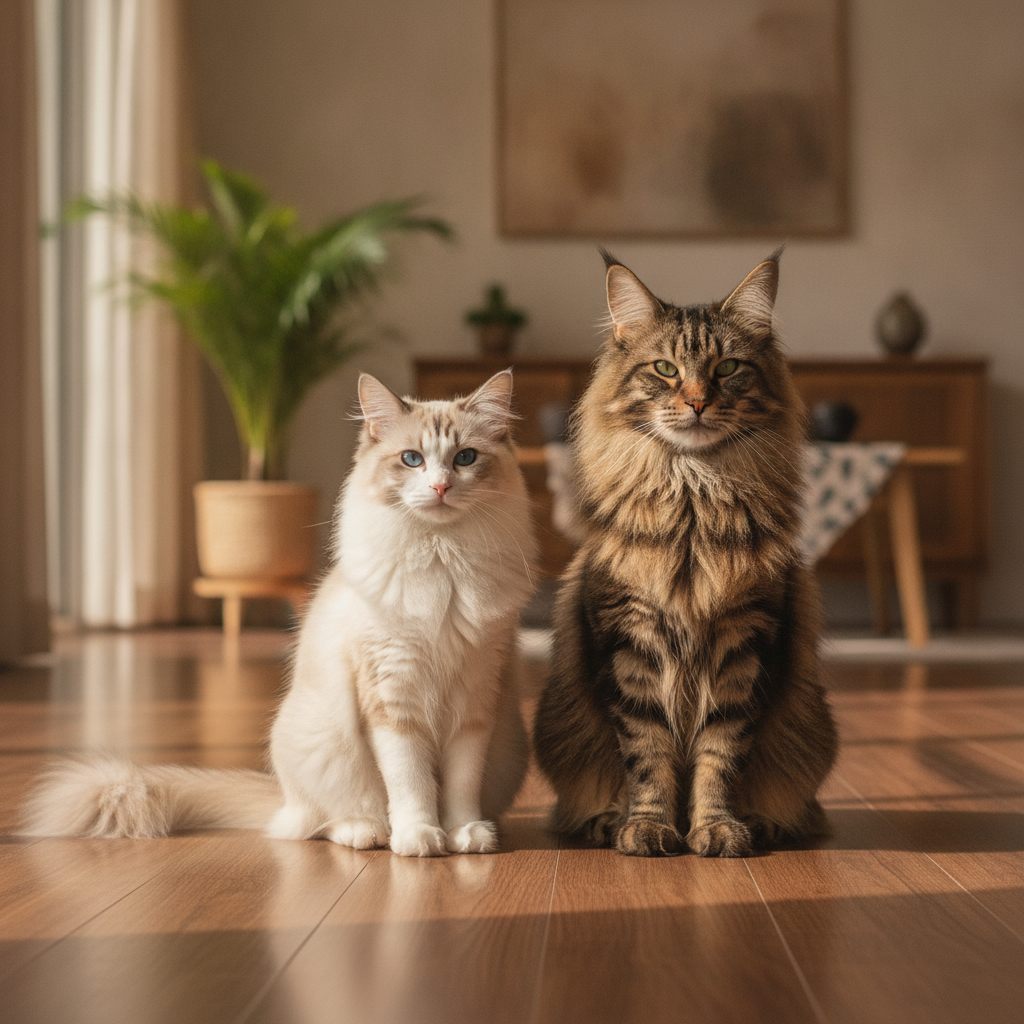
They're the two cats that make people stop and stare: the fluffy, floppy Ragdoll and the magnificent, lion-maned Maine Coon. Both are "gentle giants" — big, long-haired, sociable and brilliant with families. But they got there by completely different routes, and they make very different housemates. This is the honest side-by-side: size, temperament, grooming, health, price and — the question most families really ask — which one is better with kids, all weighed up for a Malaysian home, where heat and grooming add an extra layer to the decision.
Want the deep dive on each? We've got a full Ragdoll guide and Maine Coon guide — this article is where the two giants go head to head.
Two Gentle Giants, Two Very Different Cats
The quickest way to understand the difference is their origin story. The Ragdoll was designed — bred in 1960s California specifically for a large, beautiful cat with an almost impossibly placid temperament (it famously goes limp like a rag doll when you pick it up). The Maine Coon is a natural breed, forged by harsh New England winters into a hardy, muscular, intelligent survivor — its shaggy water-resistant coat, bushy tail and big tufted "snowshoe" paws all evolved to survive snow, as the breed's documented history records. One was built for serenity, the other for resilience — and you can feel that difference the moment each cat walks into a room. It's a useful frame for everything below: nearly every contrast in size, coat, energy and voice traces straight back to those two very different beginnings.
Size and Build: The Maine Coon Usually Wins
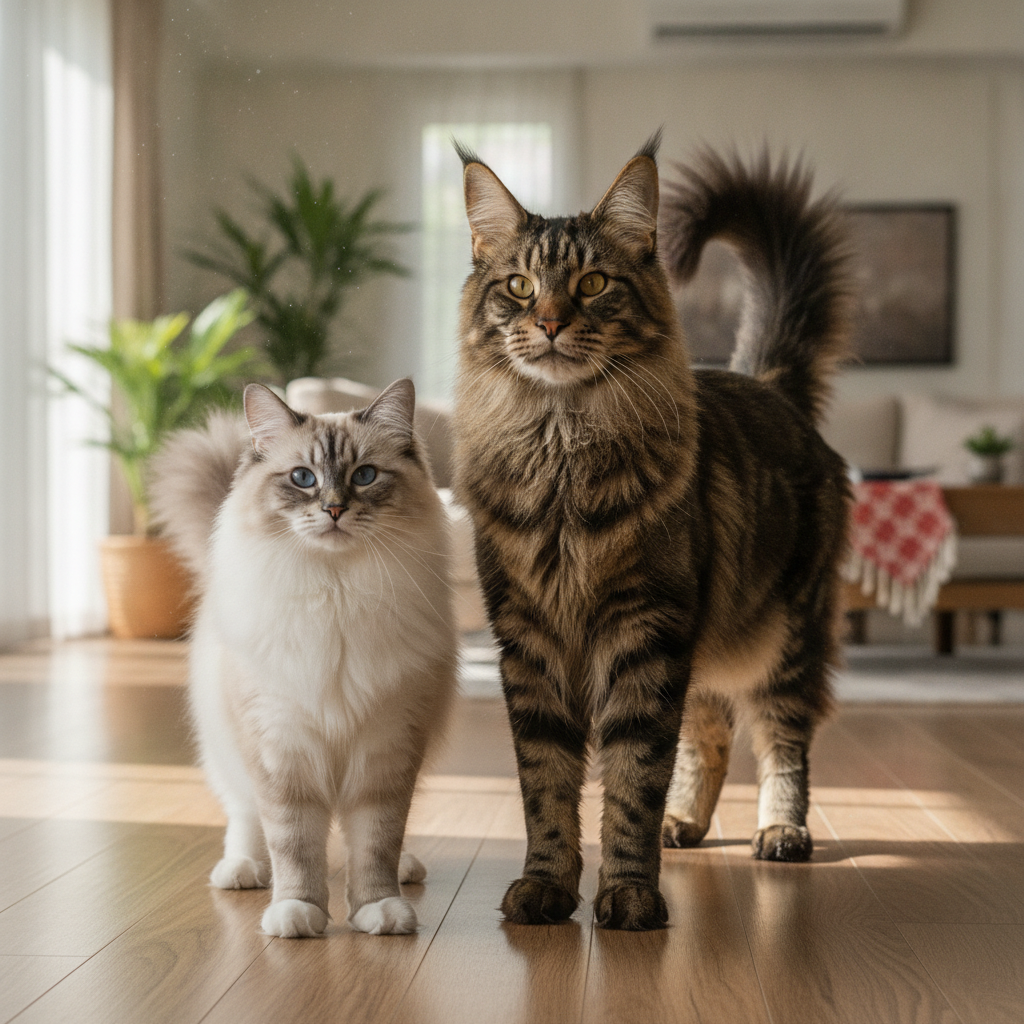
Both are big, but the Maine Coon is typically the larger of the two. Male Maine Coons run roughly 5.9–11.3 kg and stand taller, while male Ragdolls are a more consistent 6.8–9.1 kg. (For scale, a Maine Coon named Stewie holds the Guinness record for longest domestic cat at 123 cm.) Both share an unusual trait: they're slow growers, taking three to five years to fully "fill out" rather than the usual one. One myth worth busting — a "30-pound Ragdoll" isn't a genetic marvel, it's an obese cat; healthy males rarely top 9 kg. Either way, you're committing to a substantial animal that needs space, a sturdy cat tree, and a litter box sized for a big body — a cramped standard tray that a big cat hangs over the edge of is a guaranteed route to mess outside the box.
Temperament: Lap Cat vs Adventure Buddy
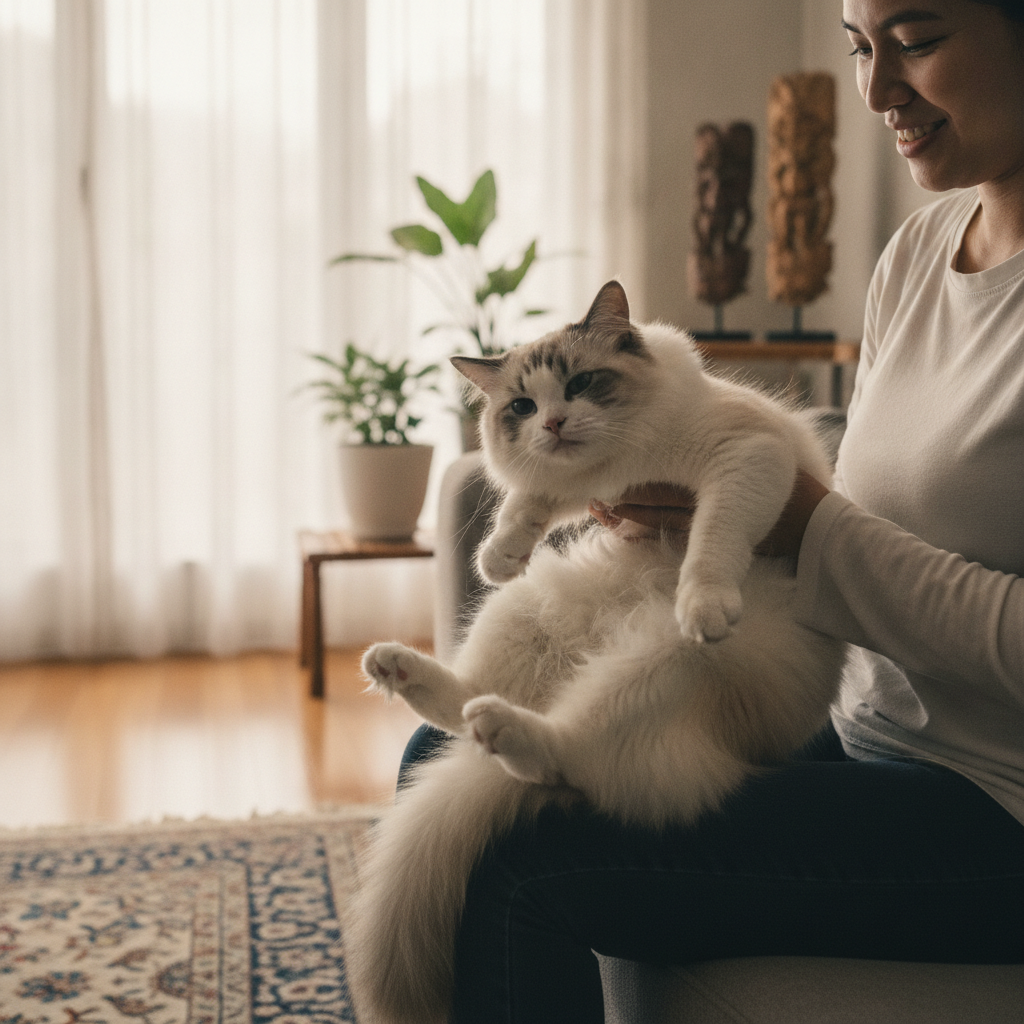
This is the real deciding factor. The Ragdoll is the quintessential lap cat — docile, soft-spoken, and happiest melted across your chest. It wants to be with you: following you room to room, going limp in your arms, content with gentle ground-level play. The Maine Coon is a "dog-like" sidekick that wants to do things with you: it supervises your chores, learns tricks and fetch, climbs to the highest shelf, chirps and trills instead of meowing, and is famously fascinated by water. Energy-wise, the Ragdoll is a low-to-moderate couch companion while the Maine Coon stays playful and athletic well into adulthood. Neither is aggressive, but the trusting Ragdoll genuinely won't defend itself, so it must be an indoor-only cat. Royal Canin's Ragdoll profile describes that gentle, people-oriented nature well — this is a cat that bonds hard and hates being left alone all day. The Maine Coon's intelligence, by contrast, is often called dog-like: quick to learn, endlessly curious, and happy to be leash-trained for a supervised walk. Match the cat to your energy, not just your aesthetics — a bored Maine Coon in a too-quiet home will invent its own (often destructive) entertainment.
Grooming and Shedding in a Hot Climate
Both are long-haired, but their coats differ in a way that matters in Malaysia. The Maine Coon's dense double coat sheds more heavily and mats more easily, demanding several brushing sessions a week; the Ragdoll's single-layer silky coat is a touch more forgiving but still needs regular combing. In our heat and humidity, both breeds feel the climate — a long, thick coat traps warmth and moisture, so air-conditioning isn't a luxury, and diligent grooming prevents the humid-weather mats and skin infections that long fur invites. Whichever you choose, budget real time each week for a comb, and keep a cool room available year-round.
A practical tip from owners of both breeds: get the kitten used to grooming early, while it's small and biddable, because wrestling a fully-grown 9 kg cat that hates the comb is a different sport entirely. Pay special attention to the friction zones — behind the ears, the armpits, the "trousers" at the back legs and the belly — where humid-weather mats form fastest. If a mat does set in, never yank it; a mat too tight to comb out is a job for a groomer, not a tug-of-war that ends in a torn-skin vet visit.
Health and Lifespan: HCM, Hip Dysplasia and Screening
Both breeds are generally robust but share two serious inherited risks every buyer must understand:
- Hypertrophic Cardiomyopathy (HCM). The most common feline heart disease — a thickening of the heart muscle. Maine Coons have a well-documented gene mutation (MYBPC3 A31P) carried by roughly a third of the breed, and Ragdolls have their own HCM mutation. VCA Hospitals explains why it's so dangerous — it can cause heart failure or sudden death, sometimes young.
- Hip dysplasia. Their size makes joint problems more likely; one dataset put hip dysplasia prevalence in Maine Coons at about 24.9%. PetMD covers the breed's orthopaedic watch-points.
On lifespan, Ragdolls tend to live a little longer (around 13–18 years) than Maine Coons (around 10–15). The single most important thing you can do for either: buy only from a breeder who genetically screens parents for HCM and shows you the results. A higher kitten price from a screening breeder is far cheaper than a heartbreak heart condition later. International Cat Care recommends regular cardiac screening for at-risk breeds, since HCM can be silent until it's advanced — so even with a screened kitten, build in periodic vet heart checks as your giant grows. Insurance is worth a serious look too: a large cat with a known orthopaedic and cardiac risk profile is exactly the kind of pet where an unexpected bill can run into the thousands.
Price and Cost in Malaysia
Neither is a budget cat. As rough 2026 market guidance (not Liger figures), both breeds run into the low thousands of ringgit for a pet-quality kitten, with the Maine Coon often commanding the higher price — partly because responsible breeders fold extensive health screening into their costs. Treat a suspiciously cheap "purebred" Maine Coon or Ragdoll as a red flag for unscreened, possibly unhealthy genetics. And remember the sticker price is the smallest cost: for a fuller breakdown see our cat breed price guide for Malaysia, and factor in years of food, grooming, vet care and litter — all of which run higher for a big, long-haired cat.
Litter and Big-Cat Care: Don't Overlook This
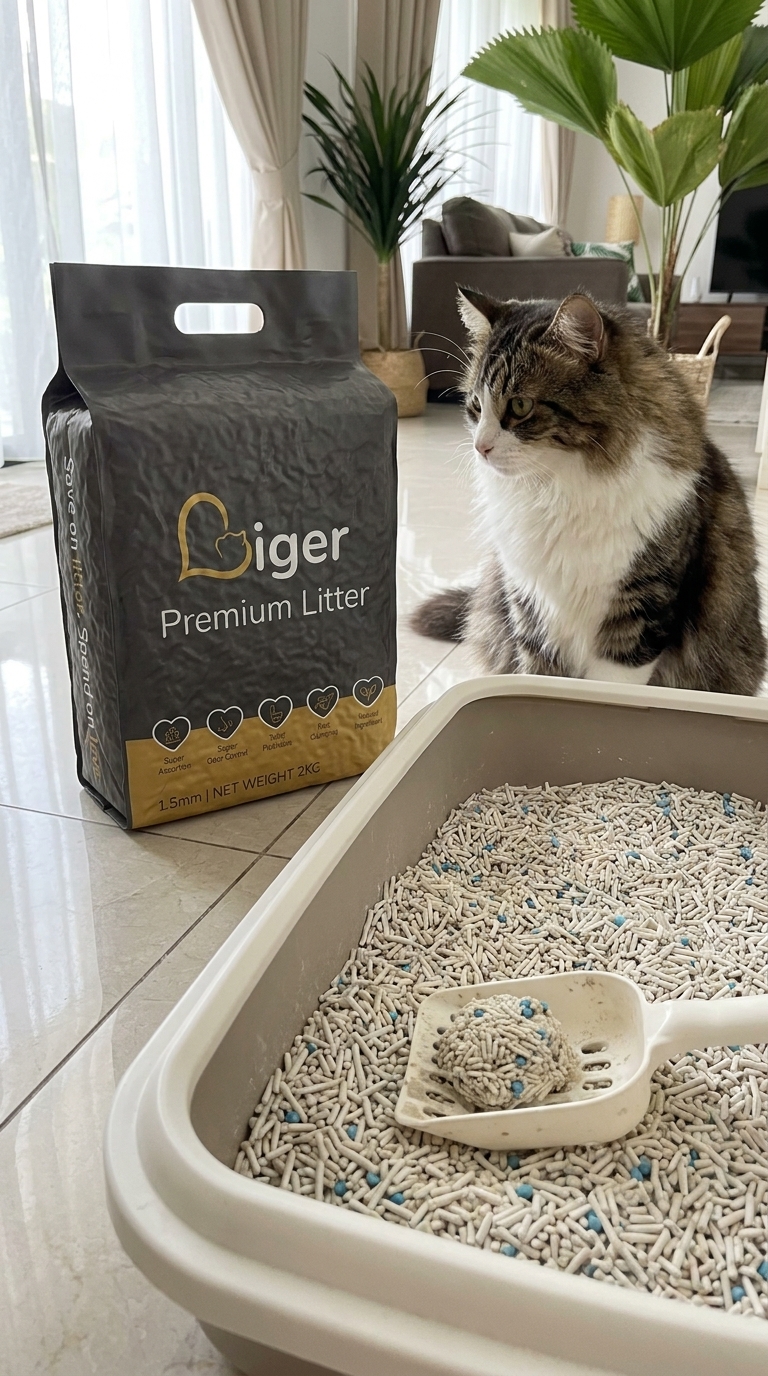
Here's a detail new owners of giant breeds always underestimate: a bigger cat means a bigger litter habit, and a long-haired cat means litter that catches in fur and tracks across your whole house. That's where litter quality earns its keep. Liger Premium Tofu Cat Litter is made from natural plant starch, clumps firmly so you scoop a big cat's waste cleanly, and controls odour without needing constant full changes. Crucially it's low-dust — a real plus for a long-coated cat in a sealed, air-conditioned Malaysian home — and flushable and Halal for fuss-free disposal. Less tracking, less mess to comb out of all that fur, and one less daily chore in a household already busy keeping a giant cat brushed and cool.
On cost, a single 2 kg pack is RM21.90, while the 10-pack (20 kg) drops to RM8.45/kg — about 23% cheaper per kilo, with free shipping across Peninsular Malaysia (current Liger pricing, as of 2026). Since giant breeds get through more litter, run your numbers through the litter calculator before you bulk-buy.
Which Gentle Giant Suits Your Family?
Here's the clean verdict. If you have young children or simply want a serene, cuddly, low-key companion that's happy to be carried and snoozed on, the Ragdoll is your cat — its endless patience and limp-when-held calm make it arguably the best big breed for little kids and first-time owners. If your household is active with older children who'll love an intelligent, playful, interactive cat that learns tricks and joins in everything, the Maine Coon is the one — just be ready for more grooming, more energy, more climbing furniture and a bigger appetite. Both will fill your home with plenty of fur and even more love in equal measure; the right choice is simply the temperament that matches your family's pace, your home's size, and how much grooming time you can honestly commit. Still weighing it up? Our full cat breeds in Malaysia guide puts both in context against every other option.