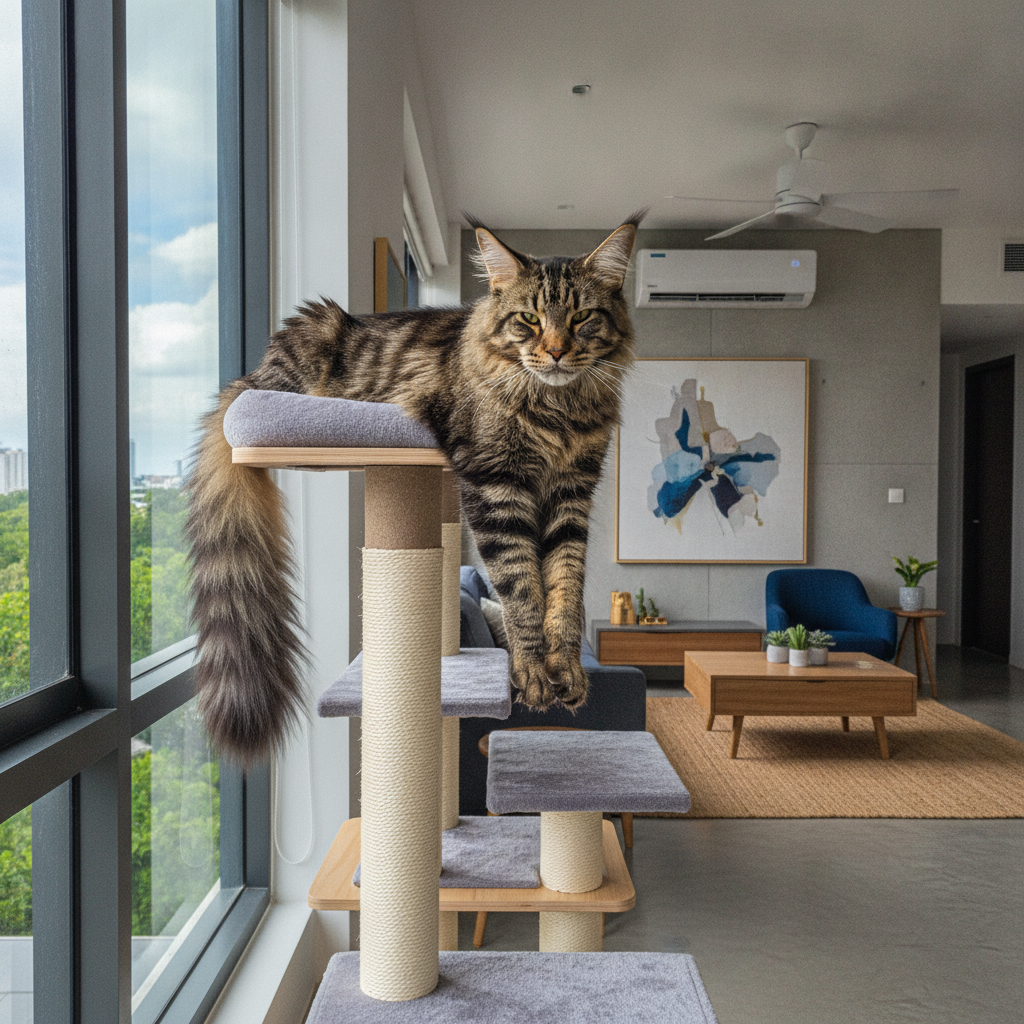
If the British Shorthair is Malaysia's most popular pedigree and the Persian its most glamorous, the Maine Coon is its most impressive. Nicknamed the "gentle giant," this is one of the largest domesticated cats in the world — males can top 11kg — with a shaggy coat, lynx-tipped ears, a magnificent plumed tail, and a famously friendly, dog-like personality. They've had a dedicated following here since the mid-2000s. But a giant, cold-climate cat in tropical Malaysia is a serious commitment. Here's the honest guide.
New to choosing a breed? Our complete cat breeds in Malaysia guide puts the Maine Coon in context against the other popular breeds.
The Gentle Giant: Is a Maine Coon Right for Malaysia?
Temperament-wise, the Maine Coon is close to ideal: friendly, intelligent, sociable, and great with children and other pets. They're playful well into adulthood and often follow their humans around the house like a dog. The catch is everything that comes with the size and the coat — space, cooling, grooming, food, and litter all scale up. This is a cat for an owner who has the room, the budget, and the time. If that's you, few cats are more rewarding; if you're in a compact, non-air-conditioned flat on a tight budget, be honest that a short-coated cat would be kinder to keep.
Space and Climate: Cool Air and Vertical Room
Two non-negotiables in our climate. First, cooling: that dense, water-resistant coat evolved for North American winters, so a Maine Coon needs a consistently cool indoor environment — air-conditioning around 24–27°C to prevent heat stress.
Second, space — but think up, not out. You don't need a mansion; you need height. As breed resources like Royal Canin note, this active, intelligent breed thrives with enrichment; a big cat in a Malaysian condo does best with tall, sturdy cat trees, sturdy shelves, and climbing routes that suit its size and weight. Vertical territory keeps a large, intelligent cat exercised and happy in a modest footprint — the same principle we cover in our indoor cat enrichment guide. Flimsy furniture won't survive a 9kg cat, so invest in solid, weight-rated kit.
Grooming That Shaggy Coat in the Tropics
The Maine Coon's semi-long, shaggy coat sheds year-round in our climate and will mat if neglected — and mats trap humidity against the skin, inviting infection. Brushing several times a week (daily in heavy-shed periods) keeps it under control; a steel comb plus a de-shedding tool works well, with attention to the britches, belly and behind the ears. Breed-care guides such as PetMD note this consistent grooming is the main routine cost of the breed.
One important warning from vets: don't shave a Maine Coon into a "lion cut" unless it's medically necessary. Counterintuitively, the coat insulates against heat as well as cold, and shaving can disrupt that and expose skin to sunburn. Manage heat with air-conditioning and brushing, not clippers.
Health Risks: HCM and Hip Dysplasia
The Maine Coon's size and genetics bring two big screening priorities. Hypertrophic Cardiomyopathy (HCM) — the most common feline heart disease — is strongly associated with the breed; a key genetic marker shows around 30% prevalence in Asia. It's the same condition we detail in our cat heart health guide, and WebMD flags it as a defining breed risk; VCA Hospitals explains how the disease thickens the heart muscle and why early scans matter. Hip dysplasia — unusual in cats but notably higher in this heavy breed (around 25% globally) — can cause pain and mobility issues as they age.
The takeaway: buy only from a breeder who screens parents for HCM (via DNA test and cardiac scans) and hip dysplasia, and will show you the results. As breed references note, responsible breeding is the single biggest predictor of a healthy Maine Coon. Typical lifespan is 12–15 years — see our cat lifespan by breed guide.
Feeding and Litter for a Big Cat
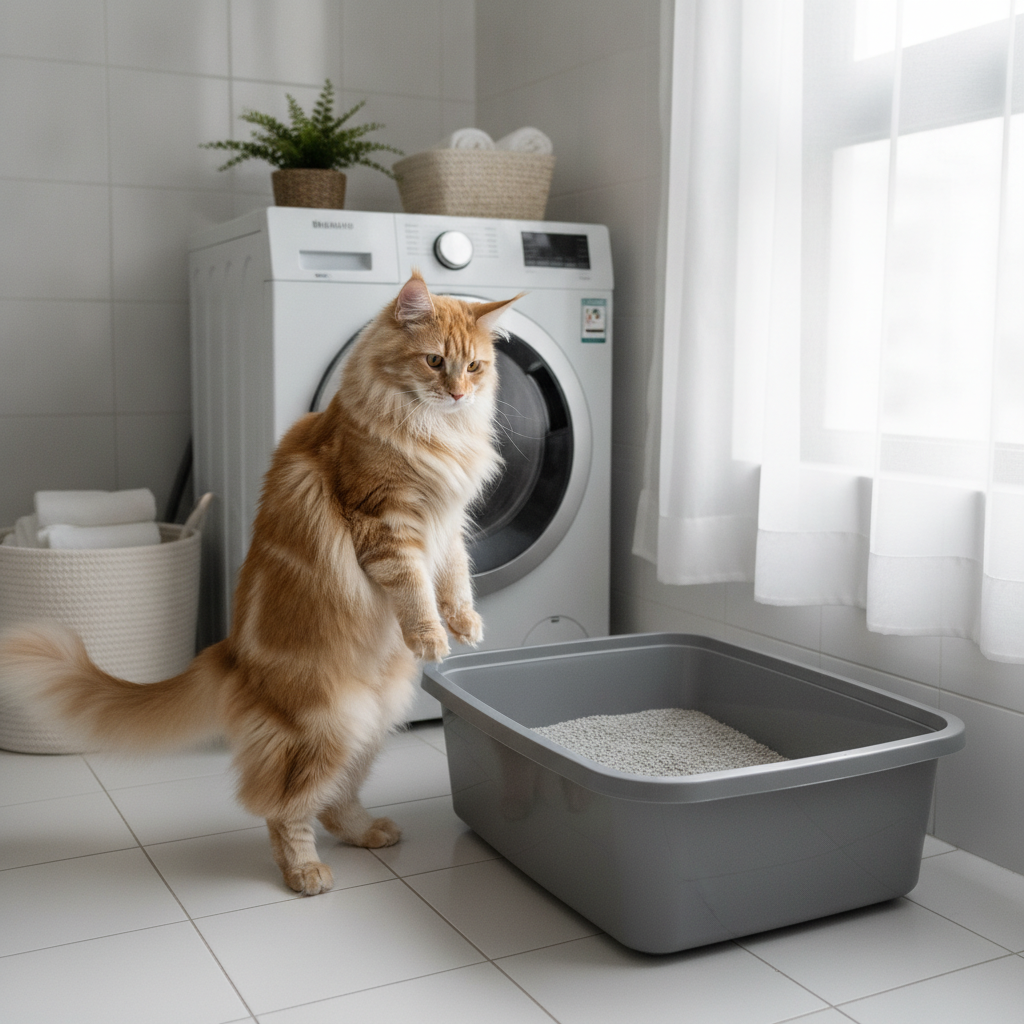
Everything about a Maine Coon is bigger — including what goes in and what comes out. They need more food than an average cat (a quality diet to support that frame and joints), and they use noticeably more litter too. Realistic monthly spend on food and litter combined sits around RM200–600+, depending on brands.
Two practical litter points for a giant cat. First, get a large litter box — most standard trays are too small; a Maine Coon needs room to turn around, or it'll start missing the edges. Second, a big cat plus a long coat means litter gets tracked far and wide, so a low-dust, low-tracking, firmly-clumping litter saves your floors and your sanity. A natural tofu litter like Liger Premium Tofu Cat Litter clumps tightly (less waste per scoop, which matters when your cat produces a lot) and tracks less than fine clay. Because a Maine Coon gets through volume, buying in bulk is the smart move — Liger's 10-pack works out to RM8.45/kg versus RM10.95/kg for a single pack (as of May 2026), a real saving for a heavy user. Size your household's monthly need precisely with our litter calculator.
Price and Buying in Malaysia (2026)
For 2026, a pedigree Maine Coon kitten from a reputable Malaysian breeder typically runs RM3,000–7,000, while imported champion bloodlines can exceed RM15,000 — among the priciest cats you can buy here. As always, a bargain-basement "Maine Coon" is a red flag for no health screening or misrepresented mixed kittens.
Buy well: ask for documented HCM and hip screening of the parents, meet the kitten, check for an alert, well-grown body and clean coat, and never take a kitten under 12 weeks. For how Maine Coon costs compare to every other breed — purchase price and lifelong upkeep — see our cat breed price guide for Malaysia.
A Maine Coon is a decade-plus of big-hearted, big-bodied companionship. Give it cool air, vertical space, a few brushes a week, the right-sized litter box, and proactive health screening, and your gentle giant will be the most charming member of the household. Still deciding? Compare it with the equally placid Ragdoll or browse the full Malaysia cat breeds guide.