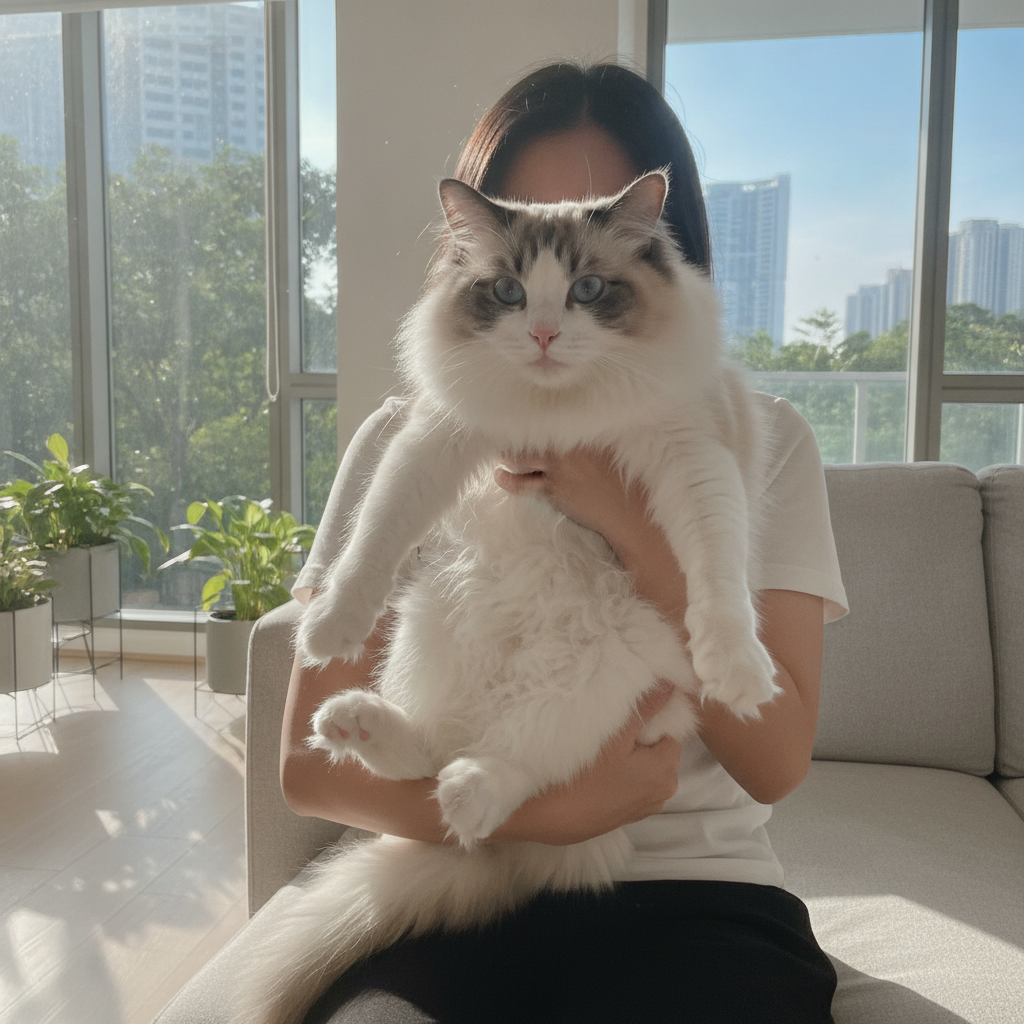
Ask any Ragdoll owner why they're hooked and you'll hear the same word: dog-like. These big, blue-eyed beauties follow you from room to room, flop into your arms, and go limp with contentment when you pick them up (that's the "rag doll" trait that named the breed). They're one of the most affectionate cats you can own — but that devotion comes with real responsibilities, especially in Malaysia's heat. Here's the honest guide.
Weighing your options? See how the Ragdoll stacks up against the others in our complete cat breeds in Malaysia guide.
The 'Dog-Like' Cat: Is a Ragdoll Right for You?
Ragdolls are placid, gentle, and people-oriented to a fault. They're patient with children, get along with other pets, and would rather be a lap-warmer than a daredevil. As breed references like the Ragdoll profile note, they're slow to mature (three to four years to full size) and stay sweet-natured throughout. The flip side of all that affection: they bond hard and genuinely struggle when left alone (more on that below). If you want a cuddly, low-drama companion and can give it time and a cool home, the Ragdoll is hard to beat.
Heat and Grooming in the Tropics
That silky, semi-long coat was not designed for Kuala Lumpur. Ragdolls are heat-sensitive, so a climate-controlled, air-conditioned room at around 24–26°C is important to prevent heat stress in our climate.
The good news on grooming: a Ragdoll's coat has little undercoat, so — as Royal Canin notes — it mats less than a Persian's. Still, in our humidity you'll want to brush 3–4 times a week with a steel comb — focusing on the armpits, belly and behind the ears — to keep it tangle-free and to manage the year-round shedding that tropical living encourages. A few minutes every couple of days beats a painful de-matting session later.
They Can't Be Left Alone: Companionship Needs
This is the deal-breaker most people underestimate. Ragdolls are profoundly social and do not cope well with solitude — leave one alone for long working days, week after week, and you risk a stressed, depressed, or destructive cat. If your household is empty 10 hours a day, a Ragdoll is only fair if it has a companion (another cat or a cat-friendly dog) for company. Our guides on cat separation anxiety and cats and dogs living together are worth reading before you commit. Plenty of enrichment helps too — see indoor cat enrichment.
Health: Heart Disease (HCM) and Urinary Problems
Two health risks define responsible Ragdoll ownership. First, Hypertrophic Cardiomyopathy (HCM) — the breed carries a specific mutation in the MYBPC3 gene linked to this serious heart disease, which VCA Hospitals explains thickens the heart muscle. A reputable breeder will DNA-test parents for it; insist on seeing the results. It's the same condition we cover in our cat heart health guide.
Second, Ragdolls are prone to Feline Lower Urinary Tract Disease (FLUTD), including painful bladder stones and crystals — a pattern documented for the breed. VCA Hospitals explains how these stones form and why diet and hydration are central to preventing them. This is where daily care genuinely prevents disease. With good care a Ragdoll lives 12–17 years (see our cat lifespan by breed guide) — and a lot of that hinges on the urinary care below.
Diet, Water and Litter for a Ragdoll
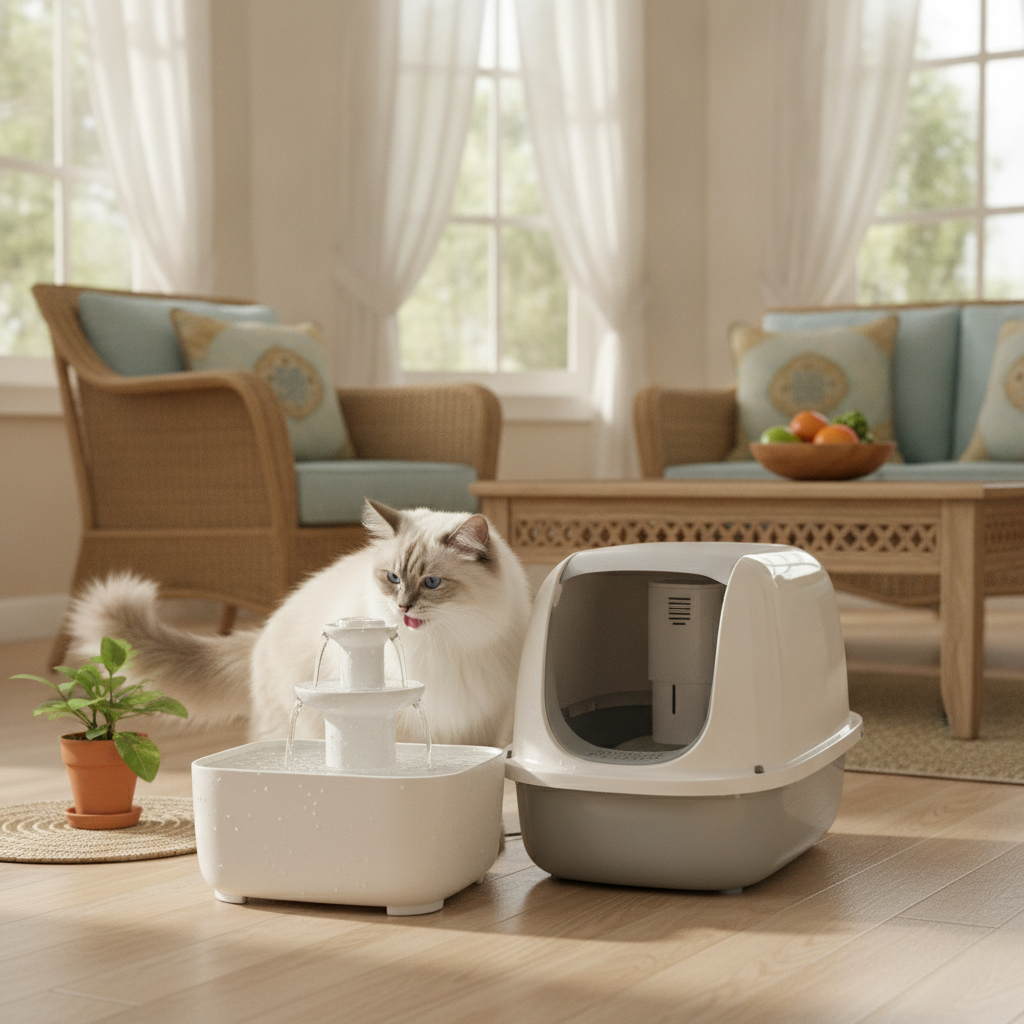
Because FLUTD is such a risk, hydration is preventive medicine for a Ragdoll. A high-moisture, wet-food-led diet keeps urine dilute and helps wash out the crystals that form stones — the single most protective everyday choice you can make. Encourage drinking with a water fountain and multiple bowls; our full guide on getting your cat to drink enough water covers the tactics, and the cat urinary health guide goes deeper on prevention.
Your litter box doubles as an early-warning system. With a firmly-clumping litter you can actually see your Ragdoll's urine output — and a sudden drop in clump size or number, frequent tiny visits, or straining are red flags for a urinary blockage, which is a life-threatening emergency. A low-dust, low-tracking tofu litter like Liger Premium Tofu Cat Litter clumps firmly so those changes are obvious, and its lightweight pellets track less out of a semi-long coat. Size your household's needs with our litter calculator, and scoop daily so you never miss a warning sign.
Price and Buying in Malaysia (2026)
A purebred Ragdoll kitten from a reputable Malaysian breeder typically costs RM3,000–14,000 in 2026, depending on lineage, colour, and pattern (mitted, bicolour, colourpoint). As with any pedigree, a price that looks too good usually means no health screening or a misrepresented mixed kitten.
Buy responsibly: ask for documented HCM DNA screening of both parents, meet the kitten, check for clear eyes and easy movement, and never take a kitten under 12 weeks. For how Ragdoll costs compare to every other breed — purchase and lifelong upkeep — see our cat breed price guide for Malaysia.
A well-cared-for Ragdoll is one of the most rewarding companions in the cat world — soft, affectionate, and endlessly devoted. Give it cool air, company, a wet-food-led diet, and proactive heart and urinary care, and you'll have a gentle shadow for 15 years or more. If long hours alone are unavoidable, consider the more independent Maine Coon or browse the full Malaysia cat breeds guide to find your match.