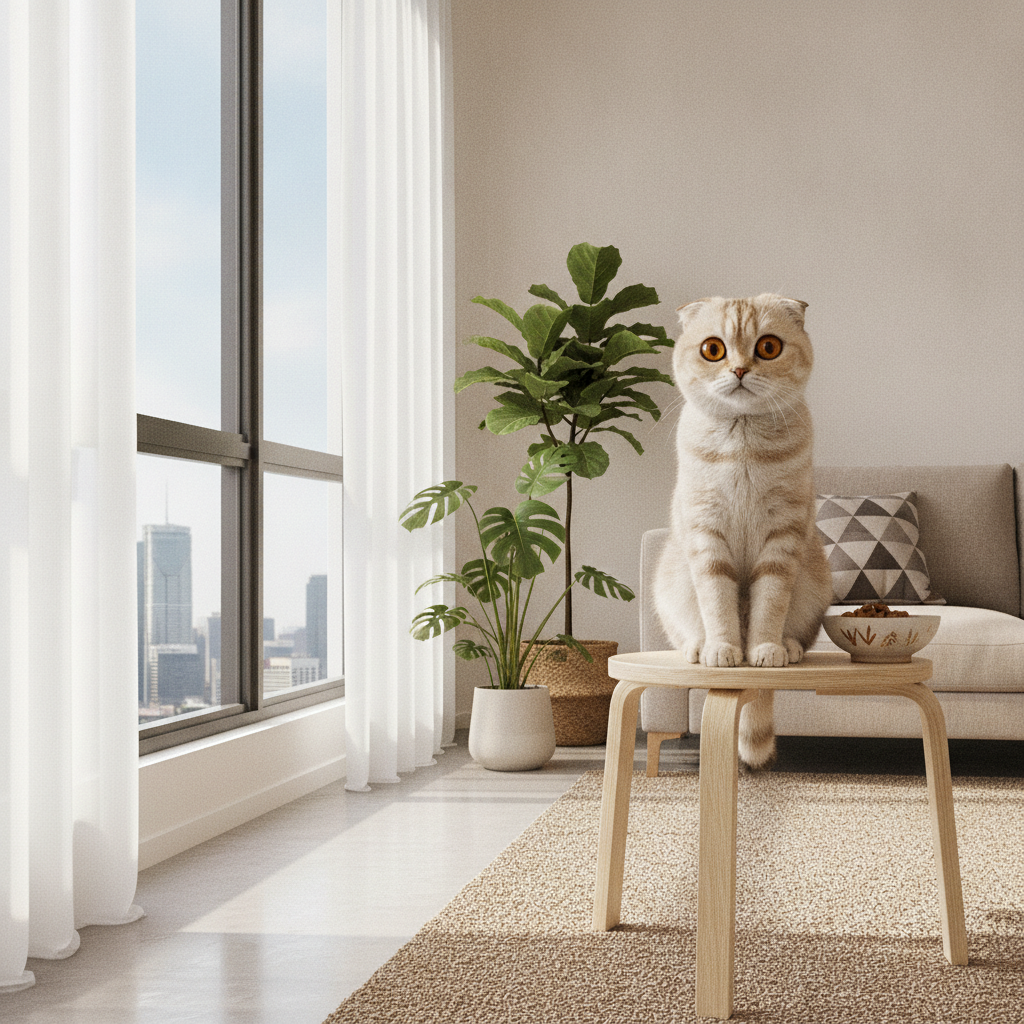
Few cat breeds generate as much adoration — and as much debate — as the Scottish Fold. That round face, those huge eyes, and those famously folded-forward ears have made it one of the most photographed cats on the internet. Walk into any Malaysian pet shop or scroll through Instagram for five minutes and you will see why people fall hard for them. But behind that endearing owl-like look lies a serious scientific and welfare story that every prospective owner in Malaysia deserves to understand before opening their wallet.
This is a breed-specific deep dive. If you are still comparing breeds, start with our complete 2026 guide to cat breeds in Malaysia, then return here for the full Scottish Fold picture — the adorable bits and the difficult bits alike.
From Susie the Barn Cat: A Breed Born from One Mutation
The entire Scottish Fold breed traces back to a single cat. In 1961, a shepherd named William Ross spotted an unusual white barn cat with forward-folded ears on a farm near Coupar Angus in Scotland. That cat's name was Susie. William and his wife Mary were captivated by her owl-like appearance, and when Susie produced a litter, they obtained one of her kittens and began a deliberate breeding programme. By 1966 the breed was officially registered with the Governing Council of the Cat Fancy (GCCF) in the United Kingdom, according to Wikipedia's documented breed history.
The breed spread internationally, gaining enormous popularity in the United States and, in recent years, across Southeast Asia including Malaysia. The GCCF, however, withdrew its recognition just five years after granting it — by 1971 — citing reports of "crippling deformities" in the limbs and tails of affected cats. That early red flag, it turned out, was the first warning sign of a far deeper problem that science would take decades to fully unravel.
Today the Scottish Fold comes in both shorthaired and longhaired varieties, typically weighing 3 to 5 kg for females and 4 to 6 kg for males. The round face and compact body make them look permanently kitten-like. But the most important thing to understand about a Scottish Fold is not how it looks — it is what causes those ears to fold in the first place.
The Genetics and OCD: One Mutation, Lifelong Disease
The folded ear is not a quirk of cartilage formation that breeders stumbled upon. It is the outward sign of a specific genetic mutation. In 2016, researchers identified the culprit: a single base substitution (c.1024G>T) in the TRPV4 gene, which encodes a calcium channel critical to the healthy development of cartilage and bone throughout the body. This mutation is autosomal dominant, meaning just one copy of the mutated gene (designated Fd) is enough to produce folded ears — and to trigger disease.
Here is the part that matters most: the very same mutation that makes the ear cartilage fold also disrupts cartilage and bone development across the entire skeleton. The two effects are not separate; they are the same event. As International Cat Care (iCatCare) explains, the folded ear is not a cosmetic side effect of a mostly harmless gene — it is the most visible symptom of a systemic skeletal disease called osteochondrodysplasia (OCD).
The severity depends on how many copies of the mutation a cat carries. A homozygous cat (Fd/Fd, two copies) develops a devastating, early-onset form of OCD that can cause crippling arthritis within months. A heterozygous cat (Fd/fd, one copy — the type produced by "responsible" fold-to-straight breeding) develops a milder but still progressive and painful form of the same disease. There is no genotype that produces healthy folded ears. It is genetically impossible. The gravity of this mutation is underscored by parallels in human medicine: the exact same amino acid substitution (p.V342F) has been identified in a human patient diagnosed with metatropic dysplasia, a severe skeletal disorder characterised by short limbs, a shortened trunk, and painful joint abnormalities.
Osteochondrodysplasia (OCD) is therefore the defining health reality of the Scottish Fold — an incurable, progressive disease of cartilage and bone affecting the entire skeleton, not just the ears. And according to the scientific evidence, every Scottish Fold with folded ears has it.
This is the single most important fact in this article, and it contradicts what many breeders claim. The common argument is that breeding a Fold with a straight-eared cat (such as a British Shorthair or Scottish Straight) produces healthy kittens, because the resulting kittens are only heterozygous and not the severely affected homozygous kind. This is partly true — fold-to-straight breeding does avoid the most severe early-onset disease. But it does not produce healthy cats. A landmark radiological study published in the Australian Veterinary Journal in 1999 demonstrated that heterozygous Folds also develop OCD, with skeletal abnormalities visible on X-ray even in cats not yet showing obvious clinical signs. The disease progresses with age, leading to degenerative joint disease and chronic pain.
The clinical signs owners may observe include a stiff, shuffling or limping gait; short and inflexible limbs; a thick, fused tail that cannot move freely; swollen ankle or wrist joints; and reluctance to jump, climb, or use the litter box if entry is painful. Behavioural changes — irritability when handled, reduced activity, hiding — are often the first sign that a cat is in pain it cannot verbalise. As PetMD's veterinary overview of OCD in cats notes, the disease is managed but not cured, and pain management is lifelong.
For Malaysian owners who may be comparing Scottish Folds with another famously short-limbed breed, our article on the Munchkin cat in Malaysia covers a related conformation-welfare debate that is worth reading alongside this one.
The Welfare Consensus: What the Experts Say
The scientific evidence has produced a clear and unified position among the world's leading veterinary and animal welfare organisations: breeding Scottish Folds is ethically indefensible.
Cats Protection, the UK's largest cat welfare charity, states plainly that OCD "hugely impacts their quality of life" and causes "a lifetime of painful, debilitating disease." The charity actively campaigns for a ban on breeding Scottish Folds. The British Veterinary Association (BVA) has called the continued breeding of Scottish Folds "indefensible." The GCCF withdrew breed recognition back in 1971. The Federation Internationale Feline (FIFe), one of the world's largest cat registries, refuses to recognise the breed at all.
This ethical consensus has been translated into law in several countries. Scotland itself has banned breeding Scottish Folds. Flanders (Belgium) banned both breeding and selling them, effective October 2021. Austria and Norway have enacted breeding bans. The Netherlands has a breeding ban with an ownership ban phasing in from 2026. Victoria, Australia, prohibits breeding of affected animals under animal cruelty legislation. The trend internationally is clearly toward prohibition, not accommodation.
It is worth being balanced here: in the United States, registries such as TICA continue to recognise the breed and permit fold-to-straight breeding under guidelines they describe as responsible. But even within those organisations, internal voices acknowledge that a breed with this genetic profile would not pass modern welfare scrutiny if it were seeking recognition today.
For a Malaysian buyer, the practical implication is this: if you acquire a Scottish Fold with folded ears, you are acquiring a cat that science confirms will develop a painful skeletal disease. The question is not whether OCD will occur, but when and how severely. That is not a scare tactic — it is the settled veterinary consensus, backed by peer-reviewed research and the formal positions of organisations including iCatCare, Cats Protection, and the RSPCA.
Temperament: The Calm, Owly Companion
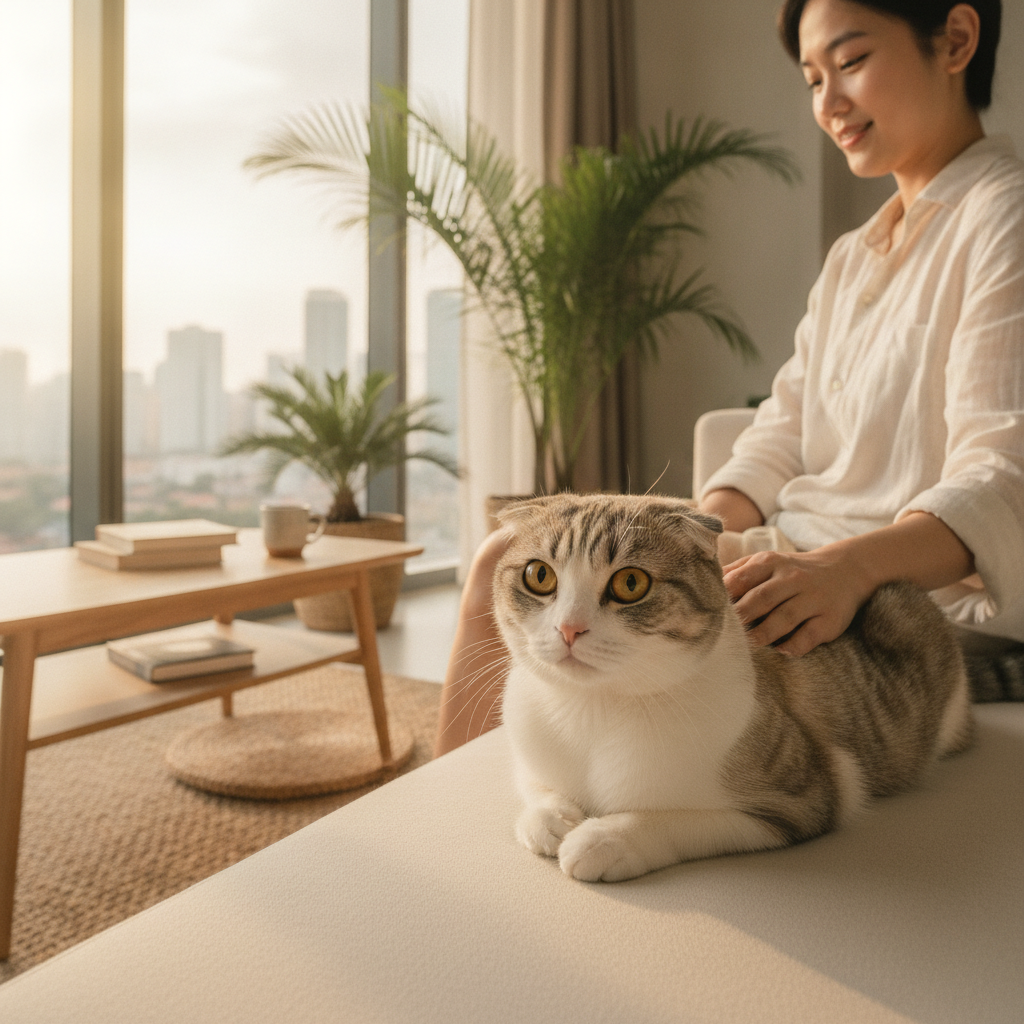
With all of the above said honestly, it is also fair to describe what Scottish Fold owners consistently report about living with these cats: they are genuinely lovely to be around. The breed is known for a gentle, calm, and unusually patient temperament. They are intelligent and sociable, typically forming deep bonds with their families and following owners from room to room without being demanding or loud about it.
Scottish Folds do not tend toward the vocal insistence of a Siamese or the high-energy chaos of a Bengal. They are content to supervise the household from a comfortable perch, engage in interactive play sessions, and then settle into a quiet lap for the evening. Their placid nature makes them well-suited to KL condo life, multi-generational households, and homes with children or other pets, provided introductions are managed carefully.
One trait to be aware of: Scottish Folds form strong social bonds and do not cope well with long periods of isolation. If you work full days and the cat will be alone, consider whether a second cat companion would help — and factor that into your breed-specific lifetime planning.
Observe their posture regularly, too. A cat that sits in what owners sometimes call the "Buddha pose" — flat on its back, legs extended forward — may simply be comfortable, but it can also be a sign of joint discomfort from OCD. Any change in gait, reluctance to jump, or stiffness warrants a prompt vet check.
Other Health Concerns: HCM, PKD and Ear Infections
OCD is the primary health concern, but Scottish Folds carry additional risks that responsible owners need to monitor.
Hypertrophic cardiomyopathy (HCM) is the most common heart disease in cats, and Scottish Folds are among the breeds with an elevated risk. The heart muscle thickens, reducing pumping efficiency. As the Cornell Feline Health Center explains, many cats are asymptomatic until the disease is well advanced, making regular echocardiogram screening important. Advanced cases can lead to laboured breathing, lethargy, and the formation of painful blood clots affecting the hind limbs.
Polycystic kidney disease (PKD) entered the Scottish Fold gene pool through historical outcrossing with Persians. Fluid-filled cysts develop progressively in the kidneys, eventually causing renal failure. According to VCA Hospitals, symptoms typically appear between three and ten years of age. A DNA test can confirm whether a cat carries the PKD1 mutation, and a reputable breeder should be able to provide screening results.
Chronic ear infections are a recurring issue that follows directly from the breed's conformation. The folded ear canal restricts airflow, trapping wax, moisture, and debris. In Malaysia's humidity, this becomes an even bigger problem than in temperate climates. Weekly ear checks for redness, odour, or discharge are non-negotiable, and cleaning must be done gently with a vet-approved solution. Any sign of infection — head-shaking, scratching at the ear, dark discharge — needs veterinary attention promptly.
Grooming and Daily Care in Malaysia's Humidity
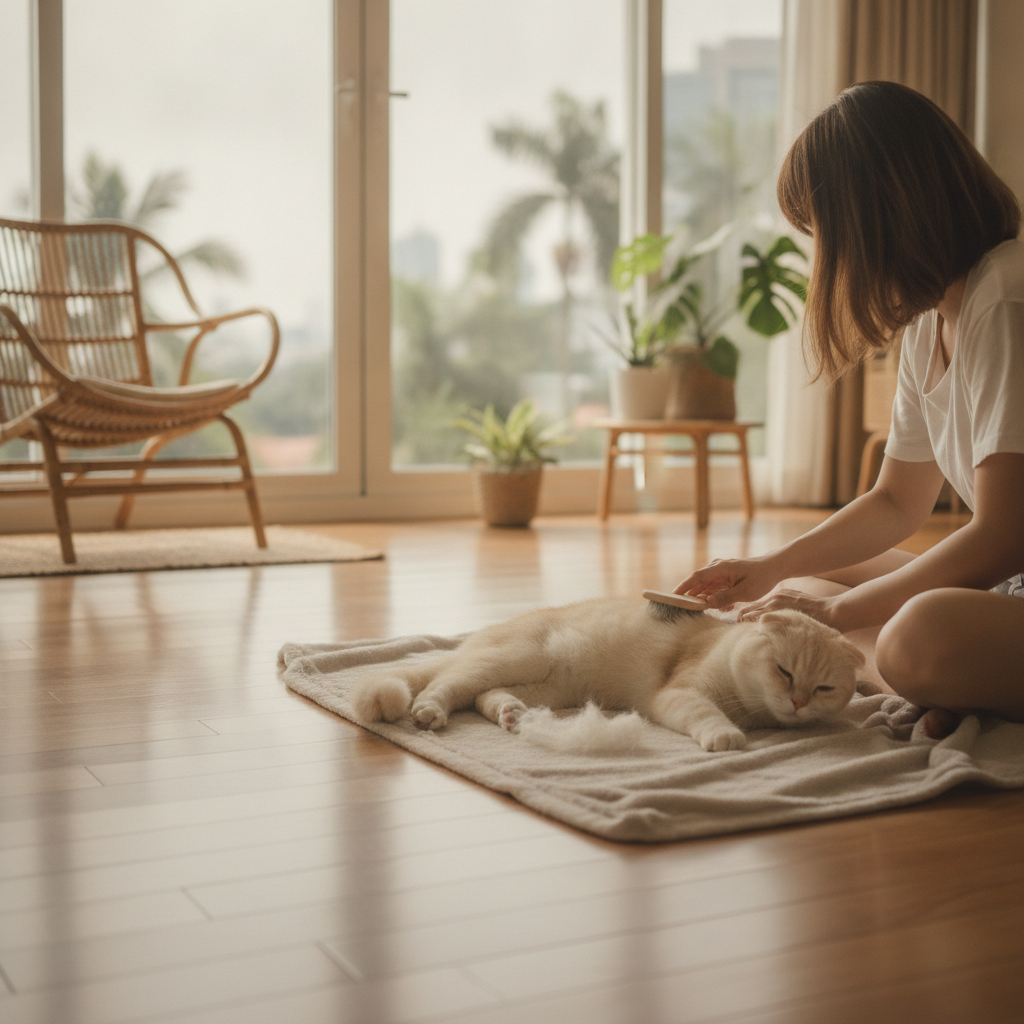
Scottish Folds come in shorthaired and longhaired versions. Shorthaired cats need weekly brushing; longhaired varieties need grooming several times a week to prevent mats that trap heat and moisture against the skin, which in our climate can quickly lead to skin infections and irritation. Regular brushing also reduces the loose hair that accumulates in an air-conditioned condo.
The ears deserve their own weekly routine. Use a vet-recommended ear-cleaning solution and cotton wool, wiping only the visible outer portion of the ear canal. Never probe deeply. If the ear smells, looks red, or the cat is scratching at it, see a vet — do not attempt to treat infections at home with over-the-counter drops without a diagnosis first.
Climate management is essential. An indoor-only life with reliable air conditioning is not optional for this breed in Malaysia. The combination of OCD joint pain and high humidity makes physical discomfort worse, and the warm damp environment accelerates ear and skin problems. Keep multiple fresh water sources — a fountain is useful to encourage drinking — and lean on wet food to boost hydration.
Exercise must be structured carefully. Scottish Folds with OCD may be reluctant to jump or climb, which owners sometimes misread as laziness. Do not force high-impact activity, and provide ramps or pet stairs to give access to favourite resting spots without requiring painful leaps. Any reluctance to move that appears suddenly warrants a vet visit.
Litter Choices for a Cat That May Have Joint Pain
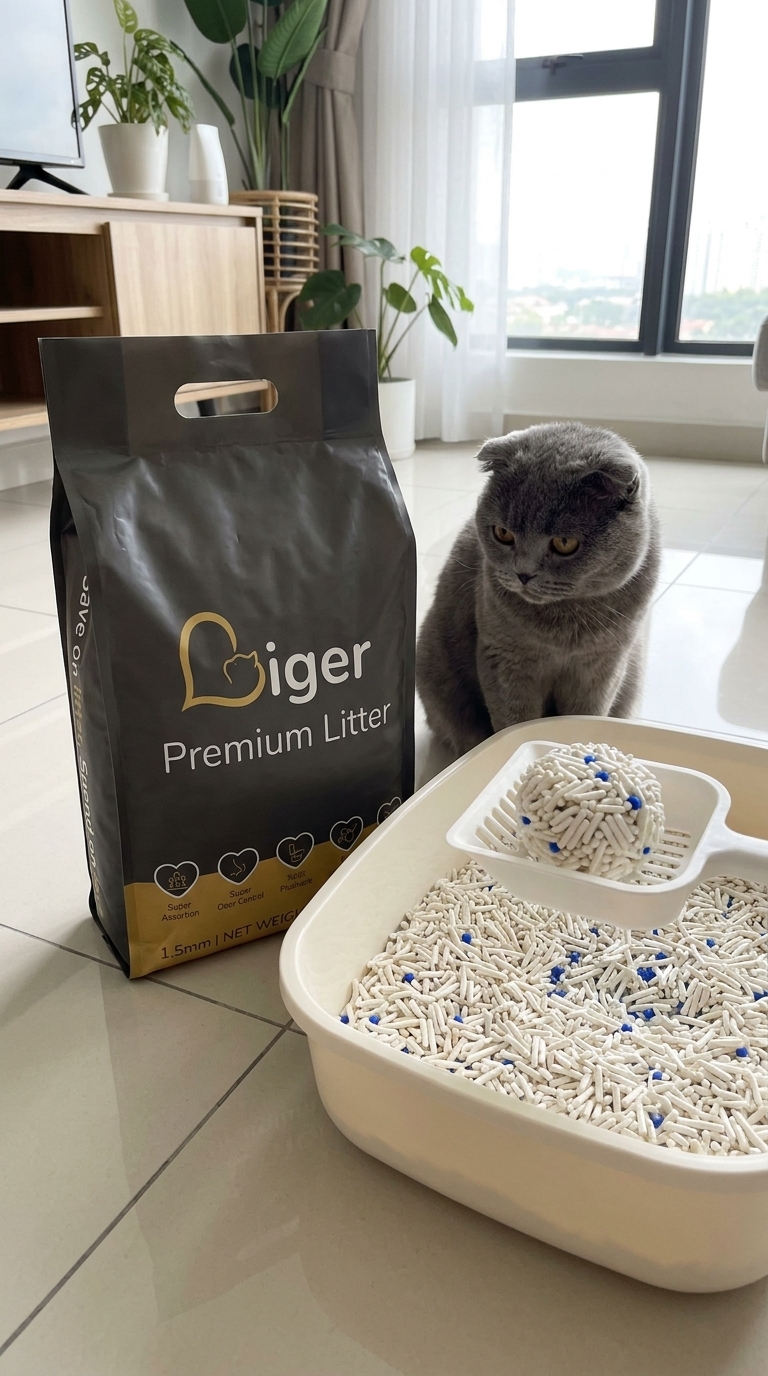
For a Scottish Fold that may already be experiencing the early stages of OCD joint discomfort, the litter box setup matters more than it does for the average cat. The box entry height is the first consideration: a high-sided box that requires an uncomfortable jump or step can become a deterrent, leading the cat to eliminate outside the box. A low-entry design — or a box with a cutout entry — is the practical answer.
The litter itself also matters. A soft, low-dust litter is kinder on paws and joints than a heavy, gritty clay, and in an enclosed Malaysian condo, airborne litter dust is a respiratory concern for both cat and owner. This is where Liger Premium Tofu Cat Litter is a natural fit. It is a low-dust, naturally clumping, flushable soy-based litter that is soft underfoot — gentler on a cat that may be moving more carefully than it lets on. It clumps firmly for easy scooping and handles odour well in a closed air-conditioned space.
Current Liger pricing for 2026: RM21.90 for a single 2 kg pack, RM53.90 for 3 packs, RM89 for 5 packs, and RM169 for the 10-pack (20 kg) — working out to RM8.45 per kg, with free shipping across Peninsular Malaysia. Use our litter calculator to figure out exactly how many bags your Scottish Fold will go through per month.
Scottish Fold Price in Malaysia and What to Consider Before Buying
Scottish Folds are popular and often expensive in the Malaysian pet market. As rough 2026 market guidance (not Liger figures), folded-ear Scottish Folds typically range from RM2,500 to RM6,000, with show-quality lines, rarer coat colours, and high-demand kittens pushing toward the upper end. Straight-eared siblings from the same litter (Scottish Straights) are sometimes priced lower, and are worth considering seriously — they share the calm temperament without the certainty of OCD.
Before purchasing, use our cat breed cost calculator to budget honestly for the full lifetime cost, and compare against other options in the 2026 cat breed price guide. Factor in ongoing joint-pain management, ear care, potential cardiac and kidney screening, and the vet bills that come with a cat whose genetics guarantee a degenerative condition.
If you do decide to proceed, insist on seeing health screening documentation for HCM and PKD from both parents. Ask whether the kitten's parents have been assessed by a vet for signs of OCD — a responsible seller will not be offended by that question. Avoid any seller who dismisses the welfare concerns or claims their fold-to-straight breeding produces entirely healthy cats; the scientific evidence is unambiguous that it does not.
The ethical questions here matter more than the price tag. A Scottish Fold is a cat that will need attentive, informed ownership and likely more veterinary care than the average breed. Go in with clear eyes, not just a heart melted by those round faces — and if the welfare picture gives you pause, our breed guide covers many healthy alternatives that are equally wonderful companions.