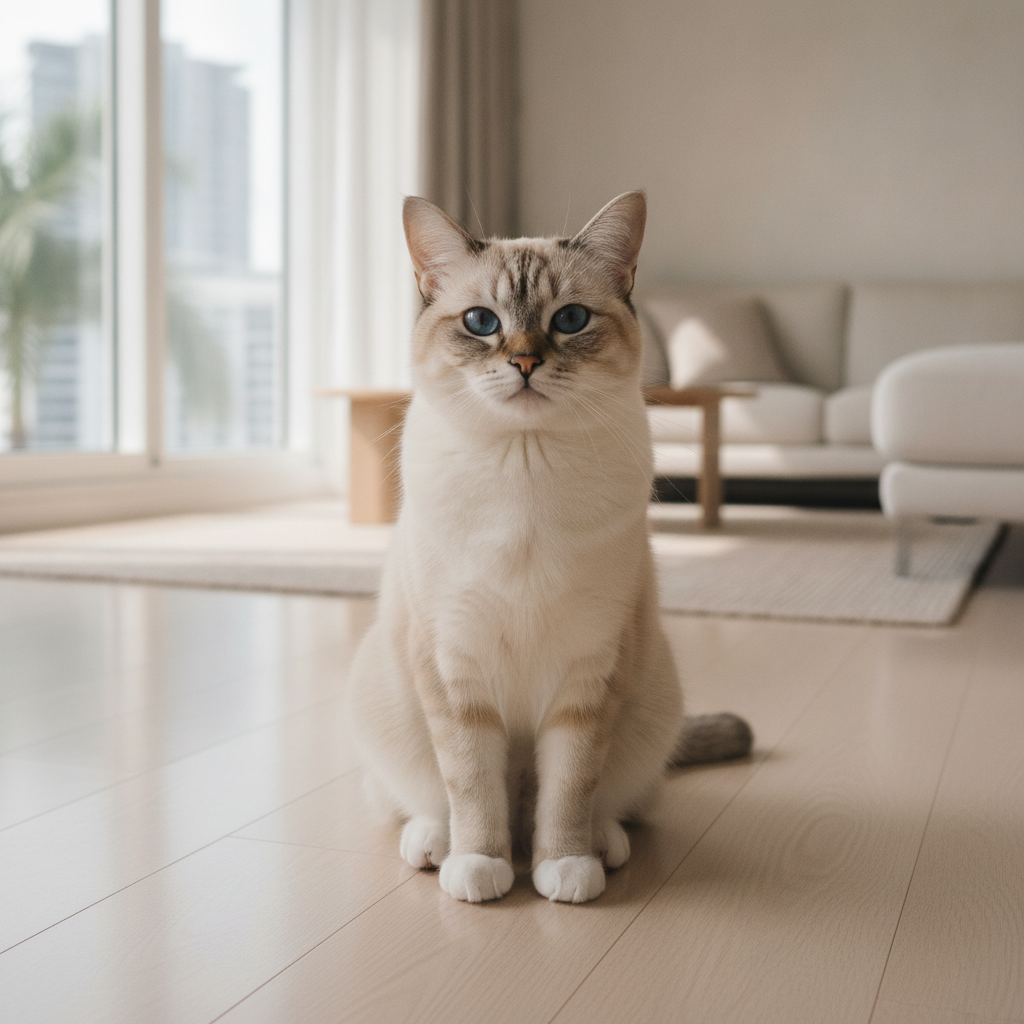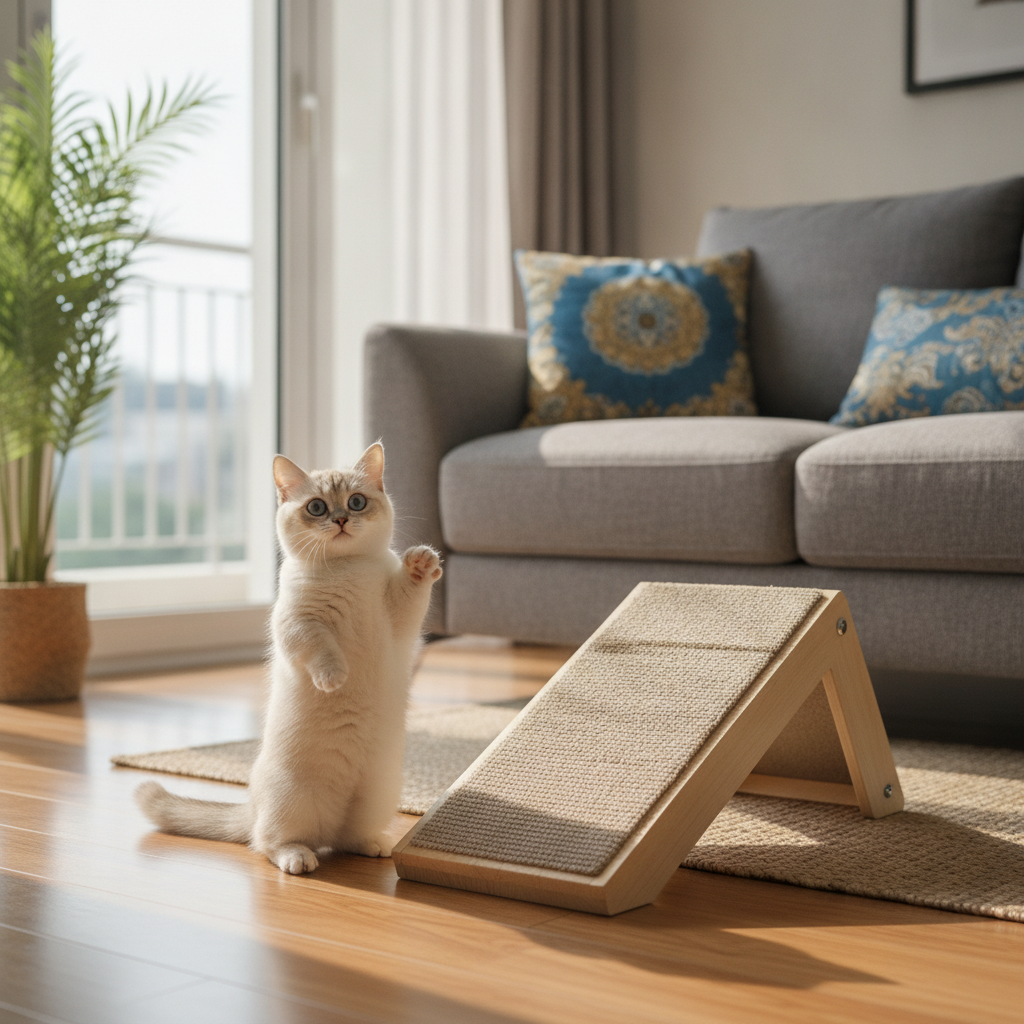
With their stubby legs and bunny-like sit, Munchkins are internet darlings and increasingly sought-after in Malaysia. They're affectionate, playful, and full of personality. But the Munchkin is also the most ethically debated cat in this guide, and a responsible owner should understand exactly what those short legs mean — for the cat's health and for your home — before buying. Here's the honest, detailed version.
See how the Munchkin sits among the other breeds in our complete cat breeds in Malaysia guide.
The Cute Cat with a Serious Debate
Munchkins are friendly, sociable, and surprisingly fast and agile on the ground, scurrying with a distinctive ferret-like gait — PetMD describes them as confident and outgoing. The controversy isn't about temperament; it's about the genetics that create the look, and whether breeding for it is fair to the cat. The modern breed is young: it traces to a single pregnant stray named Blackberry, found in 1983 in Rayville, Louisiana, whose short-legged son Toulouse founded the line — the breed was named after the little characters in The Wonderful Wizard of Oz. You can love the cats that already exist (and many need good homes) while thinking carefully about supporting the breeding of more.
Temperament-wise, Munchkins are a delight: playful, curious, people-oriented, and good with children and other pets. They keep their kitten-like energy well into adulthood, love interactive toys, and are famous little "magpies" that hoard shiny objects in a favourite hiding spot. They sit up on their haunches in that signature "rabbit" or "frog" pose to survey a room. None of this charm is in dispute — the entire debate is about the body those personalities come in, not the personalities themselves.
The Genetics and Ethics You Should Know
The short legs are a form of chondrodysplasia — impaired cartilage and bone growth — caused by a dominant mutation. Research in 2020 pinpointed it to the UGDH gene, denoted by breeders as the 'Mk' allele, as the breed's documented genetics show. Two facts matter enormously:
First, the gene is lethal in its double (homozygous) form. Breeding two short-legged Munchkins together means roughly 50% short-legged kittens, 25% normal-legged, and 25% non-viable embryos that are reabsorbed — which is why ethical breeders never pair two Munchkins, and instead outcross a Munchkin with a normal-legged cat. Second, major welfare bodies object to the breed entirely: the World Cat Federation calls breeding it "unethical and irresponsible," the American Association of Feline Practitioners (AAFP) does not condone breeding cats with deliberate malformations, and the CFA, the UK's GCCF (citing "abnormal structure") and FIFe (which bans breeds based on a "genetic disease") all refuse to recognise it, and animal-welfare charities like Cats Protection urge buyers to put health before appearance. Only TICA champions it. We're not here to shame anyone who owns one — but you should buy with full knowledge, and never reward a breeder chasing "extreme" shortness.
Health: Spine, Chest and Joints
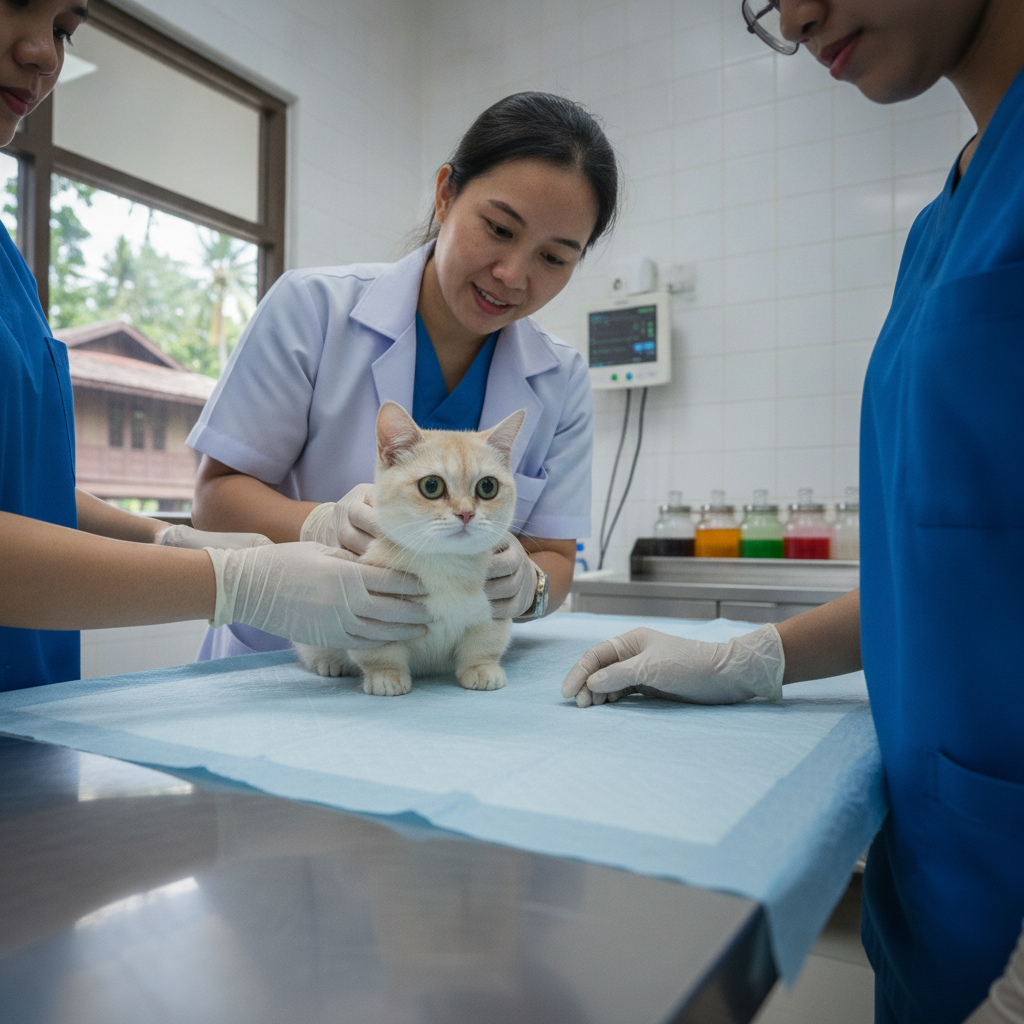
Here's where honesty cuts both ways — the risks are real but often overstated. The breed's main congenital concerns are lordosis (an excessive inward curve of the spine, caused by short spinal muscles) and pectus excavatum (a sunken chest). In mild cases a cat is symptom-free; in severe cases the curve or sunken sternum can compress the heart and lungs, which is dangerous, especially in young kittens, and may need costly surgery. Reassuringly, robust prevalence data is lacking and many breeders report these severe cases are uncommon.
The most-cited worry is osteoarthritis — the logic being that short, oddly-loaded limbs stress the joints, as VCA Hospitals explains can worsen with excess weight. But the evidence is genuinely mixed: an ongoing University of Missouri study led by Dr Leslie Lyons, scanning Munchkins aged one to ten, has so far found only a single case of "very mild arthritis." For context, up to 90% of all cats over 12 show some joint disease on X-ray, so some of the concern may be normal feline ageing rather than a breed curse. The bottom line: an anatomical risk exists, but a Munchkin that avoids severe lordosis and gets good care lives a normal 12–15 year lifespan. Compare breed lifespans in our cat lifespan by breed guide.
Can a Munchkin Handle Malaysia's Heat?
Munchkins come in short-haired and long-haired varieties, and for our climate the short-haired version is far more practical. The coat is often described as a silky "all-weather" one, but warm-weather tolerance isn't a breed strength, so stay vigilant about heat: cool, ventilated spaces, fresh water, and air-conditioning during the hottest hours. A long-haired Munchkin needs the same heat care as any fluffy breed, plus more grooming. For a short-haired Munchkin, a simple weekly brush keeps the coat healthy and comfortable, and limiting outdoor time helps since they can be sensitive to sudden temperature changes.
Adapting Your Home: Ramps and Floor-Level Living
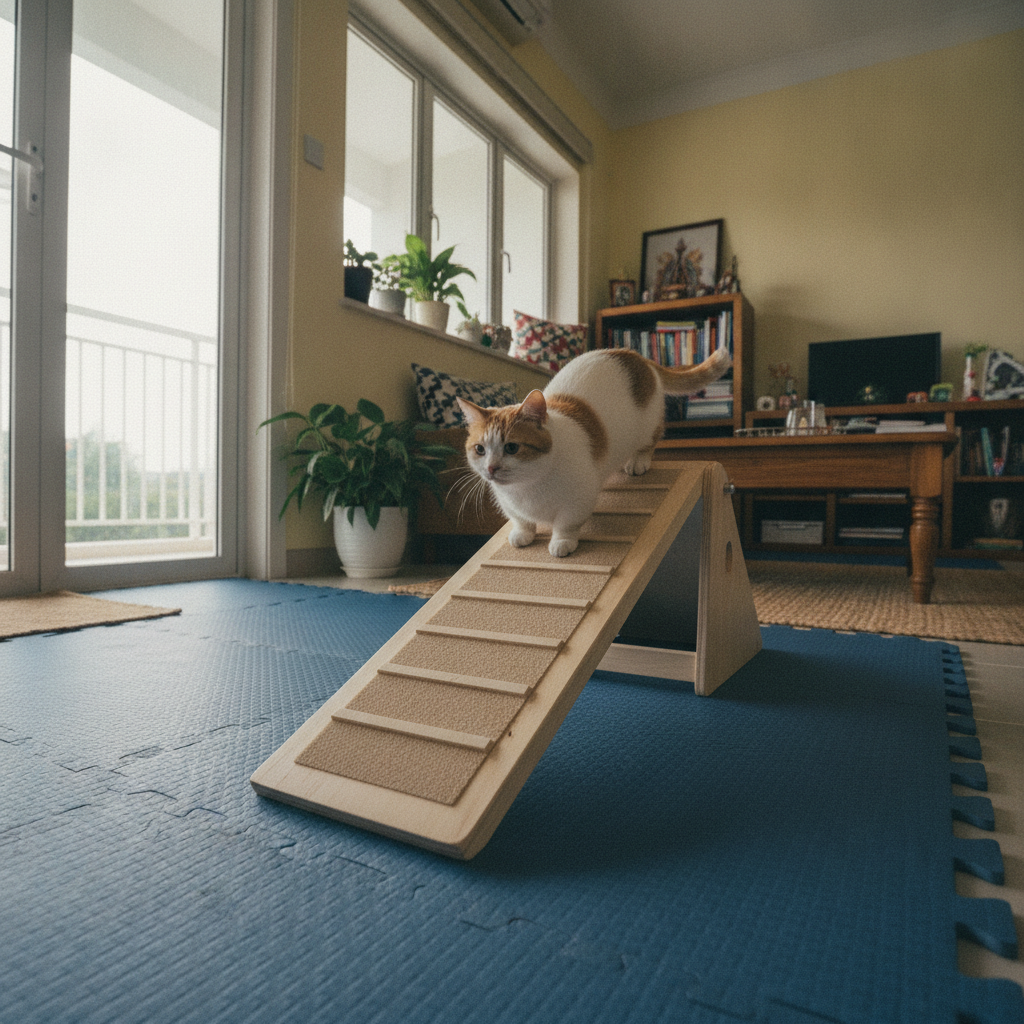
This is the practical heart of Munchkin ownership. Their legs are roughly half the length of a typical cat's, so while they're quick on the ground, they struggle to jump up to beds, sofas, and standard cat trees — and forcing those jumps stresses their joints and spine over time. Adapt your home:
- Ramps and pet stairs to furniture and windowsills, so they never have to launch or crash-land from height.
- Low, multi-level cat trees with small gaps between platforms; avoid tall ledges and wobbly shelves.
- Non-slip mats on smooth tiles to prevent injuries from their fast, scurrying gait.
- Floor-level everything — beds, bowls, and toys placed where short legs can reach them easily.
These aren't optional touches; they're how you protect a Munchkin's joints for life.
The Litter Box: Why Low-Entry Matters Most
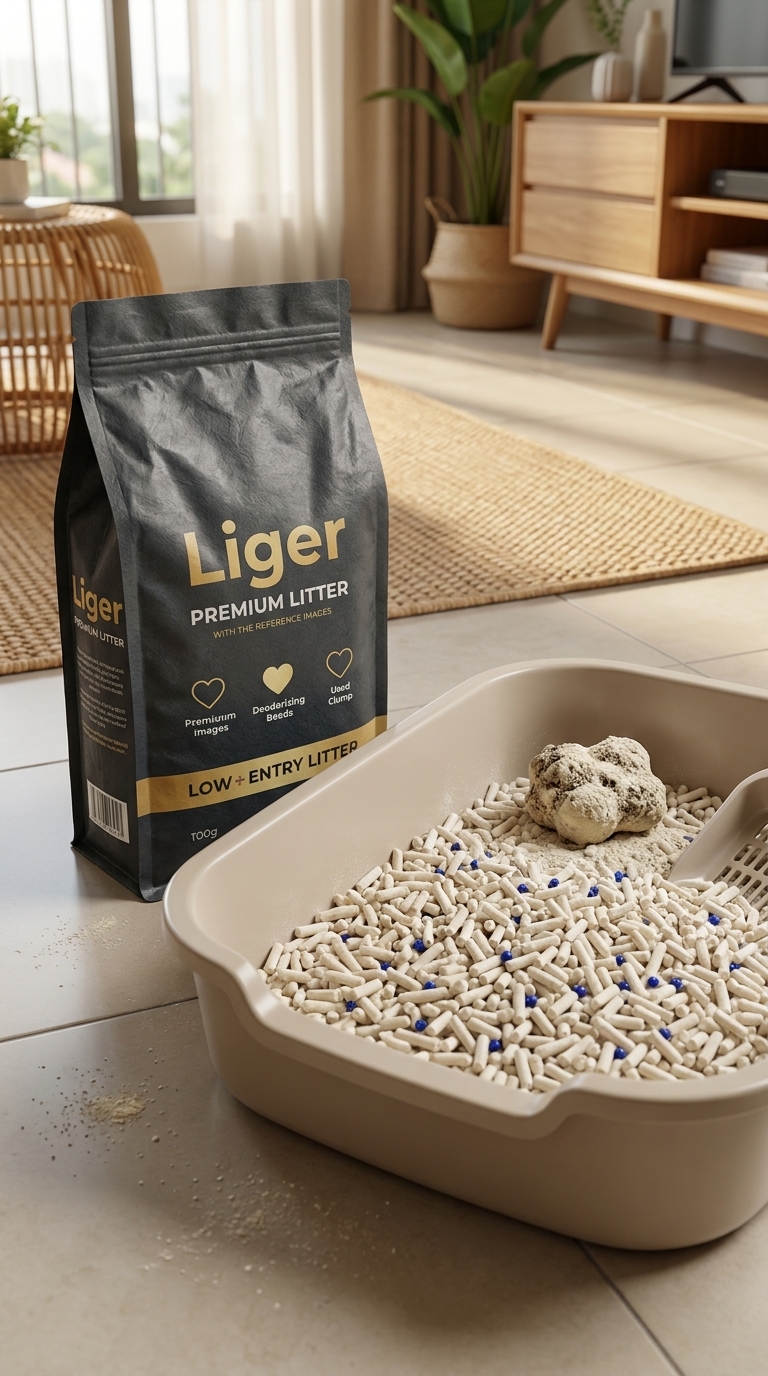
Of all the home adaptations, the litter box is the one owners most often get wrong — and it matters more than people realise. A standard high-walled litter box is genuinely difficult and painful for a short-legged cat to climb into. The consequences are serious: an inaccessible box leads to litter-box aversion (the cat toilets elsewhere) or, worse, urine retention, which raises the risk of urinary tract infections.
The fix is a low-entry litter box with an opening of about 3–5 inches (8–13cm) that your Munchkin can simply step into. Pair that shallow, open tray with a low-dust, firmly-clumping litter so the box stays clean and tidy without deep, awkward dunes — and so daily scooping is quick. A natural tofu litter like Liger Premium Tofu Cat Litter is low-dust and clumps tightly, keeping a low, accessible box manageable and pleasant for a fastidious little cat. Size your monthly need with our litter calculator, and watch the clumps daily — given the UTI risk, catching a change in urine output early really matters (see keeping your cat hydrated). Place the box somewhere your Munchkin reaches without stairs or thresholds, and if you have more than one floor, give it a box on each level so it never has to "hold it" while navigating an obstacle.
Everyday Care: Weight, Joints and Diet
Because joint stress is the main long-term concern, two everyday habits do the heavy lifting. First, keep your Munchkin lean — every extra gram adds load to that spine and those short limbs, so measure meals and resist over-treating. Second, support the joints proactively: ask your vet about a diet or supplement containing joint-supporting nutrients like glucosamine, and watch for the subtle signs of feline arthritis — reduced activity, stiffness, or reluctance to use even the ramps. Floor-level play they can win keeps them fit without risky leaping. With a lean body, an accessible home, and a watchful eye, most Munchkins live active, comfortable lives.
One more practical note for Malaysian owners: book a vet who knows the breed and establish a baseline early. Because the worrying conditions (lordosis, pectus excavatum) are present from kittenhood, a thorough check in the first weeks tells you what you're working with, and annual reviews catch any joint changes before they limit your cat. Pet insurance or a dedicated emergency fund is worth considering, given that the rare severe structural cases can need costly surgery.
Price and Buying Responsibly in Malaysia (2026)
Munchkins are in strong demand here, with 2026 prices from reputable breeders around RM2,000–5,000, holding firm thanks to the "pet humanisation" trend and strong social-media appeal. If you do choose a Munchkin, make your money count for welfare: buy only from a breeder who outcrosses to normal-legged cats (never Munchkin-to-Munchkin), prioritises moderate leg length and healthy spines over extreme looks, screens and is transparent about health, and lets you meet the kitten. Never buy a kitten under 12 weeks.
For how the Munchkin compares on price and lifelong cost, see our cat breed price guide for Malaysia. And if the ethical questions give you pause — they reasonably might — consider that a kucing kampung offers all the personality and play with none of the built-in structural worries. Browse the full Malaysia cat breeds guide to weigh every option.