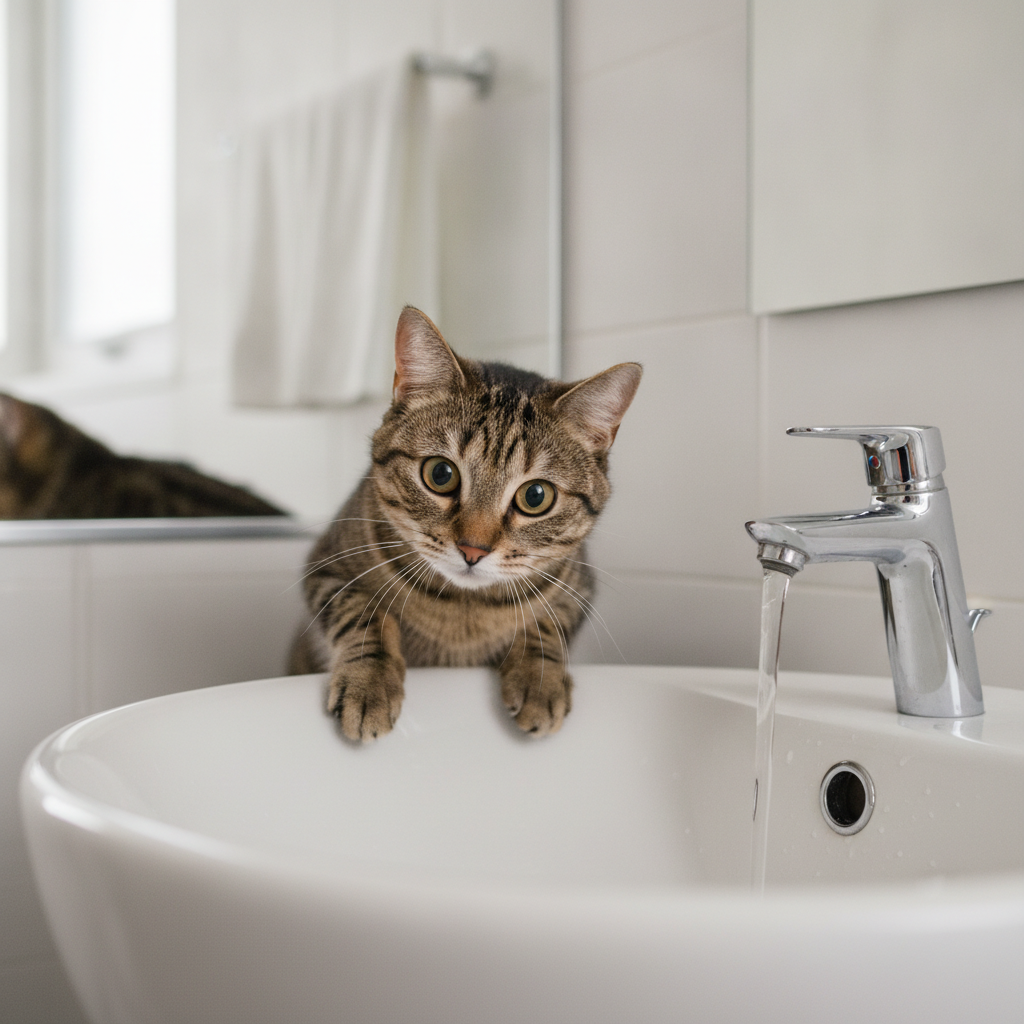
You turn on the shower and your cat vanishes. You run a bath and it's as if the tub is made of lava. Yet that same cat will sit transfixed by a dripping tap for twenty minutes and dip a curious paw into your glass of water. So what's really going on? The cat's complicated relationship with water isn't stubbornness or drama — it's roughly 10,000 years of desert evolution wired into a small predator now living in your air-conditioned Malaysian flat.
This guide unpacks the real reasons most cats dislike being soaked, the handful of breeds that buck the trend, and what it all means for whether you ever actually need to bathe your cat. For the bigger picture on reading your cat, start with our Malaysian guide to cat behaviour.
The Desert Cat in Your Living Room
Nearly every house cat on earth descends from a single ancestor: the African wildcat (Felis silvestris lybica), a lean hunter that began living alongside humans around 10,000–12,000 years ago in the arid Fertile Crescent. As Zoetis Petcare explains, this was a world of scrubland and scarce water — lakes and rivers were rare, and survival never once depended on swimming. Water was something to sip cautiously, not wade into.
That heritage left deep marks. Cats evolved famously efficient kidneys that concentrate urine to squeeze every drop out of their food, and they historically drew most of their moisture from prey rather than from drinking. With no evolutionary reason to get comfortable in water, the instinct to avoid a soaking simply never developed — unlike, say, the tiger, which evolved in water-rich jungle and swims happily to cool off. Your cat is, in a very real sense, a desert animal that wandered indoors.
Why Being Wet Actually Feels Bad
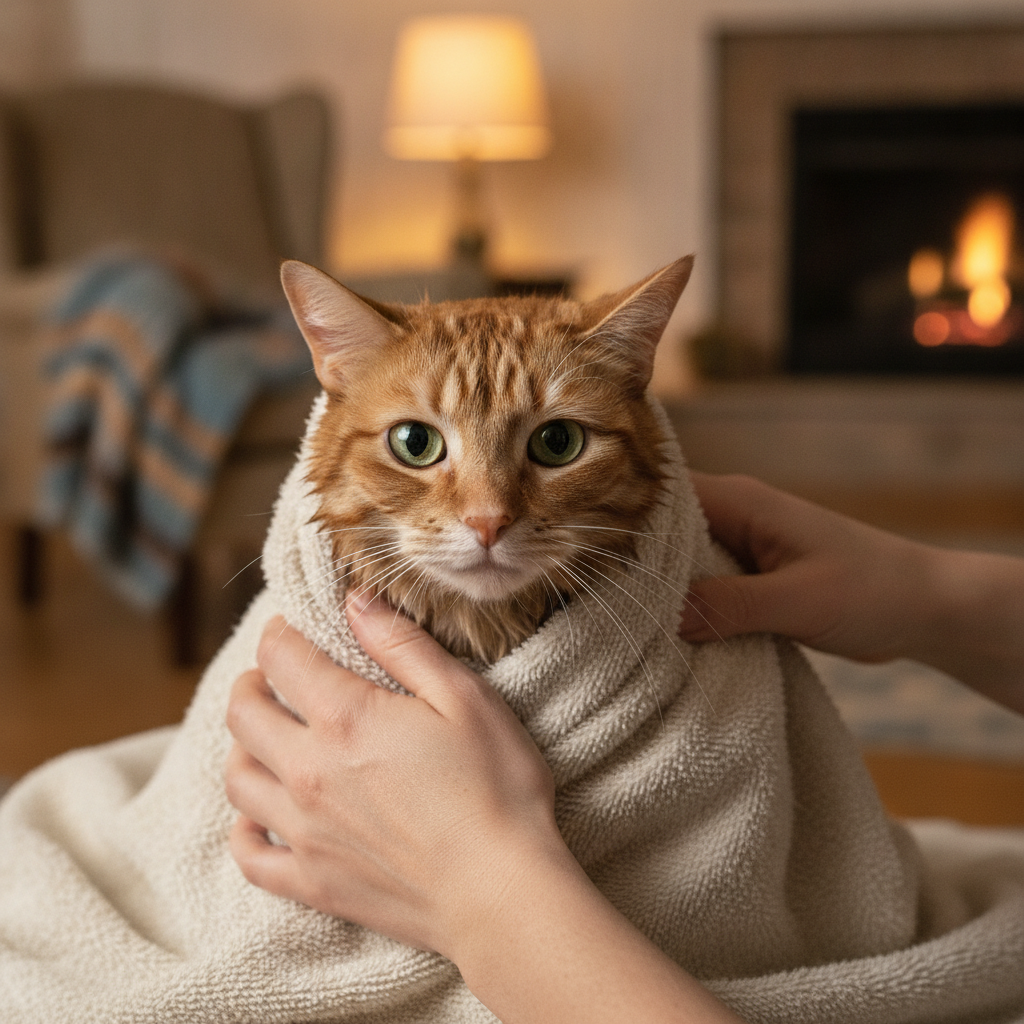
The aversion isn't only ancestral memory — being wet is genuinely uncomfortable for a cat, and the reasons are physical. A cat's coat is built from a soft insulating undercoat and coarser guard hairs that trap a layer of warm air against the skin. Crucially, that coat is not waterproof. According to Cats Protection, it behaves more like wool than a raincoat: it soaks through fast, water displaces the trapped air, and the fur mats flat against the body, killing its insulating power.
That matters more than it sounds. A cat's normal body temperature sits in a narrow window of roughly 38.1–39.2 °C (about 100.5–102.5 °F), and a drenched coat conducts heat away from the body alarmingly quickly. In a cool, air-conditioned room a wet cat can start to chill within minutes — shivering, lethargy and a real risk of hypothermia in kittens and frail older cats. On top of that, a waterlogged coat is heavy, and weight is the enemy of a creature that survives on speed. As PetMD notes, a sodden cat feels slow, clumsy and exposed — precisely the opposite of the agile escape artist it's built to be.
It's Also About Control (and That Smell)
Beyond the physical, there's a psychological hit. Cats are control freaks by design — they manage threats by staying nimble and being able to bolt at any second. Take that away and anxiety spikes. Clinical animal behaviourists point to this loss of control as the core driver of bath-time panic: weighed down, on slippery footing, with no clean exit, a cat feels genuinely trapped.
Then there's their nose. A cat's sense of smell is vastly sharper than ours, and tap water isn't odourless to them — the chlorine and treatment chemicals we can't detect register loud and clear as something alien and off-putting. Worse, a soaking strips the natural oils and the familiar personal scent that your cat works hard to maintain through grooming. So a bath doesn't just feel cold and heavy; it smells wrong and erases the scent-identity your cat has carefully built. Little wonder they object.
The Exceptions: Cats That Actually Like Water
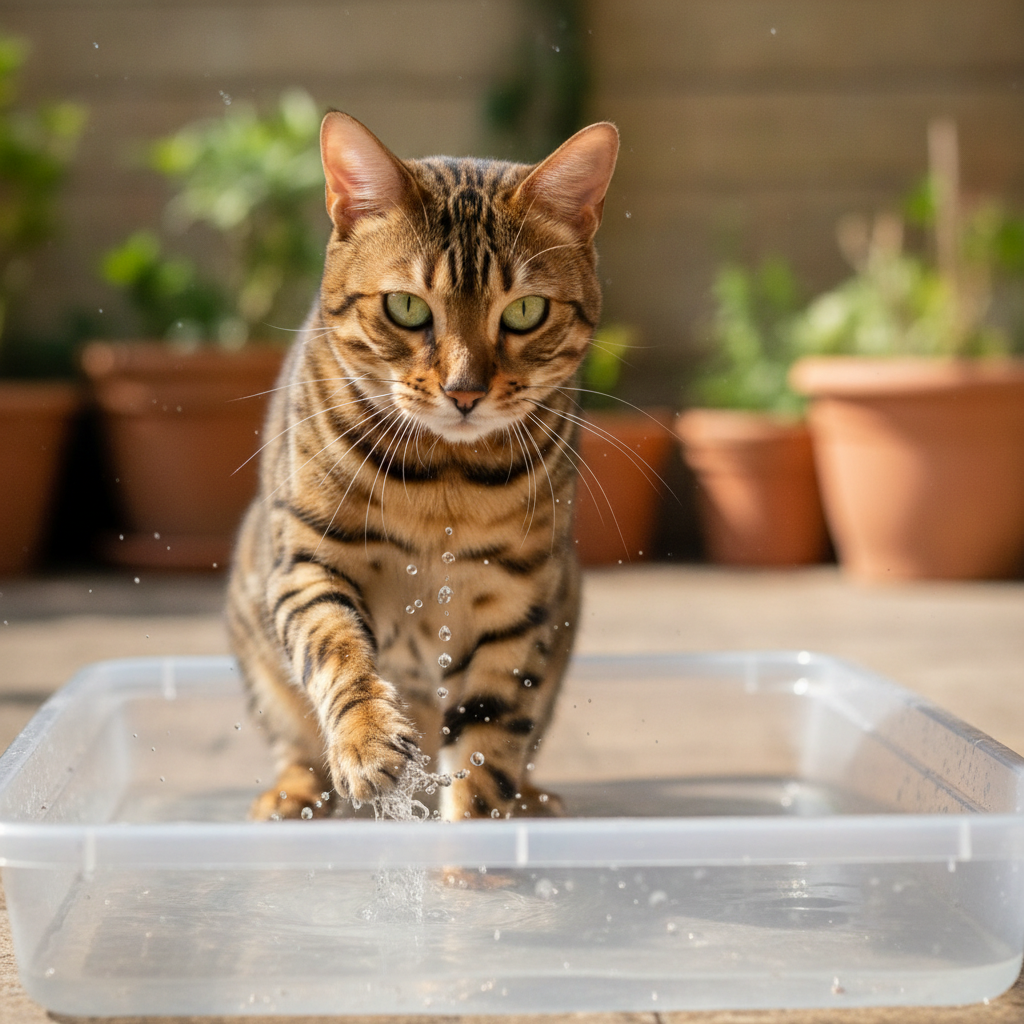
Every rule has rebels, and a few breeds genuinely enjoy water — almost always because of where they came from. Their stories are a neat proof of the evolutionary argument: change the ancestral environment, and you change the instinct.
| Breed | Origin | Why they tolerate water |
|---|---|---|
| Turkish Van | Lake Van region, Turkey | A single-layer, water-resistant coat with no undercoat that won't waterlog; nicknamed the "Swimming Cat" |
| Bengal | Hybrid of domestic cat & Asian Leopard Cat | Direct inheritance from a wild ancestor that hunts and swims near water; sleek quick-drying coat |
| Maine Coon | New England, USA (possible ship's cat) | Thick, multi-layered, water-repellent coat bred to survive a wet, snowy climate |
The Turkish Van earned its "Swimming Cat" reputation after two British visitors in 1955 were astonished to see the cats voluntarily wade into ponds and swim, a story documented by the Cat Fanciers' Association. The Bengal's love of water is a gift from its wild parent, the Asian Leopard Cat, while the Maine Coon developed its dense water-repellent coat to survive damp New England winters. If you share your home with one of these, our Maine Coon and Bengal care guides go deeper. That said — genetics is a tendency, not a guarantee. Plenty of individual Vans and Bengals still hate baths, and one bad experience can put any cat off water for life.
So Do Cats Even Need Baths?
Here's the liberating part for most Malaysian cat parents: for a healthy, able-bodied cat, the answer is usually no. Cats are obsessive self-groomers, and their tongues do a remarkable job. As Texas A&M's veterinary school points out, over-bathing can actually backfire — it strips the protective oils from the coat and skin, leaving them dry, flaky and irritated. We make the full case in why you should stop bathing your cat.
Baths are reserved for specific situations, not routine hygiene:
- Medical treatment — a vet-prescribed medicated shampoo for ringworm, skin infections, severe flea infestations or seborrhoea, used with a specific contact time.
- Emergencies — a cat that's got a toxic or sticky substance on its fur (motor oil, paint, glue). Washing it off fast stops them poisoning themselves when they groom.
- Cats that can't self-groom — elderly, obese or arthritic cats that physically can't reach everywhere, and hairless breeds like the Sphynx, whose oily skin needs regular washing because there's no fur to absorb it.
If none of those apply, your cat is almost certainly cleaner than you think — and happier left dry.
How to Bathe a Cat Without the Trauma
When a bath is genuinely necessary, preparation is everything. The goal, per WebMD, is a calm, fast, controlled procedure:
- Set the stage first. Use a small enclosed room. Lay a non-slip mat in the sink or tub so your cat has secure footing, and pre-fill 3–4 inches of lukewarm water before bringing the cat in — the sound of a running tap is half the terror.
- Prep the cat. Time it for when they're naturally calm (after play), trim the claws a day or two earlier, and brush out the coat first so tangles don't tighten when wet.
- Wash gently. Wet from the neck down with a cup or low-pressure sprayer, never blasting the face. Use a cat-specific shampoo only — human and dog shampoos have the wrong pH and can be toxic. Clean the face separately with a damp cloth.
- Rinse completely. Any leftover residue irritates the skin and gets swallowed during grooming.
- Dry warm. Wrap in a towel and blot — don't rub. Keep your cat in a warm, draft-free room until fully dry to prevent chilling, which is critical in an air-conditioned home. Reward generously with treats throughout.
The Cleaner-Cat Connection: It Starts on the Floor
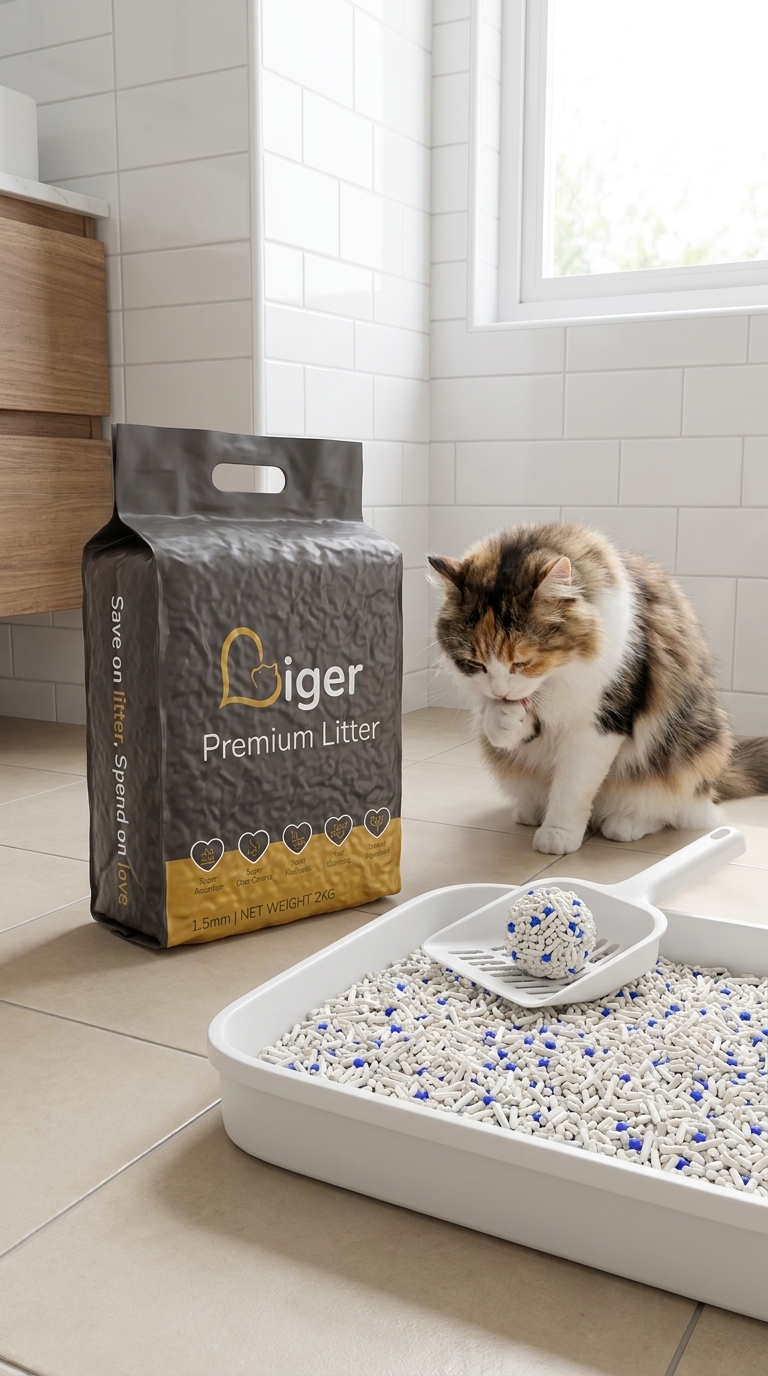
Here's the practical upshot of everything above: because your cat would rather face almost anything than a bath, the cleanliness of its environment does the day-to-day work that a bath otherwise would. And the single dirtiest thing your indoor cat steps in several times a day is the litter box.
Every trip to the tray, your cat picks up dust and residue on its paws — then licks it all off during grooming and swallows it. A high-dust clay litter coats the very fur your cat is trying so hard to keep clean (and irritates the airways of a desert animal already sensitive to its environment). A low-dust, firmly clumping plant-based litter like Liger Premium Tofu Cat Litter leaves far less powder clinging to fur and paws, so your self-grooming cat stays genuinely cleaner without ever going near a tap. Made from natural food-grade plant starch, it clumps tightly for quick scooping and throws off minimal airborne dust — a real plus in a sealed, air-conditioned Malaysian unit. Liger runs from RM21.90 for a single 2 kg pack down to RM169 for the 10-pack (20 kg) — about RM8.45/kg in bulk, with free shipping in Peninsular Malaysia (current Liger pricing, as of May 2026). Work out how much your household gets through with our litter calculator.
The other legacy of that desert ancestry is a famously weak thirst drive — cats simply aren't built to drink enough, which is why urinary and kidney issues are so common. Since your cat won't be cooling off in any water bowl, make drinking easy and appealing: multiple fresh bowls, kept away from the food and the litter box, and check whether yours is getting enough with our cat hydration calculator. Respect the desert cat in your living room, and you'll keep it both dry and well.