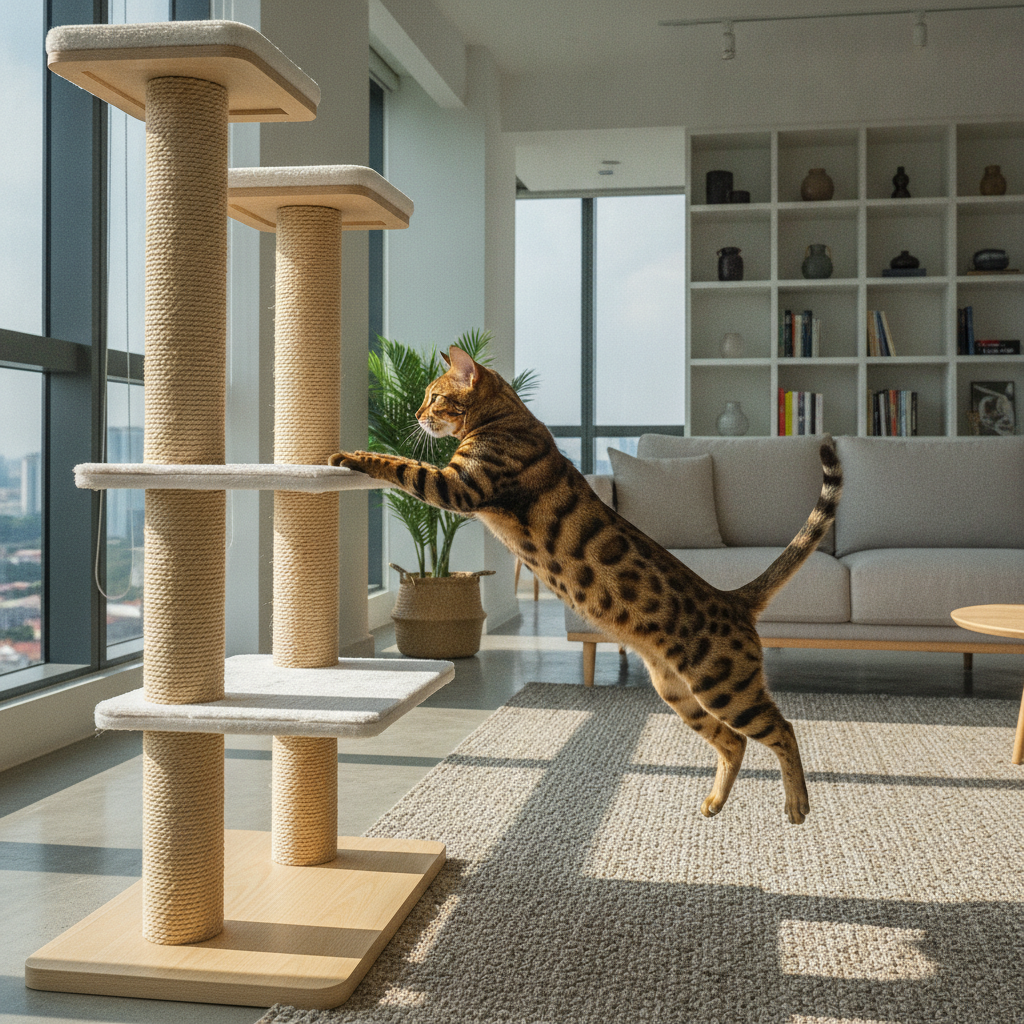
Few cats turn heads like a Bengal. With their glittering leopard-spotted coats and athletic, muscular bodies, they look like a slice of jungle in your living room — a legacy of their Asian Leopard Cat ancestry, as the breed's history records. They're brilliant, beautiful, and full of personality. They're also one of the most demanding breeds you can bring into a Malaysian apartment. Here's the full, honest guide before you're seduced by those rosettes.
See how the Bengal compares to calmer breeds in our complete cat breeds in Malaysia guide.
A Mini-Leopard with a Turbo Engine
Bengals are confident, curious, and astonishingly athletic, descended from the wild Prionailurus bengalensis. They climb everything, open cupboards, fetch toys, and form strong, vocal bonds with their families. None of that is a problem if you can meet their needs. The issue is that a Bengal's intelligence and energy are not optional extras to manage — they're the core of the breed, and ignoring them creates a miserable, destructive cat. This is a working-athlete in a house pet's body, and the single biggest mistake owners make is underestimating just how much input it needs every day.
It helps to understand where the breed comes from. As WebMD explains, the Bengal was created by crossing the wild Asian Leopard Cat with domestic cats, and the kittens are graded by how many generations removed they are from that wild ancestor. The early generations (F1–F3) retain strong wild behaviour and aren't suited to ordinary homes; the pet Bengals you should be buying are well-removed, fully domestic "SBT" cats (typically four or more generations down). If a breeder is offering an early-generation Bengal to a first-time owner, walk away — that's a recipe for a stressed cat and a wrecked home.
The Energy Reality: Play or Pay the Price
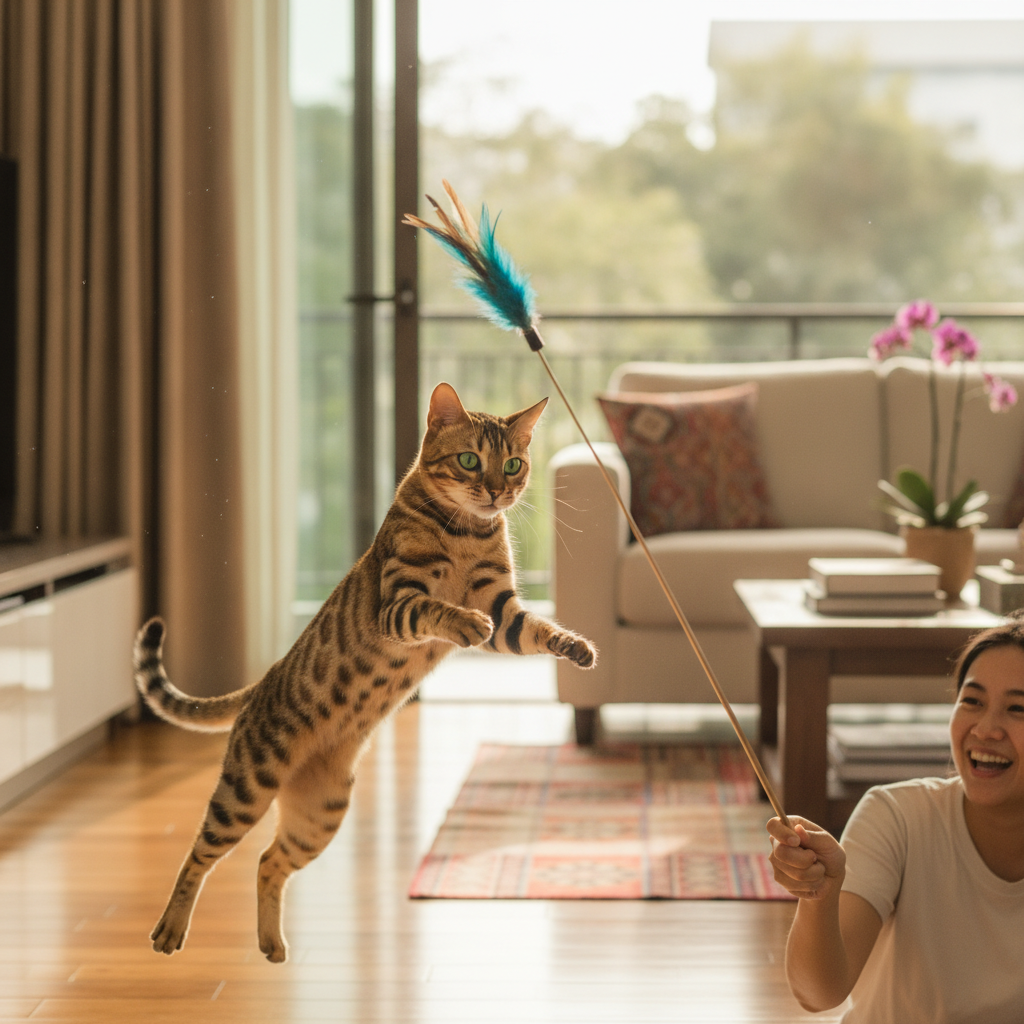
This is the most important thing to understand. A Bengal needs at least two to three 15-minute interactive play sessions every day that mimic hunting — wand and feather toys are the gold standard. If you use a laser pointer, always end the session with the dot landing on a physical toy or treat the cat can actually "catch", or you'll just create frustration. Deprive a Bengal of this and you get the classic results: shredded furniture, knocked-over everything, incessant yowling, and a stressed cat.
Mental work matters just as much as physical. Bengals are highly trainable — clicker training teaches tricks and burns mental energy while strengthening your bond — and puzzle feeders make them problem-solve for meals, engaging their foraging instinct and slowing fast eaters. Rotate toys every few days to keep novelty high. A useful rhythm is to schedule play around your own routine — a session before you leave for work and another when you return drains energy at the times a Bengal is most likely to act out. Our indoor cat enrichment guide is mandatory reading for any Bengal owner — for this breed, enrichment isn't a luxury, it's the difference between a delightful companion and a wrecking ball.
Climbing and Water: A Cat with Wild Instincts
Two wild traits define daily life with a Bengal. First, a powerful climbing instinct: vertical space isn't enrichment, it's a fundamental need. In a typical 550–1,200 sq ft Malaysian apartment, the smart move is to build upward — tall, sturdy cat trees by windows, plus wall-mounted shelves forming a "cat highway" that lets the cat patrol its territory without eating floor space. If you have a balcony, enclose it securely with netting or as a proper catio so your Bengal can safely take in outdoor sights and smells.
Second, an unusual love of water. Many Bengals play with dripping taps, splash in their bowls, and try to join you in the shower — a quirk PetMD attributes to the breed's wild heritage. It makes the occasional bath easier, but frequent baths aren't needed and can strip the coat's protective oils; bathe only when genuinely dirty, with a cat shampoo, and dry thoroughly to prevent fungal skin infections in our humidity.
Climate and Grooming in the Tropics
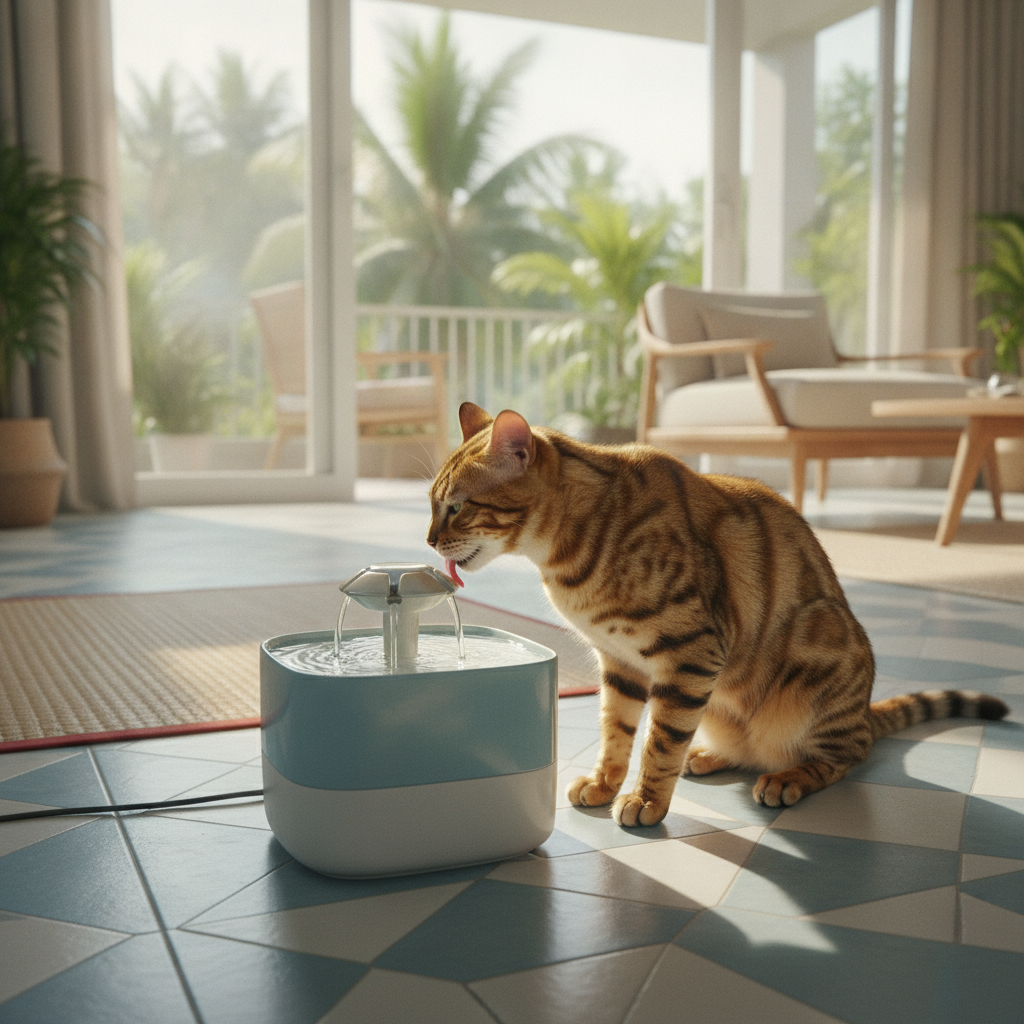
Good news for Malaysia: the Bengal's short, dense, single-layer coat — no thick undercoat — dissipates heat efficiently and copes well with our climate, and Royal Canin notes a weekly brush with a soft mitt is all the grooming it needs. Its lean, muscular build helps with temperature regulation too.
That said, our high humidity reduces a cat's ability to cool itself through grooming, so be proactive: provide constant fresh, cool water (a fountain encourages drinking), cool resting spots like tiled floors or cooling mats, and good ventilation with fans or air-conditioning during the afternoon heat. Schedule strenuous play for cooler mornings and evenings. Persistent moisture also raises the risk of skin "hot spots" (moist dermatitis), so check regularly for redness or irritation, and stay on top of flea and tick control, since parasites thrive in warm, humid conditions.
Diet for an Athlete
A Bengal's high energy output demands a diet rich in quality animal protein to support lean muscle — vets and breeders typically recommend 35–45% protein, primarily from wet or raw sources. The high moisture content of wet food is especially valuable in our climate for hydration and urinary health; dry kibble, being higher in carbohydrates and lower in moisture, is best limited and, if used, should be a high-protein, grain-free formula served alongside wet food. An average adult Bengal needs roughly 250–350 calories a day, adjusted for activity and weight. Avoid free-feeding a bottomless bowl — measured meals (or puzzle feeders) suit this food-motivated breed better and keep weight in check, and a portion of the daily ration set aside as training treats doubles as enrichment. Keep fresh water available everywhere — a fountain plays to their water obsession — and see our guide on keeping your cat hydrated for more.
Health Risks: HCM and PRA
Two inherited conditions need screening. Hypertrophic Cardiomyopathy (HCM) — the most common feline heart disease — is a real breed risk; a Universiti Putra Malaysia study found HCM to be the most prevalent heart condition among cats in the Klang Valley, which makes annual echocardiogram screening genuinely worthwhile here. The breed is also prone to Progressive Retinal Atrophy (PRA-b), an inherited eye disease that can be DNA-tested. Buy only from a breeder who provides documented clearances for both — and read our cat heart health guide for what HCM screening involves. Check typical breed lifespans in our cat lifespan by breed guide.
Litter and a Clean, Happy Bengal
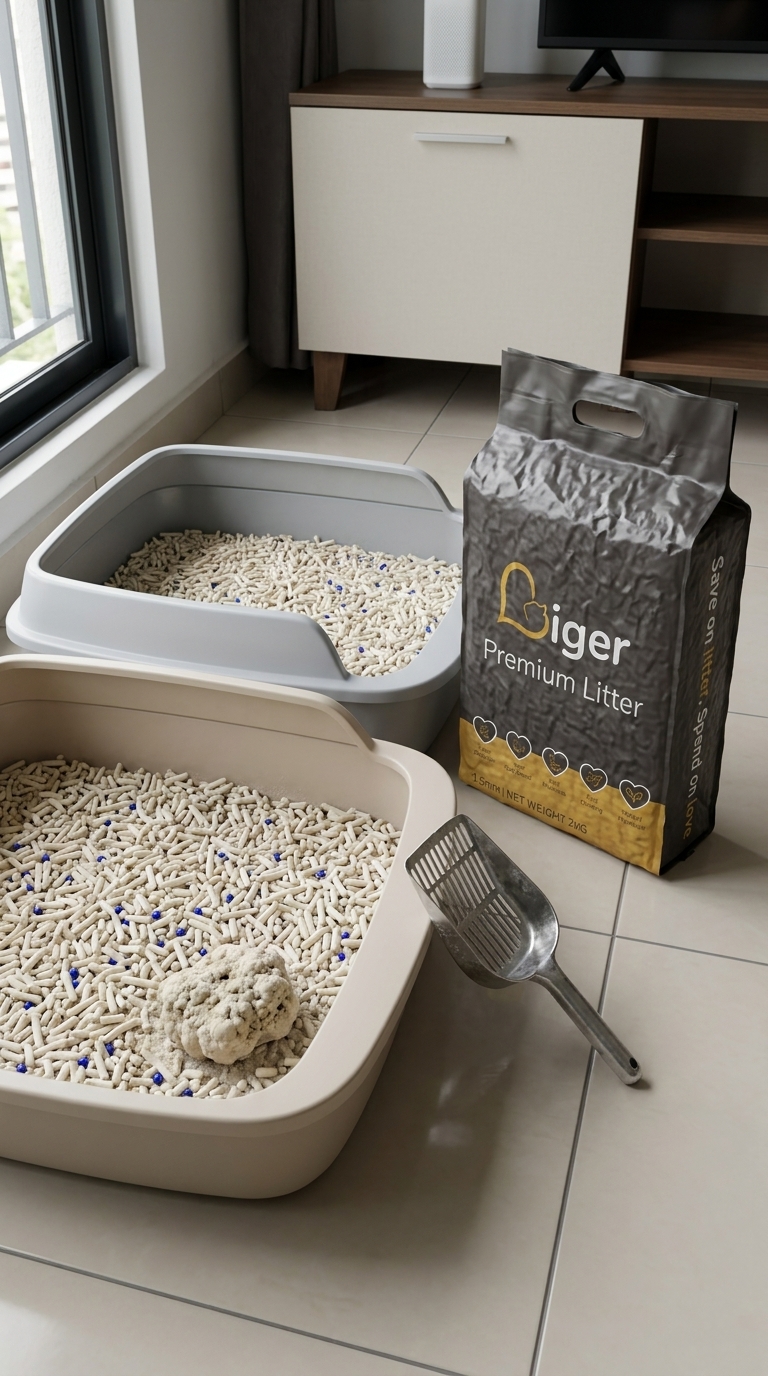
Bengals are intelligent and meticulous about cleanliness, with a low tolerance for a dirty litter box — and inadequate litter management is one of the most common causes of house-soiling in the breed. Two rules keep a Bengal happy. First, follow the "plus-one" rule: provide one more litter box than the number of cats, so a single Bengal should have at least two boxes, letting it separate urination and defecation if it prefers. Our guide on how many litter boxes you need covers placement in a condo.
Second, keep them spotless and low-dust. A firmly-clumping, low-dust litter makes daily scooping fast (essential when you're maintaining two boxes) and won't irritate an active cat that's constantly digging and kicking. A natural tofu litter like Liger Premium Tofu Cat Litter is lightweight and very low-dust, so it tracks less when your Bengal does its digging acrobatics, and clumps tightly for quick cleanup. Because you'll be running two boxes, buying in bulk makes sense — size your household's monthly need with our litter calculator. Get the litter setup right and you remove one of the most common reasons a clever, fussy Bengal starts toileting where it shouldn't.
Condos, Neighbours and Price in Malaysia (2026)
Most Bengals here live in high-rises, which raises a practical legal point. Under the Strata Management Act 2013 (By-Law 14), pets are generally permitted in stratified properties, but only on condition they don't cause a "nuisance" — and management can demand a pet's removal within three days of a formal complaint. A bored, yowling, furniture-wrecking Bengal is exactly what triggers complaints, so keeping yours well-exercised and content (so it sleeps at night) isn't just kindness — it protects your right to keep it.
On price, a pet-quality Bengal kitten from a reputable Malaysian breeder runs about RM3,000–8,000 in 2026, more for premium rosetted or "silver" lines. Insist on documented HCM and PRA-b screening of the parents, meet the kitten, and never buy under 12 weeks (early socialisation is vital for this intense breed). For how the Bengal compares on price and lifelong cost, see our cat breed price guide for Malaysia. A Bengal is a spectacular companion for an active, engaged owner who treats daily play as non-negotiable — but a poor fit for anyone wanting a calm lap cat. If your lifestyle is busier or quieter, the British Shorthair or Ragdoll may suit better. Browse the full Malaysia cat breeds guide to decide.