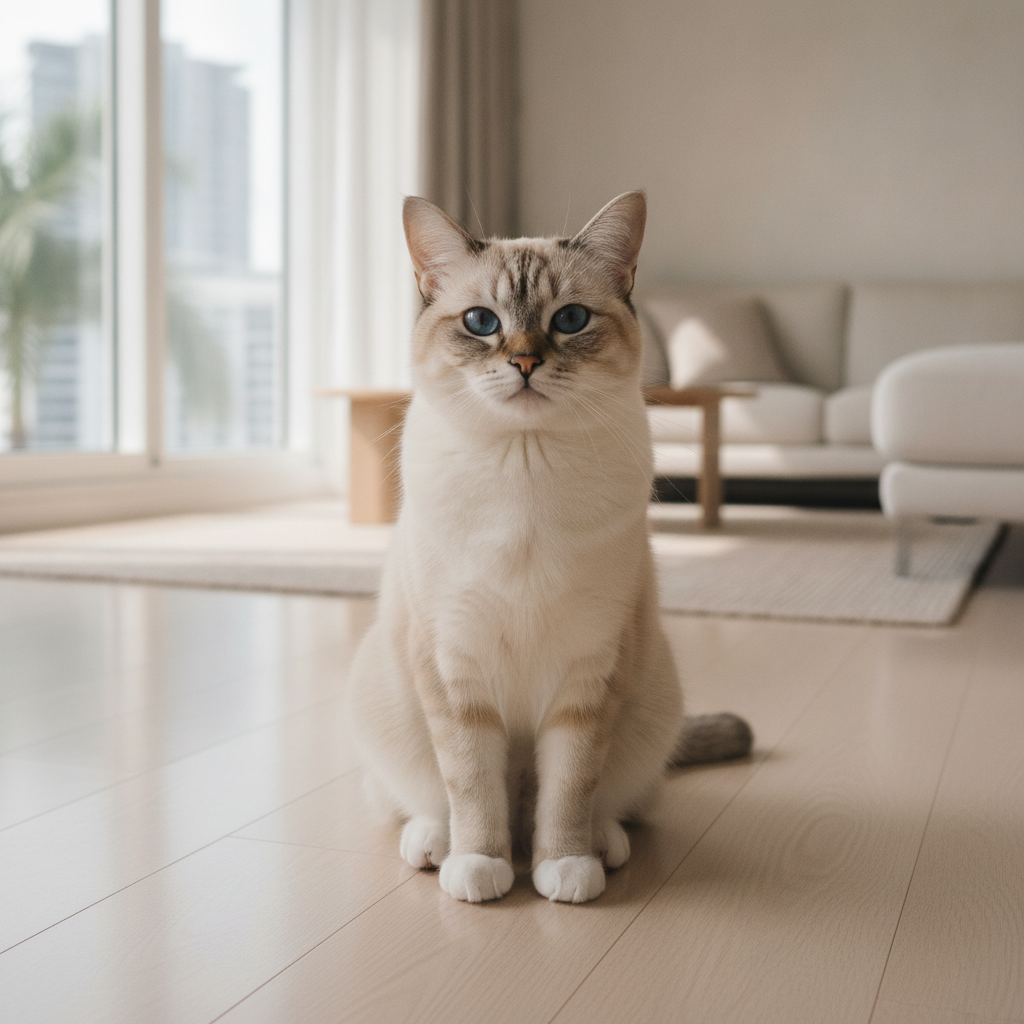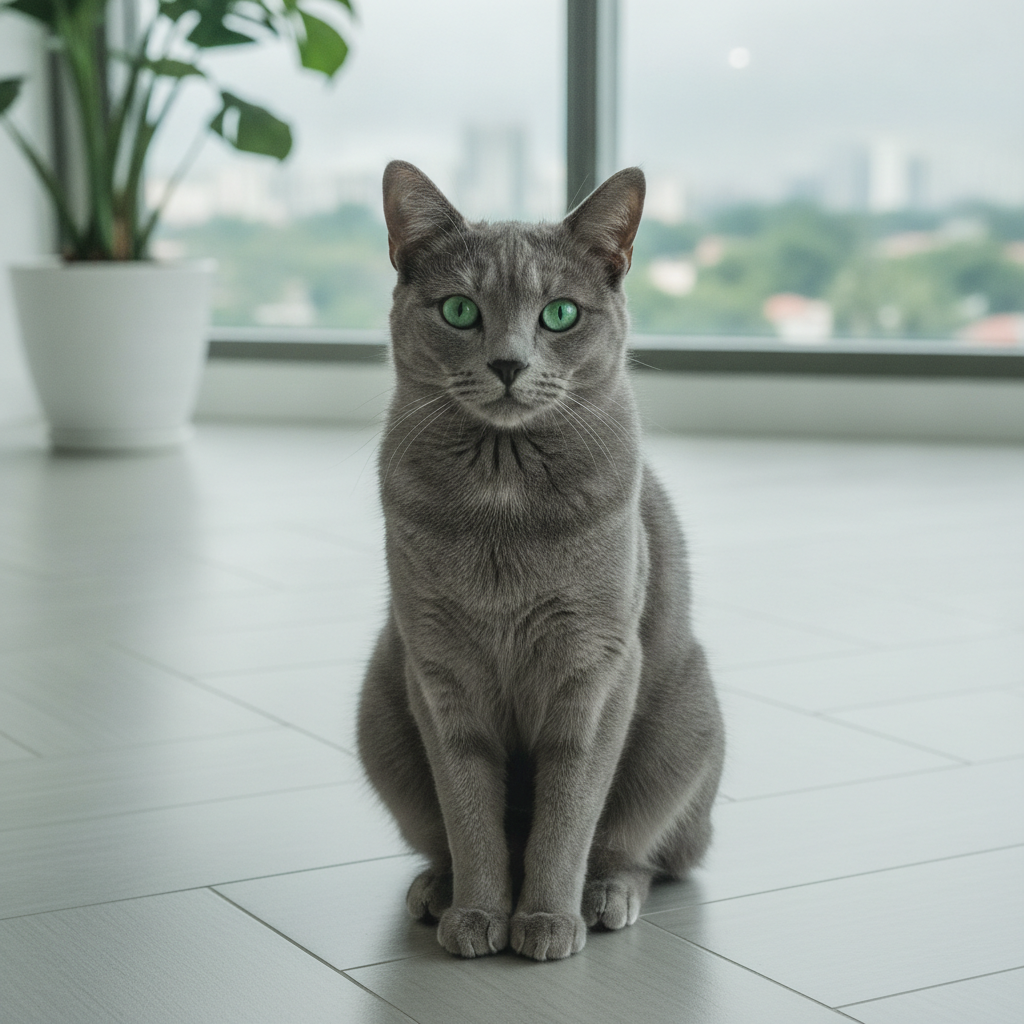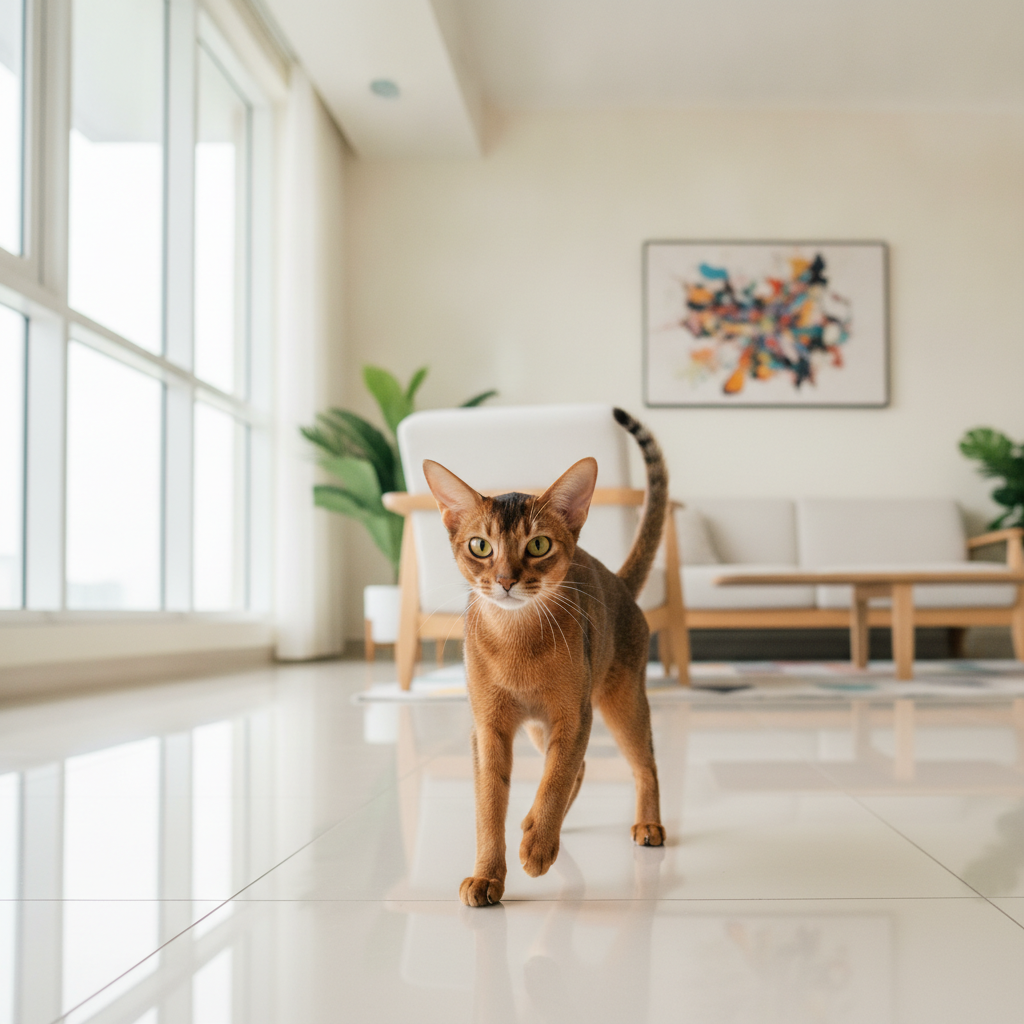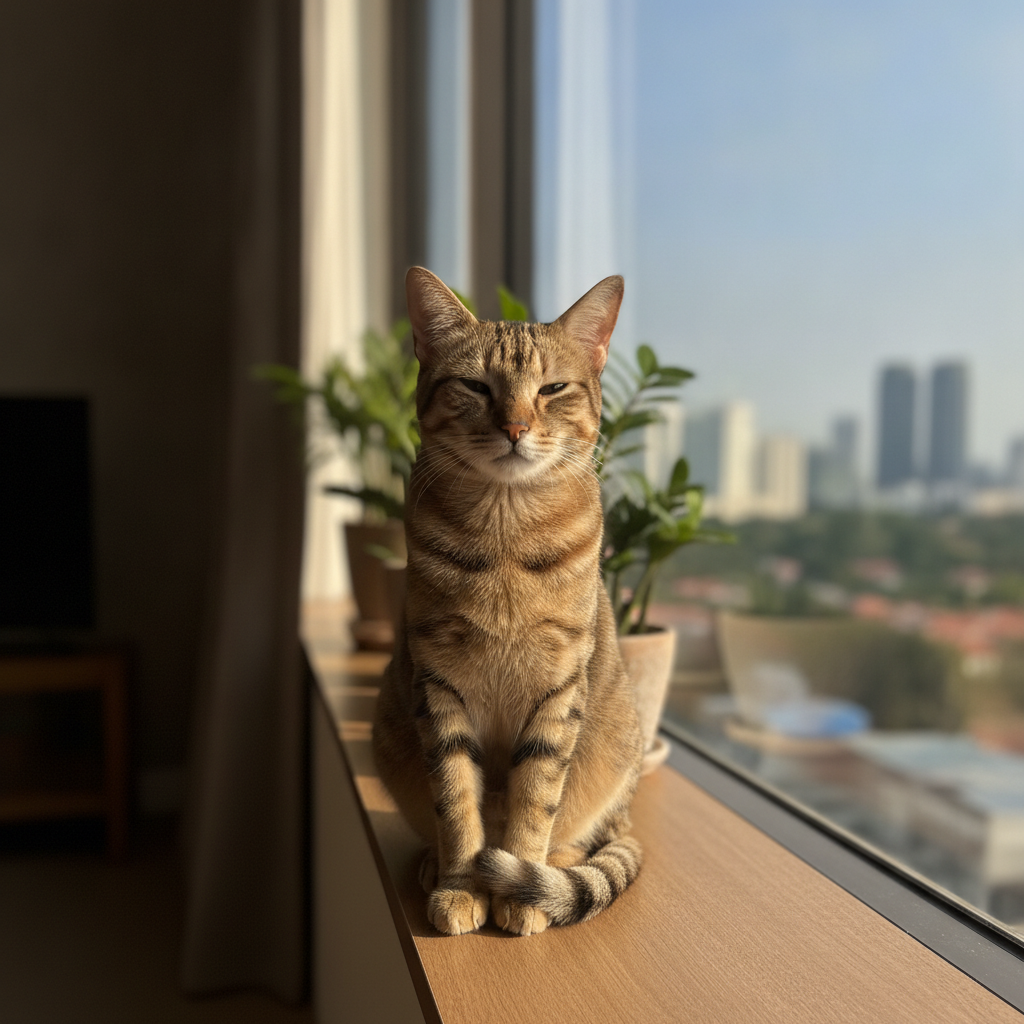
Cats are the most popular pet on earth and somehow still the most misread. We project dog logic onto them — a wagging tail must mean happy, ignoring us must mean spite, weeing on the bed must mean revenge — and we get it wrong almost every time. The truth is that nearly everything your cat does is a logical, readable signal inherited from a small desert hunter. Learn the language and the "weird" behaviour suddenly makes sense.
This is the hub guide for Malaysian cat parents: the big picture of why cats do what they do, with links out to deep-dives on every specific behaviour. Bookmark it — and jump to the Why Does My Cat…? directory at the bottom if you're chasing one particular mystery.
Your Cat Is a Wildcat in a Condo
Almost every house cat alive descends from the African Wildcat (Felis silvestris lybica), a solitary predator that started living near humans only around 10,000 years ago, as documented on Wikipedia. That's a blink in evolutionary time, and unlike dogs — bred over millennia for cooperative work — cats were never really redesigned. They semi-domesticated themselves to hunt the rodents in our grain stores, and they kept their wild operating system almost completely intact.
This single fact explains the bulk of feline behaviour. Your cat was both predator and prey, which is why it craves high perches, bolts at sudden noises, and ambushes your ankles. Pouncing, scratching, kneading and scent-marking aren't quirks — they're the survival toolkit of a wild animal that happens to live in your Kuala Lumpur apartment. Once you stop expecting a furry dog and start seeing a tiny wildcat, you become a far better owner.
Reading the Silent Language: Tail, Ears and Eyes
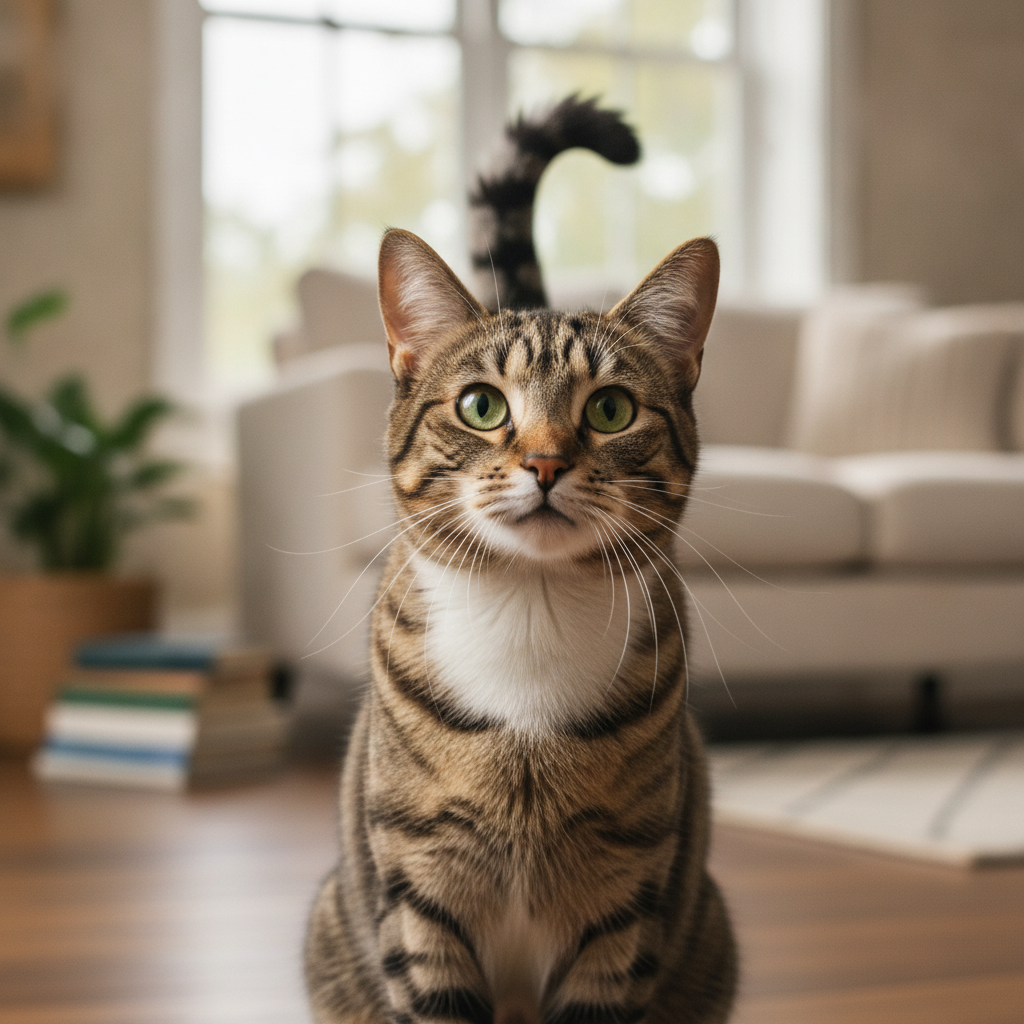
Most cat communication is visual and silent. The body broadcasts mood constantly — you just have to read tail, ears and eyes together, never in isolation. The clinical guidance from International Cat Care is the gold standard here.
- The tail. Held high and upright = a friendly, confident cat happy to interact; a question-mark curl at the tip adds "and I'm feeling playful." Tucked under the body = fear or pain. Puffed up like a bottlebrush = alarmed and trying to look bigger. And the big one Malaysians get wrong: a fast thrashing or whipping tail is not happiness like a dog's wag — it's irritation. If it starts while you're petting, stop.
- The ears. Each ear has 32 muscles and swivels up to 180°. Forward and neutral = relaxed and curious. Swivelled sideways ("airplane ears") = nervous or annoyed. Pinned flat back against the skull = fear or imminent aggression.
- The eyes. Big dilated pupils mean high arousal — could be play, could be fear, so read the context and the lighting. A slow, lazy blink is the famous "cat kiss": a genuine signal of trust you can blink right back. A hard, unblinking stare, by contrast, is a challenge.
We break the trust signals down further in does your cat actually trust you.
Scent and Sound: The Channels You Can't See
Scent is the cat's primary language, and it's invisible to us. Cats carry scent glands on their cheeks, chin, paws and flanks, and they deposit pheromones deliberately. When your cat head-bumps you or rubs its cheek on the sofa — a behaviour called "bunting" — it's literally tagging you as safe and part of its group scent, as we explain in why your cat headbutts you. Scratching does the same job, mixing a visible mark with scent from glands between the toes.
Sound is the newer, human-directed channel. Here's a fact that reframes everything: adult cats almost never meow at each other — the meow is a tool they evolved specifically to manage humans, per research hosted on the NIH's PMC library. The purr is subtler still. It rumbles at a therapeutic 25–150 Hz that may aid self-healing, and cats can hide a high-frequency "solicitation" cry around 380 Hz inside it that mimics a human baby — basically an acoustic guilt-trip to get fed. We go deep on this in the science of cat purring.
The Instinct Files: Kneading, Pouncing and Scratching
Three of the most-Googled "why does my cat" behaviours are pure ancestral instinct:
- Kneading ("making biscuits"). A leftover from kittenhood, when kneading mum's belly stimulated milk — now linked to comfort and security, and often paired with purring. Full story in why your cat is making biscuits on you.
- Pouncing and stalking. The crouch-wiggle-pounce at a toy is the exact predatory sequence of a hunting wildcat. A well-fed indoor cat still needs this outlet — wild cats spent over three hours a day hunting. Channel it with daily interactive play (see indoor cat enrichment).
- Scratching. Not vandalism — claw maintenance, a full-body stretch, and territory marking all at once. The fix is never punishment; it's giving a better target, as covered in your cat isn't a vandal.
Every cat also has a personality layered on top of these instincts — the science of feline temperament is in the Feline Five.
The Social Cat: Why Multi-Cat Homes Get Tense
Cats aren't pack animals, but they're not strictly solitary either — wild colonies form around food, usually as cooperative groups of related females. The catch is that a multi-cat household is an artificial arrangement: you've put unrelated cats in a sealed condo and asked them to share. As the RSPCA notes, the new cat reads as a competitor, not a friend, and there's nowhere to escape to.
Almost all household tension traces back to one thing: competition over resources. In one colony study, 97.5% of aggressive encounters happened near the food. The evidence-based fix is resource multiplication and separation — multiple feeding stations, water points, perches and litter boxes, spread out so no cat has to pass another to reach them. This is exactly why litter-box bullying happens, which we tackle in when one cat guards the box, and why the litter box setup matters so much in a small Malaysian home.
When Behaviour Goes Wrong: Always Rule Out the Vet First
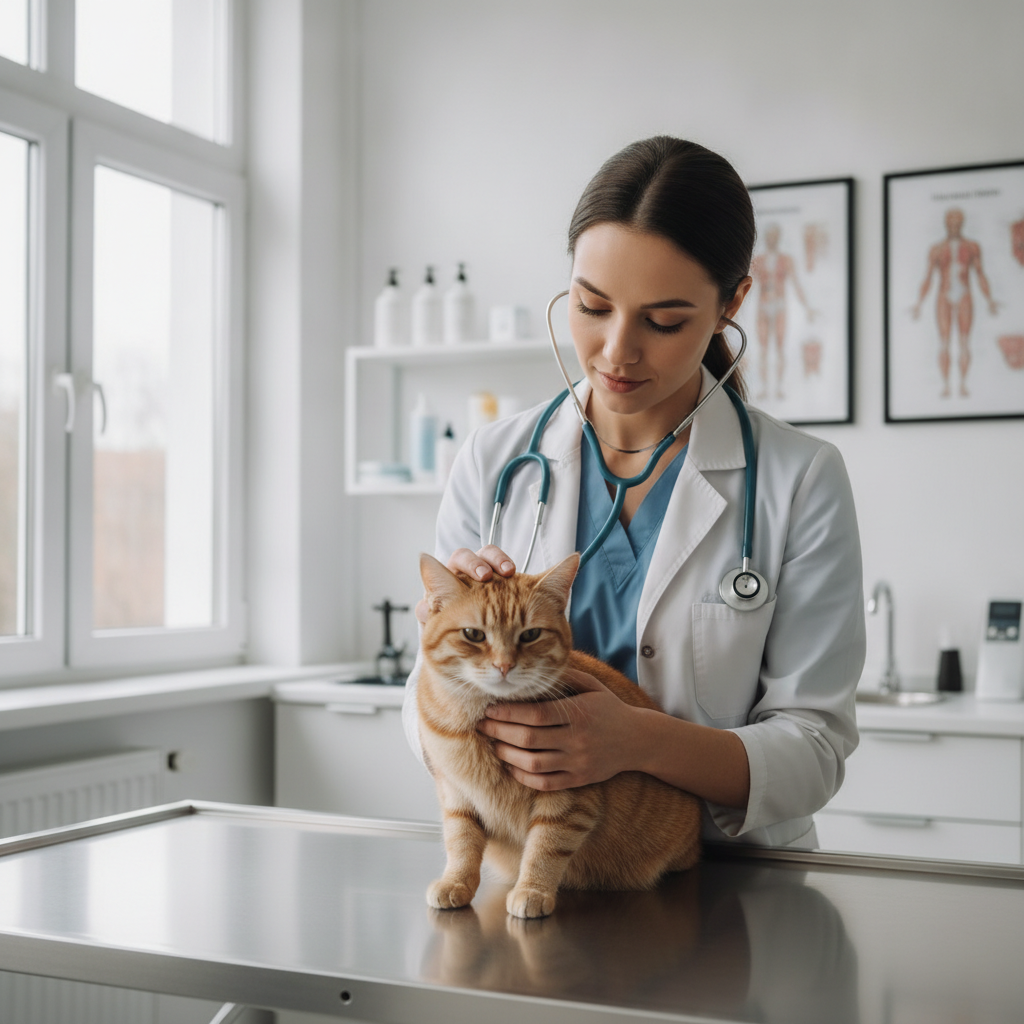
Here is the single most important rule in this whole guide: a sudden behaviour change is a medical symptom until proven otherwise. Behaviourists and vets are unanimous on this. A cat doesn't pee outside the box, bite, or over-groom out of spite — those are distress signals, and pain is the most common hidden cause.
Per the Cornell Feline Health Center and the ASPCA: inappropriate weeing can mean a urinary tract infection, bladder stones, kidney disease or diabetes; new aggression can stem from arthritis, dental pain or hyperthyroidism; and obsessive over-grooming is often itchy skin from allergies or parasites, not anxiety. See the vet before you try to "train" anything. Only once medical causes are cleared do you move to environmental fixes — and never, ever physical punishment, which just creates fear and makes everything worse (more in stop punishing your cat).
The Five Pillars of a Cat-Friendly Malaysian Home
The American Association of Feline Practitioners and International Cat Care distilled feline needs into five pillars. Meet these and most "problem behaviours" never appear:
- A safe place — a private retreat plus vertical space (a cat tree or shelf) to watch the world from a height.
- Multiple, separated resources — food, water, litter and perches, spread apart. The rule for boxes is one per cat plus one.
- Play and predatory outlet — daily wand-toy hunting and puzzle feeders to satisfy the hunter.
- Positive, predictable interaction — gentle daily attention on the cat's terms; reward-based, never punishment.
- Respect for the cat's sense of smell — unscented, low-dust, finely-clumping litter, and no strong cleaners or essential oils near their core areas.
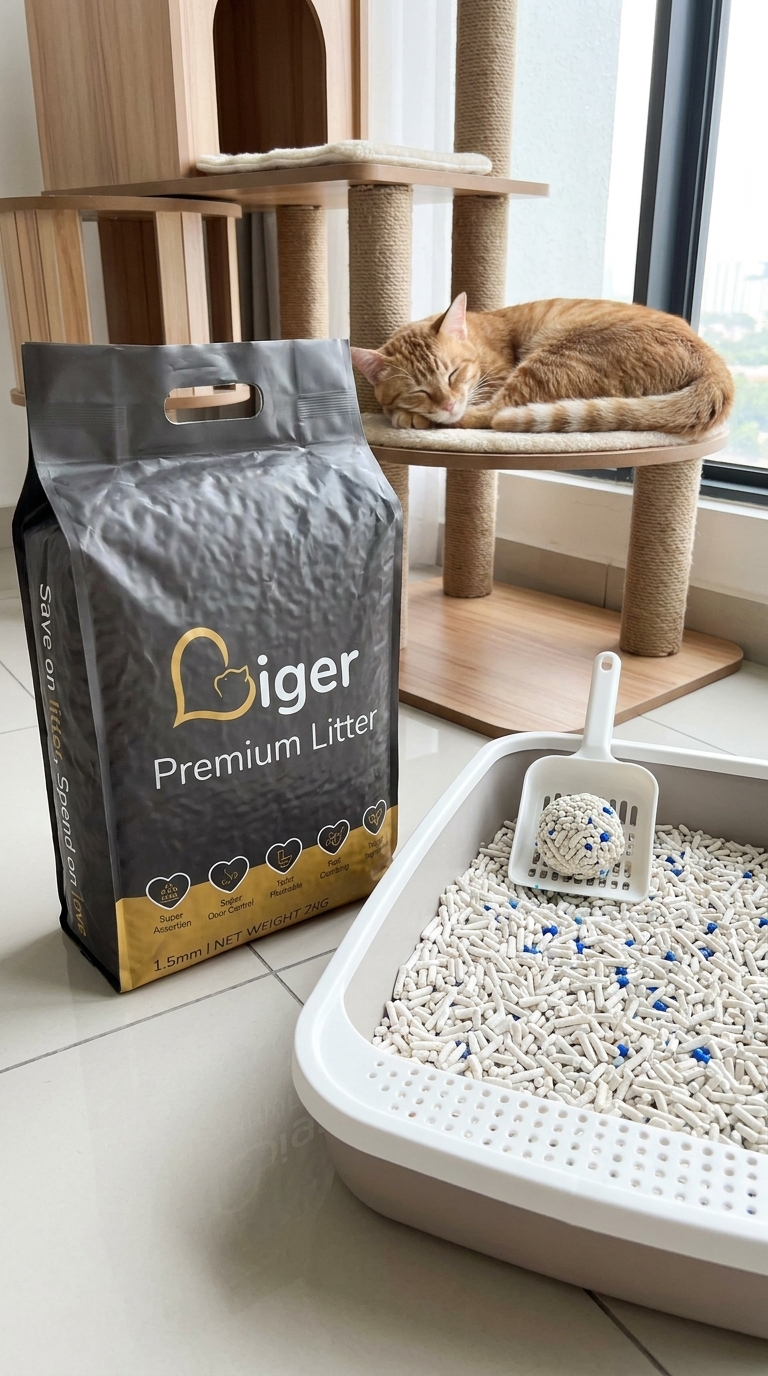
That fifth pillar is where day-to-day product choices quietly matter. A cat's security is built on scent, and a sensitive nose in a sealed, air-conditioned unit does not want perfumed, dusty litter. A natural, low-dust, firmly clumping plant-based litter like Liger Premium Tofu Cat Litter fits the brief: made from food-grade plant starch, it's unscented in the harsh-chemical sense, throws off minimal airborne dust, and clumps tightly so the box stays clean and odour-controlled — which is exactly what keeps a cat using it happily. It runs from RM21.90 (single 2 kg pack) to RM169 for the 10-pack (20 kg, about RM8.45/kg), free shipping in Peninsular Malaysia (current Liger pricing, as of May 2026).
The litter box is also your best behaviour-monitoring tool. Because cats hide illness so well, changes in what lands in the tray — going more or less, straining, blood, or skipping the box entirely — are often the first clue something's wrong. A clean, low-dust clumping litter makes those changes easy to spot. Size the setup and work out usage with our litter calculator, and if you're new to all this, start with the new cat owner checklist.
Why Does My Cat…? The Behaviour Directory
Chasing one specific mystery? Here's where each common behaviour gets its full deep-dive:
- …bite or attack me? Play, overstimulation, fear and redirected aggression decoded in cat aggression: why cats bite, swat and attack.
- …meow so much? What constant meowing and yowling really mean in why does my cat meow so much.
- …spray on the walls? Territorial marking (not box avoidance) in cat spraying and urine marking.
- …lick me constantly? Grooming, bonding and when it's too much in why does my cat lick me.
- …hate water so much? The desert-ancestry answer in why do cats hate water.
- …follow me everywhere? Velcro-cat bonding vs anxiety in why does my cat follow me everywhere.
- …sleep all day? Normal vs worrying sleep in why does my cat sleep so much.
- …go crazy at 3am? The night zoomies explained in the 3am midnight crazies.
- …seem lonely when I leave? The truth about feline separation anxiety.
- …prefer one person? The science in do cats really prefer women.
The thread running through every one of these: your cat is always communicating. Once you read the signals instead of fighting them, you stop having a "badly behaved" cat and start having a well-understood one.