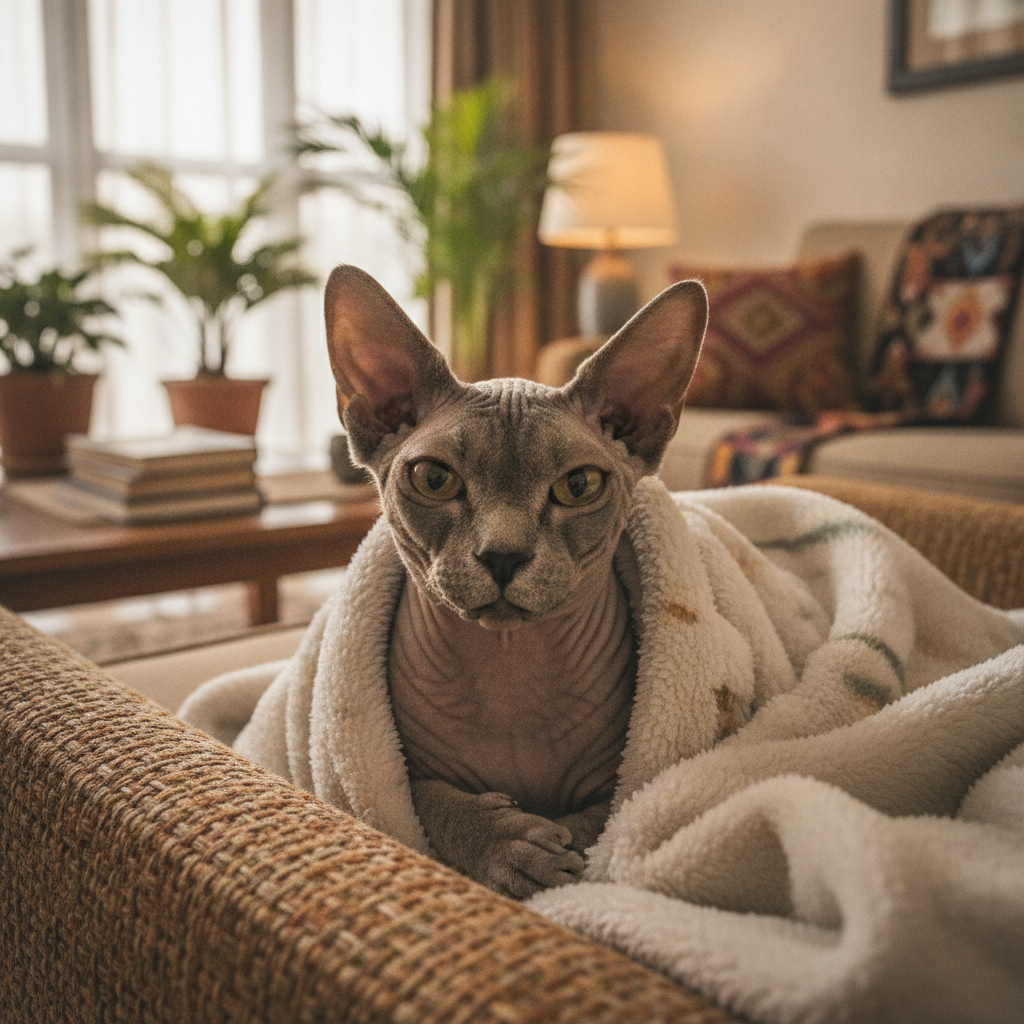
The Sphynx is the cat that breaks the internet — wrinkled, big-eared, velvety-skinned, and impossibly affectionate. Many Malaysians assume "no fur" means "no work." The opposite is true: the Sphynx is one of the most high-maintenance cats you can own, with serious skin, temperature, and heart-health needs that are amplified by our tropical climate. Here's the honest, detailed guide before you fall for that alien charm.
See how the Sphynx compares to other breeds in our complete cat breeds in Malaysia guide.
The Myth of the Low-Maintenance Hairless Cat
The Sphynx isn't a human invention — it began with a spontaneous genetic mutation in Canada in 1966, traced to a single hairless kitten named Prune born to a domestic shorthair in Toronto. As the breed's history records, that natural anomaly was stabilised over decades of breeding. The hairlessness comes from a recessive mutation in the KRT71 gene, which weakens the hair shaft — so most "bald" Sphynx are actually covered in a fine downy fuzz, giving the skin a texture like warm chamois or a peach.
No coat doesn't mean no grooming — it means different, more frequent grooming. A normal cat's fur absorbs the natural oils its skin produces; a Sphynx has nowhere for those oils to go, so they build up on the skin (and on your sofa and bedsheets). Their big ears also lack the fine hairs that trap debris, so wax builds up fast. Add Malaysia's humidity and you have a recipe for greasy skin, blackheads, and yeast or bacterial infections if you don't stay on top of it. The Sphynx is a cat for a committed, hands-on owner — not a shortcut to an easy pet.
Skin Care and Bathing in the Tropics
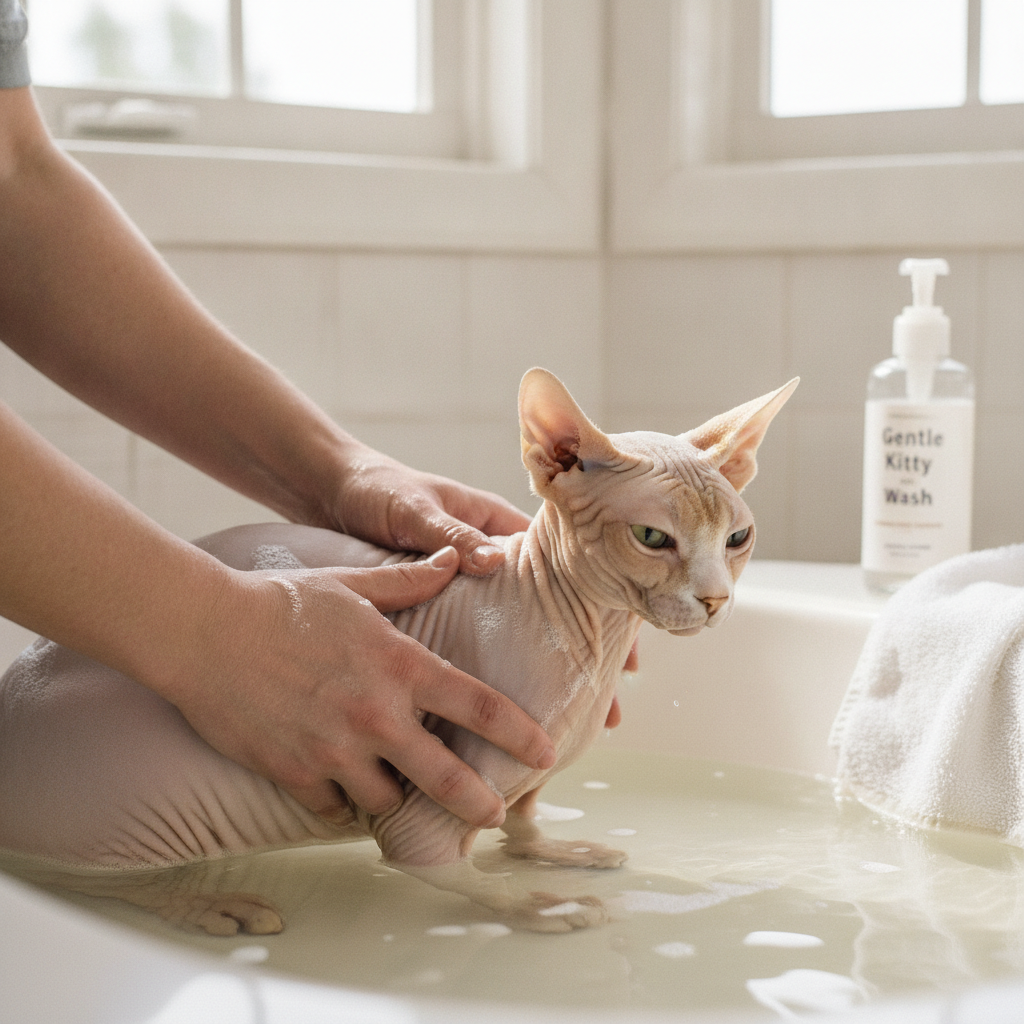
The cornerstone of Sphynx care is regular bathing. In our hot, humid climate the skin produces more oil and sweat, so most Sphynx here need a bath every one to two weeks — noticeably more often than the two-to-four-week schedule advised in cooler countries. As Royal Canin notes, skin care is central to the breed.
Do it properly: pre-warm the bathroom to at least 21°C so the cat doesn't chill, keep the water comfortably warm (around 31–35°C), and use a gentle, fragrance-free shampoo formulated for cats — never human soap unless your vet says so. Lather the whole body, pay special attention to the skin folds, rinse thoroughly (residue irritates), and dry completely, including inside the folds, to prevent fungal growth. Don't over-bathe, though — stripping the skin causes dryness, so stretch the interval if the skin looks flaky.
Two extras worth knowing: blackheads commonly appear on the chin and tail and can be managed with vet-approved cleansing before a bath; and you should never apply essential oils to a Sphynx, as they're absorbed through the skin and are toxic to the liver. Between baths, a daily wipe-down with a soft damp cloth or unscented pet wipes keeps paws and neck folds clean and stretches the time between full baths.
Two more grooming jobs come with the territory. Those big, open ears collect wax far faster than a furry cat's, so gently clean them weekly with a vet-approved ear cleaner and cotton pads (never push anything deep into the canal). And because Sphynx have no fur to hide grime, their nails and nail beds collect a dark, waxy buildup that needs regular wiping, and claws should be trimmed every couple of weeks. As general feline grooming guidance from International Cat Care stresses, building these handling routines early makes a lifelong difference — and with a Sphynx, grooming isn't optional upkeep, it's core healthcare.
Too Hot and Too Cold: Thermoregulation Under the A/C
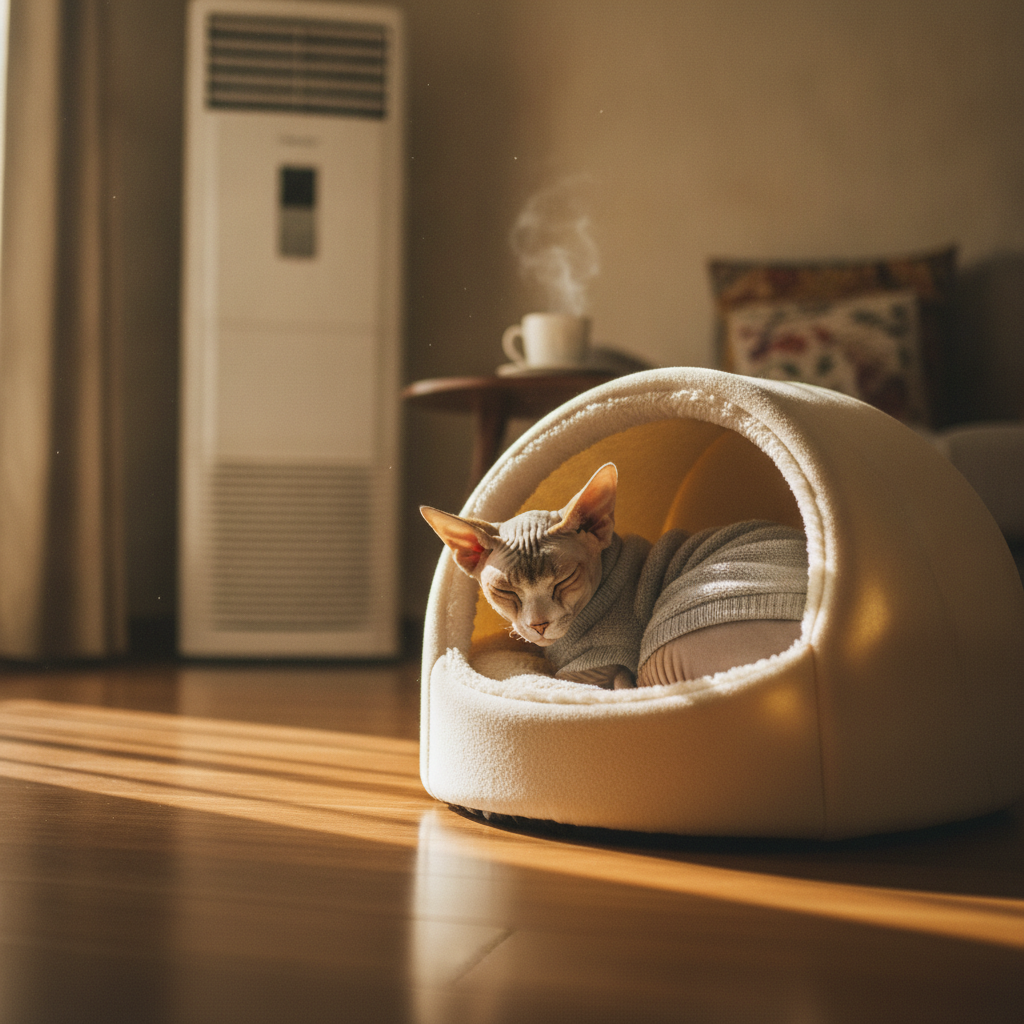
Here's the counter-intuitive part: a hairless cat in Malaysia struggles with our heat and with our air-conditioning. Because it has no insulating coat, the Sphynx burns energy constantly to stay warm and runs a slightly higher body temperature than coated cats. The ideal indoor range is 21–27°C.
In practice, the bigger daily risk in a Malaysian home isn't overheating — it's chilling under fierce air-conditioning. Give your Sphynx draft-free warm retreats: covered "cat cave" beds, self-warming beds, or piles of soft blankets placed away from A/C vents. Many Sphynx happily wear lightweight cotton or fleece sweaters for extra insulation (avoid wool — it irritates their skin). On hot days without A/C, the reverse applies: ensure cool spots and plenty of fresh water so they don't overheat. You're constantly managing a cat with no thermostat of its own.
Sun Protection: A Naked Cat Under the Equator
Malaysia's equatorial sun is a real hazard for bare Sphynx skin — unprotected exposure causes painful sunburn and raises the long-term risk of skin cancer. Limit sun exposure during peak UV hours (roughly 10am–4pm), and don't assume an indoor cat is safe, because UV penetrates window glass.
The safest protection is physical, not chemical: apply UV-blocking window film to windows your cat suns itself at, use light cotton clothing during unavoidable exposure (like vet trips), and provide only shaded, secure outdoor access such as a catio. And the firm rule: never use human sunscreen on a cat. Ingredients like zinc oxide and salicylates are toxic if licked off — which a grooming cat will do — and even "baby-safe" formulas may contain harmful oils or preservatives. As PetMD and hairless-care specialists advise, rely on shade, film and clothing rather than SPF. If your cat does get sunburnt (red or peeling skin), see a vet — human after-sun products, especially aloe vera, can be unsafe for cats.
The Big One: Heart Disease (HCM) and Dental Risk
This is the most important thing a prospective Sphynx owner must understand. The breed has an exceptionally high risk of Hypertrophic Cardiomyopathy (HCM) — the most common feline heart disease. Studies put prevalence around 40% in Sphynx, versus roughly 15% in the general cat population. VCA Hospitals explains how HCM thickens the heart muscle and can cause sudden, serious decline.
The catch: genetic tests are unreliable for Sphynx HCM, so the only effective protection is an annual echocardiogram (heart scan) by a vet — budget for this for life, and buy only from a breeder who heart-screens their cats. The breed is also prone to serious dental disease, so brushing and regular dental checks matter. Our cat heart health guide explains what HCM screening involves.
Feeding a High-Metabolism Cat
That bare body burns energy to stay warm, so the Sphynx has a genuinely high metabolism and eats more than coated cats. Feed a calorie-dense, high-protein diet — look for over 40% protein on a dry-matter basis — with plenty of quality animal fat, and Omega-3 and Omega-6 fatty acids to keep that exposed skin supple. A mix of wet and dry food works well (wet for hydration and urinary health, dry to help teeth), and because of their fast metabolism many Sphynx do better on small, frequent meals through the day rather than one or two big ones. Several premium high-protein and breed-specific formulas are available in Malaysia; ask your vet to match the diet to your cat's age and health. Keep fresh water available at all times too — good hydration supports urinary health, and our guide on getting your cat to drink enough water has practical tips that apply just as much to a thirsty, high-metabolism Sphynx.
Litter and Daily Care for Bare Skin
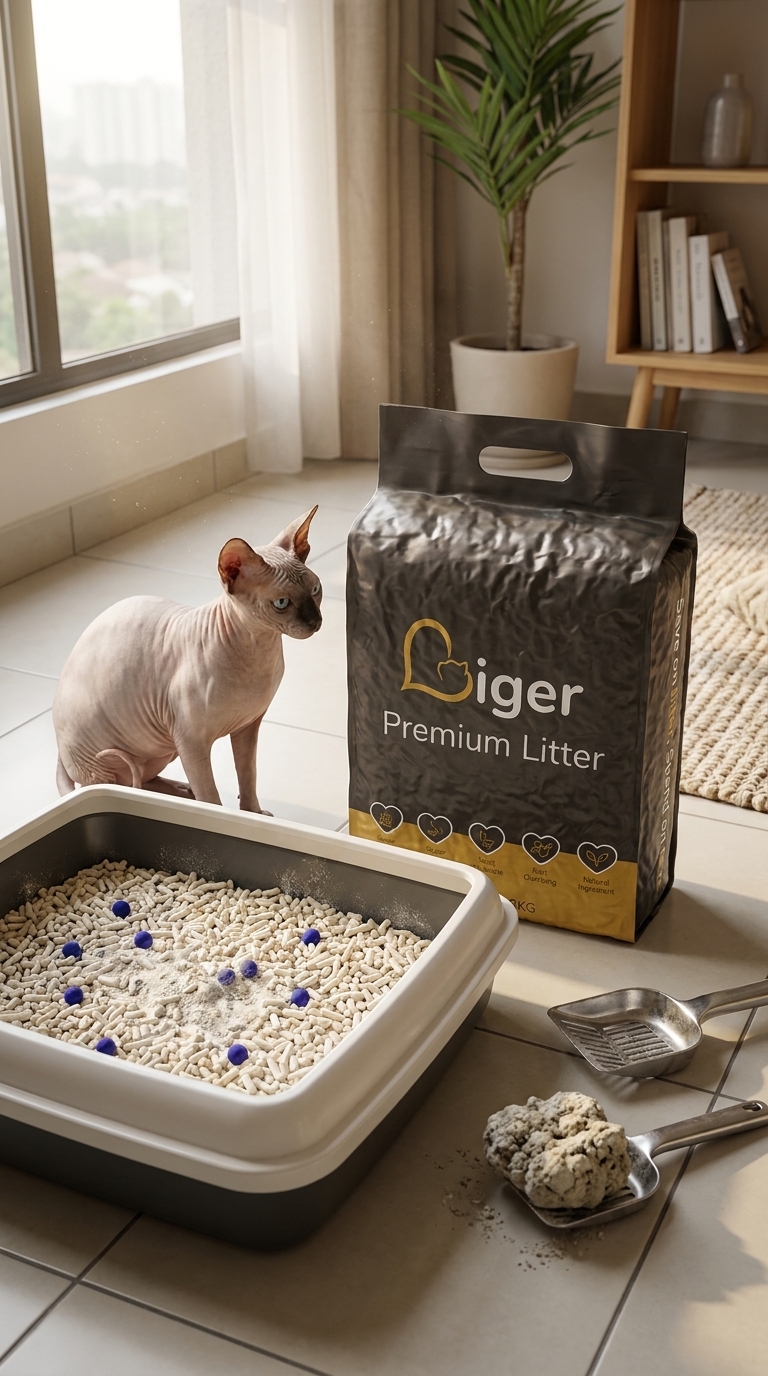
Litter choice has an extra dimension for a hairless cat. With no fur as a barrier, litter dust and fine particles settle directly on bare, oily skin and can irritate it or lodge in skin folds — exactly what a Sphynx, already prone to dermatological trouble, doesn't need. A low-dust litter is therefore genuinely a skin-health choice for this breed, not just a tidiness one.
A natural tofu litter like Liger Premium Tofu Cat Litter runs very low on dust and clumps firmly for quick, clean scooping — far less residue to settle on sensitive skin than a fine clay litter throws up. Keep the box scrupulously clean (Sphynx are fastidious), and size your household's monthly need with our litter calculator. Round out daily care with the wipe-downs, ear cleaning, and warm bedding covered above, and you'll keep skin problems to a minimum.
Price and Buying in Malaysia (2026)
A Sphynx kitten from a reputable Malaysian breeder runs about RM2,500–7,500 in 2026, reflecting the rising cost of pets here. Given the breed's intense skin and heart needs, ethical sourcing matters more than usual: insist on documented HCM echocardiogram screening of the parent cats, meet the kitten to check for healthy, clean skin and clear ears, and never buy a kitten under 12 weeks.
For how the Sphynx compares on price and lifelong cost to every other breed, see our cat breed price guide for Malaysia, and check typical breed lifespans in our cat lifespan by breed guide. The Sphynx rewards a dedicated owner with extraordinary, dog-like affection — but go in knowing it's a hands-on, lifelong commitment of baths, warmth, sun care and heart scans. If you want an easier first cat, browse the full Malaysia cat breeds guide.