Some cats barely make a sound. Others keep up a running commentary from dawn till midnight, and a few will stand in the hallway at 3am belting out a yowl that wakes the whole condo. If you've ever asked "why won't my cat just stop meowing?", here's the twist most owners miss: the meow is a language your cat invented specifically for you — and constant meowing is almost always a message worth decoding, not a habit to be silenced.
This guide covers what each cat sound means, the medical causes you must rule out first, and the proven, punishment-free way to dial down demand meowing. It builds on our Malaysian guide to cat behaviour.
The Meow Is a Language Cats Invented for Us
Here's the fact that reframes everything: adult cats almost never meow at each other. Out in the wild, the African wildcat — ancestor of all house cats — communicates through scent and body language, and the meow is mostly a kitten's call to its mother that fades with maturity. Domestic cats kept it, and aimed it squarely at humans.
When wildcats moved into human grain stores around 12,000 years ago, the cats that could "ask" people for things did better. So your cat retained the kitten-to-mother meow and repurposed it to talk to you — for food, doors, attention, complaints. Researchers even think cats have tuned their meows to resemble a human baby's cry, a sound we're wired to find hard to ignore. As Harvard puts it, the meow is a tool of feline-human negotiation. Your "noisy" cat is really just very good at communicating.
A Glossary of Cat Sounds
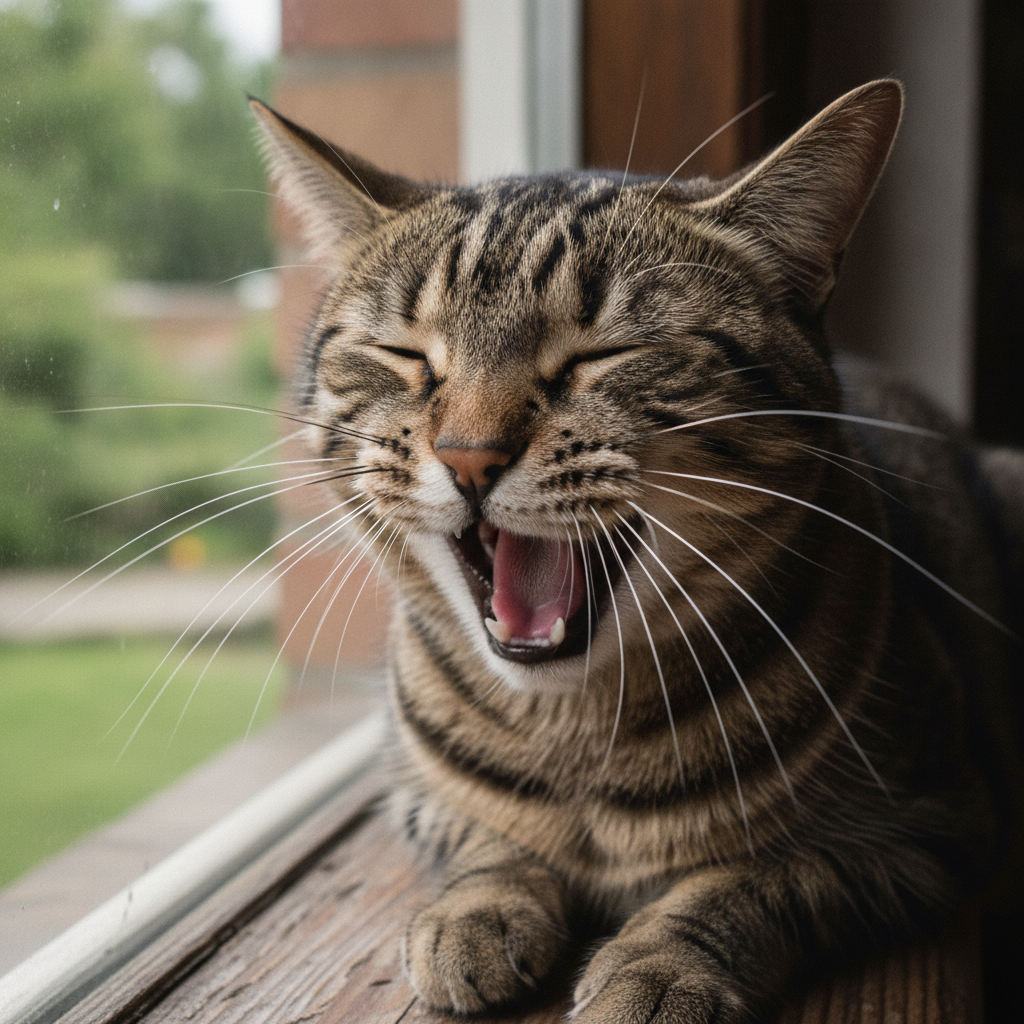
Not all vocalisations are the same, and telling them apart is half the diagnosis:
| Sound | What it sounds like | What it usually means |
|---|---|---|
| Meow | Vowel-like, varies in pitch/length | Aimed at humans: greeting, demand for food/attention, a request |
| Trill / chirp | Short, musical, bird-like "mrrp" | Friendly greeting; excitement (often watching birds it can't reach) |
| Yowl | Long, loud, mournful cry | Distress, pain, anxiety, or a medical issue — especially in seniors |
| Caterwaul | Harsh, screaming wail | A hormonally-driven mating call from an unspayed cat in heat |
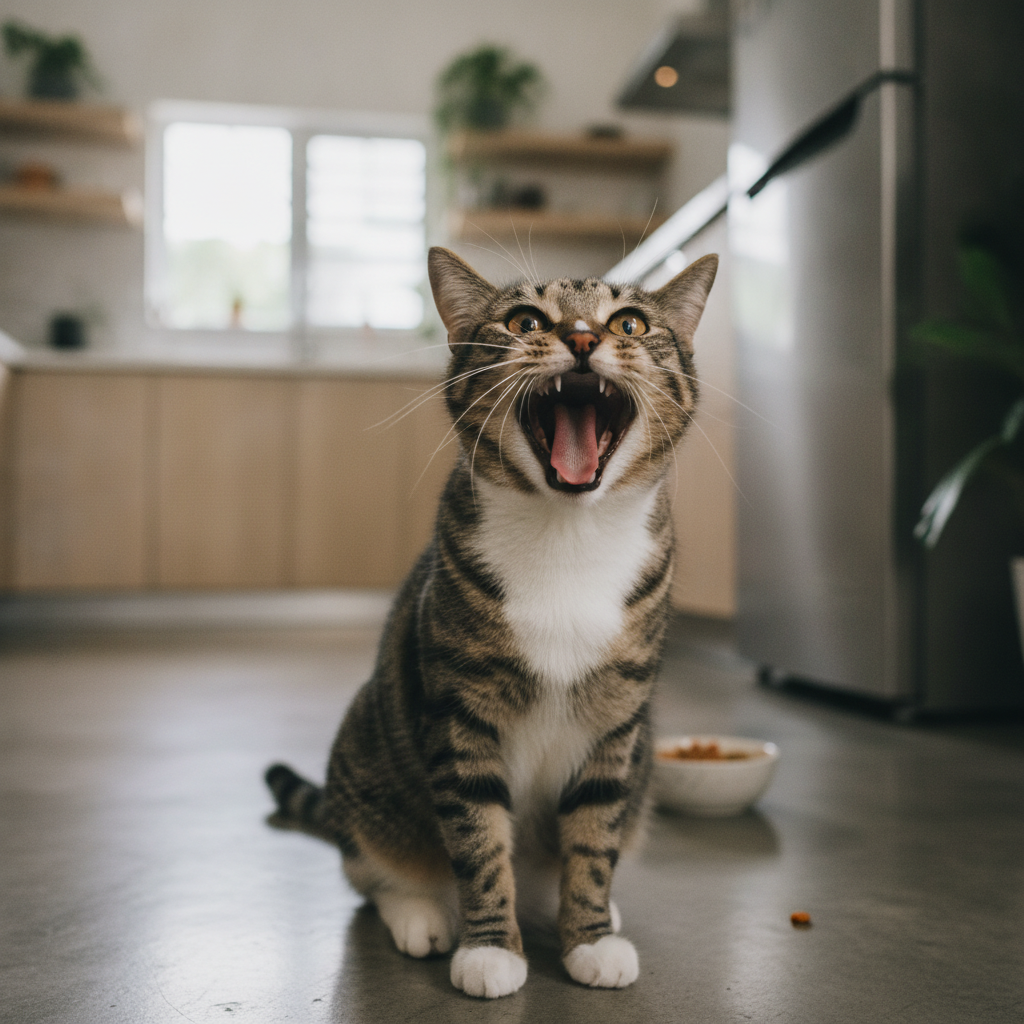
A short mid-pitched meow is a casual "hi"; a long drawn-out one is an insistent demand; a string of urgent high-pitched meows signals distress or excitement. The friendly trill — that rolling "mrrp" greeting — and the chirp are positive sounds, often aimed at you as a hello or used when your cat is fixated on a gecko it can't reach. Per International Cat Care, these affiliative sounds are the opposite of a warning. Some breeds are also just chattier by design — the Siamese is famously talkative. But a sudden change in how much, or how, your cat vocalises is the signal to pay real attention to.
Step One: Always Rule Out a Medical Cause
Before you treat meowing as a behaviour problem, treat it as a possible health problem — especially in an older cat where new or increased yowling is a classic red flag. As the ASPCA stresses, sudden excessive vocalising warrants a vet visit. The usual suspects in senior cats:
- Hyperthyroidism. An overactive thyroid affects over 10% of cats past age ten and leaves them restless, ravenous yet losing weight, and prone to persistent yowling, often at odd hours. Per VCA Hospitals it's very treatable — but untreated, it's fatal.
- High blood pressure (hypertension). Roughly a quarter of hyperthyroid cats also develop it, and the disorientation it causes can trigger loud night-time crying.
- Cognitive dysfunction (feline dementia). Older cats can grow confused, lose track of where they are, and yowl aimlessly, often at night.
- Pain and sensory loss. Arthritis and dental pain make cats cry out; a deafening cat meows louder because it can't hear itself, and a cat losing its sight vocalises from anxiety.
A vet works through a physical exam, bloodwork, urinalysis and blood-pressure check to find or rule these out. Skipping this step and labelling a genuine cry of pain as "attention-seeking" can let a serious disease progress.
The Heat and Midnight Exceptions
Two specific kinds of loud vocalising have their own causes — and their own guides. A harsh, relentless caterwaul, especially from an unspayed female, is almost always a mating call: she's advertising to every tomcat in the neighbourhood. The fix isn't behavioural, it's spaying or neutering — and we decode the full heat cycle in the midnight scream: cat heat explained.
The other classic is the cat that goes off at 3am — racing around and yowling while you're trying to sleep. That's usually not illness but crepuscular energy and boredom, which we tackle head-on in the 3am midnight crazies. If your night-time yowler is a senior, though, loop back to the medical section above first.
Attention-Seeking: The Meow You Taught Your Cat
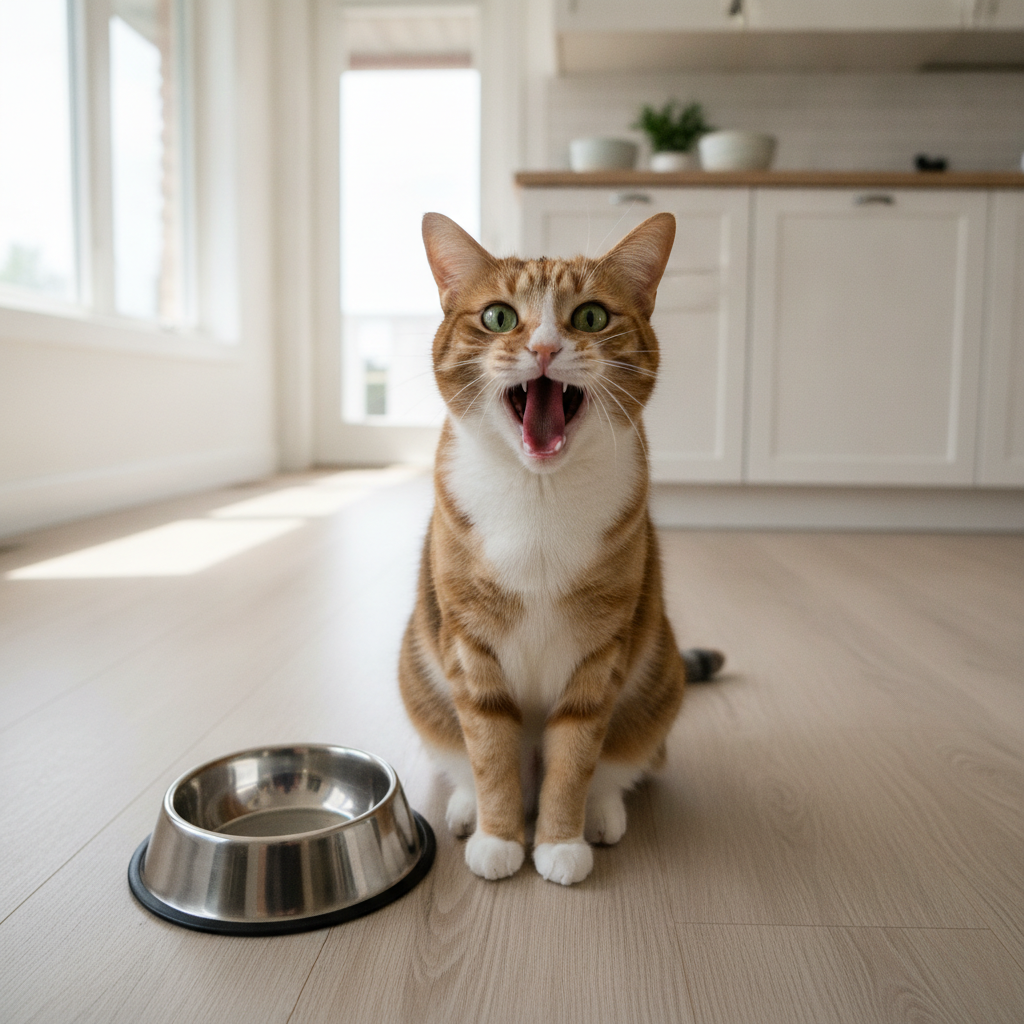
Once a vet has cleared your cat, the most common remaining cause is the one owners accidentally create themselves: learned attention-seeking. It's textbook operant conditioning. Your cat meows, you respond — food, a door opened, a few words, even an annoyed "stop it" — and the cat files away a simple rule: meowing works.
This learning is fast and powerful. In one classic study, cats were trained to meow for food in minutes and would keep it up at two meows a minute for hours. A documented case study recorded one cat meowing 208 times in a row before giving up. The deciding factor is always your response — including the negative attention of telling it off, which to an attention-starved cat still counts as a win.
Not all behavioural meowing is a demand, though. As PetMD notes, cats thrive on routine, and stress from change is a frequent trigger for a previously quiet cat to suddenly get loud — moving house, a new baby or pet, a renovation, even rearranging the furniture or a shift in your work hours. Cats also pick up on household tension between people. In these cases the meowing is an expression of insecurity, and it settles as the cat re-adjusts and its environment becomes predictable again.
How to Reduce Demand Meowing
The evidence-based fix pairs two things, and you need both. The WebMD and behaviourist consensus is clear that punishment — shouting, water bottles — only adds fear and makes things worse.
- Stop rewarding the meow (extinction). When your cat is demand-meowing, give zero response: no eye contact, no talking, no touch. Wait for a pause.
- Reward the quiet (differential reinforcement). The instant your cat is calm and silent, that's when the treat, praise or play arrives. You're teaching that quiet, not noise, pays. One case study using exactly this combination saw an 80% drop in meowing within two weeks.
- Brace for the "extinction burst." When you first stop responding, the meowing gets worse before it gets better — the cat tries harder at its once-reliable tactic. That 208-meow marathon is this phase. Pushing through consistently, with everyone in the house on the same page, is what makes it work.
- Enrich, enrich, enrich. A bored cat meows for stimulation. Daily wand-toy play, puzzle feeders that make it "hunt", vertical perches and a window view all cut frustration meowing. An automatic feeder can also break the "human = food" link that fuels mealtime yelling. More ideas in indoor cat enrichment.
Don't Overlook the Litter-Box Complaint
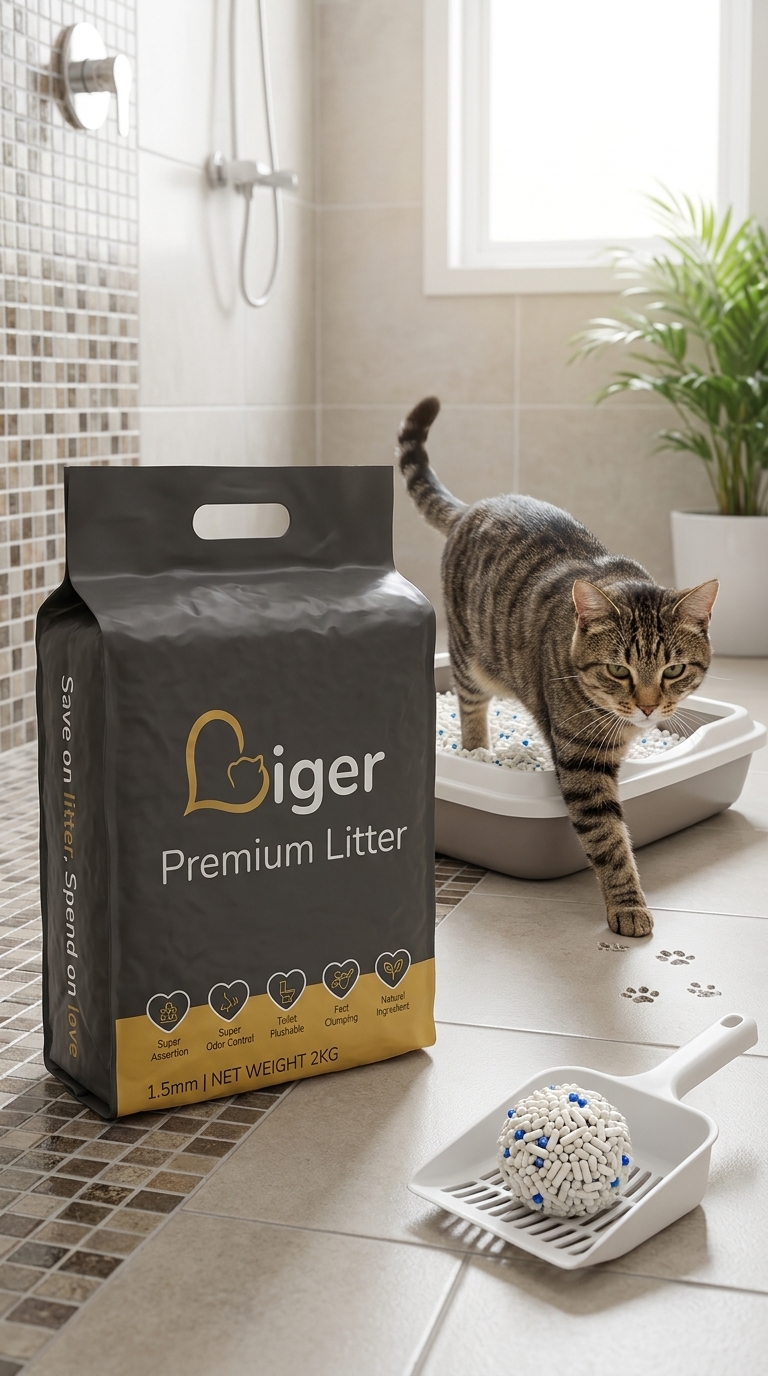
Sometimes the meow is the simplest message of all: "I'm not happy with my toilet." A cat will meow and pace, or cry near the tray, when the box is dirty, when you've just switched to a litter it doesn't like, or when the box has been moved somewhere it feels exposed. It's a direct complaint, and it usually stops the moment you fix the cause.
Two practical moves keep this off your cat's complaint list. First, never change litter abruptly — cats are deeply territorial about texture and smell, so transition over a week or so (see why your cat hates new litter). Second, keep the box genuinely clean and low-odour, which is far easier with a consistent, firmly clumping litter. Liger Premium Tofu Cat Litter clumps tight so waste lifts out cleanly, controls odour without heavy perfume that can itself put a cat off, and throws off little dust — so the box stays a place your cat is happy to use silently. Made from natural plant starch, it runs from RM21.90 (2 kg) to RM169 for the 10-pack (about RM8.45/kg, free shipping in Peninsular Malaysia, current pricing as of May 2026). If the meowing comes with a smelly box, our litter smell fix guide helps, and you can size daily usage with the litter calculator.
The thread through all of it: a meow is information, not misbehaviour. Rule out illness first, stop accidentally training the demand meows, meet your cat's real physical and mental needs — and the relentless chatter almost always settles down into the friendly, occasional conversation it was always meant to be. A cat that feels heard simply doesn't need to shout.