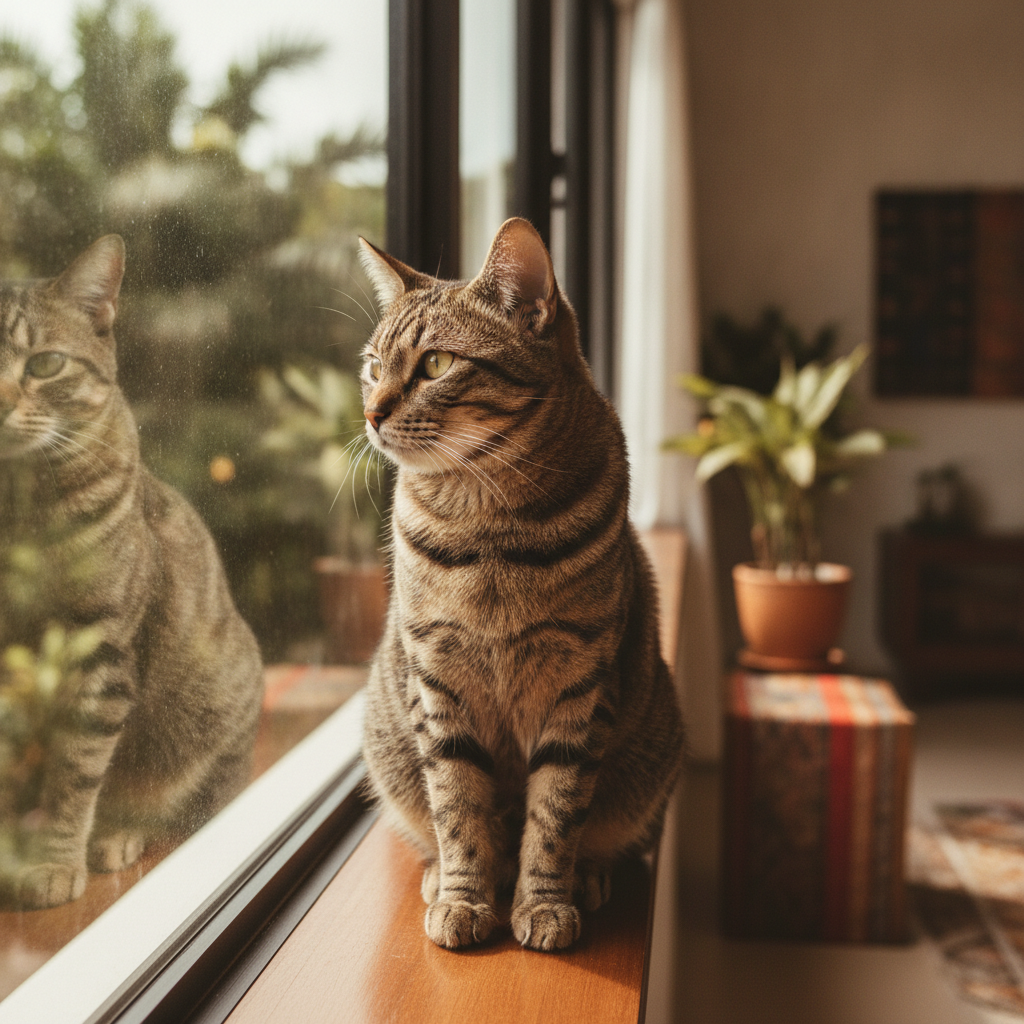
"Tabby" is probably the word you reach for most often to describe a cat — and it's also the one most people get slightly wrong. A tabby isn't a breed. It's a coat pattern: those stripes, swirls and spots, finished with a signature "M" stamped on the forehead. In fact it's the original, ancestral cat coat, the one our cats' wild ancestors wore for camouflage in dappled light — arguably the most successful cat pattern in history. Here's how the pattern works, where its name and that famous "M" come from, the four types to look for, and why every ginger cat is secretly a tabby too.
This is part of our cat colours and coat patterns guide. And one important note up front: this article is about the tabby pattern and genetics — if you're after tabby behaviour, that's a coat-blind topic covered in our cat behaviour guide.
Tabby Is a Pattern, Not a Breed
Every domestic cat carries the genetic instructions for a tabby coat — it's the "wild-type" pattern inherited from the African wildcat. Whether you actually see it comes down to one master switch: the agouti gene. Switched on (the dominant "A"), it bands each hair with light and dark, letting the stripes and swirls show. Switched off (when a cat inherits two recessive copies, a/a), the pattern is suppressed and you get a solid-coloured cat — which is exactly why a black cat is really a tabby with the pattern turned off, sometimes betraying faint "ghost" stripes in sunlight. This is also why two solid-coloured parents can surprise you with a stripy kitten, or vice versa — the tabby instructions are always present in the genome, simply waiting to see whether the agouti switch is flipped on. Because tabby shows up across moggies and pedigrees alike, it tells you nothing about breed; for that, try our cat breed identifier. The pattern itself is ancient: the same banded "agouti" hairs that camouflage a wildcat in dappled scrub are what give your sofa tiger its stripes, as the science of the tabby coat describes. In other words, tabby isn't one option among many — it's the default cat, and every other coat is a variation that hides or recolours it.
Where the Name "Tabby" Comes From
Here's a lovely bit of trivia. The word "tabby" has nothing to do with cats originally — it comes from Al-Attabiya, a district of medieval Baghdad famous for producing a striped silk taffeta called attabi. As that wavy, watered-silk fabric was traded into Europe, the French called it tabis, and by the 1690s English speakers were calling stripy, swirly cats "tabby cats" because their coats looked just like the cloth. So the name has always described an appearance, never a lineage — a thousand-year-old fashion reference hiding in your cat's name. It's a neat reminder of just how long cats and humans have lived side by side: long enough for a luxury textile from Baghdad to lend its name to the most ordinary cat on your street. Next time someone calls a cat "just a tabby," you can tell them it's wearing watered silk.
The Four Tabby Patterns
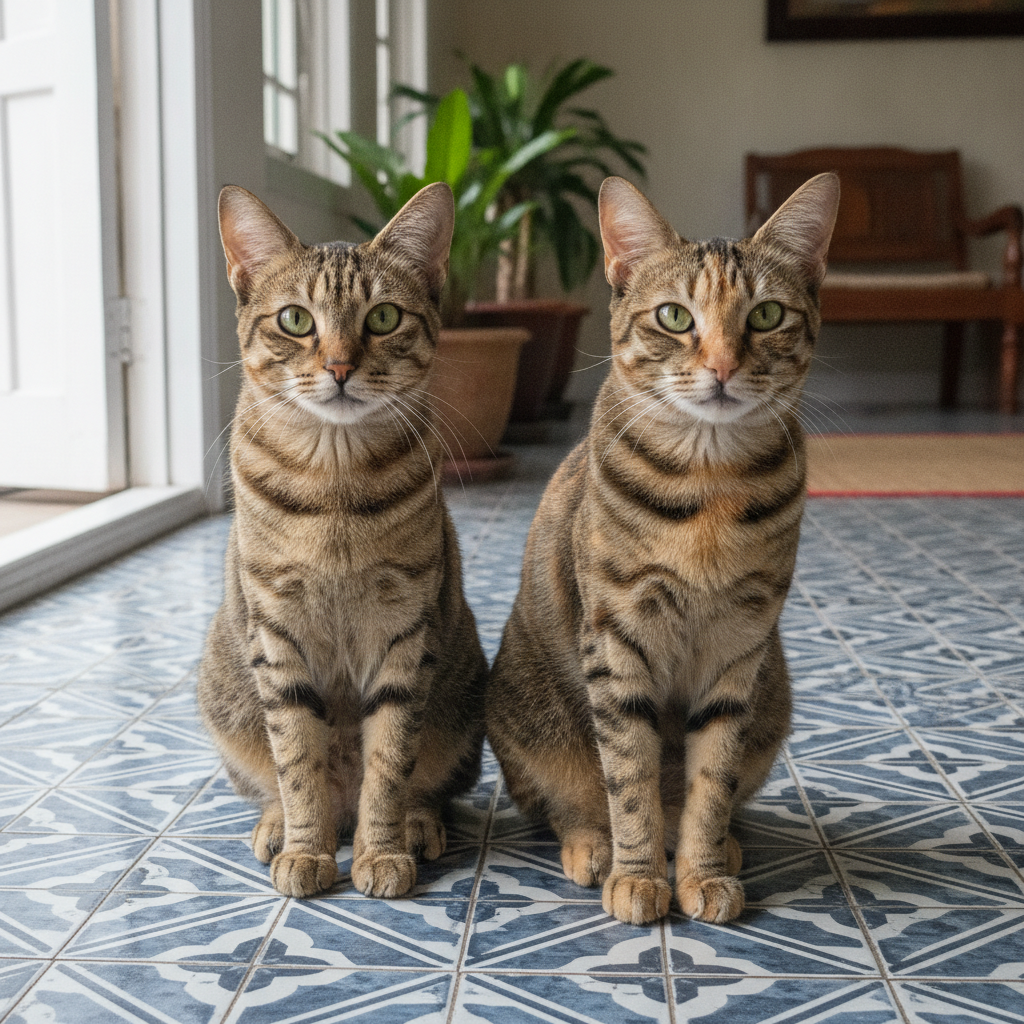
Tabby comes in four distinct layouts, each set by its own genes:
- Mackerel: the classic "tiger" look — narrow vertical stripes running down the sides like fish bones. This is the dominant, most common form (governed by the Taqpep gene).
- Classic (blotched): bold, swirled, marbled blotches, often with a "bullseye" on the flank. It's the recessive version of the same Taqpep gene.
- Spotted: the stripes break up into spots — seen strikingly in breeds like the Bengal.
- Ticked (agouti): almost no stripes on the body at all, just finely speckled "salt and pepper" hairs, classic in the Abyssinian. It's controlled by a separate dominant gene (DKK4) that overrides the others.
These genes can combine, which is why a single cat can show ticked fur on the body but still wear stripes on its legs, face and tail. The way pattern genes layer and override one another is a small masterclass in genetics, neatly catalogued by veterinary labs like the UC Davis Veterinary Genetics Laboratory, which can even DNA-test a cat to predict its pattern. For most owners, though, a quick look at the flanks tells you all you need: fishbone stripes mean mackerel, bold swirls mean classic.
You'll also see "patched tabby" or torbie — a tabby whose coat also carries tortoiseshell colours, almost always female (the same X-linked orange gene that makes torties is at work). Spotting which pattern your cat has is easy and oddly satisfying once you know the four; many cats are obvious at a glance, while a few sit somewhere in between as breeders refine the lines.
The "M" on Every Tabby's Forehead
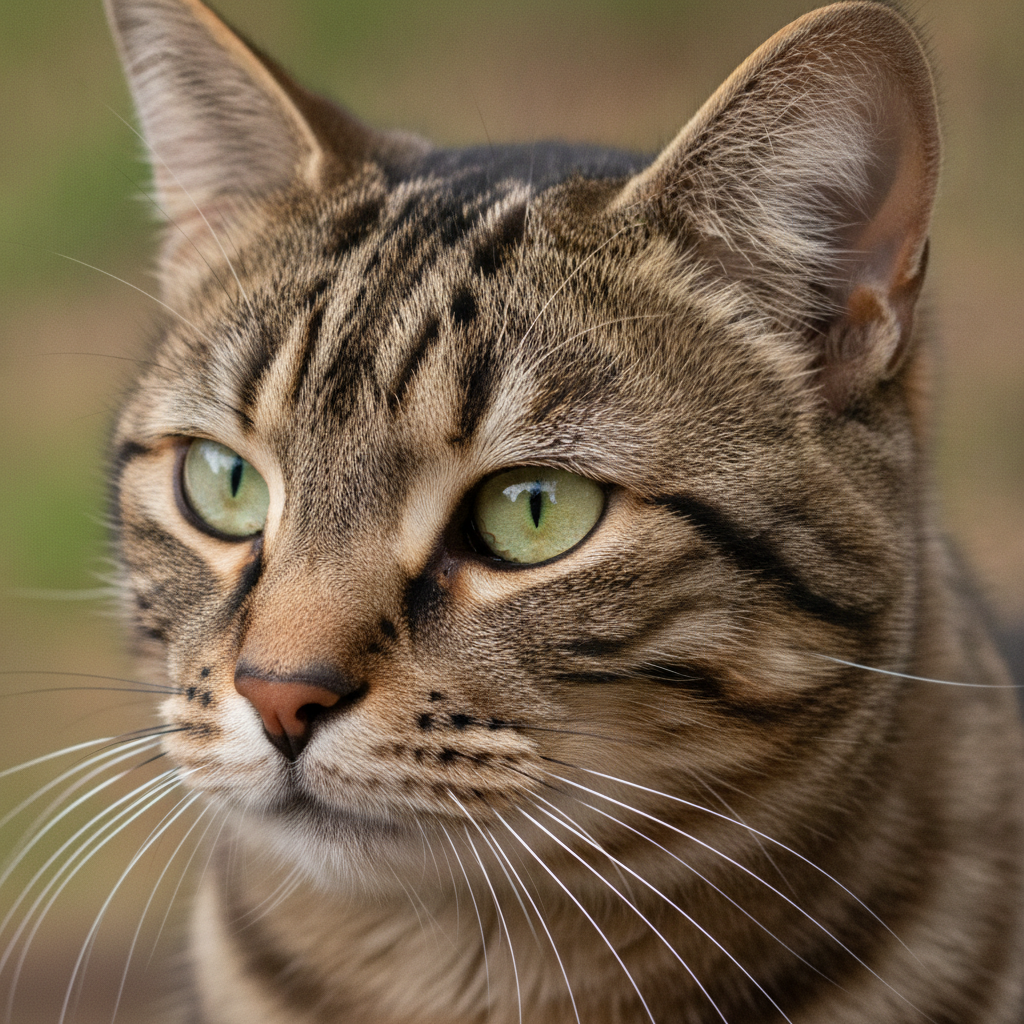
Look at any tabby's face and you'll find an "M" marked above the eyes. Genetically it's nothing mystical — just where the forehead stripes naturally converge during development. But the folklore is far more romantic. One Christian legend says the Virgin Mary stroked a tabby that comforted the baby Jesus, leaving an "M" of blessing. An Islamic tradition tells of Muezza, the beloved cat of the Prophet Muhammad, who is said to have marked tabbies with an "M" in gratitude after the cat was honoured for its loyalty. Pick whichever story you like — the genetics and the legends can happily coexist. Some say the "M" stands for "mau," the ancient Egyptian word for cat, since cats were revered there long before either legend arose. Whatever its origin myth, the marking is so reliable that it's one of the quickest ways to confirm a cat is carrying the tabby pattern at all: no agouti, no stripes, no "M."
Tabby Colours: Brown, Silver, Orange and More
Tabby is a pattern, so it layers over almost any colour. The most common are brown (the wild "agouti" brown-and-black), grey/silver, and of course orange. In fact every orange cat is a tabby — the ginger gene overrides the solid-coat switch, so stripes always show, which is why you'll never meet a truly solid ginger (more in our orange cats guide). It's one of those satisfying genetic rules with no exceptions: if a cat is orange, it is also, definitionally, a tabby. Add the dilution gene and a brown tabby becomes a soft "blue" (grey) tabby, while an orange one mellows to a pale cream tabby. Add white spotting and you get a tabby-and-white, with white paws, bib or face. The pattern is endlessly mix-and-match, which is why tabbies are the most varied-looking cats around. A "silver tabby" adds a twist: a gene strips the warm pigment from the base of each hair, leaving crisp black markings on a sparkling silver-white ground — the same effect that gives "smoke" and "shaded" cats their shimmer, well documented in the science of cat colours. So when someone says their cat is a "grey tabby," they may mean a true blue (dilute) tabby or a silver one — two different genes, similar cool look.
Is "Tabby" a Personality?
You'll sometimes hear that tabbies are friendly, laid-back "everycats." It's a nice thought, but worth being honest about: a coat pattern doesn't determine personality. Tabby is simply the most common coat, so we meet more of them and form an "average cat" impression. Temperament actually comes from genetics, early socialisation between 2 and 7 weeks, and environment, as International Cat Care and Cornell both stress — not from stripes. If you want to understand why your cat acts the way it does, that's our cat behaviour guide, not its coat. The Cornell Feline Health Center makes the same point about every coat-personality claim: the friendliest predictor isn't colour or pattern, it's whether a kitten was gently handled during its first weeks of life. A shy tabby and a bold tabby are both perfectly normal — the stripes are just the wrapping.
Caring for Your Tabby
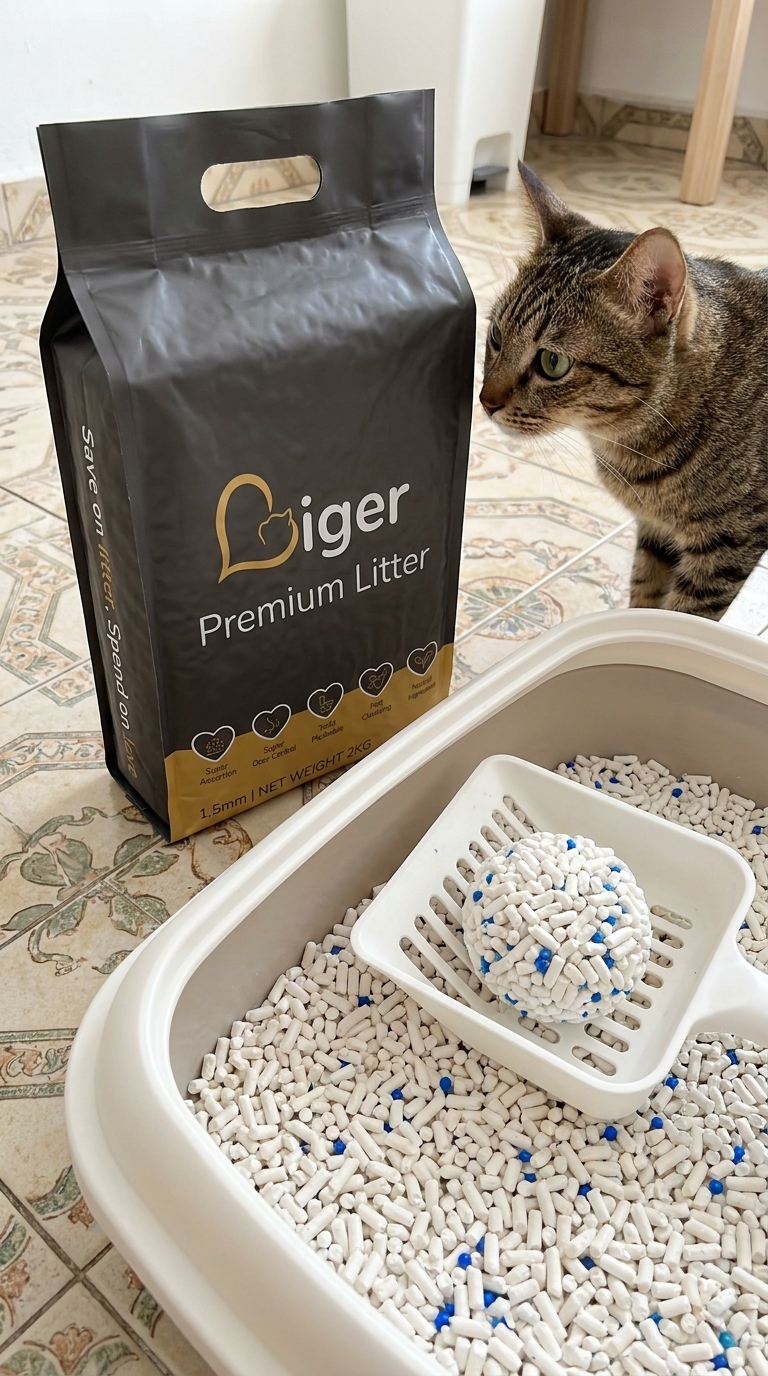
A tabby needs nothing special — the pattern is purely cosmetic. Good food, vet checks, enrichment and a clean litter box keep any cat thriving, whatever its stripes, and a tabby ages on exactly the same timeline as any other cat of its breed and build. To show that gorgeous patterning at its best, a tidy, low-dust set-up helps: a natural, food-grade litter like Liger Premium Tofu Cat Litter keeps fine dust off the coat and the box fresh between scoops. It runs from RM21.90 for a single 2 kg pack to RM169 for the 10-pack (about RM8.45/kg), free shipping in Peninsular Malaysia (current Liger pricing, as of May 2026); size your supply with the litter calculator.
Keep exploring coats: see how the same genes play out in orange, tortoiseshell and calico cats, or head back to the colours and patterns hub. And if your little tiger still needs a name, our cat name generator can help.
Curious what colours your two cats could produce? Try our kitten coat colour predictor — it shows the odds of each colour and pattern, including tabby.