Here's a hard truth most new cat owners never hear: by the time a kitten is old enough to come home with you, the most important window in its entire emotional life is already closing — or has slammed shut. Whether your cat grows into a confident lap companion or a nervous creature who hides whenever the doorbell rings is decided largely in a few short weeks, most of them before eight weeks of age.
That window is called the socialisation sensitive period, and understanding it is the single best thing you can do for a kitten's lifelong wellbeing. This guide explains what happens, why it's so hard to reverse, and exactly how to make the most of whatever time you have — whether you've got a three-week-old foster or a wary rescue. It's part of our wider cat life-stage care guide.
The Window That Decides Who Your Cat Becomes
The sensitive period for socialisation begins around two weeks of age, as a kitten's eyes and ears open, and the core of it closes between seven and nine weeks. International Cat Care defines the key window as roughly two to eight weeks, and the ASPCA notes a cat's personality is largely formed by eight weeks, with some softer influence lasting out to 14–16 weeks.
During this stretch a kitten's brain treats almost everything it meets — people, hands, noises, other animals — as simply "normal." After it closes, an innate fear of the unfamiliar takes over. Anything the kitten hasn't met by then risks being filed permanently under "threat." That's why a well-socialised kitten takes a vacuum cleaner or a stranger in stride, while an under-socialised one may spend its whole life afraid of both.
What Is Happening in a Kitten's Brain (2 to 9 Weeks)
This isn't pop psychology — it's neurology. A kitten's brain reaches close to its adult structure by around 14 weeks, and during the weeks before that it shows extremely high plasticity: the ability to wire new connections in response to experience. Positive exposure during this time literally builds the neural pathways that encode the world as safe.
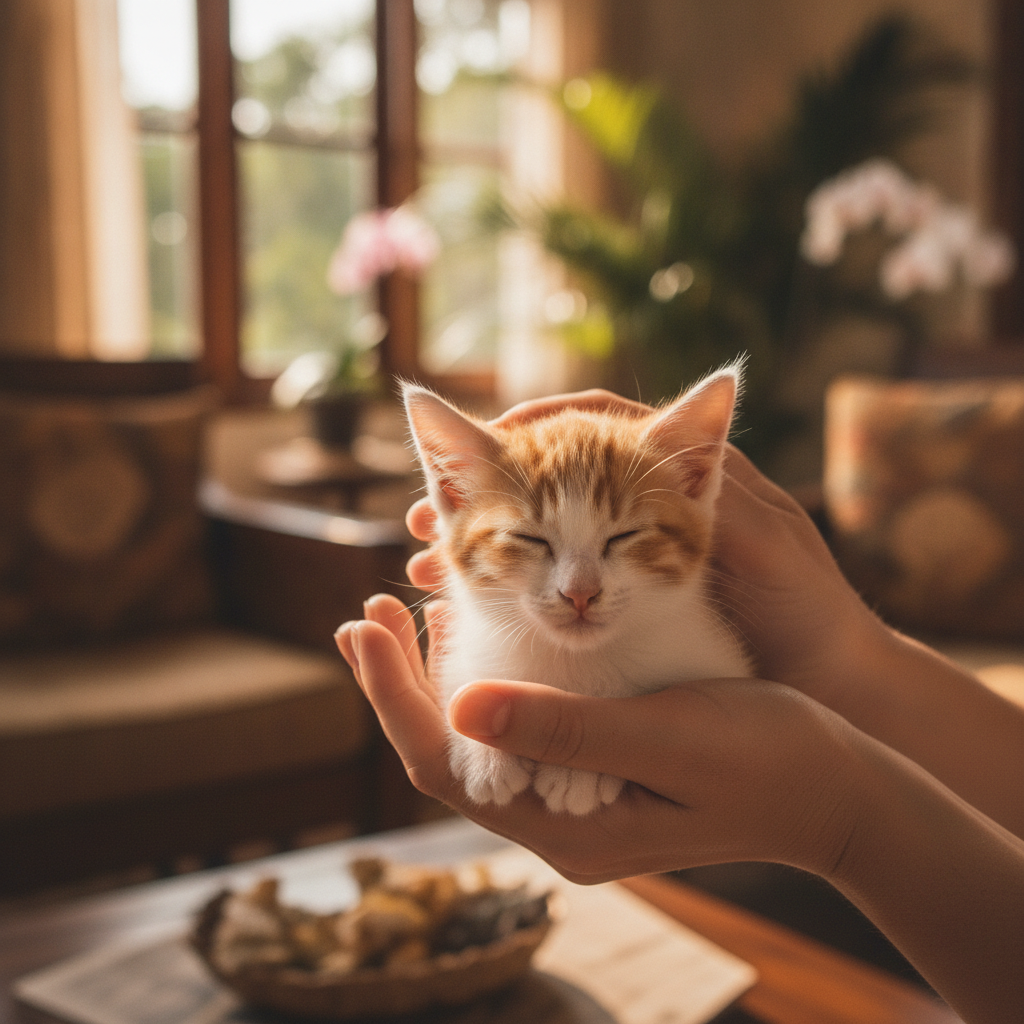
Researchers have found that kittens handled gently by people for just 15 to 40 minutes a day in their first seven weeks grow up more exploratory, learn faster, and are less fearful than unhandled kittens. The flip side is just as physical: a lack of positive exposure can dysregulate the stress-response system (the HPA axis), leaving a cat neurologically primed for fear for life. Because this is a structural change, you can manage a fearful adult cat — but you usually can't fully rewrite the wiring later. That's what "largely irreversible" really means.
Mum and Littermates: The First Teachers
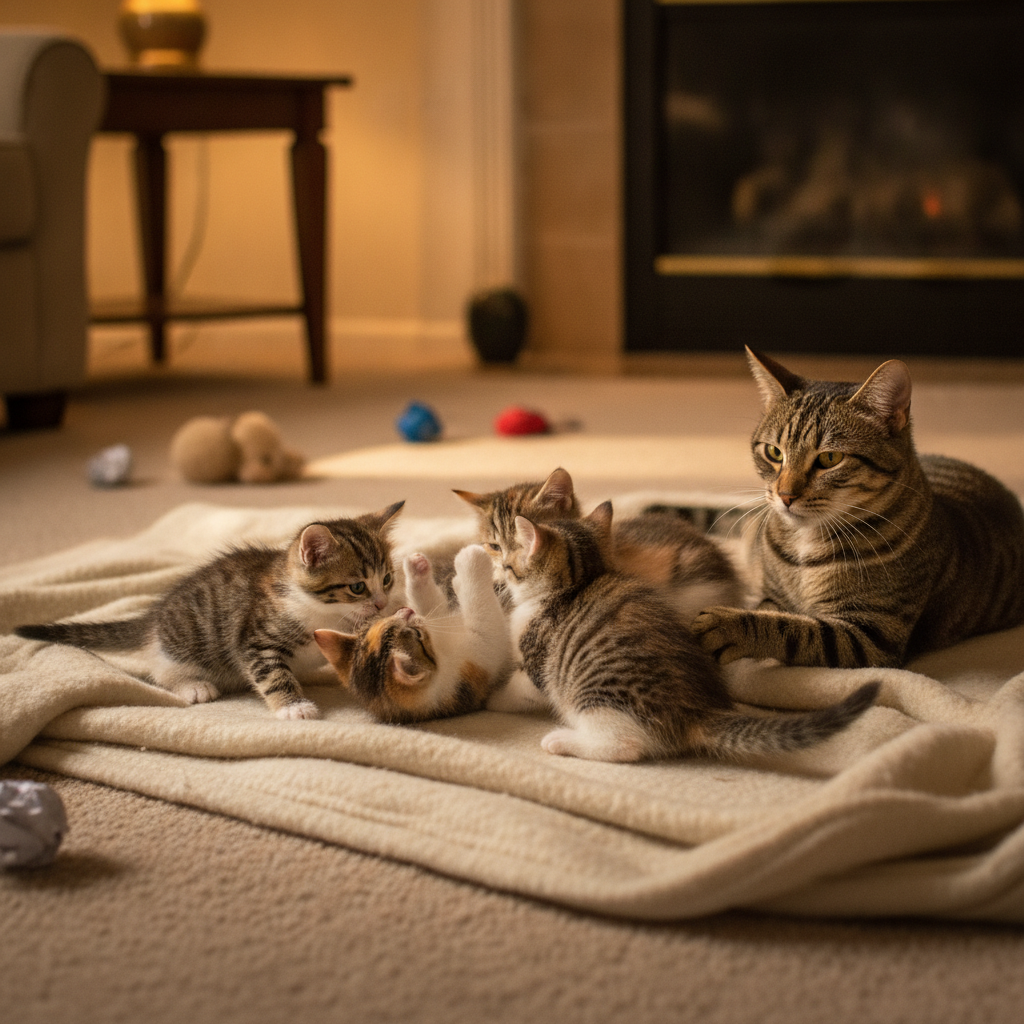
Long before a human gets involved, a kitten's mother (the queen) and siblings run the first classroom. A relaxed, friendly mum who is comfortable around people teaches her kittens, just by example, that humans are safe. An anxious mum can pass her wariness on the same way.
Littermates teach the lessons humans can't. Through rough-and-tumble play that starts around three weeks and peaks near 12 weeks, kittens learn bite inhibition — bite a sibling too hard, the game stops, lesson learned. They also learn to read feline body language: flattened ears, a lashing tail, the difference between play and "back off." This is why separating a kitten too early matters. The ASPCA and feline behaviourists recommend kittens stay with their family until at least 8 to 10 weeks, and studies link early weaning before 12 weeks with more aggression and compulsive behaviours such as wool-sucking and over-grooming in adulthood. If you're raising an orphaned litter, our newborn kitten SOS guide covers the basics.
Your Socialisation Checklist: People, Handling, Sounds and Carriers
If you have a kitten in the sensitive window, here is what to deliberately, gently expose them to — always keeping sessions short, positive, and on the kitten's terms, with an easy escape route. The Cats Protection and San Diego Humane Society checklists are excellent templates.
- People: handled gently by at least four or five different people before seven weeks — different ages, voices, appearances. Let the kitten approach; toss treats rather than grabbing.
- Whole-body handling: touch paws, ears, mouth and tail daily, pairing it with a lickable treat. This is what makes future vet visits and nail trims tolerable.
- Grooming tools: introduce the brush and nail clippers as objects to investigate for a reward, then clip a single nail tip at a time. No need to do all of them at once.
- The carrier: leave it out, door open, with bedding and treats inside; feed meals in it. A carrier that means "food and naps" instead of "vet" removes half the stress from a lifetime of travel.
- Household sounds: vacuum, doorbell, blender, rain on the window. Play sound recordings very quietly while the kitten eats or plays, raising the volume only if they stay relaxed.
Vaccinations and parasite control run on their own schedule during these same weeks — we keep that separate in the kitten first-year health timeline so it doesn't get muddled with behaviour. For the physical milestones happening alongside socialisation, see kitten development month by month.
Introducing Kittens to Children, Dogs and Other Cats
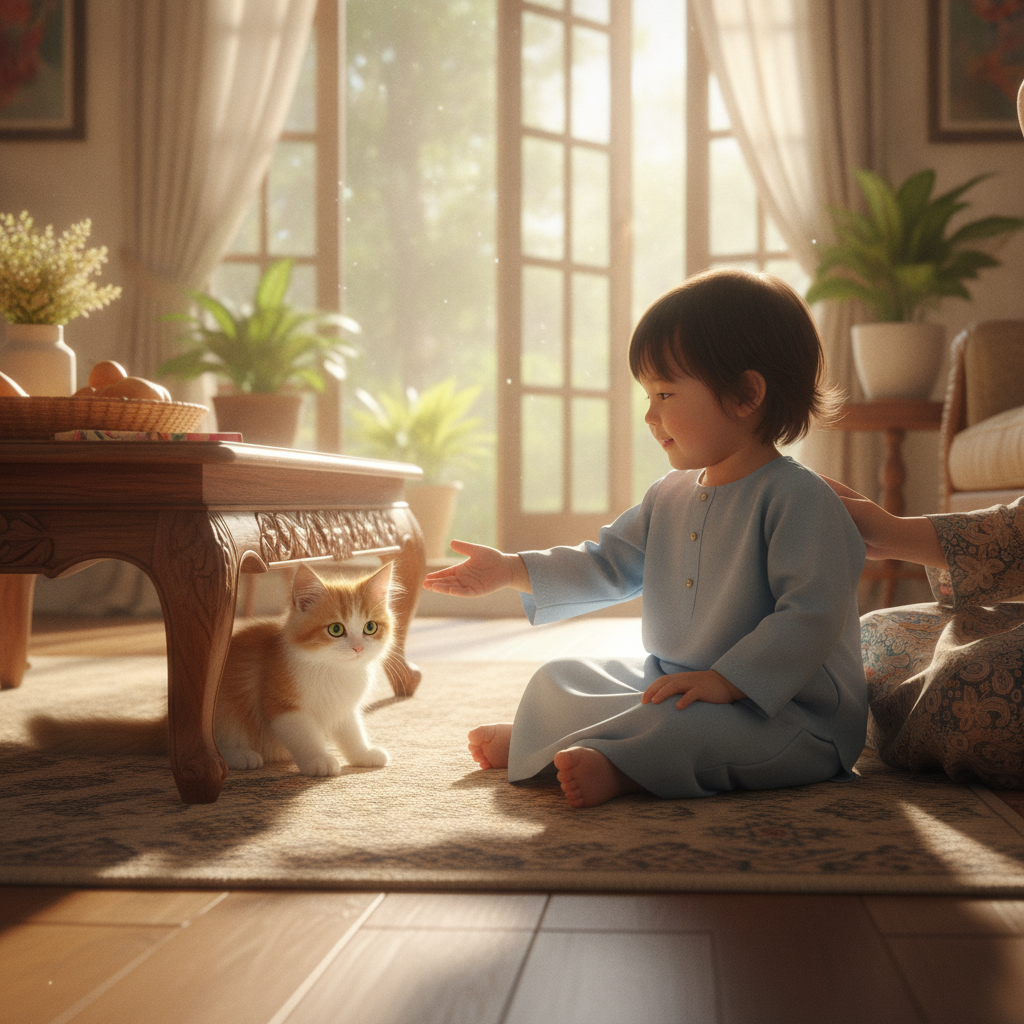
Positive early exposure to other species and to children of different ages prevents a lifetime of interspecies fear. The rules are similar across the board: go slow, supervise, reward calm, and never force contact.
Children: always supervise. Teach kids to sit on the floor and let the kitten come to them, to stroke the back and chest (not the belly or tail), to use toys instead of hands, and to stop the moment the kitten's ears flatten or it walks away. The kitten must always have a high or separate place to retreat to.
Dogs: start with no contact at all. Swap scents on bedding, feed both animals on opposite sides of a closed door, then progress to visual contact through a baby gate with the dog on a lead, rewarding calm behaviour. Give the kitten vertical escape routes.
Resident cats: go even slower — cats are territorial. Full separation first, then scent swapping, then room swapping, then a barrier introduction, and only then short supervised meetings. Provide separate food, water and litter resources following the "one per cat, plus one extra" rule. Our kitten litter training guide helps you set up that first box correctly.
Socialising Feral or Shy Kittens (and When to Choose TNR)
For feral or under-socialised kittens, age is the single biggest predictor of success. The taming protocol itself is gentle and food-led: confine to a small safe space, speak softly for a day or two, then build trust by hand-feeding, progressing to gentle touch with a wand toy, then brief strokes — the first purr under your hand is the milestone you're waiting for.
| Kitten age | Chance of taming | Realistic outcome |
|---|---|---|
| Under 8 weeks | Very high | Days to a week; becomes a confident, affectionate pet |
| 8–12 weeks | Good, with patience | Several weeks; loving but may stay a little shy |
| Over 12–16 weeks | Variable to low | Weeks to months; may bond to one person, stay semi-feral |
For healthy feral kittens older than around four to five months who show no progress, many welfare groups consider Trap-Neuter-Return (TNR) the kinder choice — forcing prolonged confinement on a terrified cat causes real suffering, as the American Association of Feline Practitioners notes. Knowing when to stop is part of doing right by the cat.
The Litter Box Counts in Socialisation Too
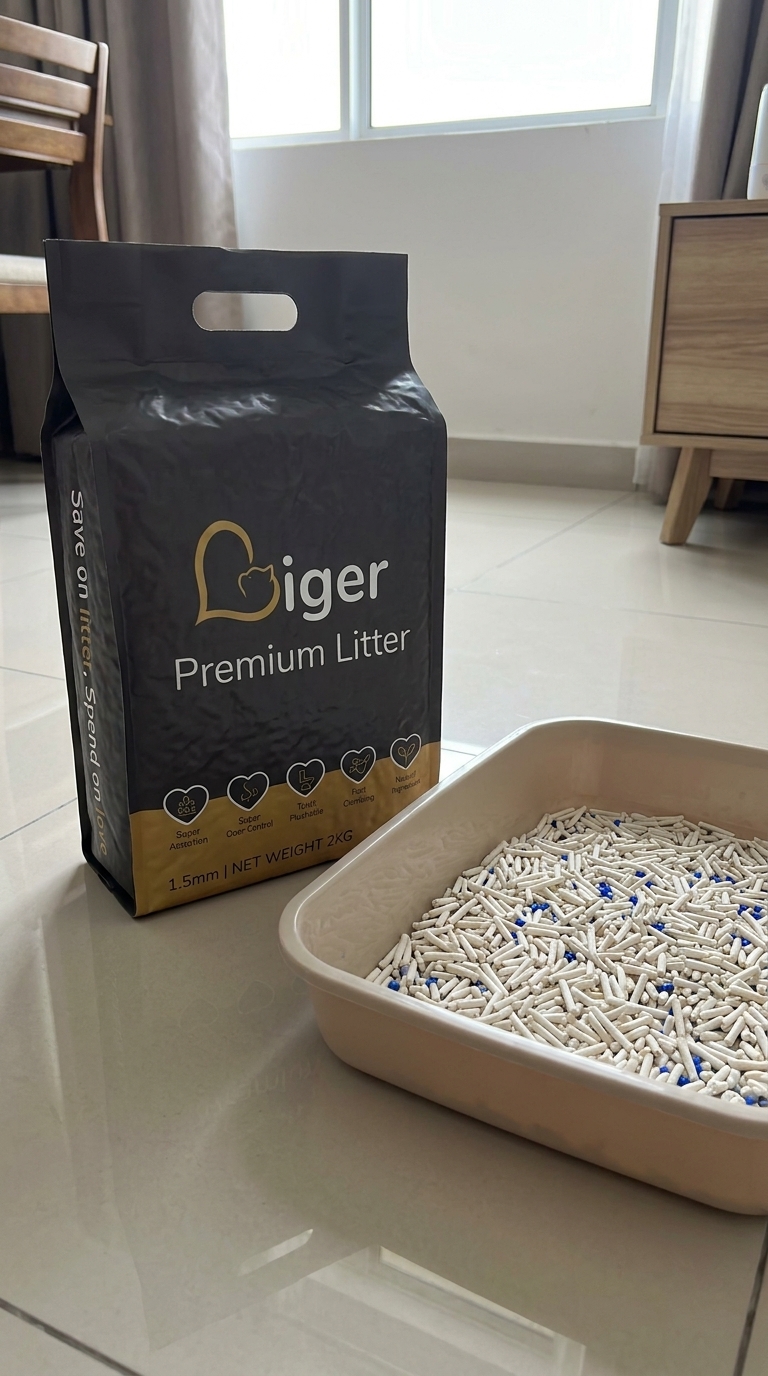
An easily overlooked piece of early socialisation is getting the litter box right from day one, because a bad first experience can put a kitten off for life. Kittens are tiny, they dig enthusiastically, and they nibble — so the litter should be low-dust and food-grade, and the box low enough to climb into.
Liger Premium Tofu Cat Litter suits a kitten well: made from food-grade plant starch, it's low-dust (gentler on developing airways), softly textured for little paws, and clumps firmly so accidents are easy to clear. It runs from RM21.90 for a single 2 kg pack up to RM169 for the 10-pack (about RM8.45/kg), free shipping in Peninsular Malaysia (current Liger pricing, as of May 2026). Work out how much a growing kitten needs with our litter calculator, and see age-by-age picks in safe litter for kittens.
What If the Window Has Already Closed?
If you've adopted an older, fearful cat, don't despair — but do reset your expectations. You're no longer socialising; you're patiently building trust with a brain that's wired to be cautious. Go at the cat's pace, use food and routine, never corner or force them, and celebrate small wins. Some under-socialised cats blossom into affectionate companions over months; others stay shy forever and that's okay too. Getting your new arrival's whole setup right helps — start with our new cat owner checklist. And whatever stage your cat is at, the life-stage guide will point you to what comes next.