Bringing home a kitten in Malaysia usually happens one of two ways: you adopt a weaned 8-week-old from a shelter, or a stray queen has her litter under your car porch and suddenly you're a foster parent at 2am. Either way, the first year is the single most important stretch of a cat's nutritional life — get it right and you set up a strong, healthy adult; get it wrong and the damage can be permanent. This guide walks through exactly what to feed, how much, and how often, from newborn to the first birthday, with the dangers flagged at each stage.
If you've just taken in a kitten, run through our new cat owner checklist first, then come back here for the feeding detail. For the bigger nutrition picture across a cat's whole life, see our complete cat nutrition guide for Malaysia.
The Newborn Stage (0–4 Weeks): Milk Is Everything
For the first four weeks, a kitten runs entirely on milk. If mum is around and nursing, your job is mostly to keep them warm and weigh them daily. If you're hand-rearing orphans, the rules get strict — this is the most fragile period of a kitten's life.
The one mistake that kills the most kittens is also the most common: cow's milk. It is genuinely dangerous, not just "not ideal". Kittens can't digest its high lactose load, so the undigested sugar pulls water into the gut and causes osmotic diarrhoea, dehydration, and potentially fatal electrolyte imbalance. It also lacks taurine, the amino acid cats must get from their diet. As PetMD explains, kitten milk replacer (KMR) is the only safe substitute — a queen's milk carries more than double the protein and fat of cow's milk (roughly 7.5% protein and 8.5% fat versus 3.3% and 3.6%). We unpack this fully in the truth about cats and milk.
KMR powder (sold at most Malaysian vet clinics and larger pet stores) is mixed one part powder to two parts warm water, warmed to about 38 °C — test a drop on your inner wrist. Per Best Friends Animal Society, always feed a kitten on its belly, never on its back, and tilt the bottle at 45 degrees — feeding on the back lets formula go down the windpipe and cause fatal aspiration pneumonia. Feed roughly 8 mL of formula per 28 g (1 oz) of body weight across 24 hours, and weigh daily on a kitchen gram scale: a healthy kitten gains about 14 g a day.
| Age | Feeds per 24 hours | Approx. volume per feed |
|---|---|---|
| Week 1 (0–7 days) | Every 2–3 hrs (8–12 feeds) | 2–6 mL |
| Week 2 (8–14 days) | Every 3–4 hrs (6–8 feeds) | 7–10 mL |
| Week 3 (15–21 days) | Every 4–6 hrs (4–6 feeds) | 13–20 mL |
| Week 4 (22–28 days) | Every 5–6 hrs (4–5 feeds) | 20–35 mL |
Treat the volumes as a starting point — the real gauge is steady daily weight gain and a belly that feels gently rounded, never hard or bloated.
Weaning (4–8 Weeks): From Milk to Mush
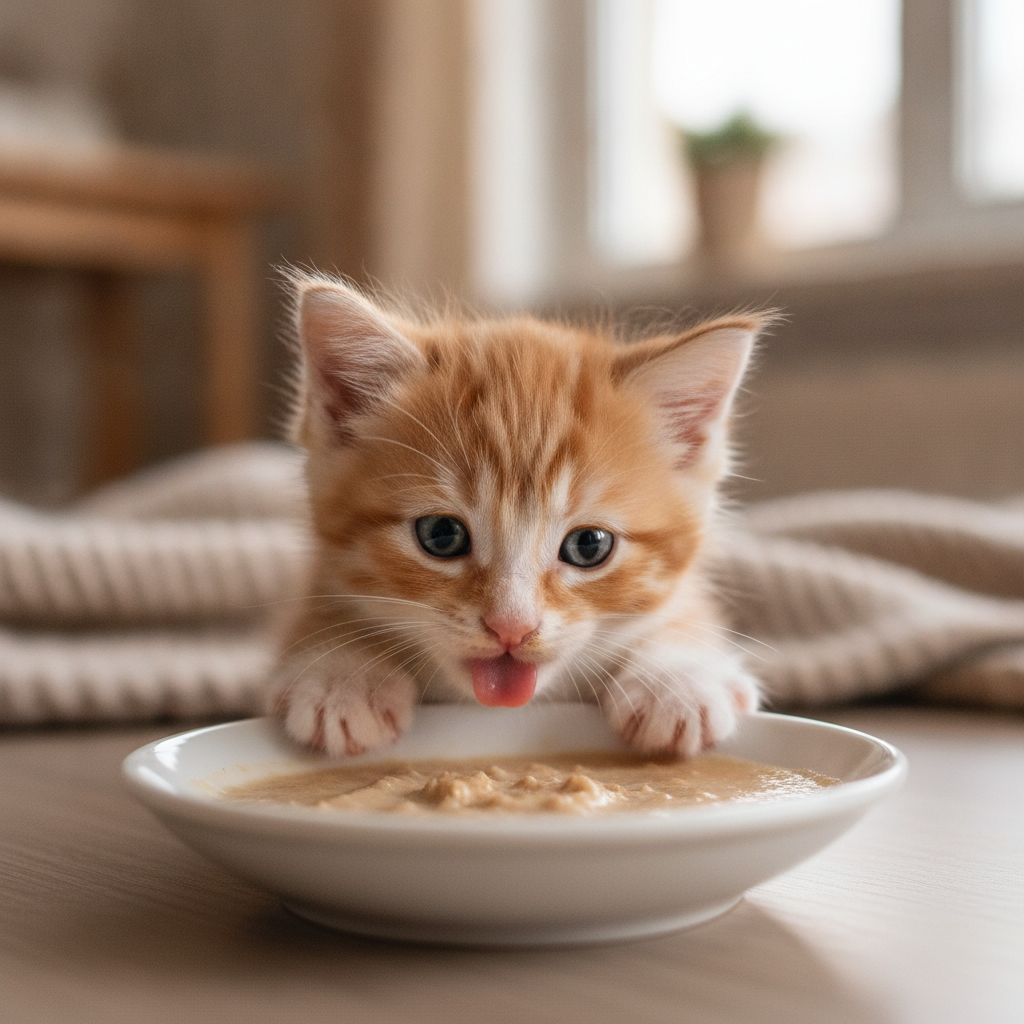
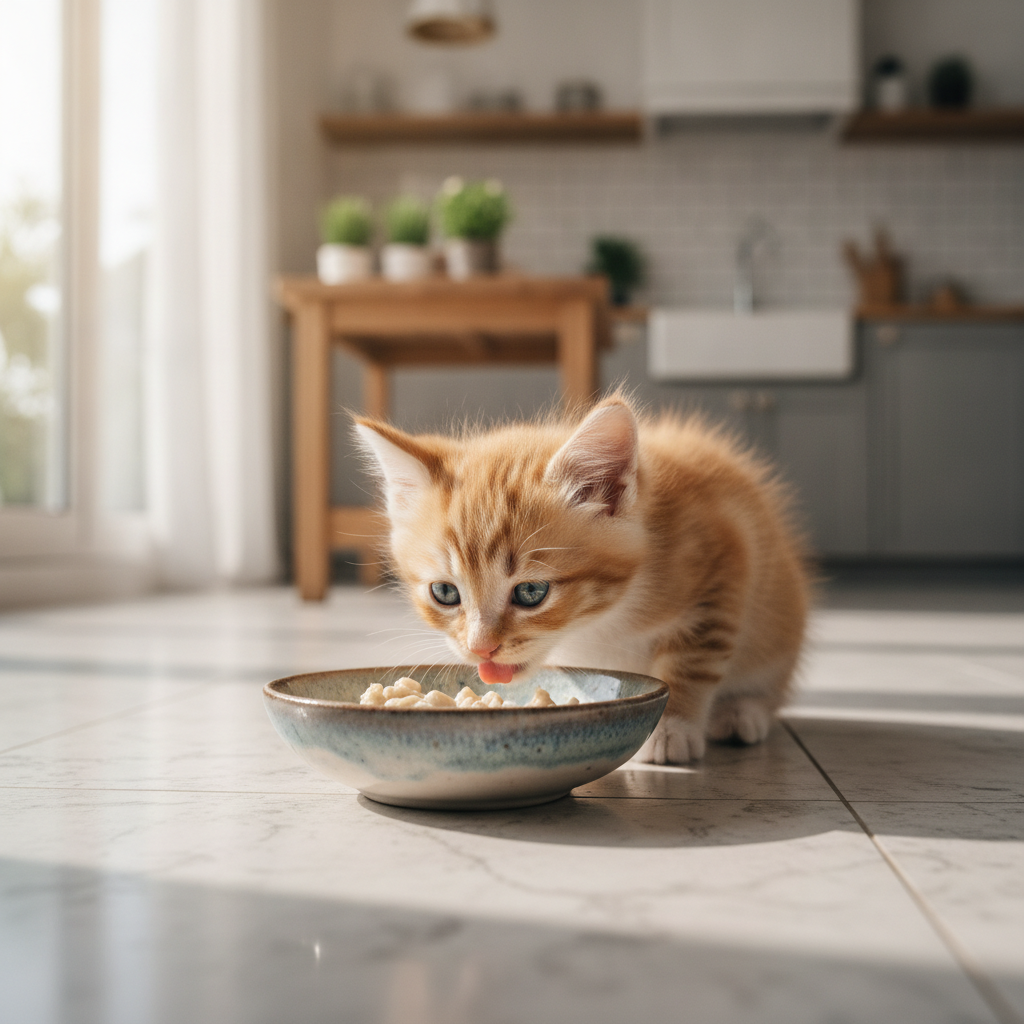
Around four weeks, kittens start telling you they're ready for solids: baby teeth come in, they get mobile and nosy, and they'll try to lap at mum's bowl. This is when weaning begins, and it should be gradual — rushing it causes digestive upset and food aversion.
The standard method is a gruel: mix a high-quality canned kitten food (pâté style) with KMR or warm water to an oatmeal consistency, starting around two parts food to one part liquid. Offer a little on a shallow saucer or a fingertip and let the kitten investigate. PetMD's weaning guide is clear on one safety point: never push a kitten's face into the food — that risks aspiration. Over two to four weeks you thicken the gruel and reduce the milk:
| Age | Food & texture | Schedule |
|---|---|---|
| 4–5 weeks | Mostly milk/KMR; thin gruel (~75% liquid) | 1 tsp gruel 2–3×/day + nursing |
| 5–6 weeks | Thicker gruel (50/50); softened dry food introduced | Gruel 4–5×/day, less nursing |
| 6–8 weeks | Mostly solid; little to no added liquid | 3–4 solid meals/day, fully weaned |
Keep weighing daily — if weight stalls, the kitten isn't getting enough solids yet and still needs milk top-ups. Put out a shallow, low bowl of fresh water once gruel starts, and watch the stools: a bit of softness is normal as the gut adapts, but persistent diarrhoea or vomiting means a vet visit, not a wait-and-see.
Feeding the Growing Kitten (2–6 Months): Peak Growth Fuel
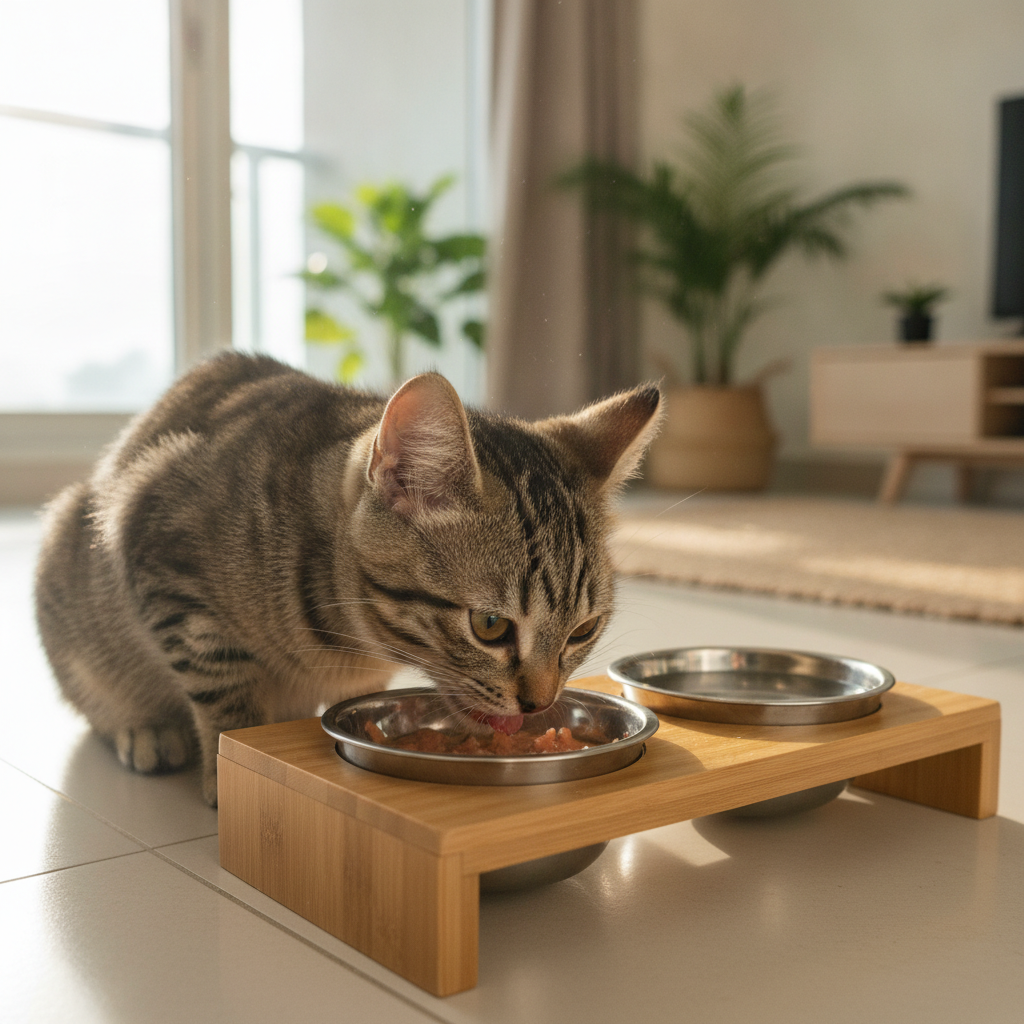
From two to six months a kitten is a growth machine, and its diet has to keep up. At around 10 weeks, energy needs peak at roughly 200 kcal per kilogram of body weight per day — proportionally far more than an adult cat. That fuel has to come mostly from animal protein: a growth diet should draw 30–40% of its calories from protein, and AAFCO sets a minimum of 30% protein on a dry-matter basis for kitten ("growth") formulas, versus 26% for adult food. As the Tufts Petfoodology team notes, quality and quantity of protein both matter for growing animals.
Crucially, feed a food labelled complete and balanced for growth or all life stages — adult-maintenance food does not carry the extra protein, calories, and nutrients like DHA that Royal Canin highlights as essential for brain and eye development. Kittens have tiny stomachs and huge appetites, so split food across several small meals:
| Age | Meals/day | Dry food (approx.) | Wet food (3 oz cans) |
|---|---|---|---|
| 2–3 months | 3–4 | ¼–½ cup | 1–1.5 cans |
| 3–6 months | 3 | ⅓–⅔ cup | 1.5–2 cans |
| 6–12 months | 2–3 | ⅓–¾ cup | 2–3 cans |
These are general figures — always cross-check the calorie chart on your specific food's packaging, since density varies a lot between brands. Treats are fine for bonding and training but should stay under 10% of daily calories so they don't unbalance the diet.
The Adolescent Kitten (6–12 Months): Easing Off the Gas
After six months the growth rate slows and so do calorie needs — by around 10 months a kitten needs closer to 80 kcal/kg/day, well down from the 10-week peak. You can usually drop to two or three meals a day. The protein stays high to protect lean muscle, but total quantity eases off. This is the stage where overfeeding quietly sets up an overweight adult, so watch body condition rather than just emptying the same scoop out of habit: you should be able to feel the ribs under a light covering and see a waist from above. In our heat, an air-conditioned, less active indoor kitten burns fewer calories than the feeding chart assumes — adjust down if the belly starts to sag.
Wet, Dry, or Both? Choosing Kitten Food
Both have a place. Wet food's big advantage is moisture — typically 70–85% water. Cats descend from desert animals with a low thirst drive, so they're built to get water from food; wet food supports hydration, which matters for kidney and urinary health, especially in Malaysia's heat. Dry food is convenient, cheaper per calorie, and easy to leave out, though the old claim that kibble "cleans teeth" is largely overstated since many cats swallow it whole. Most vets land on a mixed approach: wet food for hydration plus some dry for convenience, which also exposes the kitten to different textures and helps prevent fussy eating later. We compare the two in detail in our dry vs wet cat food guide.
Litter Training Starts at Weaning — and Why Texture Matters
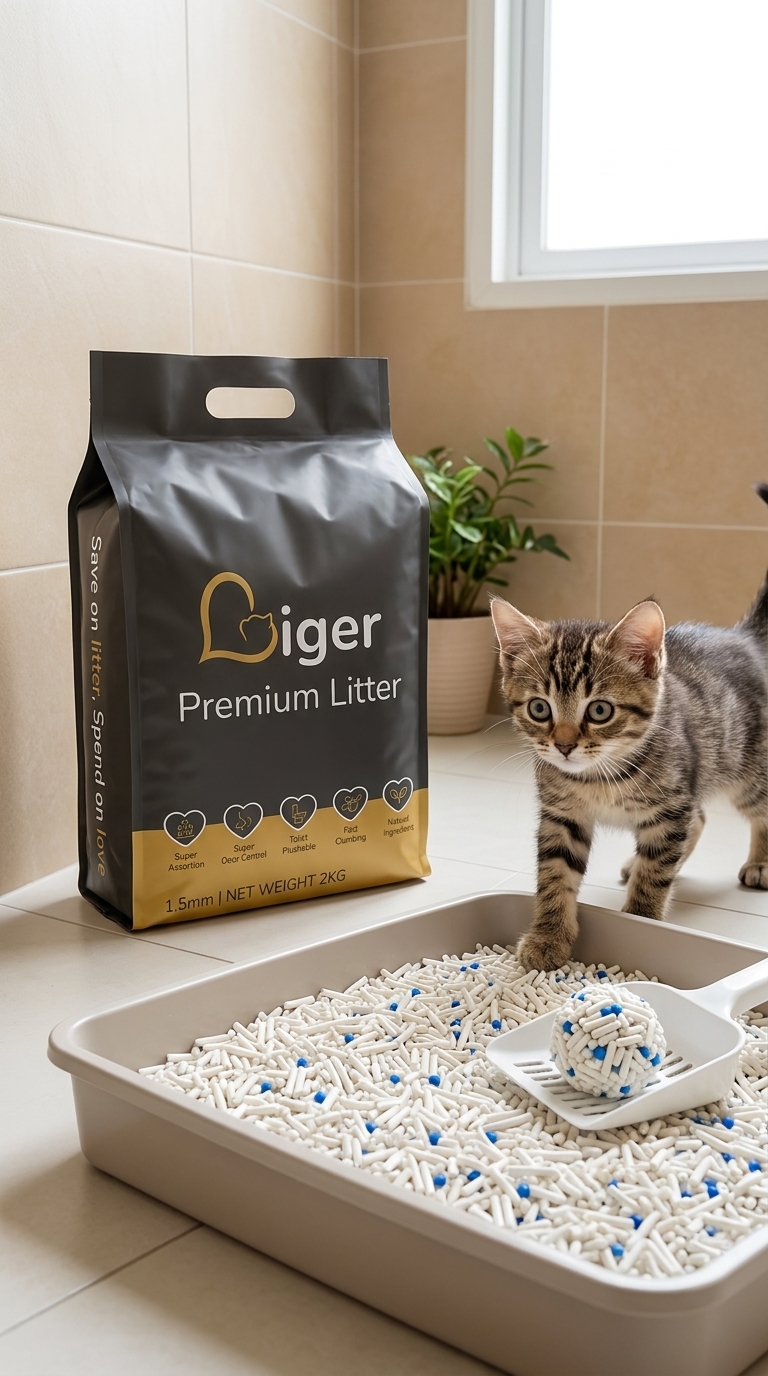
Here's the part most feeding guides skip: litter training and weaning happen at the same time. From about three to four weeks, as kittens start eating solids, they instinctively begin using a litter tray — give them a low-sided box they can climb into and they mostly teach themselves. Two things matter at this age. First, kittens explore with their mouths and will taste litter, so the material should be as safe-if-nibbled and low-dust as possible. This is a genuine point in favour of a plant-based tofu litter like Liger Premium Tofu Cat Litter: it's made from natural food-grade plant starch rather than clay, clumps firmly for easy scooping, and throws off very little airborne dust — better for small developing lungs in a sealed, air-conditioned unit.
Second, the litter box is your early-warning system. During weaning and the months after, the kitten's stool is one of the clearest signs of whether the diet is agreeing with it — firm and formed is good; loose or persistent diarrhoea means slow the food transition and call the vet. A clean, low-dust clumping litter makes it easy to actually see and monitor what's coming out. Work out how much litter a growing kitten (or a multi-kitten foster litter) will get through with our litter calculator.
Switching to Adult Food: Get the Timing Right
Most kittens move to adult food between 10 and 12 months, once they've hit roughly 90% of their expected adult weight. Large breeds are the exception — a Maine Coon keeps growing and may stay on kitten food until 15 months to two years. Early spaying or neutering lowers energy needs, so ask your vet whether an earlier switch to a lower-calorie adult diet makes sense to avoid weight gain.
Whenever you switch, do it gradually over 7–10 days to avoid stomach upset, as VCA Hospitals advises. Mix increasing amounts of the new food in:
| Days | Kitten food | Adult food |
|---|---|---|
| Days 1–2 | 75% | 25% |
| Days 3–4 | 50% | 50% |
| Days 5–6 | 25% | 75% |
| Day 7+ | 0% | 100% |
Firm, well-formed stools mean it's going well; if you see digestive upset, drop back a step for a few days. The same gentle method applies any time you change food — see how to switch your cat's food without the tummy upset. From there, our adult portion guide takes over.
Red Flags: Fading Kitten Syndrome & Feeding Mistakes
The emergency every foster dreads is fading kitten syndrome — a rapid decline in a newborn, usually driven by hypothermia (low body temperature) and hypoglycaemia (low blood sugar). Warning signs are subtle at first: lethargy, a weak suckle, constant high-pitched crying, cool-to-the-touch body, pale gums, and any weight loss (a healthy neonate gains 10–15 g a day). The first-aid order is specific and the sequence matters: warm the kitten first (never feed a cold kitten — its gut shuts down), then rub a little sugar syrup or honey on the gums for blood sugar, then get to a vet. The Cat Fanciers' Association and peer-reviewed work hosted on the NIH's PMC both stress that these steps stabilise but don't replace urgent veterinary care.
The recurring feeding mistakes to avoid: cow's milk (covered above), feeding on the back, mixing KMR too strong or too weak, and either under- or overfeeding — all of which the daily gram-scale weigh-in catches early. Get those right, keep the vet on speed dial for the first eight weeks, and you give a kitten the strongest possible start.