The moment you know your cat is expecting, your job quietly changes. A pregnant queen is not a sick cat — pregnancy is a normal, roughly nine-week process — but she is building four, five, sometimes six new lives on the back of her own metabolism, and the care you give now shapes how healthy that litter arrives. This guide walks through the practical side of looking after a pregnant cat in a Malaysian home: feeding, weight, vet visits, what is safe and what is not, and how to set up a calm space for the big day.
If you are still working out whether she is pregnant or how far along she is, start with how long cats are pregnant and the early signs, or read the full pregnancy and birth guide for the big picture.
Why a Pregnant Cat Needs Different Care
For the first two-thirds of pregnancy not much looks different. The real shift happens from about week 3 onward, when fetal growth accelerates and the queen's energy needs start climbing — roughly 10% more each week, according to feeding guidance from Royal Canin. By the time she is near term she may be eating about 50% more than before. Modern care, as International Cat Care frames it, has moved from passive watching to active partnership: targeted food, regular weigh-ins, safe parasite control, and a vet on speed-dial.
Four things make the biggest difference: nutrition, weight monitoring, safe preventative medicine, and a low-stress environment. Get those right and most pregnancies run smoothly.
Feeding a Pregnant Cat: The Kitten-Food Switch
The single most important nutrition change is simple: switch her to a high-quality kitten or growth formula. Kitten food is denser in protein, fat, calcium and phosphorus — exactly what developing kittens and a milk-producing mum need. Adult maintenance food usually cannot keep up.
Vets differ on timing. Some, including Royal Canin, suggest switching from mating so good nutrition is in place from conception; others switch around week 4–5 when energy demand climbs. Either way, transition gradually over 7–10 days, mixing more new food in each day to avoid a stomach upset. Keep her on that kitten formula right through pregnancy and nursing until the kittens are weaned. This article keeps the diet section short on purpose — for the deeper nutrition detail, lean on our cat food calculator and feeding guides, and ask your vet for a product suited to your cat.
How Much and When to Feed
Her appetite will not rise in a straight line. Here is the rough shape of it across the nine weeks.
| Stage | Roughly | Feeding approach |
|---|---|---|
| Early (week 1–3) | Normal intake | Same as a healthy adult; some queens have brief "morning sickness" |
| Mid (week 4–6) | +10% per week | Switch fully to kitten food; appetite climbing |
| Late (week 7–9) | Up to +50% | Smaller, more frequent meals; kittens crowd her stomach |
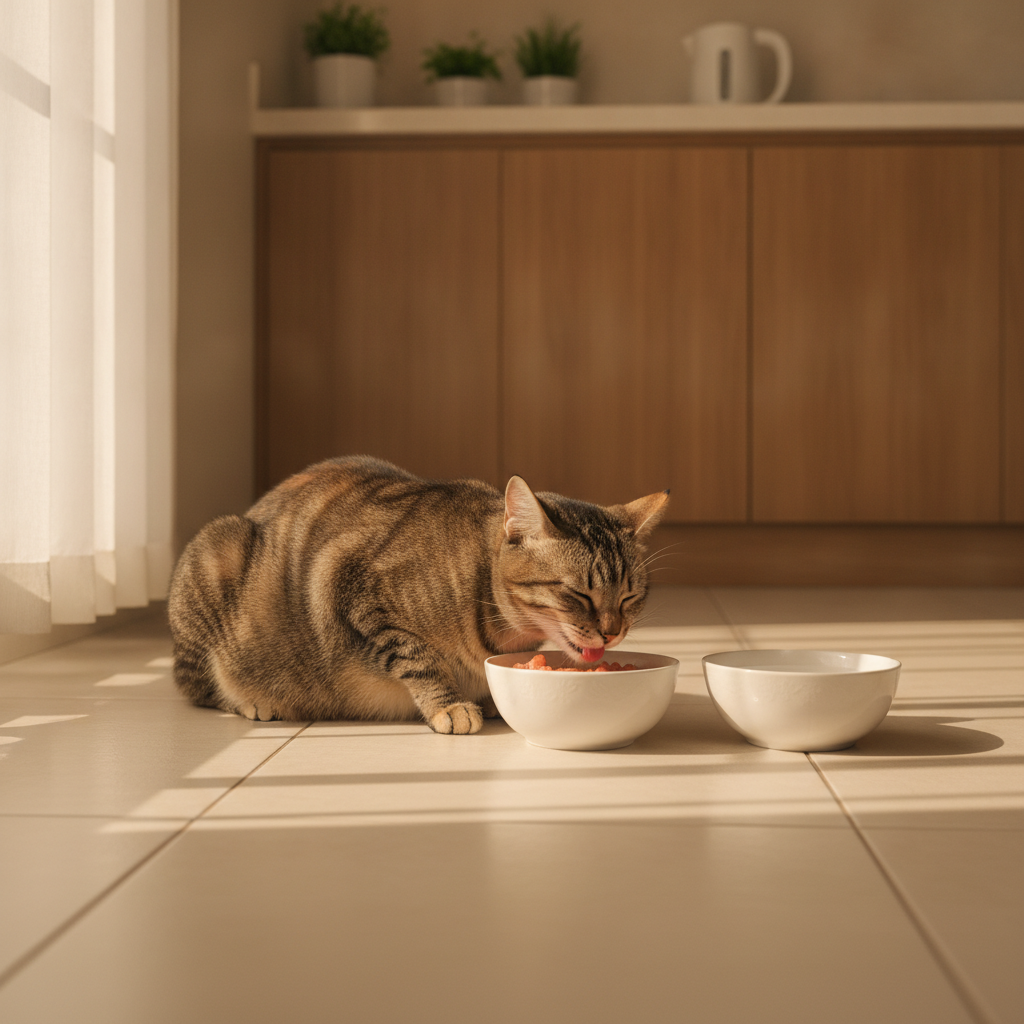
In late pregnancy the litter takes up real estate, so big meals get uncomfortable. Offer small portions often, or leave dry kitten food available so she can graze (free-choice feeding). WebMD notes this grazing approach also suits the early weeks of nursing, when her needs can be two to four times normal. One caveat: a queen with only one or two kittens may not need free-choice food, as over-rich milk supply can raise mastitis risk. Always keep fresh water down — she needs it for blood volume, tissue growth and, later, milk.
Weight and Body Condition: What's Healthy
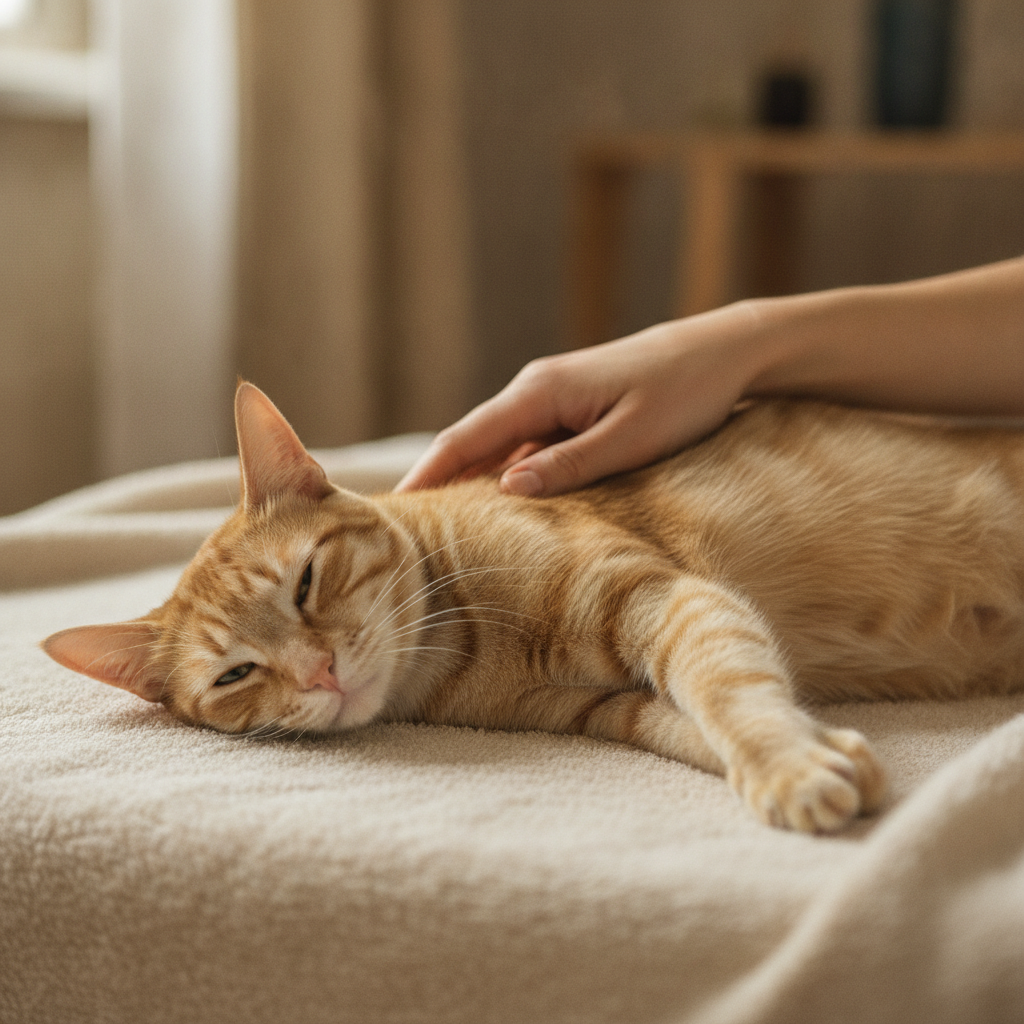
A pregnant queen typically gains about 1–2 kg total depending on litter size, and that gain should not exceed roughly 40% of her ideal pre-pregnancy weight — over-feeding to obesity makes labour harder and can hurt milk production. The gain is back-loaded: she lays down fat reserves early and puts on most weight in the final third as the kittens grow.
Weight on a scale only tells half the story. Vets use a Body Condition Score (a 9-point scale, with 4–5 ideal). Per the WSAVA body-condition guide, you should be able to feel her ribs with a light fat covering. As her belly enlarges, the usual "waist from above" check stops working, so focus on gently feeling the ribs and spine to make sure she is not laying down excess fat. Quick weekly checks let you and your vet adjust food early.
Vet Visits and What They Check
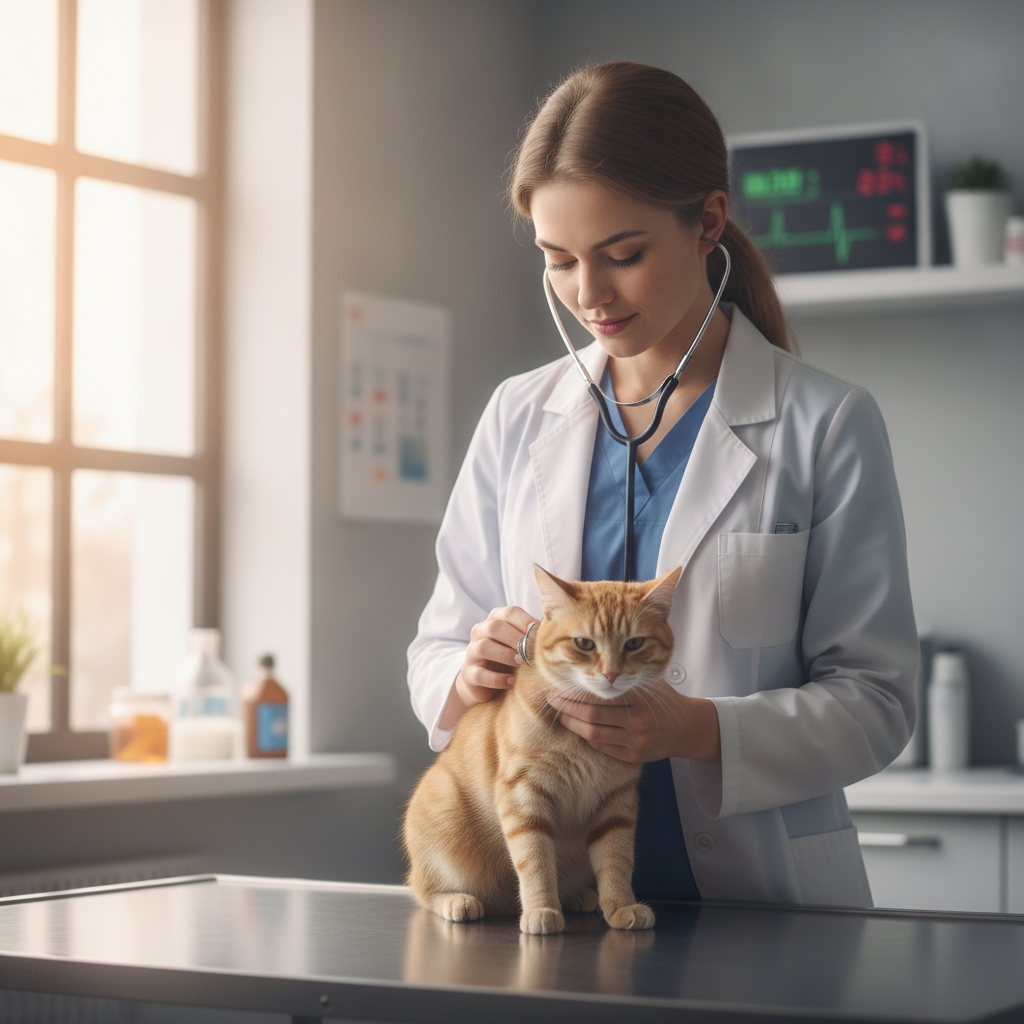
Book a wellness visit as soon as you suspect pregnancy. Across the nine weeks your vet may use:
- Ultrasound — the preferred early tool; it confirms pregnancy and, importantly, that the kittens are alive (heartbeats visible around day 25). It is not reliable for counting.
- Palpation — an experienced vet can feel fetal vesicles around day 21–25. Never attempt this yourself; rough handling can harm the litter.
- X-ray after day 45 (best after day 55) — the accurate way to count kittens once their skeletons calcify. Knowing the number ahead of time tells you when the birth is actually finished. The Merck Veterinary Manual confirms there is no routine pregnancy blood test for cats, so imaging does the work.
A pre-birth check about a week before her due date is well worth it, and so is a post-birth check for mum and kittens within 24–48 hours to rule out a retained placenta and confirm everyone is nursing. Want to know what the averages say about litter size? See how many kittens do cats have.
Vaccines, Deworming and Medication Safety
Golden rule: nothing goes into a pregnant queen without your vet's say-so — not medications, not supplements, not over-the-counter flea or worm products. Pregnancy changes how she processes drugs, and some products that are fine for other cats can damage developing kittens.
- Vaccines: ideally she is fully vaccinated before breeding, so antibodies pass to kittens through colostrum (first milk). If vaccination during pregnancy is truly unavoidable, modified-live (MLV) vaccines are strongly contraindicated — the American Association of Feline Practitioners warns MLV panleukopenia vaccine can cause cerebellar hypoplasia in kittens. Inactivated (killed) vaccines are the safer option, used only when disease risk is high.
- Deworming: kittens can pick up roundworms in the womb and through milk, so a vet-directed deworming plan matters. Agents with a good pregnancy-safety record include fenbendazole and pyrantel pamoate.
- Fleas: several modern vet-prescribed spot-ons are licensed for pregnant and nursing queens. Use only a product your vet approves — some older pesticides are unsafe.
Spaying is off the table during pregnancy, but it is the right conversation to have after she has recovered — our piece on cat neutering covers the why and when.
Building a Calm Nest and a Clean, Low-Dust Litter Set-Up
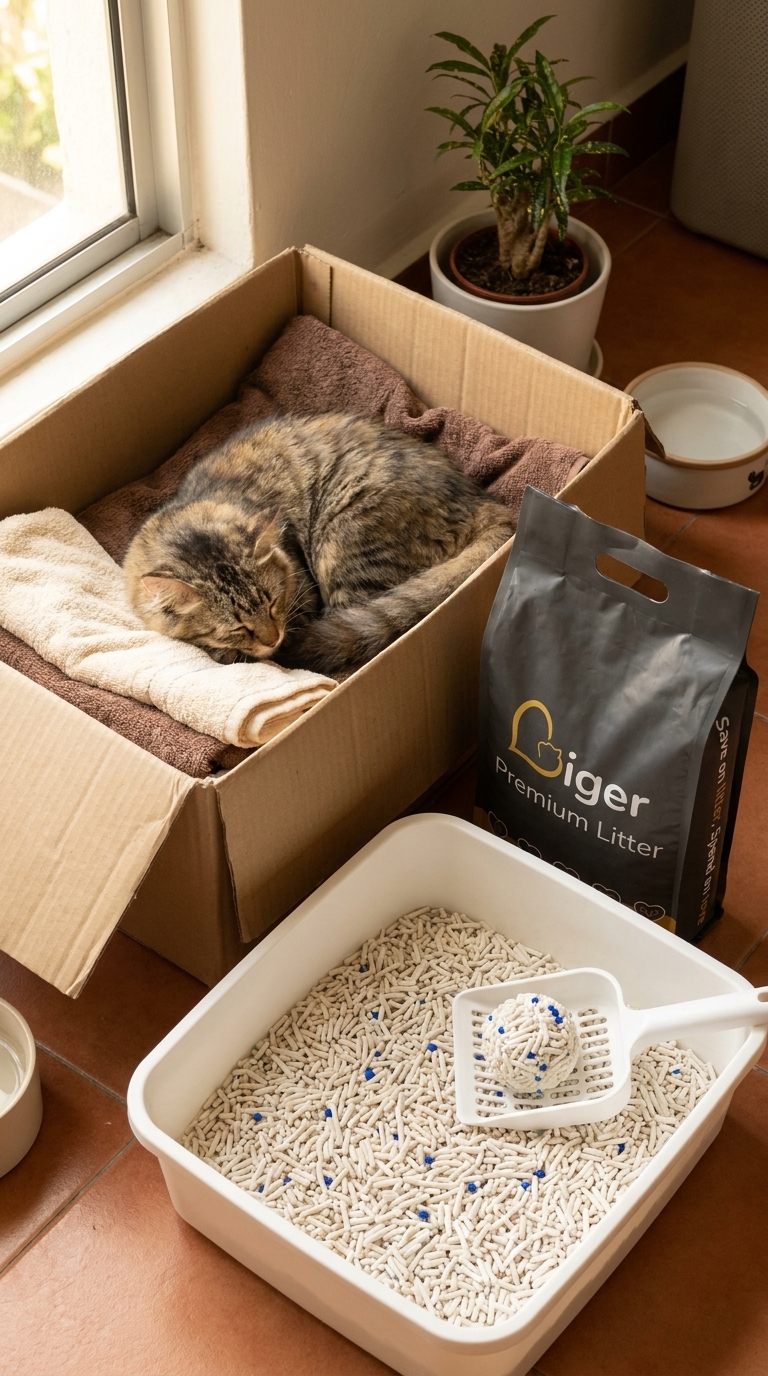
In the last week or two she will hunt for somewhere quiet and hidden to give birth. Help her by setting up a nesting box around week 7. A cardboard box roughly 40×60 cm with sides about 20 cm high works well — tall enough to keep newborns in, low enough for her to step over. Line it with newspaper she can shred, then soft washable towels on top, and place it in a warm, draft-free, low-traffic room with her food, water and litter tray nearby. Many queens prefer a covered box for security. She may still ignore it and pick your wardrobe; if her choice is safe, let her have it.
Her litter set-up deserves a second look now, for two reasons. A heavily pregnant queen spends a lot of time low to the floor, so a low-dust litter is gentler on her airways — and on the newborns who will soon share that corner. And a clean, firm-clumping tray lets you actually see her output, which is part of monitoring her health. This is where Liger Premium Tofu Cat Litter fits: made from natural soy fibre, it is low-dust, clumps firmly for easy scooping, controls odour, and is flushable in small amounts — plus it is Halal-certified. Pricing is built for real households: RM21.90 (1 pack, 2 kg), RM53.90 (3 packs), RM89 (5 packs) and RM169 (10 packs), which comes to about RM8.45/kg on the bulk pack (current Liger pricing). Once the kittens arrive your scooping multiplies, so the 10-pack earns its keep — size it with the litter calculator. (If a human in your home is pregnant, see the separate toxoplasmosis and litter safety guide.)
Keep her gently active — light play with a wand toy preserves muscle tone — but stop the high jumps and rough play, and keep her strictly indoors for the final two weeks.
Warning Signs: When to Call the Vet
Most pregnancies are uneventful, but call your vet straight away for any of these:
- Pregnancy passing about 70 days with no labour
- Strong, active contractions for more than 20–30 minutes with no kitten delivered
- More than 2 hours between kittens while she is still straining
- A dark green, bloody or foul-smelling discharge before the first kitten
- Lethargy, fever, refusing food for more than a day, or obvious pain
- Tremors, twitching, a stiff gait or restlessness in late pregnancy or after birth — possible eclampsia (milk fever), a true emergency
Have an emergency plan ready before her due date: your vet's number, the nearest 24-hour clinic, transport, and a carrier lined and waiting. When the next stage begins, our guide to labour signs and what to expect walks you through the birth itself, and caring for a nursing queen picks up afterwards.