One second your cat is purring on your lap; the next it's clamped onto your wrist with all four paws. Or it ambushes your ankles from under the sofa, or turns on the resident cat it lived with peacefully for years. Feline aggression is genuinely distressing — and it's the second most common behaviour problem vets see, after litter-box issues. The good news: aggression is almost never spite, it's communication, and once you can read it, most of it is manageable.
This guide walks through the six types of cat aggression, how to tell them apart, and the evidence-based ways to defuse each — without ever resorting to punishment, which makes things worse. It pairs with our Malaysian guide to cat behaviour.
First Things First: A Suddenly Aggressive Cat Sees the Vet
If a normally gentle cat turns aggressive out of nowhere, treat it as a medical emergency until a vet says otherwise. Pain is one of the most common hidden triggers, and a hurting cat lashes out to protect itself. As the Cornell Feline Health Center stresses, ruling out medical causes is the essential first step in any aggression plan.
Common culprits include arthritis (it hurts to be picked up), dental disease, abscesses from a fight, urinary infections, and in older cats hyperthyroidism or cognitive decline. The tell-tale sign of pain-induced aggression is a consistent reaction when one specific spot is touched, often alongside other clues like lethargy or appetite changes. No amount of behaviour training will fix a cat that's simply in pain — so book the check-up before anything else.
The Six Faces of Cat Aggression
"Aggressive" isn't a diagnosis — it's a symptom with at least six distinct causes, each needing a different fix. Identifying which one you're dealing with is the whole game.
| Type | What it looks like | Typical trigger |
|---|---|---|
| Play | Stalking, pouncing, biting hands/feet | Young indoor cat, pent-up predatory energy |
| Petting-induced | Sudden bite/swat mid-cuddle | Overstimulation from too much stroking |
| Redirected | Attacks nearest person/pet after being wound up | A cat outside the window it can't reach |
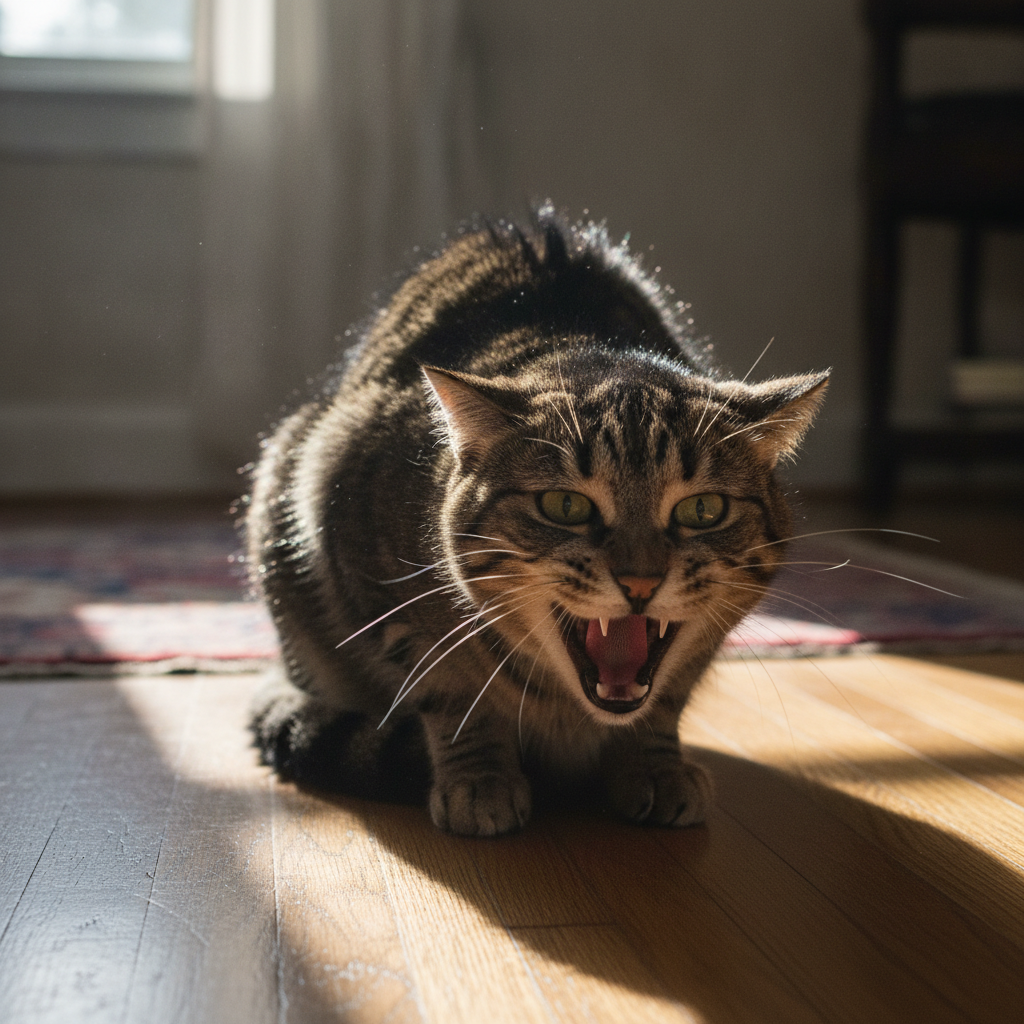
| Fear/defensive | Crouch, flat ears, hiss, then strike | Feeling cornered or threatened, no escape |
| Territorial / inter-cat | Stalking, blocking, fighting a housemate | New cat, or one returning smelling "wrong" |
| Pain-induced | Lashing out when a spot is touched | Arthritis, dental disease, injury, illness |
Most "my cat attacked me for no reason" stories turn out to be one of these with a missed early-warning signal. Let's tackle the most common ones.
Play Aggression: When Your Hand Becomes Prey
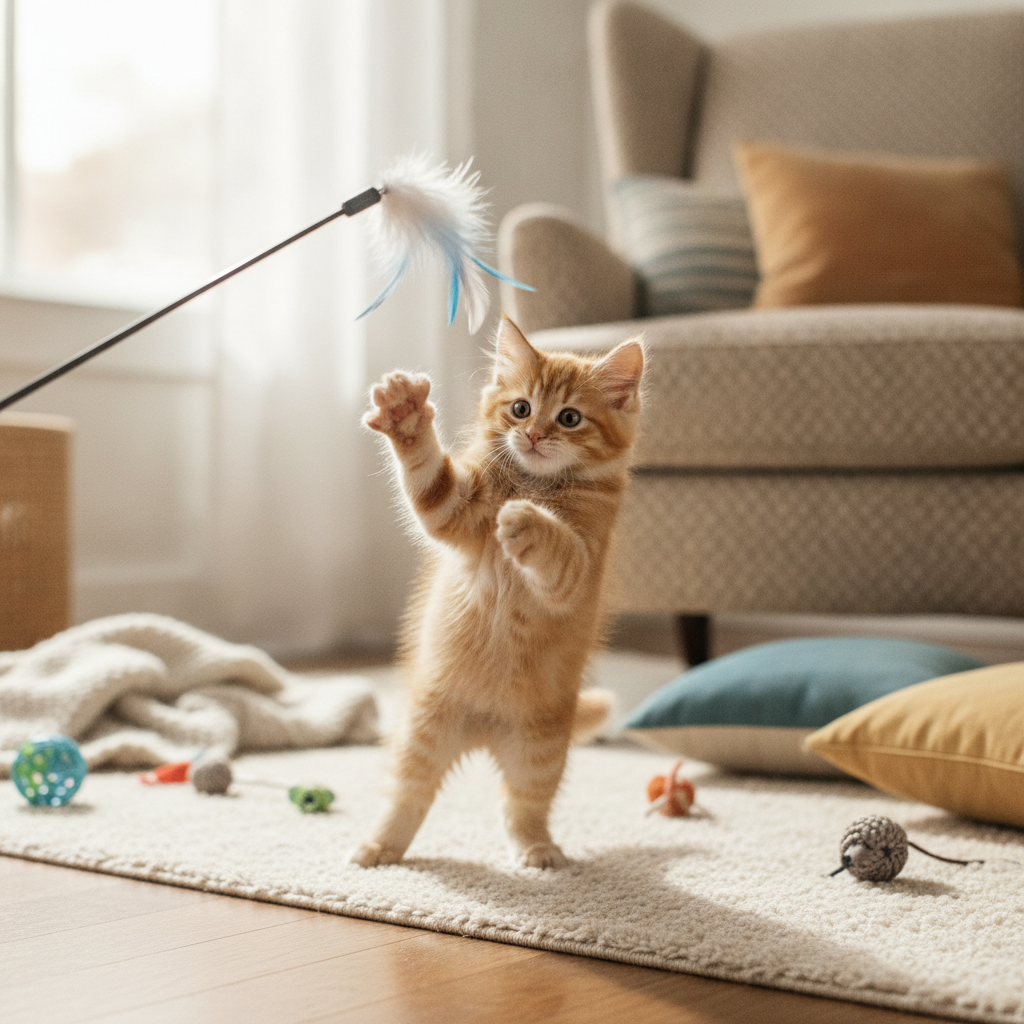
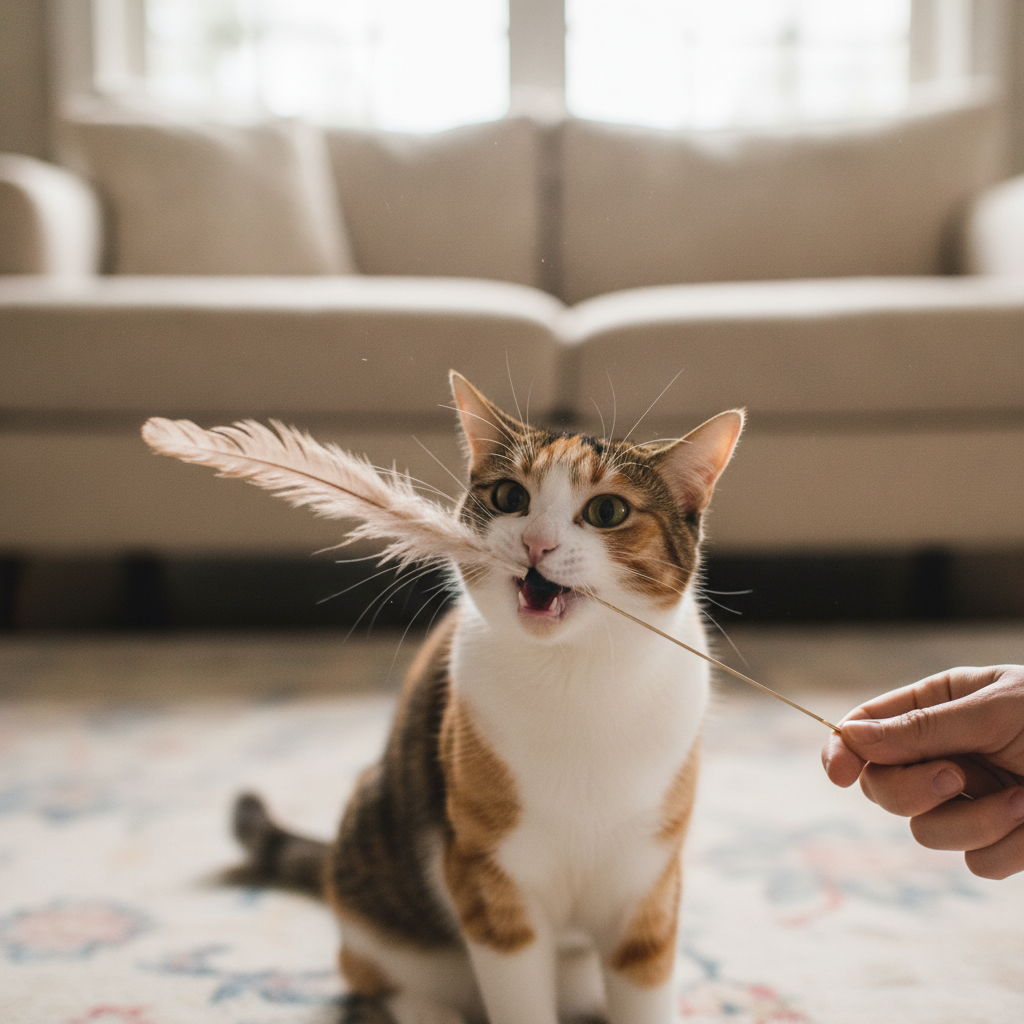
Play aggression is the classic kitten and young-cat problem — those instinctive stalk-chase-pounce-bite skills are how a little predator practises hunting. It only becomes a problem when the target is your hand. There's a critical window here: between two and nine weeks of age, kittens learn bite inhibition — how hard is too hard — from their mother and littermates. Kittens weaned or orphaned too early in Malaysia's huge stray population often miss those lessons entirely, so they play rough as adults, and a bored indoor cat with no outlet will hunt whatever moves — usually you.
The fix is redirection, never punishment:
- Strict "no hands as toys" rule. Never wrestle a kitten with your fingers. The moment teeth come towards skin, swap in a wand toy or kicker mouse.
- Drain the energy. Two to four structured play sessions a day, ~15 minutes each, that let the cat complete the full hunt — stalk, chase, "catch", then a treat or meal to end the sequence satisfyingly. Our science of cat play shows how to do it right.
- If a bite lands, calmly say "ouch", withdraw all attention and walk away. Rough play makes the fun stop — that's the lesson.
For teething kittens specifically, see our land-shark phase survival guide.
Petting-Induced Aggression: Read the Warning Signs
This is the betrayal that confuses owners most: a cat happily accepting strokes that suddenly bites. It's not malice — it's overstimulation, the cat signalling it has hit its limit for contact. According to VCA Hospitals, the threshold varies hugely between cats, and the trick is catching the warning signs before the bite:
- Tail starts twitching at the tip, then lashing or thumping
- Ears rotate backward or flatten
- Pupils suddenly dilate
- Skin ripples along the back; body stiffens
- Purring stops, maybe replaced by a low growl
Stop petting the instant you see these — ideally before. Keep sessions short, stick to less-charged zones like the cheeks and base of the ears rather than the belly, and end on a calm note. Over time your cat learns its subtle signals are respected and it doesn't need to escalate to teeth.
Redirected and Fear Aggression: The Innocent Bystander
Redirected aggression is the most alarming and unfair-seeming type. Your cat spots a stray through the window, winds up to fever pitch, can't reach it — and attacks whoever's nearest, often you or another household cat. As PetMD explains, the victim is just a convenient outlet for frustration the cat can't discharge — and a common way owners get bitten is by trying to break up a cat fight with their hands. The classic Malaysian scenario: stray cats wandering past a ground-floor condo window.
The fix is to manage the trigger: block the view with frosted film or close the curtains on that window, and discourage neighbourhood cats from the area. If your cat is already wound up, do not touch it — give it space in a quiet, dim room to come down, which can take several hours, not minutes. Fear aggression works similarly: a cornered, threatened cat that can't flee will defend itself, usually after clear warnings — crouching, flattened ears, hissing and spitting. Always give a scared cat an exit route and never force interaction; let it choose to approach on its own terms.
Cats Fighting Cats: Restoring Multi-Cat Peace
Inter-cat aggression accounts for up to roughly a third of feline behaviour cases — unsurprising, since a multi-cat household is an artificial arrangement of animals that didn't choose each other. The cornerstone fix, per the ASPCA, is reducing competition and reintroducing slowly:
- Separate first. If they're fighting, fully separate the cats with their own resources to let arousal drop before you do anything else.
- Multiply and spread resources. The rule is one of everything per cat, plus one — litter boxes, food stations, water, scratching posts, perches — spread out so no cat has to pass another to reach them. This single change defuses most tension. (More in how many litter boxes you need.)
- Reintroduce gradually with scent-swapping, then feeding on opposite sides of a closed door, then brief supervised visual contact through a barrier — always paired with treats, always at the cats' pace. This desensitisation method is the gold standard.
The American Association of Feline Practitioners' inter-cat tension guidelines are emphatic that "flooding" — forcing the cats together until they supposedly "get over it" — does the opposite, ramping up stress and cementing the conflict. Patience wins. If one cat is ambushing another at the tray specifically, our guide to litter-box bullying has the targeted fix. In stubborn cases a vet may add a calming medication like fluoxetine — but only ever as a support to behaviour work, never instead of it.
The Golden Rule: Never Punish
Across every type of aggression, one thing is consistent: punishment backfires. Yelling, scruffing, smacking or squirting a water bottle doesn't teach an alternative — a University of Guelph study directly linked punitive training methods to increased aggression. Punishment just adds fear, and a frightened cat defends itself harder. We expand on this in stop punishing your cat.
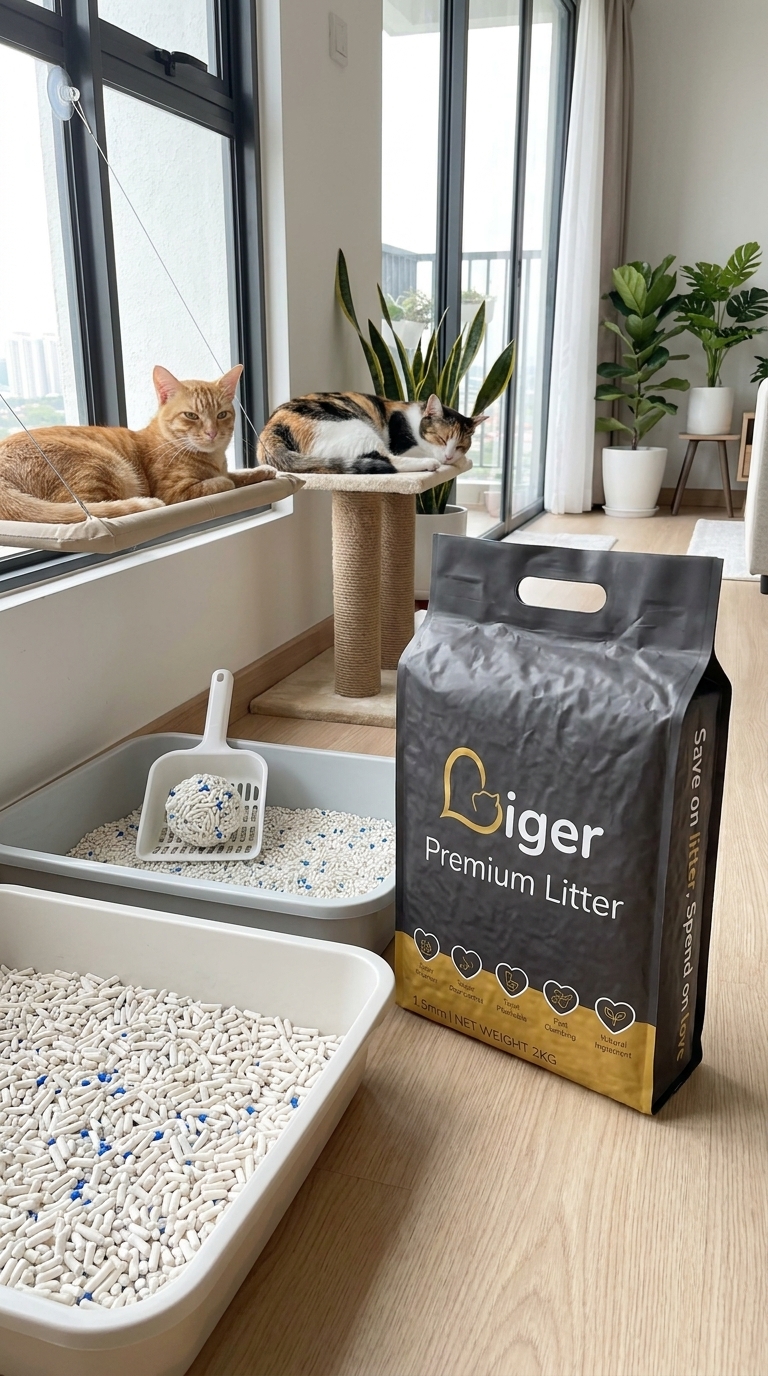
What actually works is removing triggers, redirecting energy, and reducing day-to-day stress — and a surprising amount of feline stress comes from resource conflict in a small space. A calm, predictable environment is your best anti-aggression tool: enough separated resources, daily play to burn predatory energy (see indoor enrichment), and a litter setup that doesn't itself become a flashpoint. Give every cat its own clean, low-stress place to go: a low-dust, firmly clumping litter like Liger Premium Tofu Cat Litter keeps each box pleasant enough that cats aren't forced to compete over the one "acceptable" tray. Made from natural plant starch, it clumps tight for daily scooping and controls odour without perfume — and at RM21.90 for a 2 kg pack up to RM169 for the 10-pack (about RM8.45/kg, free shipping in Peninsular Malaysia, current pricing as of May 2026), running the recommended one-box-per-cat-plus-one stays affordable. Size your multi-cat setup with the litter box size calculator and work out usage with the litter calculator.
Aggression is a cat telling you something isn't right — pain, fear, frustration or competition over space and resources. Listen to it, identify which of the six types you're seeing, fix the underlying cause, and bring in a vet or a certified cat behaviourist for severe or persistent cases. Do that, and you'll end up not with a "bad" or "vicious" cat, but a calmer, better-understood one — and a household that's safer and far less stressful for everyone in it, human and feline alike.