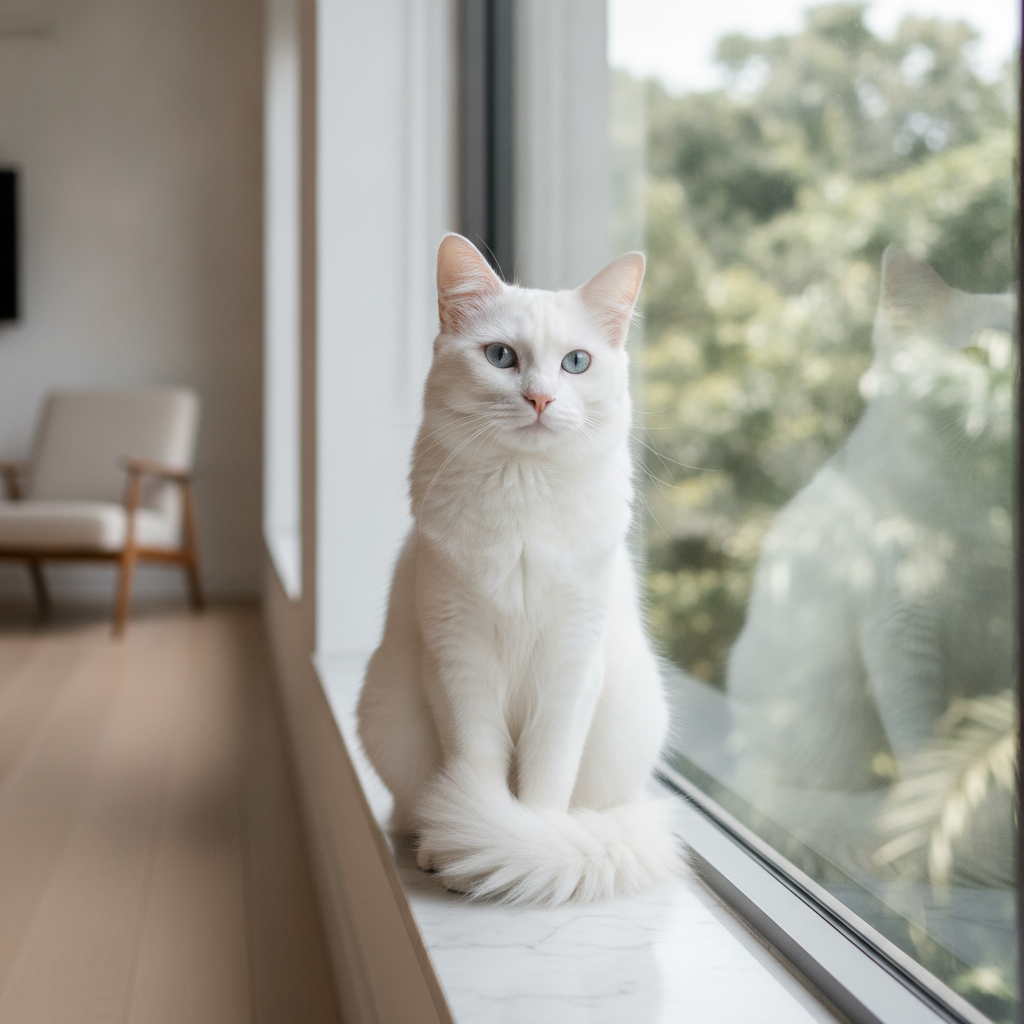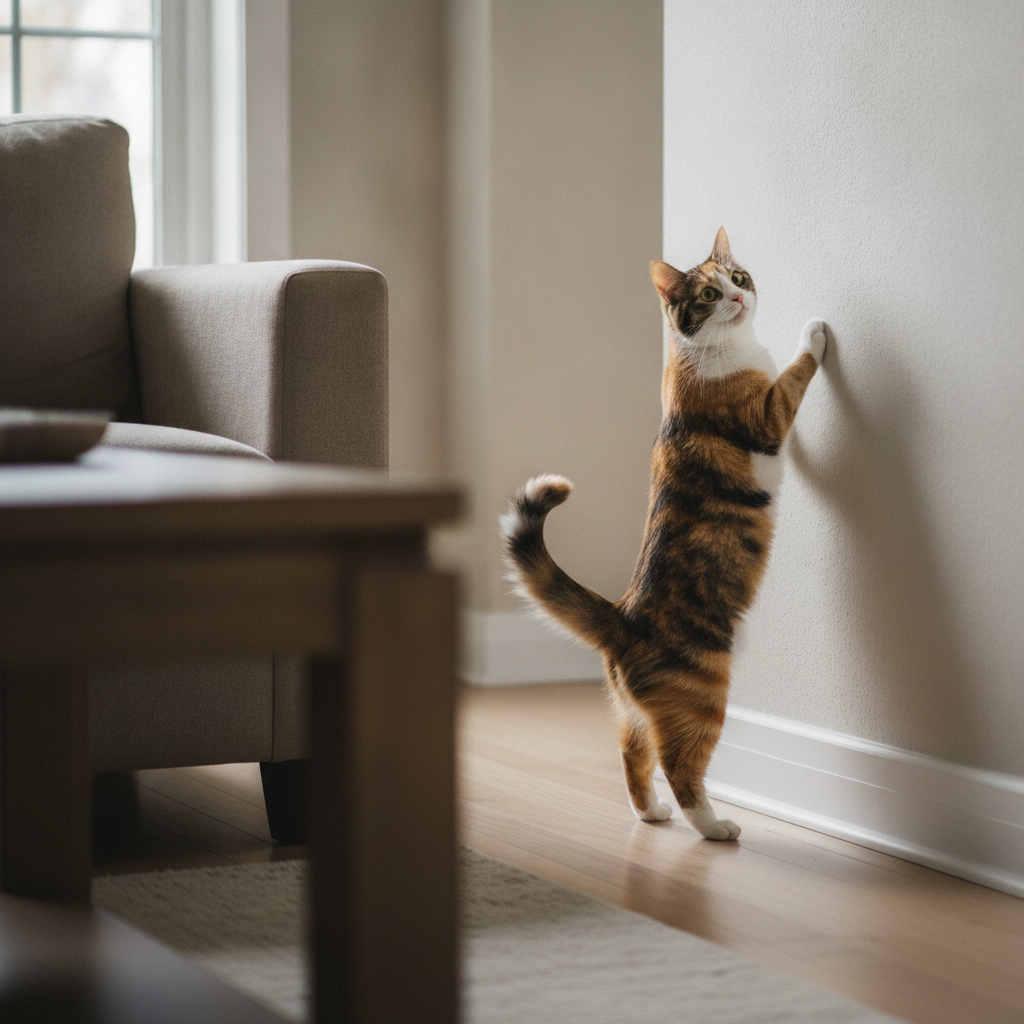
You catch your cat backed up against the wall, tail straight up and quivering, leaving a thin streak of urine at nose height — then it strolls off and uses its litter box normally five minutes later. That's not a litter-box problem. That's spraying, and it's a completely different behaviour from a cat peeing in the wrong place. Getting that distinction right is the whole key to fixing it, because the two have different causes and different solutions.
This guide is specifically about territorial urine marking — why cats spray, and the evidence-based way to stop it. For the bigger picture, see our Malaysian guide to cat behaviour.
Spraying Is Not "Peeing Outside the Box"
This is the most important thing to get straight, because owners waste months fixing the wrong problem. Spraying and inappropriate urination look superficially similar but are diagnostically distinct:
| Spraying (marking) | Inappropriate urination | |
|---|---|---|
| Posture | Standing, tail up and quivering | Squatting |
| Surface | Vertical — walls, furniture, doors | Horizontal — floor, bed, carpet |
| Amount | Small squirt | A full bladder-empty puddle |
| Litter box | Still used normally for elimination | Often abandoned |
| What it is | Communication / scent-marking | An elimination or medical problem |
If your cat is squatting and emptying its bladder on horizontal surfaces — the floor, the bed — that's not spraying, and you want our guides to a cat that suddenly stopped using the litter box or pooping outside the box instead. And no, it's never revenge — we bust that myth in do cats hold grudges. The rest of this article is for genuine vertical-surface spraying.
Why Cats Spray: A Message, Not Malice
Spraying is normal, instinctive communication for the cat family. Their solitary ancestor, the Near Eastern wildcat, used urine marks as a kind of chemical noticeboard — broadcasting territory boundaries and reproductive status to other cats without risking a face-to-face fight. Your domestic cat carries that exact instinct.
So a sprayed mark is a message, not spite. It's saying one of two things: "this is my territory" or "I'm available to mate" — or, in an anxious cat, "I need to feel more secure here." Surrounding itself with its own familiar scent acts like a comfort blanket when a cat feels its territory is threatened. Understanding spraying as communication, not bad behaviour, is what stops owners from reaching for punishment — which, as we'll see, makes everything worse.
It also explains where cats spray. Marks show up in places of social significance — doorways, windows, new furniture, a bag a visitor brought in, the spot where two cats' paths cross. A cat isn't being random or "naughty"; it's tagging the locations that matter most to its sense of territory and security. Once you see the pattern in where your cat sprays, you're already halfway to working out why.
The Hormone Driver: Intact Cats and Neutering

The number-one cause of spraying is reproductive hormones. Intact cats — especially males — spray urine loaded with pheromones to advertise their availability as they hit sexual maturity. This is biology doing exactly what it evolved to do, and it's why the single most effective fix is desexing.
The numbers are striking: neutering reduces or stops spraying in roughly 85–90% of male cats, and spaying is even more effective in females, per the guidance from animal-care authorities. Timing matters enormously, though. Desex before sexual maturity (around four to six months) and before spraying starts, and you usually prevent it entirely. Once a cat has been spraying for a while, the behaviour can shift from a hormonal reflex into a learned habit — and then neutering alone may not fully stop it. We cover the wider case for desexing in the real truth about cat neutering. Even so, about 10% of neutered males and 5% of spayed females still spray — which brings us to the other big driver.
The Stress Driver: Spraying in Neutered Cats
If your desexed cat is spraying, it's almost certainly anxiety. And the strongest predictor is how many cats share the home. The statistics are dramatic: spraying occurs in around 25% of single-cat households but climbs toward 100% in homes with more than ten cats, as Today's Veterinary Practice reports. The driver is resource competition and social tension.
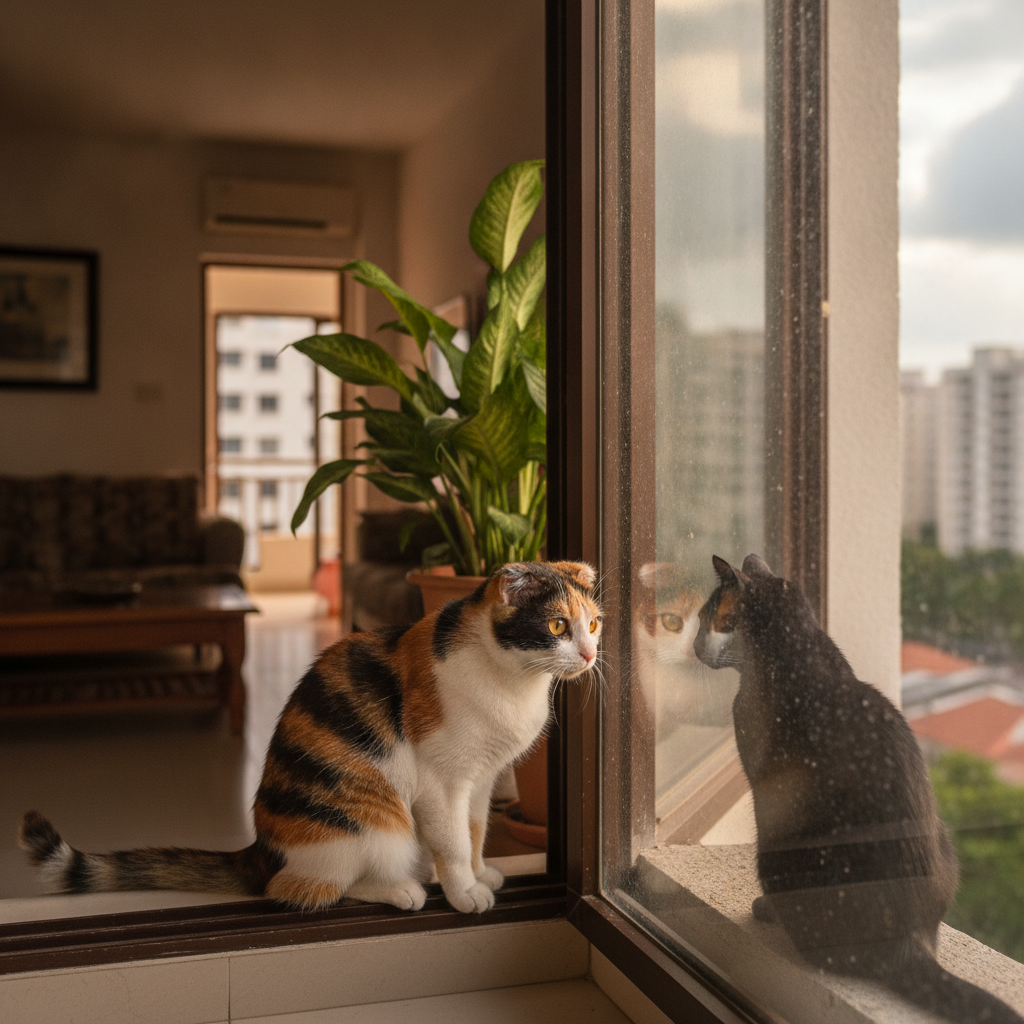
The tricky part is that inter-cat conflict is often invisible. There may be no yowling or fur flying — just one cat subtly intimidating another with a hard stare, blocking a hallway, or guarding the litter box. The bullied cat lives in low-grade chronic stress and sprays to cope. Our guide to litter-box bullying shows how to spot this. The other big anxiety trigger is the cat outside: an indoor cat that sees, hears or smells a neighbourhood cat through the window feels invaded and sprays near doors and windows to reinforce its boundary — a very common Malaysian condo scenario. Big household changes — a new pet, a renovation, a house move, even rearranged furniture — can set it off too.
Rule Out the Medical Cause First
Before you commit to a behavioural plan, a cat urinating where it shouldn't needs a vet visit. As the Cornell Feline Health Center stresses, pain and disease must be ruled out first. The big one is Feline Lower Urinary Tract Disease (FLUTD) and feline idiopathic cystitis — a painful, stress-linked bladder inflammation. There's a cruel feedback loop here: stress causes cystitis, cystitis causes pain, and pain causes the cat to urinate outside the box, which the owner then misreads as "behaviour."
A vet works through urinalysis, blood work and sometimes imaging to find or exclude infections, bladder stones, crystals, kidney disease and diabetes. In male cats especially, a cat straining and producing little or no urine is a medical emergency — a possible urethral blockage that can be fatal within a day. Our cat UTI prevention guide covers the warning signs. Only once your cat has a clean bill of health should you treat the spraying as purely behavioural.
How to Stop Spraying: The Step-by-Step Plan
There's no single magic fix — successful cases stack several interventions. Working through them in order, as the ASPCA and International Cat Care recommend:
- Desex if intact. The most effective single step for hormonal spraying — and do it early.
- Clean sprayed spots with an enzymatic cleaner. Ordinary cleaners don't remove the scent proteins; the cat still smells its mark and re-sprays the same spot. Only enzyme cleaners fully break down the odour.
- Reduce the social pressure. In multi-cat homes, follow the "n+1" rule — one litter box per cat plus one extra — spread out in separate, low-traffic spots so no cat can guard or ambush. Add vertical space (cat trees, shelves) so cats can keep their distance. See how many litter boxes you actually need.
- Block the outside threat. Frost the lower windows or close curtains so your cat can't see roaming strays, and discourage them from your porch.
- Consider pheromones. Synthetic feline facial pheromone diffusers (like Feliway) signal safety and have strong clinical support — one trial saw 96.7% of cats stop marking. For stubborn, anxiety-driven cases a vet may add a medication such as fluoxetine, always alongside the environmental work, never instead of it.
- Never punish. Shouting or squirting water only deepens the anxiety that's causing the spraying, making it worse.
The Litter Setup That Lowers the Pressure
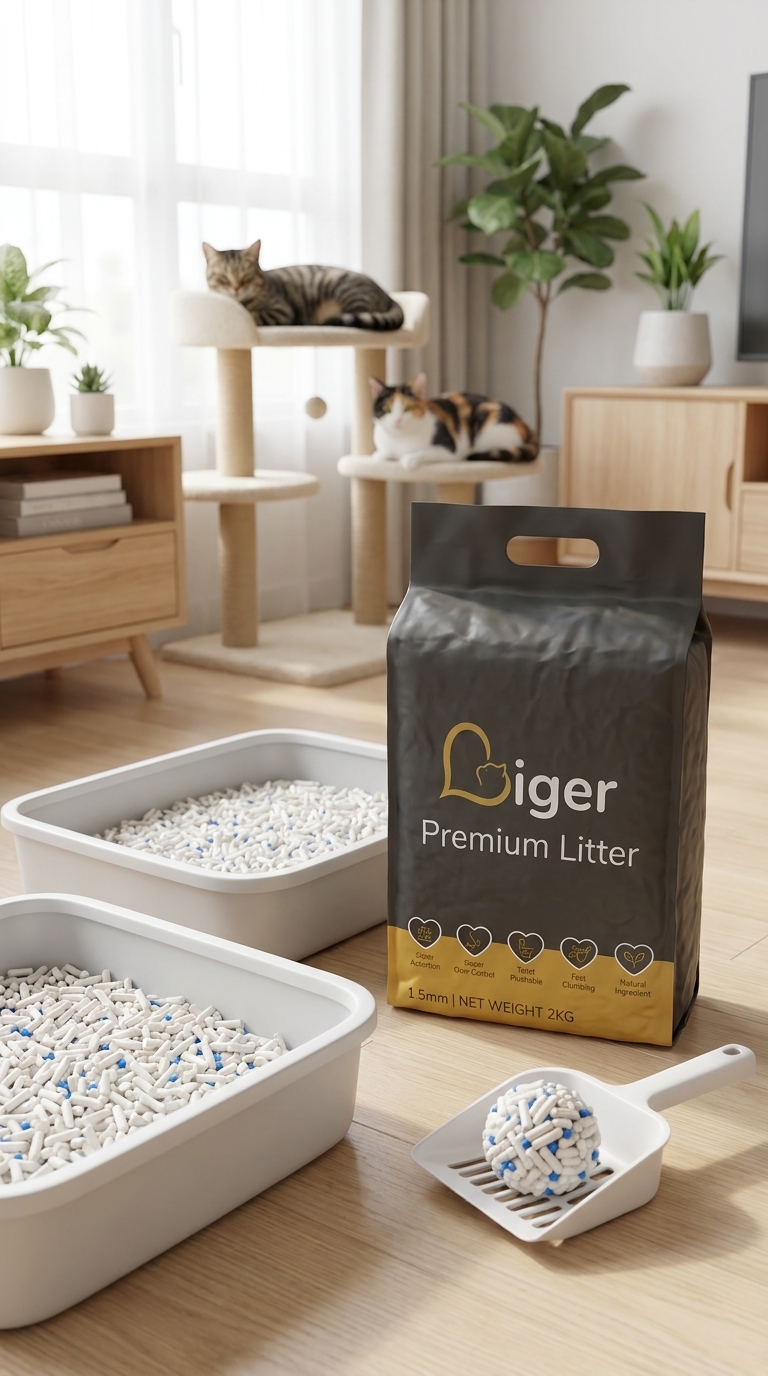
Since so much spraying in neutered cats traces back to litter-box competition and stress, the box setup is one of your strongest levers. The goal is simple: every cat should have easy, unthreatened, pleasant access to a clean toilet, so nobody feels the need to mark.
That means enough boxes (n+1), placed apart — and litter clean and inviting enough that each cat actually wants to use its own. A consistent, firmly clumping, low-odour litter like Liger Premium Tofu Cat Litter makes daily upkeep across multiple boxes realistic: it clumps tight so waste lifts out in seconds, controls odour without the heavy perfumes that can themselves stress a sensitive cat, and produces little dust. Made from natural plant starch, it runs from RM21.90 for a 2 kg pack to RM169 for the 10-pack (about RM8.45/kg, free shipping in Peninsular Malaysia, current pricing as of May 2026) — which keeps running the recommended one-box-per-cat-plus-one affordable rather than a luxury. Plan your multi-box layout with the litter box size calculator and total usage with the litter calculator.
One more practical point: keep a simple diary when spraying starts — which spots, what time, and what changed in the household around then. That record is gold for your vet, and it often reveals the trigger (a new neighbourhood cat, a schedule change, a guest) far faster than guessing. Patience matters too; even with the right plan, an established spraying habit can take weeks to fully fade, so consistency from everyone in the home is what carries it across the line.
Spraying is one of the most frustrating things a cat can do — and one of the most fixable, once you stop reading it as defiance. It's a cat telling you it feels threatened, hormonal, unwell or crowded. Diagnose which, work the plan patiently, and the walls stay dry.