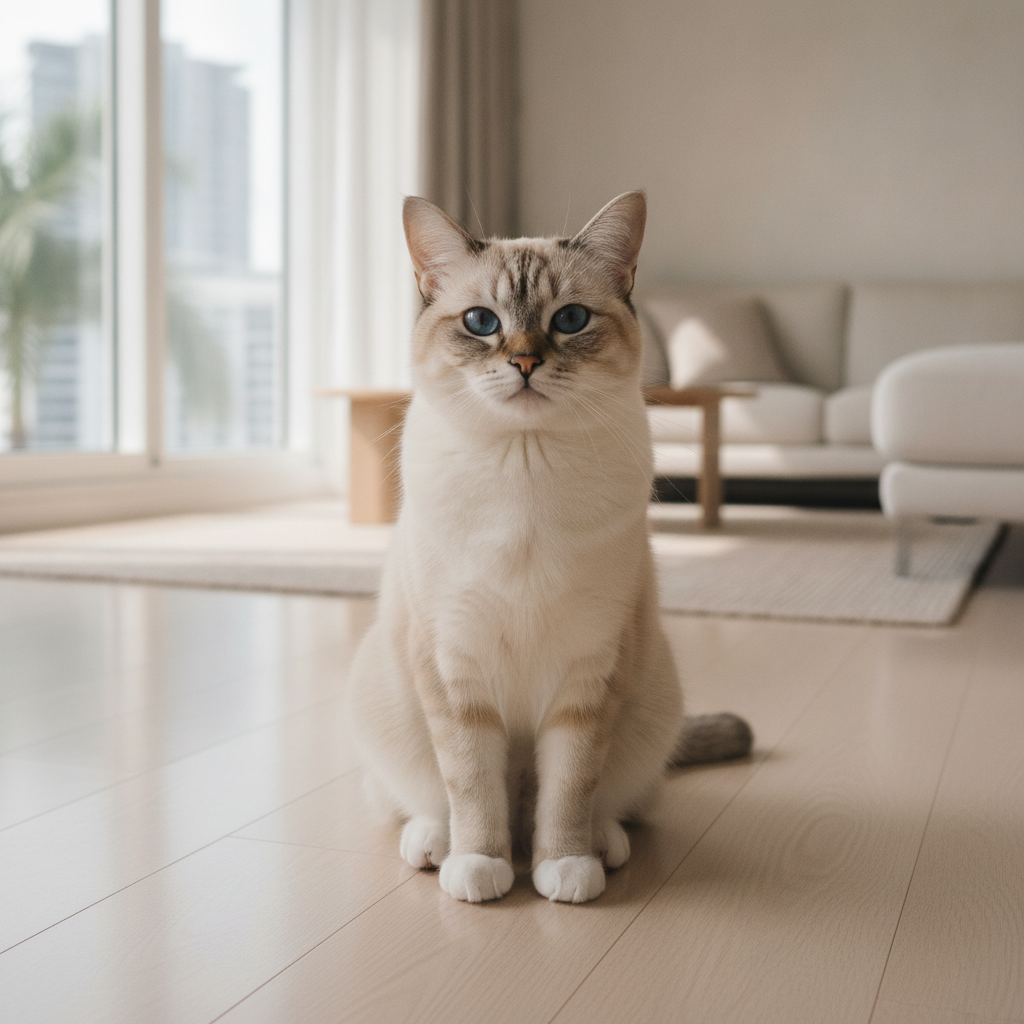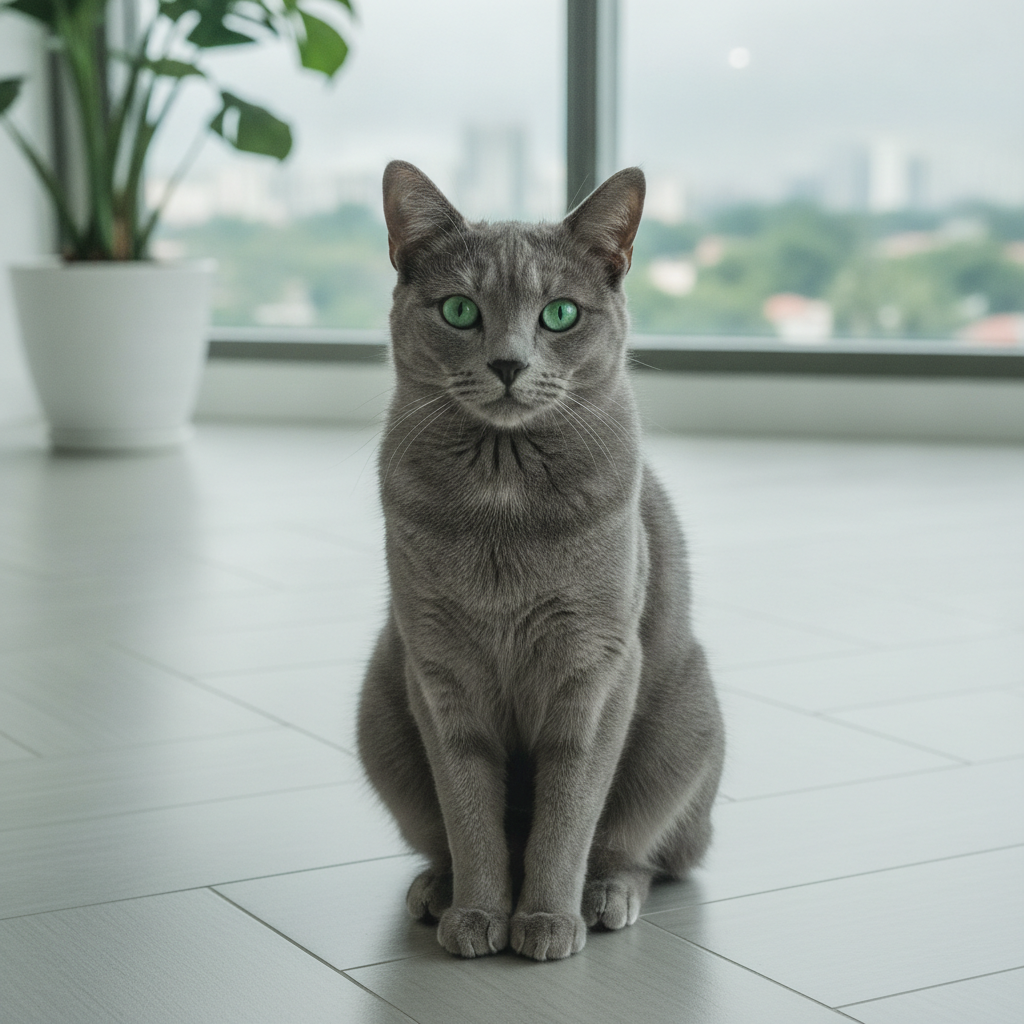
Here's something most breeders won't tell you before they take your deposit: the cat that looks gorgeous in a Korean café photo might be quietly miserable in a Klang Valley flat. Malaysia is hot, sticky and humid all year — and a cat's body handles heat very differently from ours. Pick the wrong coat and skull shape, and you're signing up for a lifetime of skin infections, vet bills and a pet that's perpetually flat on the tile. This guide walks through which breeds actually cope with our climate, which ones need full-time air-con to survive, and how to keep any cat cool once it's home.
If you're still deciding on a breed, pair this with our complete cat breeds in Malaysia guide — this article is the climate filter you run every candidate through first.
Why Malaysia's Humidity Is Harder on Cats Than the Heat Alone
Cats barely sweat. They have a few sweat glands in their paw pads and that's about it, so their main way of cooling down is licking their fur and letting the saliva evaporate. That trick works fine in dry Arizona. It barely works here. When the air is already saturated with moisture — which in most of Peninsular Malaysia means humidity sitting in the 70–90% range — that evaporation slows to a crawl, and the cat simply can't shed heat. As the team at Chewy's veterinary education library puts it, 28°C with high humidity can be as dangerous for a cat as 38°C in dry air.
This is also why panting is such a red flag. Dogs pant to cool down; for a cat, open-mouth breathing means its normal cooling systems are already overwhelmed. A cat's healthy body temperature sits around 38–39.5°C, and once it climbs past about 40°C you're into heatstroke territory — a genuine emergency. So when we talk about "heat-tolerant" breeds in Malaysia, we're really asking: which cats can lose heat fast enough to stay comfortable in a place where their built-in air-con barely functions?
The Coat Test: Single vs Double, and Why It Decides Everything
Before you fall in love with a face, look at the coat. Cats carry either a single coat (one layer of guard hairs) or a double coat (guard hairs over a dense, woolly undercoat built to trap warm air). In a Swiss winter that undercoat is a gift. In a Cheras high-rise it's a liability — it traps a layer of warm, damp air right against the skin, blocks heat loss, and turns into a breeding ground for yeast and fungal infections. Damp matted fur is exactly how cats here end up with painful "hot spots" and recurring skin problems.
So the single best predictor of climate comfort is simple: short, single-layer coats win. Lean, long-bodied cats with big ears win even more, because more surface area and well-vascularised ears help dump heat. Stocky, dense, double-coated cats struggle. Keep that lens on as we go through the breeds.
Breeds That Actually Thrive in Malaysian Heat
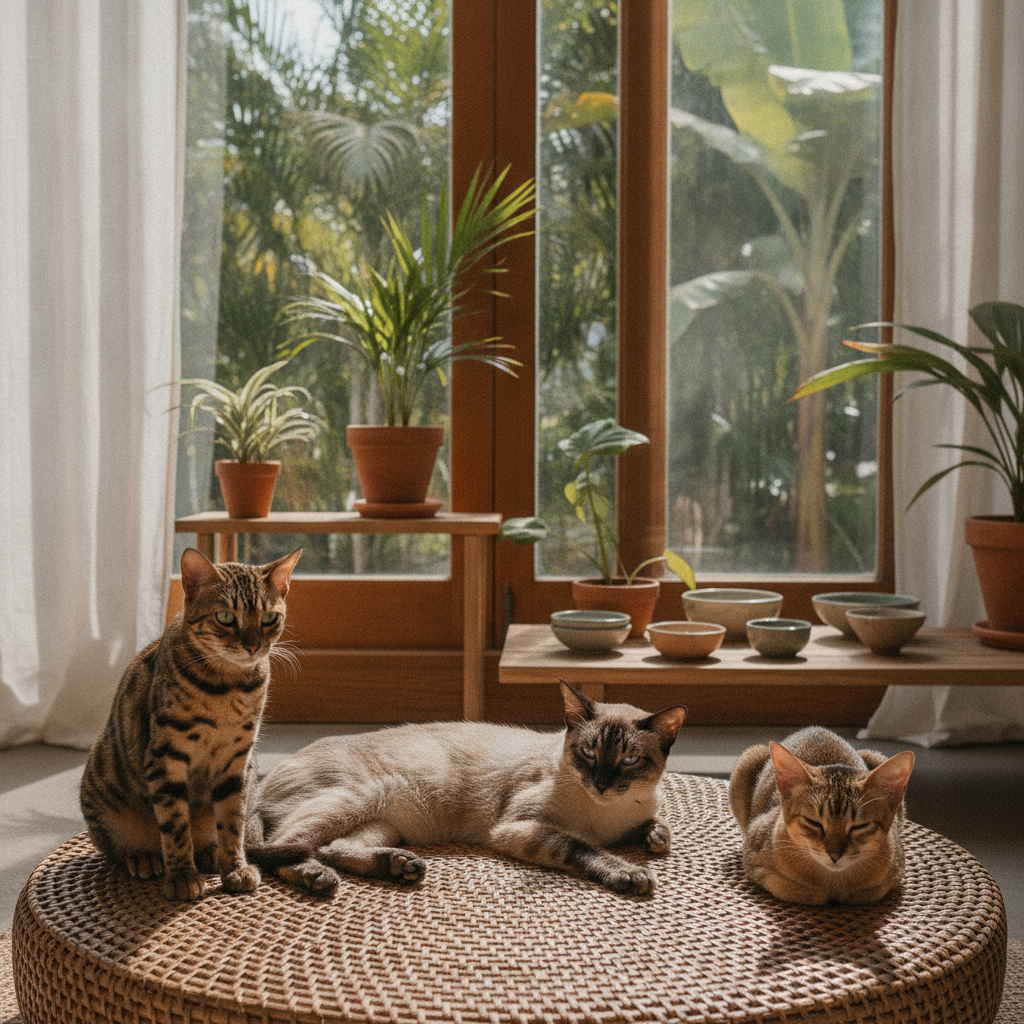
These breeds were either built by hot climates or simply carry the right hardware for one:
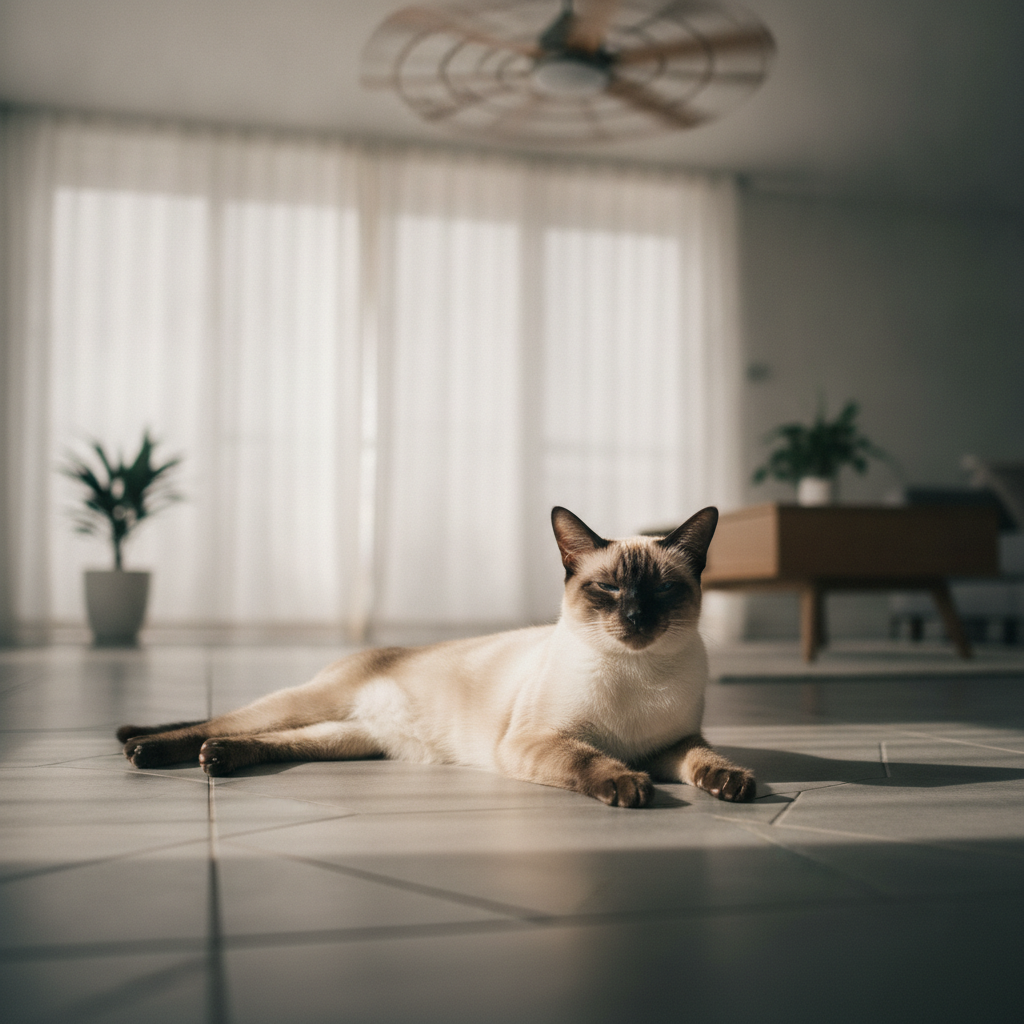
- Siamese — originally from Thailand, so it knows this weather. Short fine single coat, slim athletic body, large ears that radiate heat. Genuinely one of the best-adapted pedigrees you can keep here. Fun quirk: their colourpoints are temperature-driven, so Malaysian Siamese often run paler than ones raised in cold countries, as the breed's documented history explains.
- Bengal — descended from the Asian leopard cat, with a short dense pelt that sheds heat well, plus an unusual love of water that doubles as a cooling habit. Just be ready for the energy.
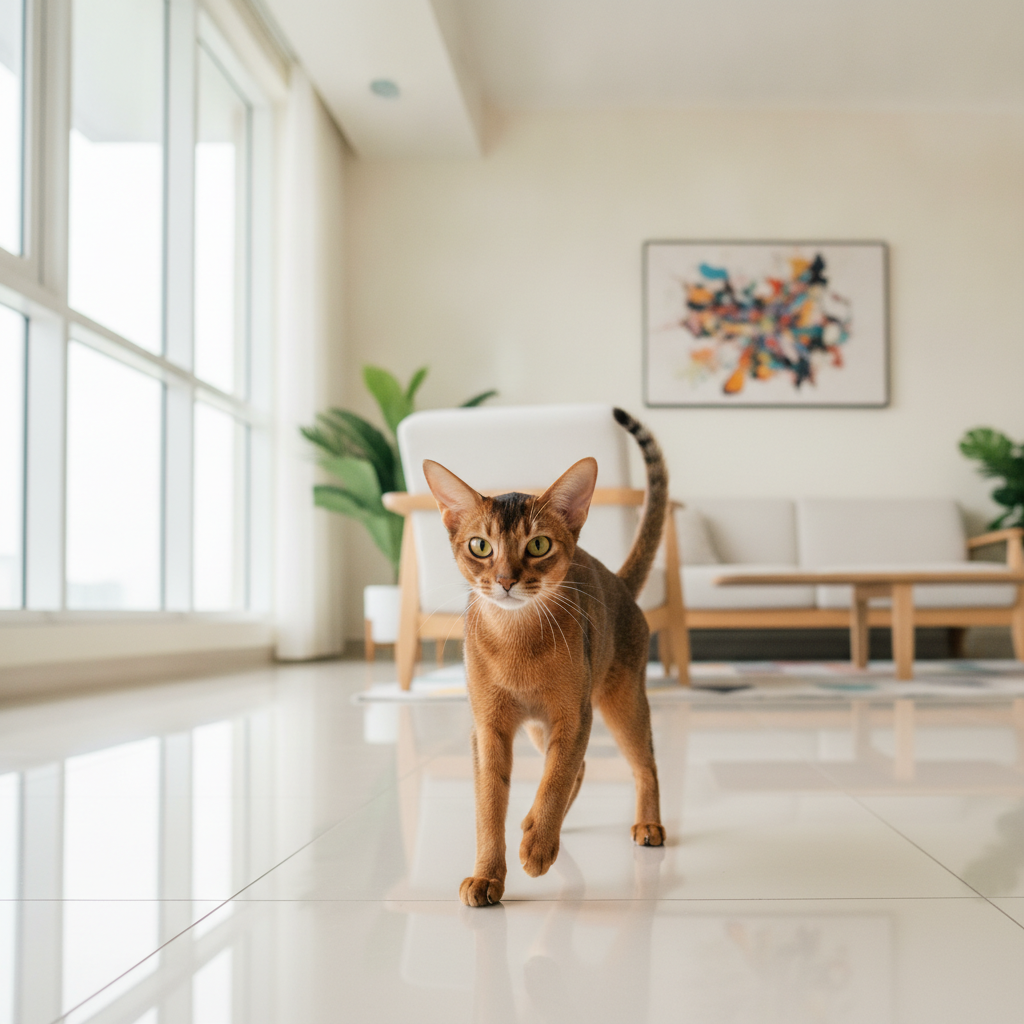
- Abyssinian, Burmese and Singapura — all lean, short-coated, hot-origin cats. The Singapura, developed from Southeast Asian street cats, is one of the smallest breeds in the world and handles warmth easily for its size.
Notice the pattern: none of them are fluffy, none are flat-faced, all are lean and short-coated. That's the template.
The Local Champion Everyone Overlooks: Kucing Kampung
If you want the cat best suited to Malaysia, it's probably sitting outside your local kedai runcit right now. The kucing kampung — our domestic shorthair — is the climate winner by a mile. Generations of natural selection in this exact weather gave it a short single coat, a sensible body type and a broad gene pool that tends to dodge the inherited diseases pedigrees carry. A Royal Veterinary College dataset found mixed-breed cats average around 14 years versus 12.5 for purebreds, and a big part of that gap is simply hardiness.
Adopting one costs little to nothing, sidesteps the whole heat-stress lottery, and frees up a shelter space. For most Malaysian households it's genuinely the smartest pick — not the consolation prize people assume.
High-Risk Breeds: The Flat-Faced and the Fluffy
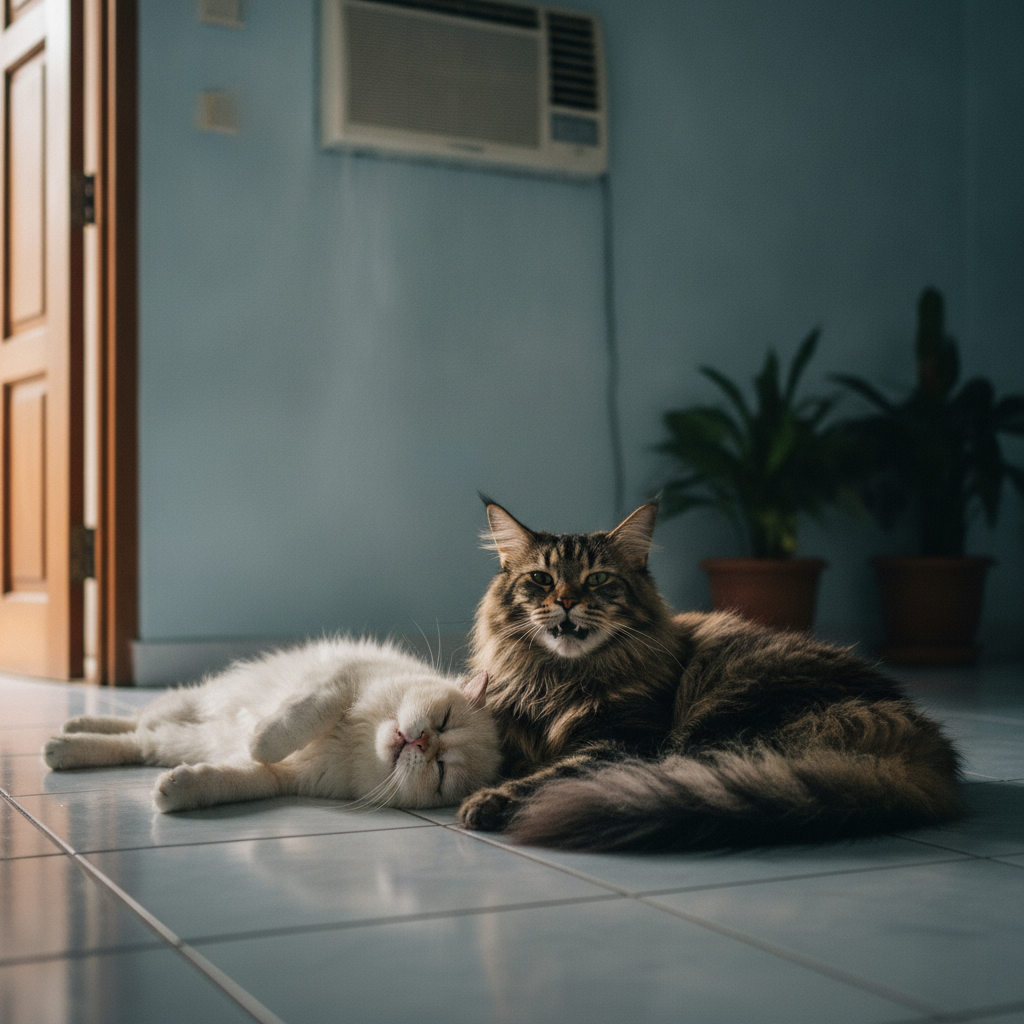
Some of the most-wanted breeds in Malaysia are, bluntly, the worst-equipped for it. Two danger groups:
Flat-faced (brachycephalic) breeds — the Persian, Exotic Shorthair and Himalayan. Their squashed skulls come with narrowed nostrils and obstructed airways, a cluster of problems vets call Brachycephalic Obstructive Airway Syndrome (BOAS). These cats struggle to breathe efficiently even in cool air; in heat, when they need to pant, the obstructed airway makes it nearly useless — and the extra effort generates yet more heat. The charity Cats Protection is blunt that these traits worsen in hot, humid conditions. They can absolutely live here, but only in a strictly air-conditioned home, no exceptions.
Long-haired, double-coated breeds — the Maine Coon and again the Persian. That magnificent coat traps heat and moisture, raising both overheating and skin-infection risk. Keeping one comfortable here means relentless grooming plus a permanently cool room.
Keeping Any Cat Cool: That Part Is Your Job
Here's the reassuring truth from the research: the owner matters more than the breed. A well-adapted cat can still suffer in a hotbox flat, and a vulnerable breed can do fine with good management. The essentials:
- Air-con and shade. Keep a cool room available during peak afternoon heat, and close the curtains to block direct sun. Tile floors give cats a cool surface to dump heat onto.
- Water, everywhere. Multiple bowls or a fountain encourages drinking; wet food adds moisture too. ASPCA grooming guidance notes regular brushing — even on short coats — clears loose fur so air can reach the skin.
- Cool, don't shock. If a cat overheats, wet its fur with cool (never ice-cold) water on the paws, ears and belly and get to a vet. An ice bath can trigger shock.
- Low-tech wins. A frozen water bottle wrapped in a towel makes an instant cool spot, a cooling mat absorbs body heat, and placing a frozen bottle in front of a fan chills the air it pushes around the room. Gently stroking the cat with a damp cloth mimics grooming and gives quick relief.
None of this is expensive or fancy — it's mostly about staying ahead of the heat instead of reacting once your cat is already panting on the floor.
The Detail Nobody Warns You About: Heat Wrecks Your Litter Too
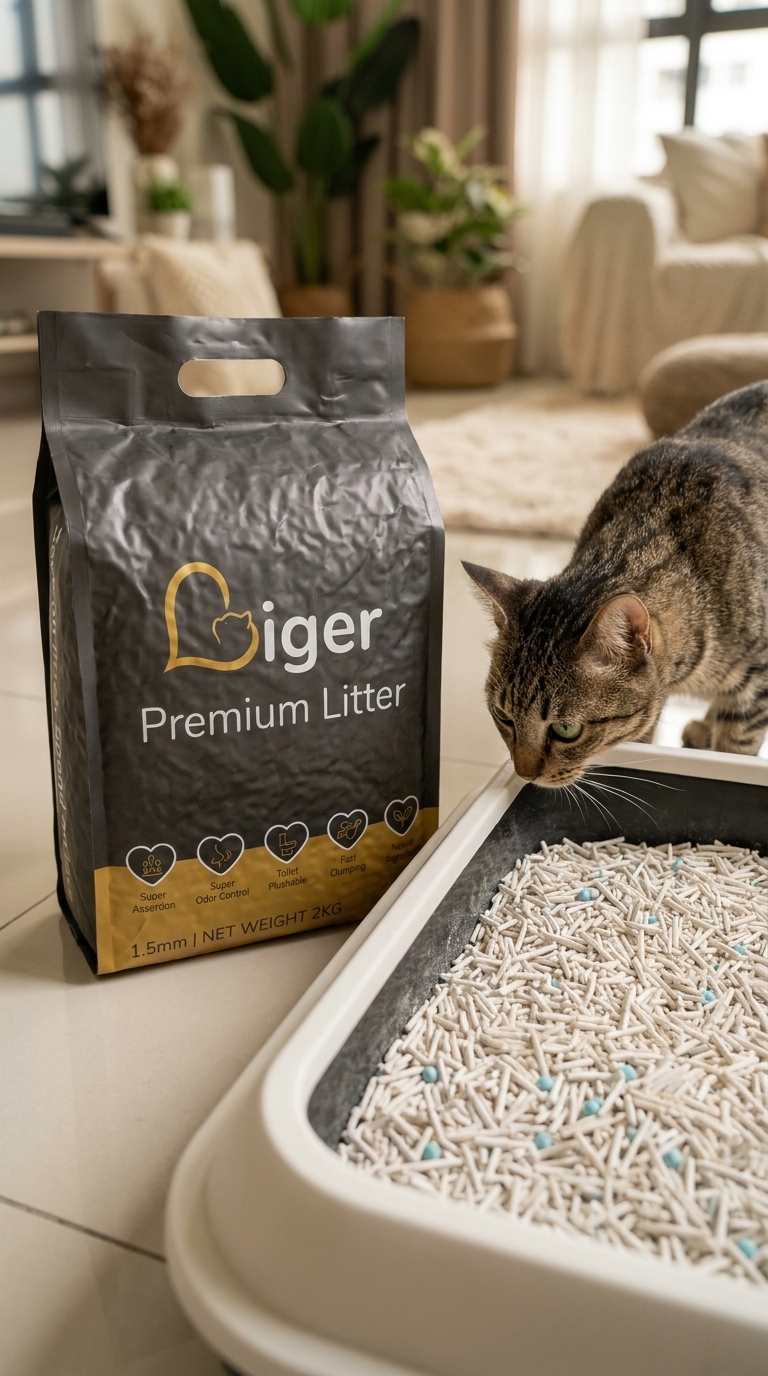
Tropical heat and humidity don't just stress the cat — they punish whatever's sitting in the litter tray. Warm, damp air makes ammonia smell stronger and faster, and cheap litters clump poorly and break down into dust in our humidity. This is where a quality tofu litter earns its place. Liger Premium Tofu Cat Litter is made from natural plant starch: it clumps firmly even in humid air, traps odour at the source instead of letting it bloom across your condo, and it's genuinely low-dust — which matters double for the flat-faced and indoor cats already fighting to breathe in this climate. It's also flushable and Halal, two things that make hot-weather disposal far less of a chore.
On cost, the maths is friendly: a 1-pack (2 kg) is RM21.90, but the 10-pack (20 kg) works out to just RM8.45/kg — about 23% cheaper per kilo than buying singles, with free shipping across Peninsular Malaysia (current Liger pricing, as of 2026). Not sure how much you'll burn through in our climate, where trays need changing more often? Run your cat count through the litter calculator for a realistic monthly figure before you bulk-buy.
Spotting Heatstroke Before It Becomes an Emergency
Whatever breed you choose, learn the warning signs — they save lives. Early heat exhaustion shows as panting or open-mouth breathing (always abnormal in cats), restlessness, drooling, or a cat sprawled out hunting for somewhere cooler. If it tips into full heatstroke you may see bright red or pale gums, vomiting, stumbling, weakness or collapse. PetMD's heatstroke guide is clear that this is a life-threatening emergency: begin cooling immediately and get to a vet, because internal organ damage can happen even when the cat looks like it's bounced back. Kittens, seniors, overweight cats and the flat-faced breeds are most at risk, so watch them closest on the hottest days.
The bottom line: in Malaysia, climate fit isn't a nice-to-have, it's the first filter. Lean short-coated breeds and the humble kucing kampung start with a real advantage — but with air-con, water, grooming and a litter that holds up to the humidity, almost any cat can live a cool, comfortable life here.