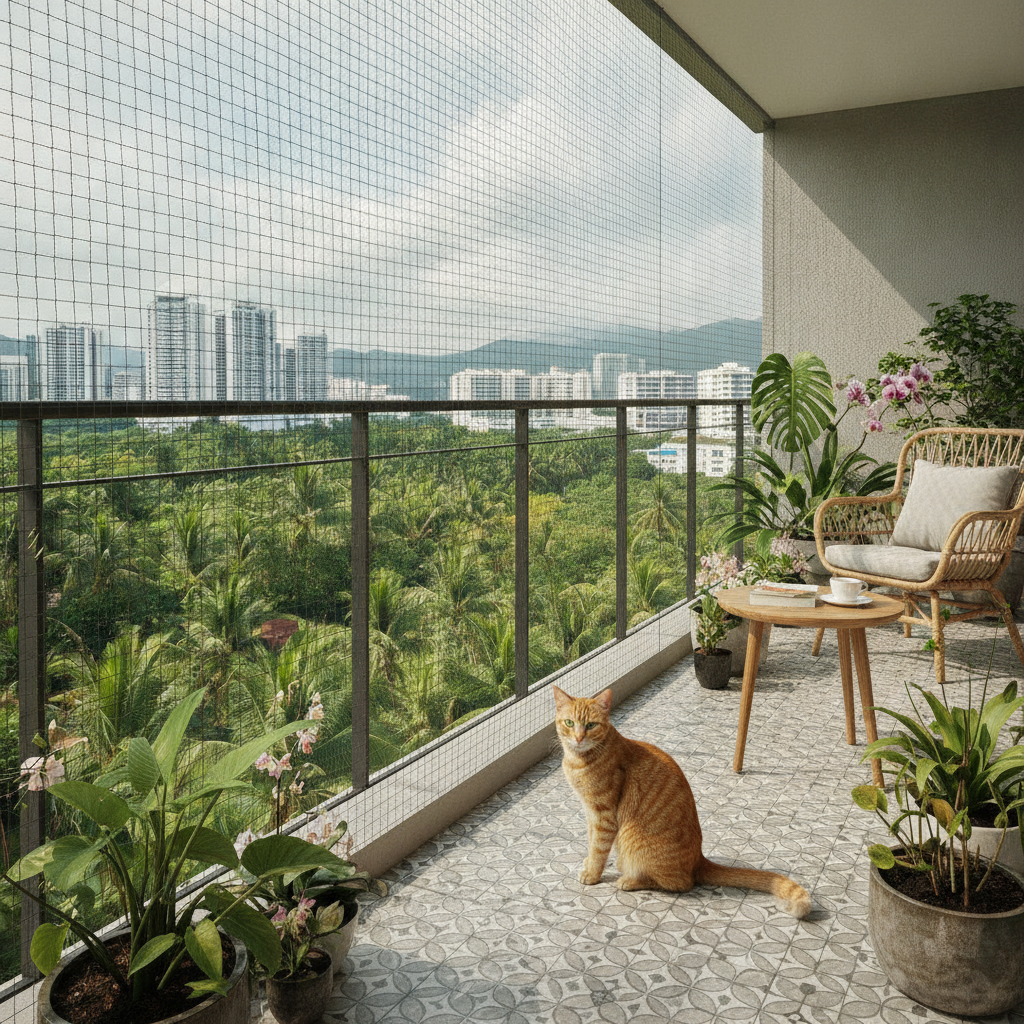
A balcony is the best thing about a Malaysian condo and the most dangerous thing for a cat. Open air, a breeze, birds and geckos to watch — and a drop that can end in a vet emergency. The good news: you do not need to spend a few thousand ringgit on a ready-made enclosure to make it safe. With the right netting, a few no-drill tricks and an afternoon's work, you can cat-proof a balcony yourself, even in a rental where you are not allowed to drill a single hole.
This is the hands-on companion to our guide on high-rise syndrome and window safety, and part of the wider cat home safety guide for Malaysian homes. If you are weighing up a full built enclosure versus a DIY net, this article covers the DIY-net route in detail.
Why a Balcony Needs Cat-Proofing (Even a High One)
Cats fall from balconies. Not because they are clumsy, but because a bird or insect crosses the railing, the cat lunges, and misjudges the edge. As International Cat Care explains, these falls are almost always accidental, driven by instinct rather than recklessness. Veterinarians call the result high-rise syndrome, and the data is sobering: a study of 119 cats that fell an average of four storeys found nearly half suffered bone fractures, as reported on the US National Library of Medicine. Survival rates with prompt treatment are high — up to around 90% in the classic Animal Medical Center data — but those numbers only count cats that reached a vet, and the injuries are still severe.
One myth to bury straight away: a high floor is not safer. The idea that cats relax and "parachute" from great heights comes from a single old study with serious survivorship bias. Treat every storey as dangerous. The fix is the same whether you are on the 3rd floor or the 30th: a physical barrier the cat cannot get through or over.
First, Do a Cat's-Eye Safety Audit
Before you buy anything, get down to your cat's eye level and look for three things, the way the Cat Protection Society recommends:
- Gaps. Every space a slim cat could squeeze through — between railing bars, under the railing, at the corners, along the floor.
- Climbable surfaces. Wide flat top rails invite perching and sleeping. Smooth glass panels invite a scramble over the top with no grip to save a slip.
- Launch pads. Any chair, table, planter, shoe rack or aircon ledge near the railing is a staircase to the edge. Move them away — this is the single cheapest safety upgrade you can make.
Write down what you find. That list becomes your shopping list. As PetMD notes, furniture near the edge is one of the most commonly overlooked hazards — owners secure the railing but forget the chair that lets the cat clear it.
The Magic Number: Safe Gap Sizes
This is the part people get wrong, so memorise it. Cats flatten themselves through openings that look impossibly small. The veterinary and cat-welfare consensus on maximum safe gaps:
- Adult cat: no gap larger than 2 inches (50 mm) in netting or mesh.
- Slim or agile adult, or a kitten: drop that to 3–4 cm (about 1.2–1.6 inches).
- Vertical railing bars: any gap wider than 4 inches (10 cm) is unsafe for most adult cats — and kittens get through far less.
- Maximum security: some vet guides go as tight as a half-inch grid so a paw cannot even pass.
When in doubt, go smaller. A net that is "probably fine" is exactly the kind of false security that gets a cat hurt.
Choosing Netting and Mesh That Survives the Tropics
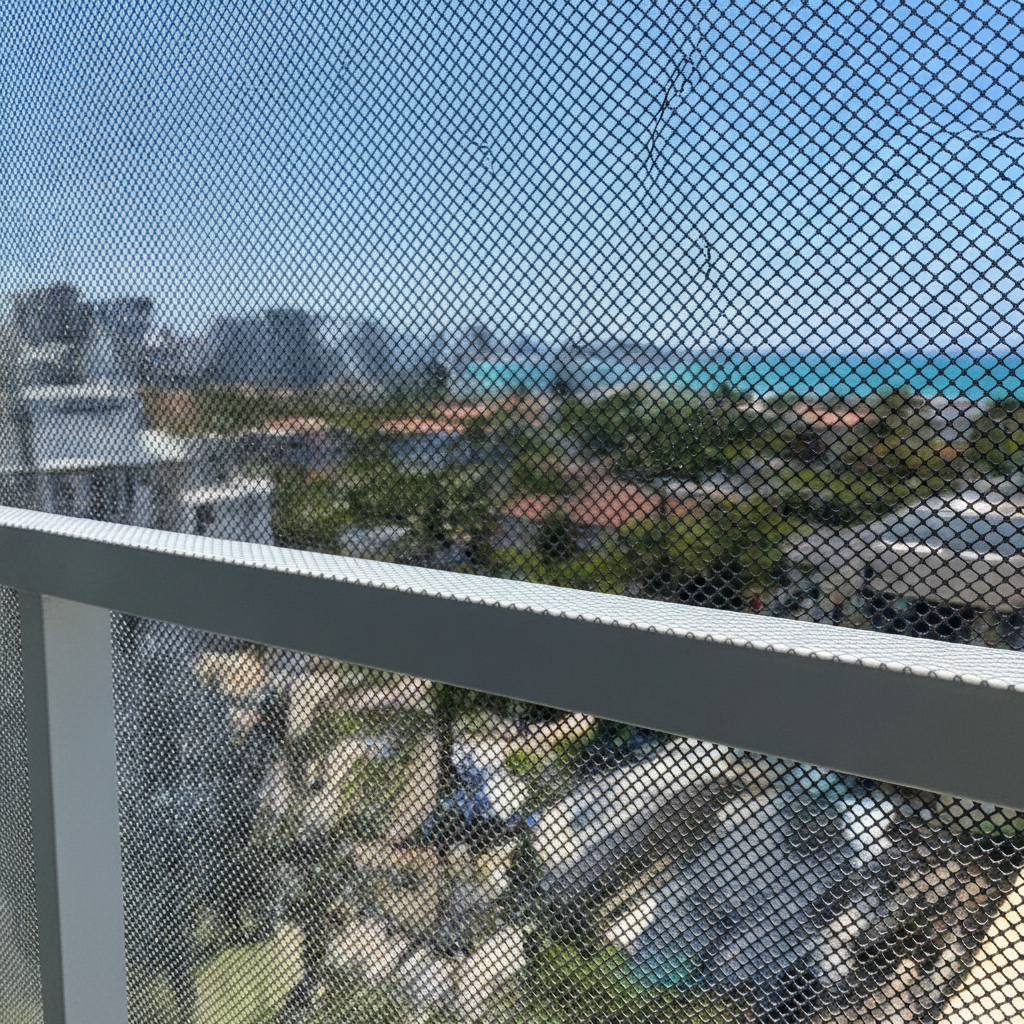
Material choice matters more here than almost anywhere else in the world, because our climate is brutal on it. Constant UV, daily humidity and afternoon storms break down cheap netting fast.
- Marine-grade 316 stainless steel mesh is the gold standard. It is chew-proof, completely immune to UV, shrugs off humidity, and can last 30 years or more. It costs more up front but it is the one material that genuinely lasts in Malaysian weather.
- Nylon or polyethylene netting is cheap and easy to fit, but even "UV-stabilised" versions go brittle and tear within a couple of years under our sun. Fine as a starter, but inspect it often and plan to replace it.
- Galvanised steel is strong but the zinc coating can flake and rust once scratched — and ingested zinc is a toxicity risk. PVC-coated or stainless wire is the safer pick.
If you use rigid mesh or hardware cloth instead of net, keep the spacing to about 2.5 cm (1 inch) or less, with wire at least 1–1.45 mm thick so a cat cannot bend it. Avoid solid plexiglass panels unless you build in real ventilation — they create a greenhouse oven on a hot KL afternoon, and overheating is its own emergency.
No-Drill Methods for Renters
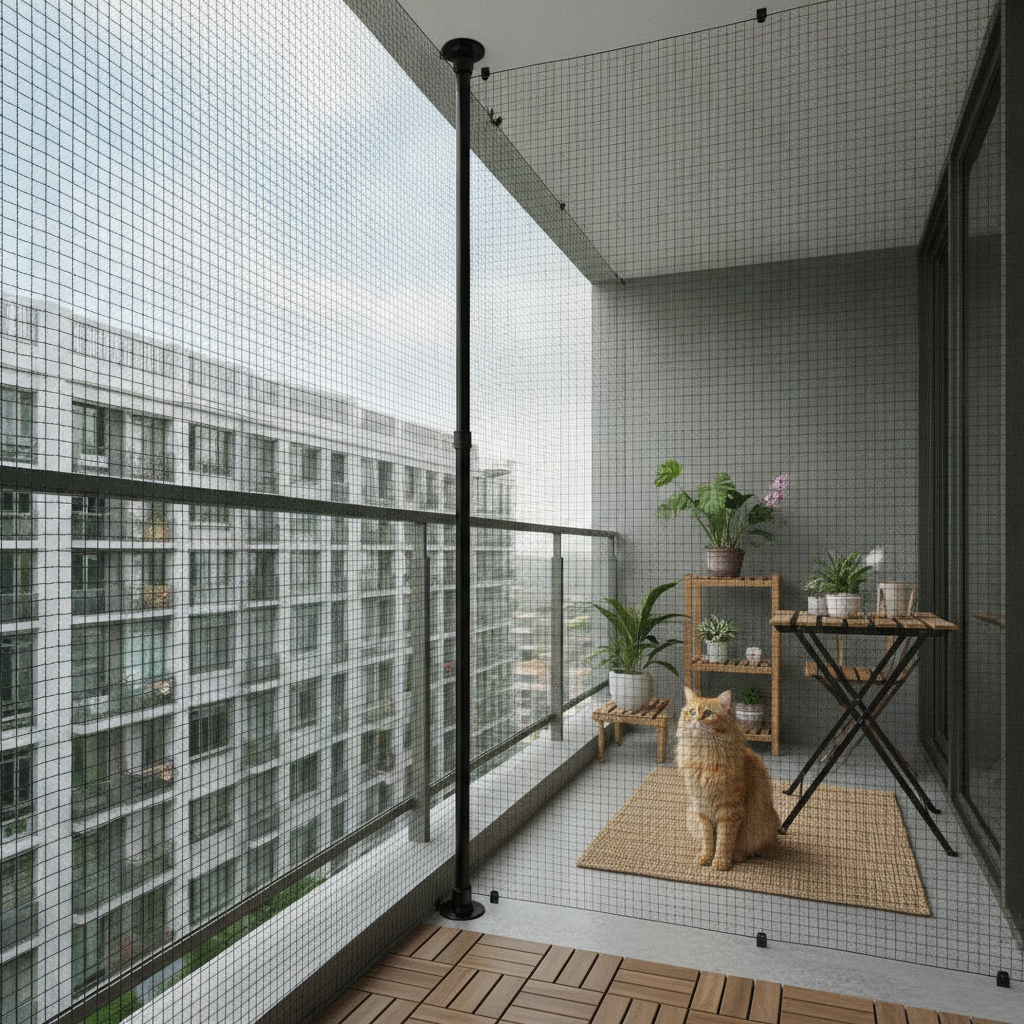
If your tenancy forbids drilling, you still have strong options. The trick is to borrow tension and existing structures instead of screws:
- Telescopic tension poles. Wedge adjustable poles between the balcony floor and ceiling in the corners (like a heavy-duty shower-curtain rod), then stretch the net across them taut. This is the most popular renter solution and, done properly, it is genuinely sturdy.
- Rubber-coated or ferrite magnetic hooks. If your railings or ceiling are ferromagnetic steel — common in Malaysian flats — strong magnetic hooks make excellent anchor points. Important: skip bare neodymium magnets outdoors; they rust and weaken in humidity. Use rubber-coated or ferrite types rated for wet conditions.
- Heavy-duty clamps. C-clamps on an existing railing or beam give you fixing points with zero holes.
- Silicone adhesive hooks. Plastic hooks set with outdoor silicone can hold a net for a year or more — one renter's install stayed fully intact after 12 months of weather.
Whatever you anchor to, the rule is the same: pull the net taut from floor to ceiling, leave no slack, and seal the corners and floor edge so nothing can be pushed under it.
DIY Barriers on a Budget
Not ready to buy a net kit? A few genuinely cheap builds work well:
- Modular wire grid panels. The metal storage-cube grids sold for closet shelving cable-tie together into a rigid, escape-proof wall. Highly customisable and easy to take down when you move.
- PVC pipe frame. Build a lightweight frame from PVC pipe and fittings, then wrap it in hardware cloth or welded wire mesh secured with cable ties. It can stand freely without touching the building.
- Tension-wire perimeter. Run stainless wire rope through tension poles, tighten with turnbuckles until rigid, then clip the net on every 20–25 cm so it cannot sag.
One design warning: avoid ordinary garden lattice laid in a diamond pattern — it is a perfect cat ladder. If you must use lattice, run the slats vertically so there is nothing to climb.
Weatherproofing and Monthly Maintenance
A cat-proofed balcony is not "fit it and forget it," especially here. Our climate loosens fixtures and degrades materials faster than temperate countries. Animal-safety guidance recommends a proper check at least once a month. Your monthly routine:
- Inspect the net for holes, fraying or chew damage along the whole surface.
- Tension test — press the net in several spots; any sagging is a new escape route forming.
- Check every fixture — retighten hooks, replace brittle cable ties, confirm tension poles have not crept. Most failures happen at the connection points, not the net itself.
- Re-audit the floor — did a new plant pot or chair sneak back near the railing?
And the honest caveat every welfare body repeats: even a perfect enclosure is not a substitute for supervision. A secured balcony is a space for supervised fresh-air time with your cat, not an unattended playground; welfare bodies such as FOUR PAWS make the same point in their balcony-proofing guidance. While you are out there, double-check that any plants are non-toxic — our toxic and safe plants guide has the full Malaysian list, since common balcony favourites like lilies are dangerous to cats.
Keep It Safe Inside Too
Securing the balcony is half the job; the other half is making indoor life good enough that your cat is not desperate to get out in the first place. A bored cat is the one obsessing over the railing — so build in vertical space, play and routine, as in our indoor enrichment guide. The research is also firmly on the side of keeping cats indoors in Malaysia for a longer, safer life.
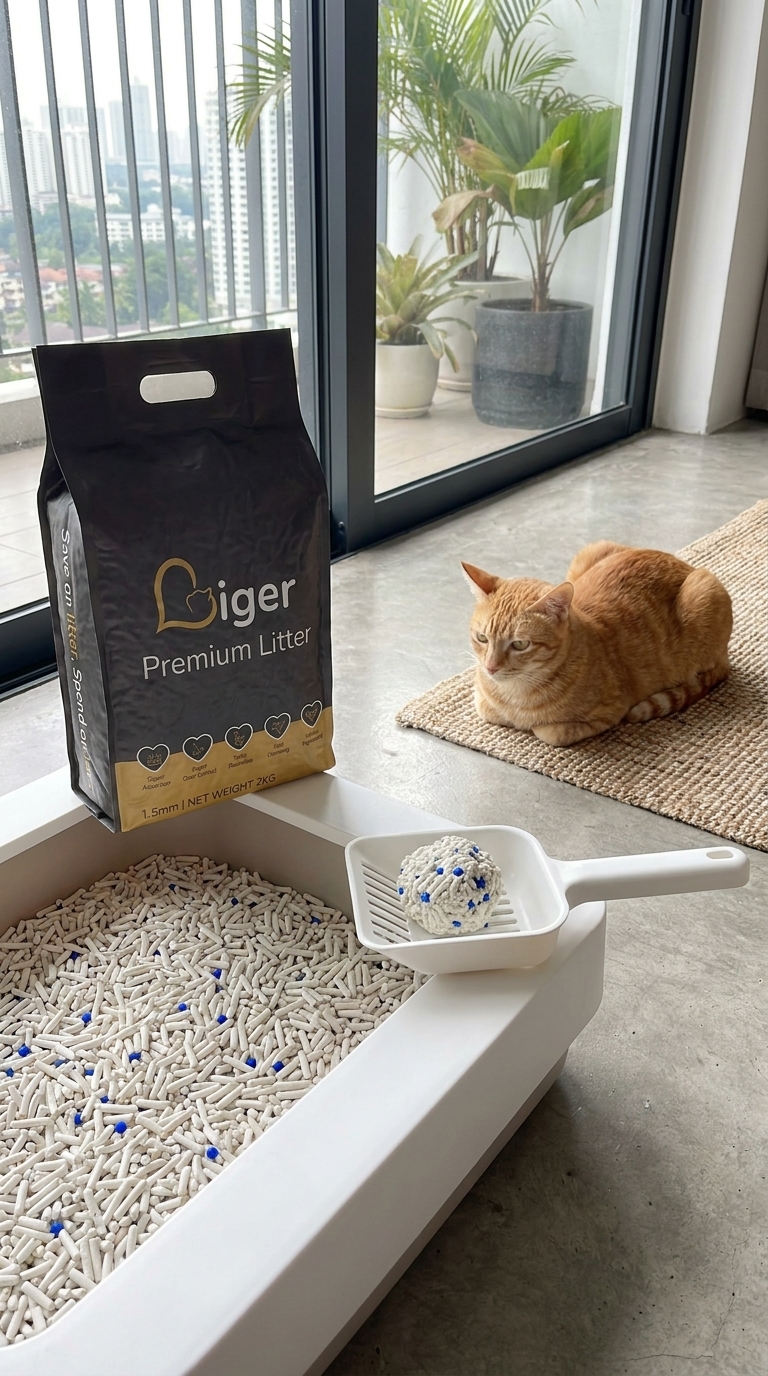
And because a securely indoor cat depends completely on its litter box, the litter you pick is part of the safe-home setup — particularly in a sealed condo where dust and smell have nowhere to escape. We use Liger Premium Tofu Cat Litter for our own four cats: low-dust (gentler on feline lungs in a small unit), naturally clumping, flushable and lightly milk-scented so the whole flat stays fresh. Pricing is local and honest — from RM21.90 for a 2 kg pack up to RM169 for a 10-pack (20 kg), about RM8.45/kg, free shipping in Peninsular Malaysia (current Liger pricing, as of May 2026). Our litter calculator tells you exactly how much your household needs. Once the balcony is netted and the box is sorted, run back through the full home safety checklist to catch anything you missed.