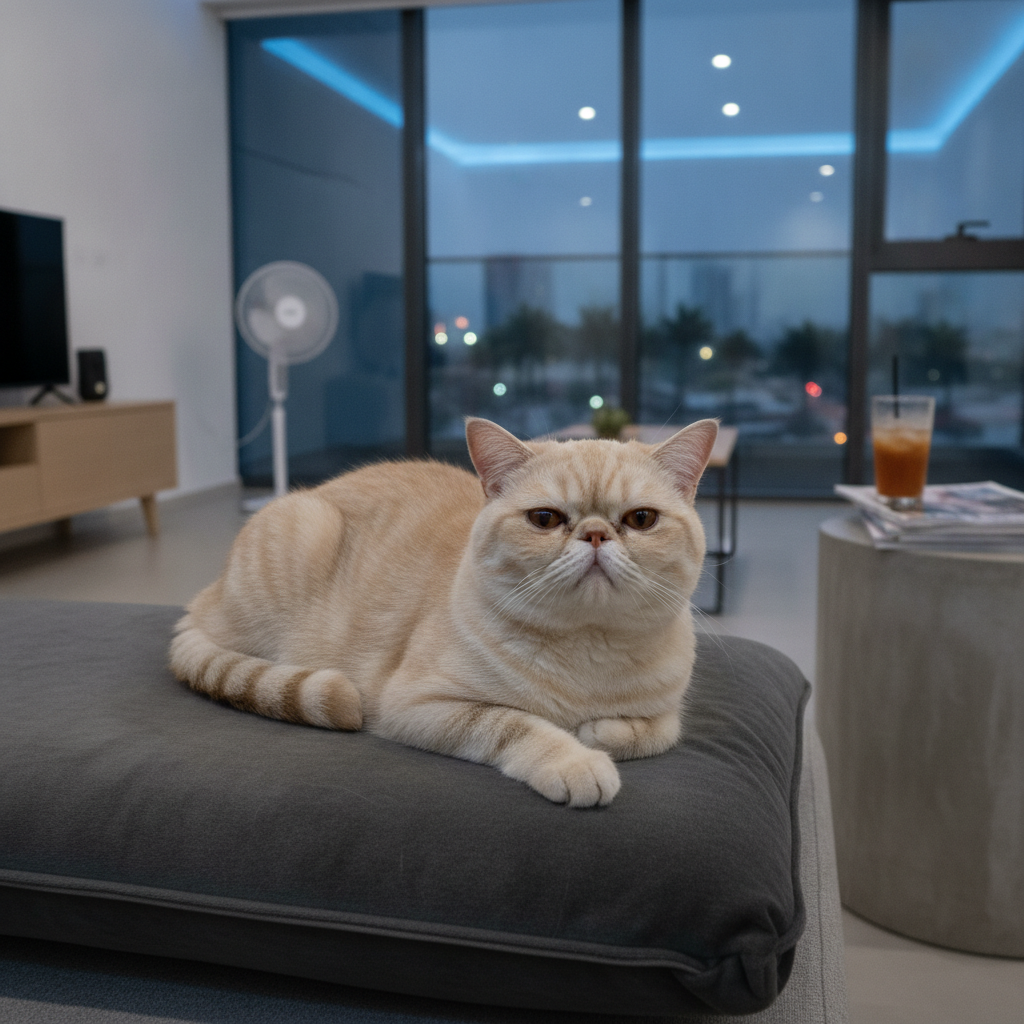
Love the squishy Persian face but dread the daily grooming? Meet the Exotic Shorthair — affectionately called "the lazy man's Persian." It's a Persian in almost every way (same round face, same sweet, placid nature) but with a short, plush coat that needs a fraction of the brushing. Sounds perfect. The catch: it also inherits the Persian's serious flat-face and kidney health risks. Here's the honest, detailed Malaysian guide.
See how it compares to the full-coat Persian and other breeds in our complete cat breeds in Malaysia guide.
The Persian in a Wash-and-Wear Coat
The Exotic Shorthair was created by crossing Persians with short-haired breeds, as the breed's history records, keeping the Persian's body type, flat face, and gentle temperament while swapping the high-maintenance long coat for a dense, teddy-bear short one. Temperament-wise they're quintessential lap cats: calm, affectionate, quiet, loyal, and happy in an apartment — PetMD calls them the easygoing alternative to the Persian. The shorthair influence makes them a touch more playful and inquisitive than a pure Persian, but they're still low-energy cats that would rather warm your lap than tear around the house. They're patient with children and other pets — more likely to retreat than lash out — and live around 12–15 years with good care. If you want a Persian's personality without the grooming marathon, the Exotic is the answer — with important health caveats.
Easier Grooming: The Low-Maintenance Win
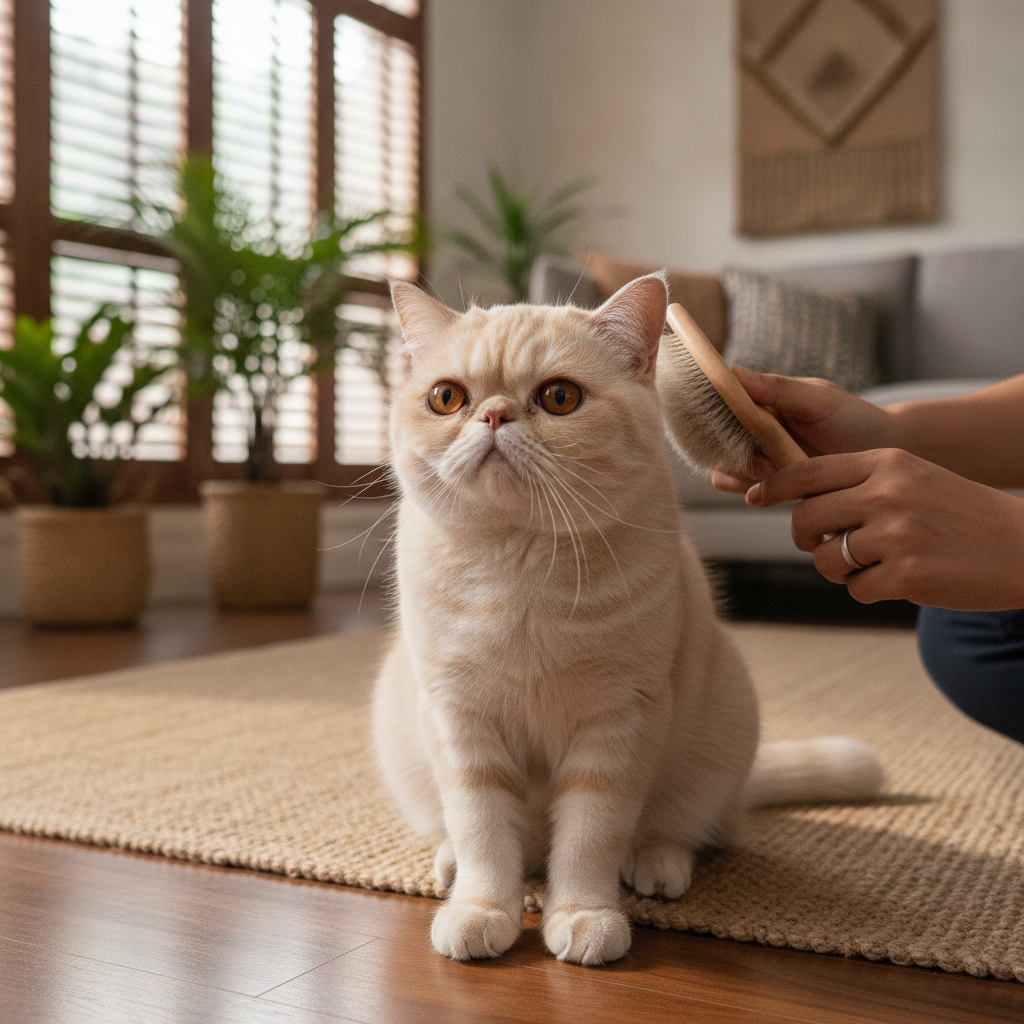
This is the breed's headline selling point, and it's real. A Persian's long double coat demands daily, meticulous brushing to prevent painful mats; the Exotic's short, dense, plush coat needs just a thorough brush once or twice a week — about 5–10 minutes a few times a week versus a substantial daily chore. A monthly bath is generally enough, where a Persian may need bathing every few weeks. In our humid climate, regular brushing does double duty: it removes loose dead fur and improves air circulation against the skin, which actually helps the cat regulate its temperature. It also keeps professional grooming bills down compared to a long-haired breed. The coat, in short, is the one genuinely easy thing about this cat. As Royal Canin puts it, the Exotic offers the Persian look for owners who can't commit to hours of grooming — but it's worth being clear-eyed that the savings are purely in coat care. Every other demand of a flat-faced cat (the breathing, the eyes, the teeth, the kidneys, the cooling) is exactly the same as a Persian's. People who buy an Exotic expecting an all-round "easy" cat are often surprised; people who buy one understanding it's "a Persian minus the brushing" tend to be delighted. Set your expectations accordingly.
The Flat-Face Problem: Breathing (BOAS)
Now the hard part. That adorable flat face causes Brachycephalic Obstructive Airway Syndrome (BOAS) — a cluster of airway abnormalities (narrowed nostrils and an elongated soft palate) that obstruct airflow. As VCA Hospitals explains, symptoms range from mild snoring and noisy breathing to serious respiratory distress, and Malaysia's heat and humidity make it worse. Watch for mouth-breathing, gagging, and tiring quickly.
For mild cases, manage it: keep the cat lean (obesity dramatically worsens BOAS), limit strenuous exercise, keep the home cool and air-conditioned, and always use a harness rather than a collar so nothing constricts the airway. For moderate-to-severe cases, corrective surgery — widening the nostrils (stenotic nares resection) and shortening the soft palate (staphylectomy) — is available at Malaysian veterinary facilities and can dramatically improve breathing; done early, it can stop the condition worsening. A cat panting or open-mouth breathing is always an emergency — get to a vet.
The Flat-Face Problem: Eyes and Teeth
The same compressed skull brings two more daily realities. First, chronic tearing (epiphora): the flattened anatomy malforms the tear ducts so they don't drain, leaving persistent wetness and reddish-brown stains around the eyes that, untreated, cause skin irritation and infection. The fix is a simple daily habit — gently wipe the eye area with a soft, damp cloth — and for blocked ducts, vets in Malaysia can perform a flushing procedure under anaesthesia.
Second, the shortened jaw causes dental crowding (malocclusion), which traps plaque and tartar and raises the risk of periodontal disease. Regular dental check-ups, professional cleanings, and home tooth-brushing genuinely matter for this breed. Neither job is hard, but both are non-negotiable parts of owning a flat-faced cat — factor them into your routine before you fall for the face.
The Big Genetic Risk: PKD Screening
The single most important health fact: the Exotic Shorthair carries a high inherited risk of Polycystic Kidney Disease (PKD) — an autosomal dominant condition straight from its Persian heritage, where fluid-filled cysts grow in the kidneys and eventually cause kidney failure. VCA Hospitals notes symptoms often don't appear until middle age (around seven years) — increased thirst and urination, weight loss, lethargy, vomiting.
There's no cure, so prevention happens at the source: insist on DNA documentation that both parents are PKD-negative (the PKD-1 mutation test), available through labs in Malaysia. A breeder who can't or won't show you that is not one to buy from. Because PKD is dominant, just one affected parent passes a high risk to the kittens, so both parents' clearances matter — don't accept "the mother is fine" as the whole story. If a cat is diagnosed, an abdominal ultrasound (roughly RM150–350 here, plus blood tests around RM180–200) confirms it, and management focuses on a low-phosphorus renal diet, blood-pressure medication, and hydration — sometimes subcutaneous fluids — to slow progression. Good lifelong hydration protects the kidneys generally — see getting your cat to drink enough water — and you can read the full flat-face picture in our Persian care guide.
Surviving Malaysia's Heat
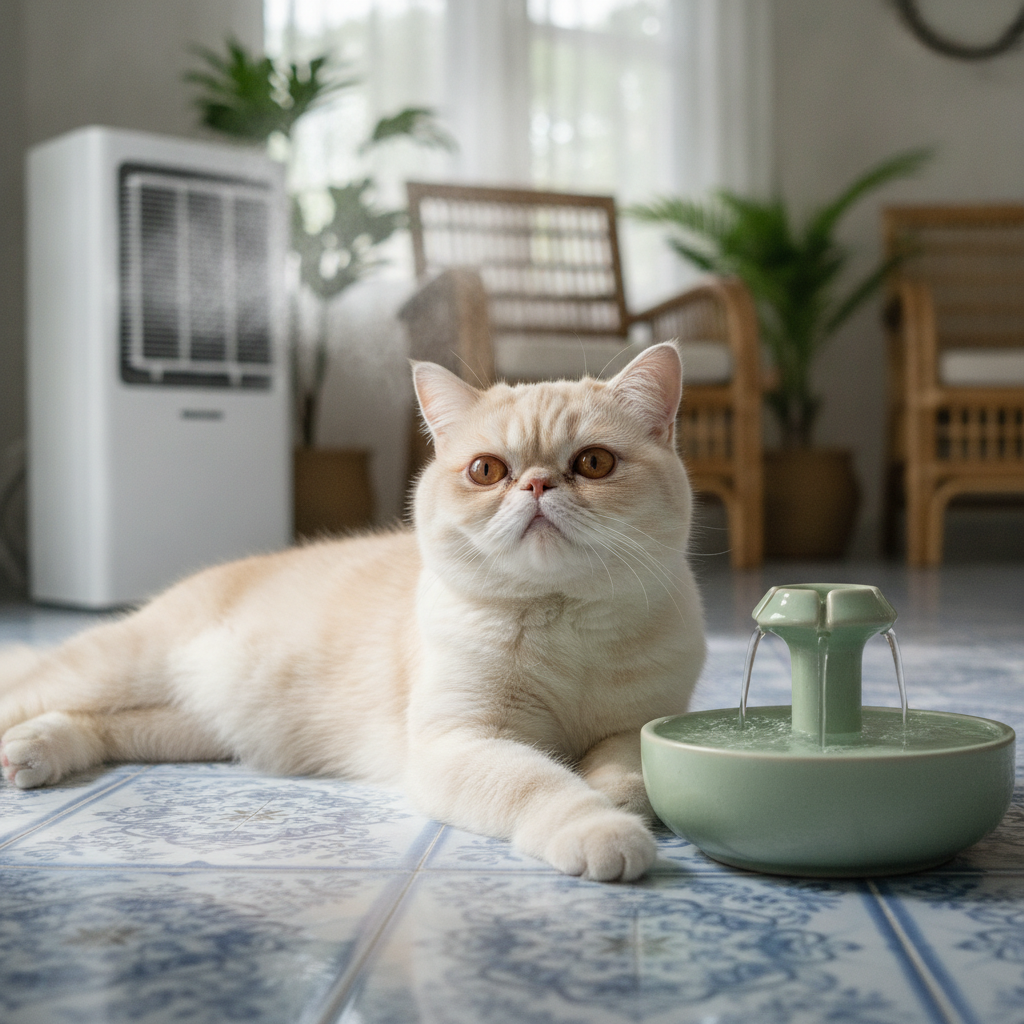
Because cats cool themselves partly by panting and a flat-faced Exotic can't do that efficiently, it has poor heat tolerance — a real liability here. A strictly indoor, air-conditioned environment is essential to prevent heat stress and heatstroke. Encourage hydration aggressively: multiple bowls of fresh, cool water around the home, a pet fountain (many cats prefer moving water), even a few ice cubes on hot days, and a wet-food-led diet for its moisture. Keep play calm and indoors, scheduled for the cooler early morning or late evening rather than the midday heat, and never leave an Exotic in a parked car — interior temperatures turn lethal within minutes. Regular brushing, as noted, also helps it shed heat.
Learn the warning signs of overheating, because a brachycephalic cat tips into trouble faster than most: open-mouth breathing or panting, restlessness, drooling, vomiting, bright-red gums, or sudden lethargy. If you see them, move the cat to a cool, shaded spot immediately, dampen its paws, belly and ears with cool (not ice-cold) water, offer a drink, and get to a vet — heatstroke is a true emergency. In a flat-faced breed, it's far better to be over-cautious about heat than to wait and see.
Litter and Daily Care
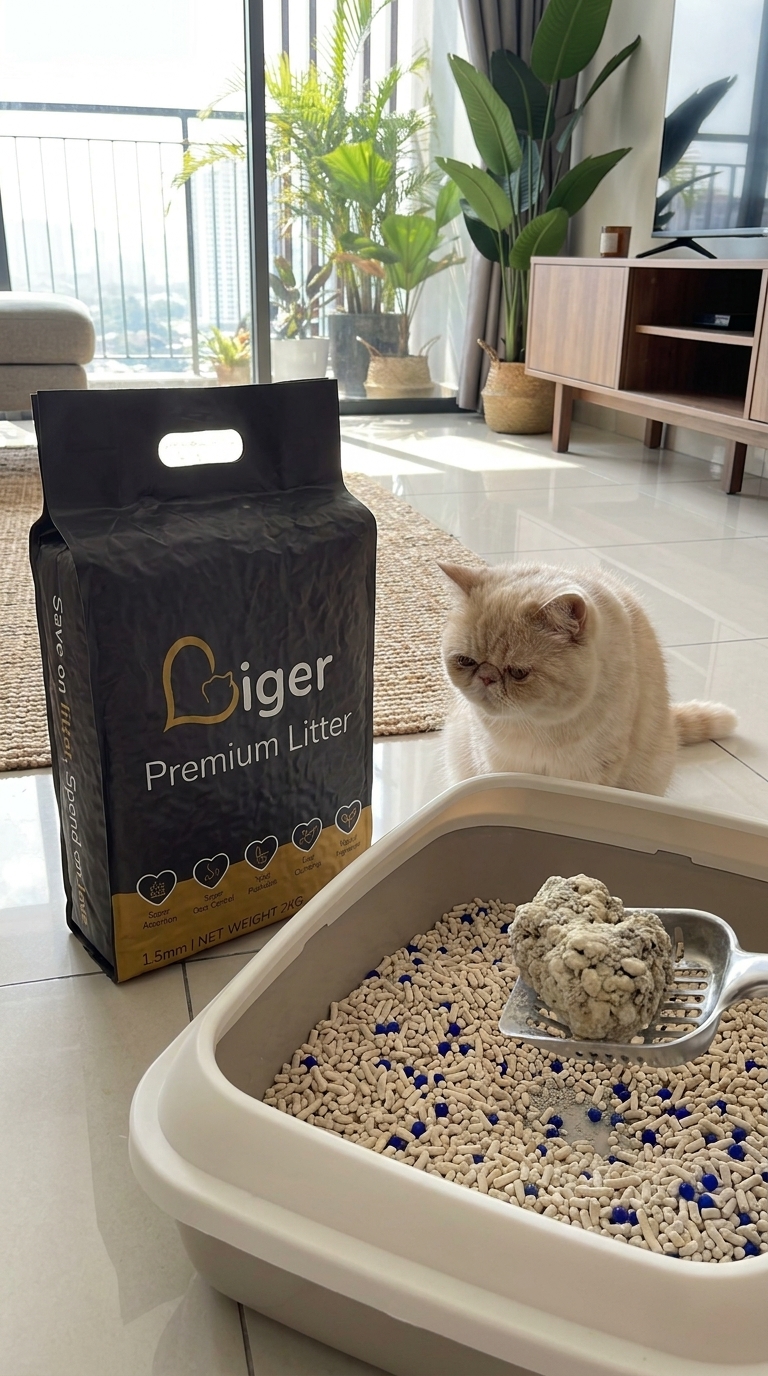
The flat face has one more implication that's easy to miss: a brachycephalic cat with compromised airways is especially sensitive to dust. A dusty clay litter is the last thing those narrow nasal passages need, so a low-dust litter is genuinely a health choice for an Exotic, not just a convenience. A natural tofu litter like Liger Premium Tofu Cat Litter runs very low on dust and clumps firmly for quick, clean scooping — kinder to that squished little nose, and easy to monitor for the early urinary changes a PKD-prone breed can develop. Being plant-based, a tofu litter is also gentler if your meticulous self-groomer ingests a stray granule. Size your household need with our litter calculator. Otherwise, daily care is gentle and predictable: a quick eye wipe, a weekly brush or two, portion-controlled quality food to protect the airways and joints, and a cool, calm home. They get on famously with other pets, too — our cats and dogs living together guide helps if you have a dog.
Price and Buying in Malaysia (2026)
An Exotic Shorthair kitten runs about RM2,000–6,000 in 2026. Given the BOAS and PKD risks, budget well beyond the purchase price: corrective BOAS surgery or PKD management can be costly, so an emergency fund of RM2,000–5,000 (or pet insurance) is a wise move. Buy responsibly: PKD-negative DNA proof for both parents, meet the kitten, check for easy breathing and clear eyes, favour a breeder aiming for more moderate (less extreme) facial features, and never buy a kitten under 12 weeks.
For how the Exotic compares on price and lifelong cost to every other breed, see our cat breed price guide for Malaysia, and check typical lifespans in our cat lifespan by breed guide. The Exotic Shorthair is a wonderful choice for someone who loves the Persian look and temperament but wants a manageable coat — just go in committed to the air-conditioning, the eye and dental care, and the health screening the flat face demands. Browse the full Malaysia cat breeds guide to compare your options.