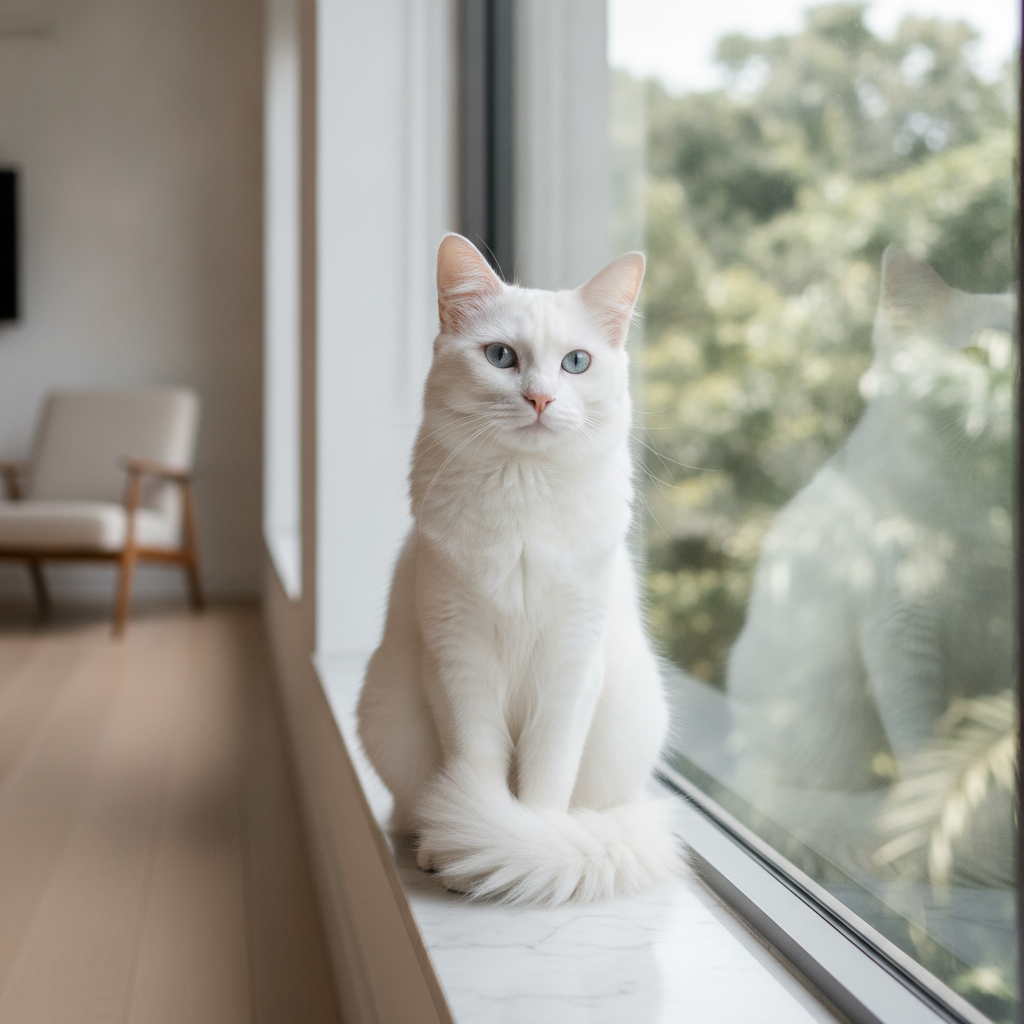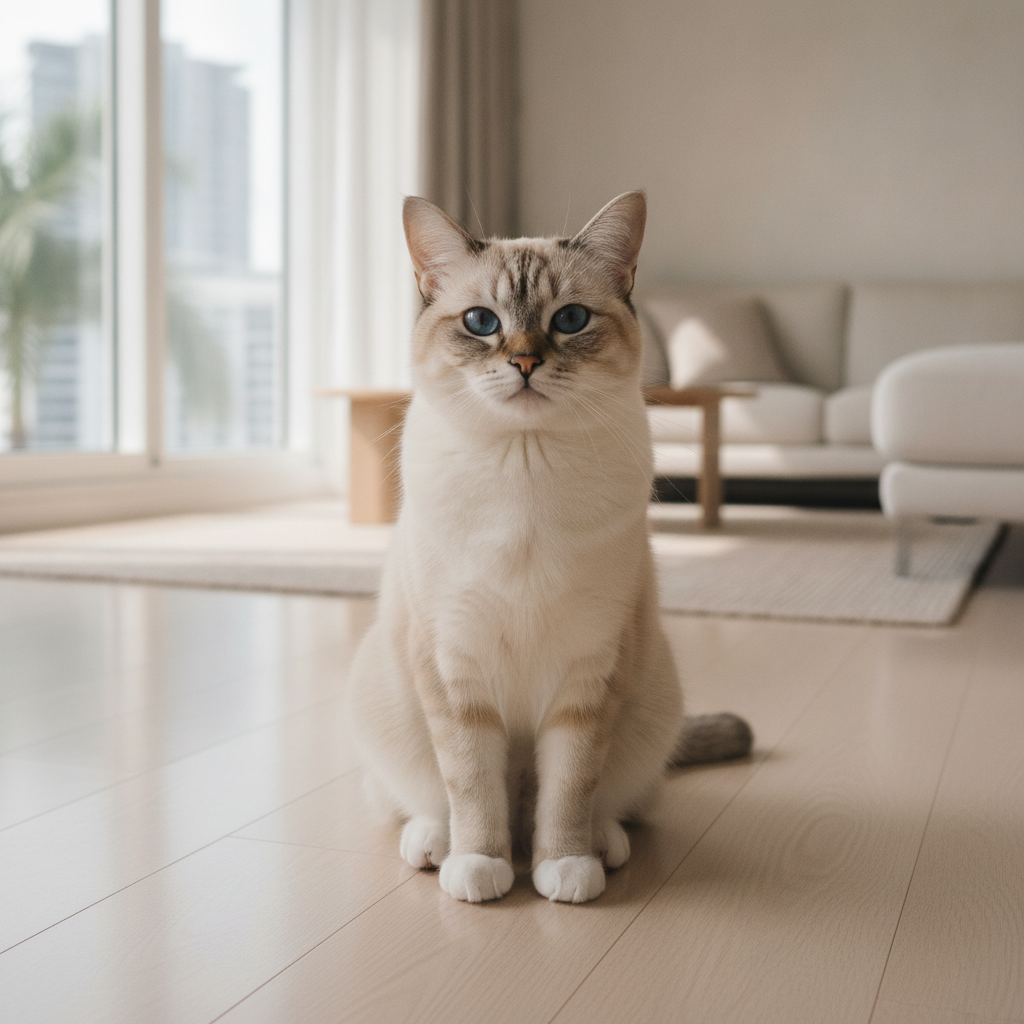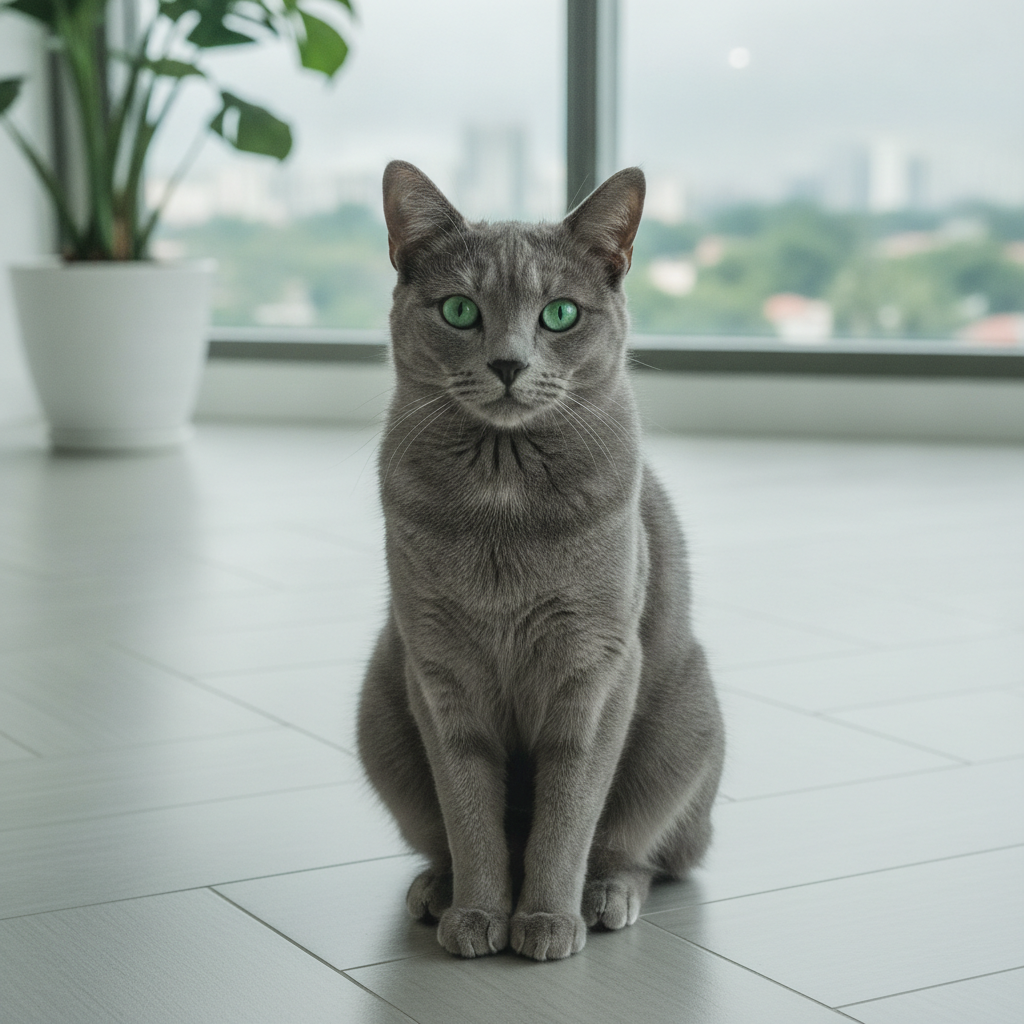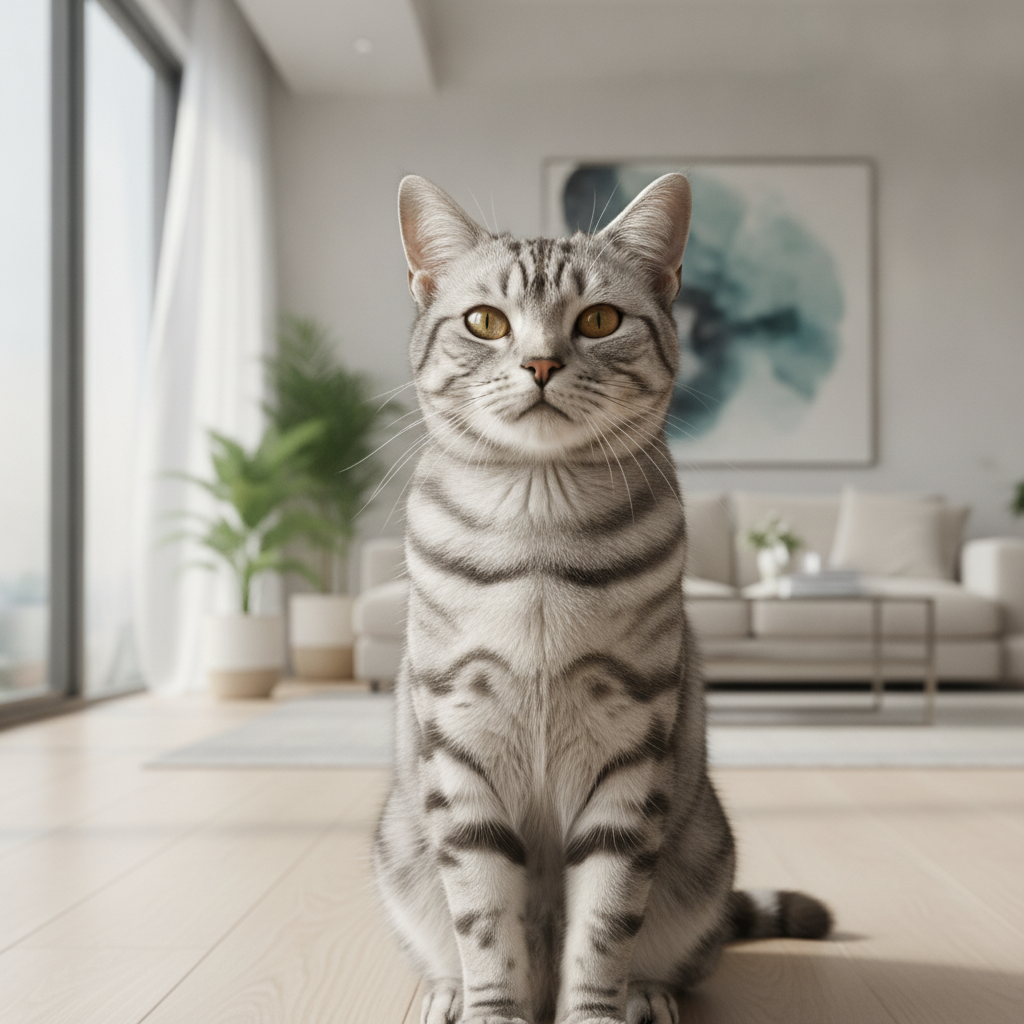
Ask a Malaysian cat lover to picture a "classic" cat and you will likely get something close to an American Shorthair: a solid, round-faced, plush-coated cat with calm eyes and an unbothered attitude. This is one of the oldest and most popular pedigreed breeds in the United States, and it has quietly become a favourite among KL and Penang condo owners who want a good-looking cat without the drama. But the breed's "low-maintenance" reputation comes with two big asterisks in our climate: a coat built for cold winters, and a couple of serious inherited health risks that hide behind that hardy frame.
This is a breed-specific guide. If you are still deciding which cat suits you, start with our complete 2026 guide to cat breeds in Malaysia, then come back here.
Meet the American Shorthair, America's Working Cat
The American Shorthair is a medium-to-large, muscular working cat that was shaped more by survival than by show-ring fashion. According to the Cat Fanciers' Association (CFA), the breed descends from ordinary European cats brought to North America as ship's mousers, then refined over decades into a pedigreed breed. The CFA ranked it the eighth-most-popular pedigreed cat in 2020, and it is recognised by every major North American registry including TICA.
What makes it appealing for first-time owners is balance. It is not as needy as a Siamese, not as fragile as a Sphynx, and not as high-strung as a Bengal. It is the cat equivalent of a sensible all-rounder. That said, "all-rounder" does not mean "carefree" in the tropics, and the rest of this guide explains why.
From Mayflower Mouser to Show Champion
The breed's ancestors were European domestic cats valued as working animals, not pets. Historical accounts place these cats on transatlantic ships protecting food stores from rodents, with some lineages traced to arrivals around 1620. For centuries natural selection did the breeding: only the hardy, muscular, dense-coated cats that could survive harsh North American winters thrived.
Formal recognition came in 1906, when the CFA registered the cat as the "Domestic Shorthair," one of its first five breeds. Because that name caused constant confusion with random-bred house cats, the CFA renamed it the "American Shorthair" in 1966 to mark its distinct all-American heritage. Understanding this working-cat origin matters, because the traits that helped it survive Boston winters, a thick insulating coat and a sturdy build prone to weight gain, are exactly the traits that need managing in Malaysia.
Built Solid: Size, Coat and Slow Growth
Males typically weigh 5 to 7 kg and the smaller females 4 to 6 kg, making this a genuinely substantial cat. One quirk catches new owners off guard: the American Shorthair matures slowly, often not reaching full size until three to four years old. So that "small" kitten you bought will keep filling out for years.
The coat is short but deceptively thick, even and hard-textured, with a soft insulating undercoat under a coarser topcoat. The CFA breed standard literally specifies a coat dense enough to protect against moisture and cold. The breed is recognised in a huge range of colours and patterns, but it is most iconic in the silver classic tabby, with the "M" on the forehead and bold swirling "bullseye" markings on the flanks. Compared with longhaired breeds, grooming is easy, but as you will see, "easy" still means more brushing here than in a temperate country.
A Golden Retriever in Cat Form
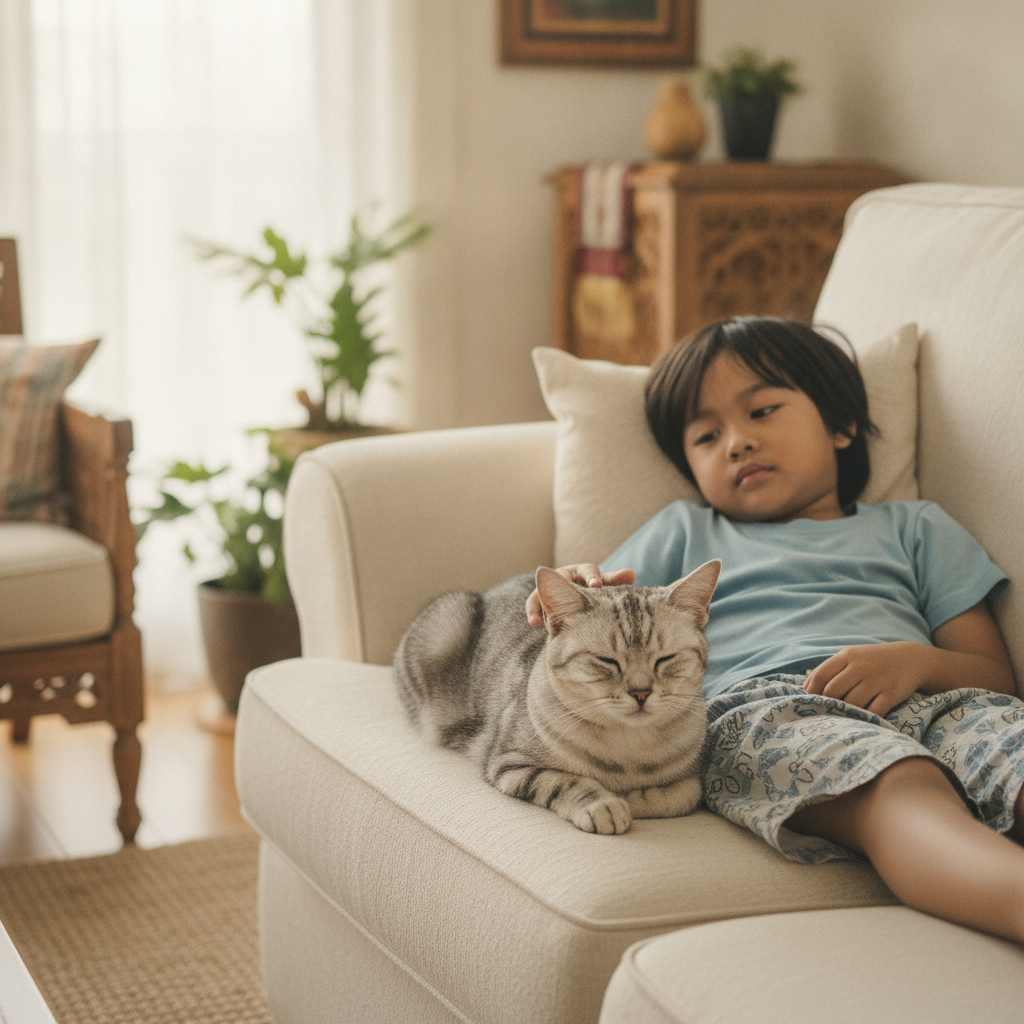
The American Shorthair's temperament is its biggest selling point. It is so even-tempered, patient and sociable that it is regularly described as the "Golden Retriever of the cat world." These cats tolerate children, coexist peacefully with other cats and cat-friendly dogs, and handle a busy household with a placid, unflappable confidence, which is genuinely useful in a multi-generational Malaysian home.
They are affectionate but not clingy. Many owners report an American Shorthair that prefers to sit beside you rather than on you, content to supervise the household from a favourite perch. Their working-cat heritage shows up as a moderate energy level and sharp hunting instincts, so they enjoy interactive wand play but are happy to entertain themselves too. They are also quiet, communicating with the occasional soft chirp rather than the constant commentary of a Siamese. If your idea of a good cat is a steady, low-fuss companion, this breed delivers. For more high-strung alternatives and how breeds compare, see our cat lifespan by breed guide.
Health Risks Behind the Hardy Reputation
Here is where "hardy" needs a reality check. The American Shorthair is generally robust and can live 15 to 20 years, but it carries two well-documented inherited conditions, plus a strong tendency to get fat.
Hypertrophic cardiomyopathy (HCM) is the most common heart disease in cats and a recognised concern in this breed. The heart's muscular walls thicken, reducing efficiency. The cruel part, as the Cornell Feline Health Center explains, is that many cats show no symptoms until the disease is advanced; the first sign is often a heart murmur caught during a check-up, or a sudden emergency. Diagnosis needs an echocardiogram (heart ultrasound). We cover this disease in depth in our guide to heart health in Malaysian cats, and the advice applies directly here.
Polycystic kidney disease (PKD) is the second concern. Fluid-filled cysts develop in the kidneys and slowly destroy healthy tissue, with signs usually appearing in middle age. According to VCA Hospitals, PKD can be confirmed by ultrasound or a genetic test. The breed's risk is real: a peer-reviewed study in Japan found the causative PKD1 mutation in a striking 47% of American Shorthairs tested.
Obesity ties it all together. The breed's sturdy build and placid nature make it prone to weight gain indoors, and PetMD flags this as a key concern because excess weight strains a heart that may already be at risk for HCM. The takeaways: buy only from breeders who screen for PKD and cardiac disease, schedule regular vet checks, and manage weight from kitten-hood. Our cat weight calculator is a quick way to check whether your cat is drifting into the danger zone.
Keeping a Thick-Coated Cat Cool in Malaysia
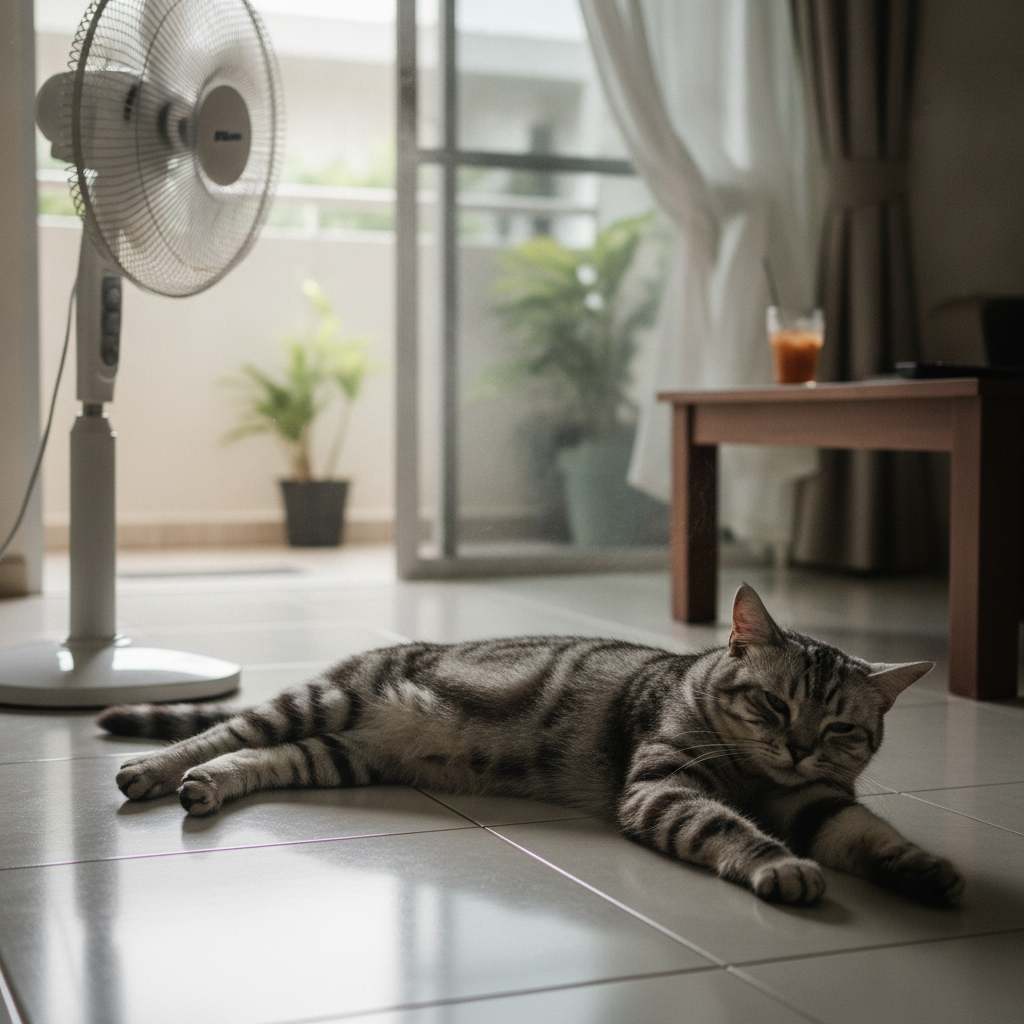
This is the single most important section for local owners. The American Shorthair's dense, all-weather coat was naturally selected for cold North American winters, not for 33°C afternoons in Klang Valley. That coat traps heat, which makes an indoor-only, climate-controlled life non-negotiable here.
In practice that means air conditioning or strong cross-ventilation during the hottest hours, cool resting spots such as bare tiled floors or a cooling mat, and shaded windows during peak sun. Watch closely for heat stress: excessive panting, drooling and lethargy are red flags, and warrant an immediate vet call. If you want a structured comparison of how different breeds cope, our roundup of the best cat breeds for Malaysia's hot, humid climate puts the American Shorthair in context against naturally heat-tolerant cats. Hydration is the other half of the equation: keep multiple water sources, consider a fountain, and lean on wet food to push water intake. Our guide on whether your cat is drinking enough water covers the warning signs.
Litter, Grooming and Daily Care in the Tropics
A thick double coat in a humid country means grooming more often than the textbook "weekly." Brushing several times a week pulls loose undercoat, cuts shedding, improves air circulation against the skin, and prevents the moisture-trapping mats that lead to skin irritation in our humidity.
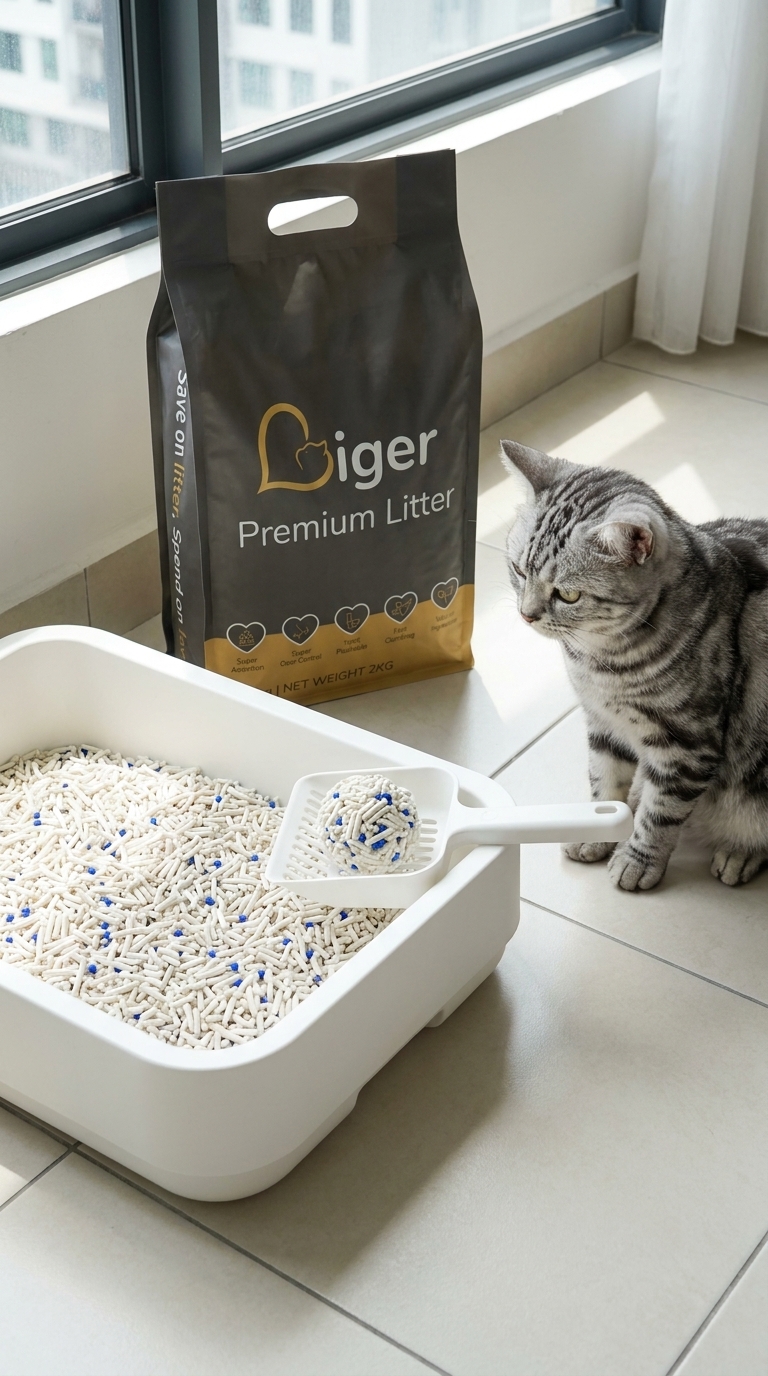
Litter matters more than people think for an indoor breed that spends its whole life inside. A heavy, dense-coated cat using the box many times a day in a closed, air-conditioned condo needs litter that controls odour and keeps dust down, because airborne litter dust is a respiratory irritant in a sealed room. This is where Liger Premium Tofu Cat Litter earns its place: it is a low-dust, naturally clumping, flushable soy-based litter made for exactly this small-space, all-indoor scenario. It clumps firmly for quick scooping (important when a 6 kg cat is producing 6 kg-cat-sized waste), and the milky scent helps in a closed room.
On cost, current Liger pricing (as of 2026) is RM21.90 for a single 2 kg pack, RM53.90 for 3 packs, RM89 for 5 packs, and RM169 for the 10-pack (20 kg), which works out to just RM8.45 per kg, with free shipping in Peninsular Malaysia. For a single American Shorthair, the 5-pack at RM89 typically lasts around 10 weeks. To size your exact monthly usage, run our litter calculator.
What an American Shorthair Costs in Malaysia (2026)
Pedigreed American Shorthairs are still relatively uncommon in Malaysia compared with British Shorthairs and Persians, so supply is limited. As rough 2026 market guidance (not Liger figures), a registered American Shorthair kitten from a reputable local breeder typically falls in the RM2,500 to RM6,000 range, with silver classic tabbies and show-quality lines pushing higher. Be cautious of suspiciously cheap "American Shorthair" kittens, which are often unregistered British Shorthair crosses or random-bred tabbies.
Remember the lifetime cost is the bigger number: quality food, year-round parasite prevention (Malaysia's warmth means fleas and ticks are a constant, not a seasonal, threat), litter, and crucially the cardiac and kidney screening this breed needs. Budget realistically using our cat breed cost calculator and compare against other breeds in our 2026 cat breed price guide. Buy from a breeder who screens for HCM and PKD, commit to an indoor air-conditioned life, keep the weight in check, and the American Shorthair will reward you with up to two decades of steady, easygoing companionship.