Some cats throw up "just a hairball" every week, have on-and-off soft stools for months, and slowly get bonier — and everyone shrugs it off as a sensitive tummy. But a pattern of chronic vomiting, diarrhoea and weight loss that drags on for weeks is a red flag for feline inflammatory bowel disease (IBD) — a completely different beast from a one-off upset stomach. This guide explains what IBD actually is, how it differs from acute diarrhoea and ordinary hairballs, and how vets diagnose and manage it, all drawn from veterinary sources.
Please note: this is educational, not a diagnosis. IBD can look identical to other serious conditions — including intestinal cancer — so the path always runs through your vet. Use this to know when to push for a proper work-up.
IBD Is Not Just a Bad Tummy Day: Chronic vs Acute
The word that matters most in "IBD" is chronic. According to VCA Hospitals, IBD is an umbrella term for ongoing inflammation of the stomach and/or intestines, where inflammatory cells invade the gut lining, thicken the wall, and stop it absorbing nutrients properly.
Here's the practical line vets draw: an acute bout of diarrhoea — from a diet change, a bin raid, or a minor bug — usually settles within about two weeks. IBD signs are persistent or keep coming back for three to four weeks or longer, often flickering on and off for months before an owner finally connects the dots. If your cat's tummy trouble is a one-off, our guide to cat diarrhoea: causes and when to worry is the right starting point. If it's a slow, grinding pattern over weeks — keep reading.
It's Just Hairballs, and Why That Might Be Wrong
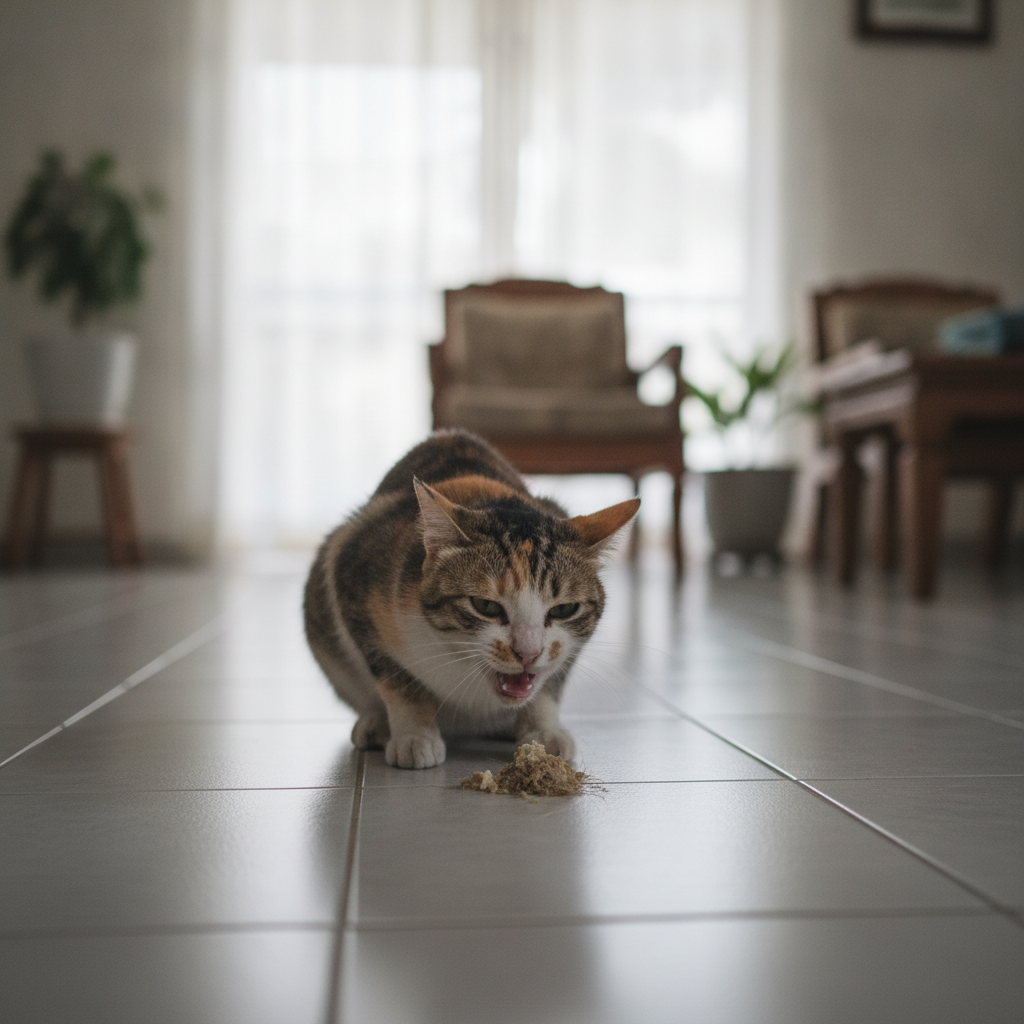
This one surprises a lot of cat parents. The occasional hairball is normal. But vomiting hairballs more than once or twice a month is not normal — the Cornell Feline Health Center and other veterinary experts flag frequent hairball vomiting as a possible sign of IBD. The reason isn't extra fur: chronic gut inflammation slows down GI motility, so ingested hair (and food) struggles to move through, and back up it comes.
So if your cat is a "frequent hairball" cat, don't auto-file it under grooming. We unpack this exact trap in is your cat really 'just' coughing up hairballs? Frequent vomiting — with or without hair — deserves a vet's attention rather than another tube of hairball paste.
What's Actually Going On Inside (Causes)
IBD is officially idiopathic — the precise cause is unknown — but research points to several factors colliding, per the Cornell Feline Health Center:
- Immune dysregulation — the gut's immune system overreacts to normal food proteins and resident bacteria instead of tolerating them.
- Diet. Hypersensitivity to specific proteins can drive inflammation — which is why a diet change alone controls signs in a meaningful share of cats.
- Gut microbiome imbalance (dysbiosis) — reduced bacterial diversity and overgrowth of inflammatory species, in a vicious cycle with the inflammation itself.
- Genetics — a predisposition is suspected, with breeds like the Siamese noted in the literature.
It's a self-perpetuating loop: inflammation reshapes the microbiome, and the disturbed microbiome fuels more inflammation. Reviews in the veterinary literature (NIH/PMC) describe this two-way relationship between gut bacteria and immune dysregulation as central to why the disease becomes chronic rather than self-resolving.
The most common form found on biopsy is lymphocytic-plasmacytic inflammation — a long-running, cell-driven battle that gradually remodels and scars the intestinal lining (blunted, fused villi and fibrosis), which is exactly why it doesn't just "clear up" like a 24-hour bug.
The Signs: Chronic Vomiting, Diarrhoea, Weight Loss
IBD shows up as a slow-burn cluster of signs, often waxing and waning:
- Chronic vomiting (including frequent "hairballs")
- Chronic or recurrent diarrhoea, sometimes with blood or mucus if the colon is involved
- Gradual weight loss despite eating
- Appetite changes — either reduced, or oddly ravenous as the cat fails to absorb nutrients
- Lethargy and a generally unthrifty, scruffy look
Where the inflammation sits shapes the picture: upper-gut inflammation tends to cause vomiting, colon inflammation tends to cause diarrhoea. Persistent weight loss or appetite changes always warrant a check — see our guide on why won't my cat eat, since reduced intake in cats carries its own dangers.
Triaditis: When Three Organs Inflame Together
Cats have a quirk of plumbing that makes IBD extra complicated. In cats, the pancreatic duct and bile duct merge before emptying into the intestine. That shared channel means inflammation and bacteria can travel between organs — so feline IBD frequently comes bundled with pancreatitis and cholangitis (bile-duct inflammation), a trio vets call triaditis. Texas A&M's veterinary school notes triaditis is common, reported in roughly half of cats diagnosed with pancreatitis, per Texas A&M veterinary medicine. If your cat has IBD, its pancreas and liver are worth watching too — more in our guide to feline pancreatitis.
How Vets Diagnose It (And the Lymphoma Question)
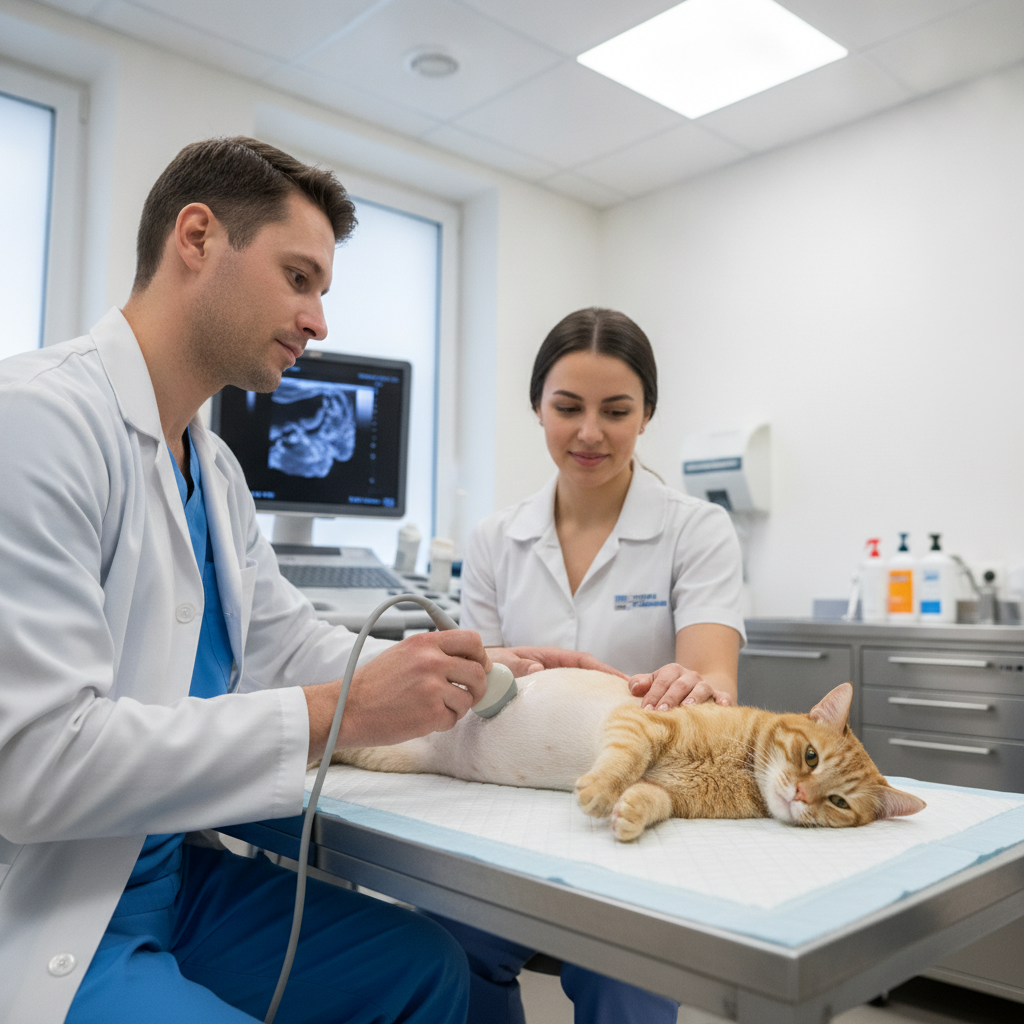
IBD is a diagnosis of exclusion — vets rule out other causes before landing on it. A typical path:
- Faecal tests to rule out parasites (Giardia, worms).
- Bloodwork and urinalysis to screen for hyperthyroidism, kidney disease, diabetes and FeLV/FIV — all of which can mimic IBD.
- GI panel measuring cobalamin (B12) and folate. Low B12 is a very common, important finding.
- Abdominal ultrasound to look at intestinal wall thickness and lymph nodes.
- Intestinal biopsy — the gold standard, and the only way to truly confirm IBD.
Here's the sobering part: severe IBD can look almost identical to small-cell intestinal lymphoma (a cancer), even under the microscope. Advanced molecular tests (IHC and PARR clonality testing) are often needed to tell them apart — and studies have found a large share of cases first called "IBD" get reclassified as lymphoma after advanced testing. The Merck Vet Manual and feline specialists stress this is why a thorough work-up — not a guess — matters: the two have different treatments and prognoses. It's estimated that up to 20% of cases initially called IBD turn out, over time, to be small-cell intestinal lymphoma, which is one more reason chronic gut signs deserve real investigation rather than years of guesswork and hairball paste.
Treatment: Diet, Medication, and B12
IBD is managed, not cured — and treatment is staged:
1. Diet trial first. A strict 8–12 week trial on a novel-protein (e.g. rabbit, venison) or hydrolysed-protein diet is the universal first step. It must be exclusive — no other treats or flavoured meds — or the trial is meaningless. Diet alone controls signs in roughly 30–60% of cats.
2. Medication for non-responders. Corticosteroids (often prednisolone, sometimes budesonide for fewer body-wide effects) are the cornerstone, tapered slowly to the lowest effective dose. Severe or refractory cases may need stronger immunosuppressants like chlorambucil.
3. Fix the B12. Because the inflamed ileum can't absorb cobalamin, many IBD cats are B12-deficient — and low B12 makes them respond far more slowly to everything else. Supplementation (usually injections) is a quiet but critical piece.
The pay-off for sticking with it is real: when diet and medication are combined, reported response rates climb to roughly 60–96% of cats. Because stress can trigger flare-ups, a stable routine and calm home help too — a small but genuine lever you control.
We don't list doses here on purpose. Steroid and immunosuppressant dosing is individualised and needs monitoring bloodwork; getting it wrong is harmful. Your vet builds and adjusts the plan — your job is consistency and observation.
Living With an IBD Cat: Monitoring at Home
Because IBD flares and settles, what you notice at home genuinely steers treatment. Two habits help most:
- Track the basics: appetite, weight (a kitchen scale works), energy, and how often your cat vomits.
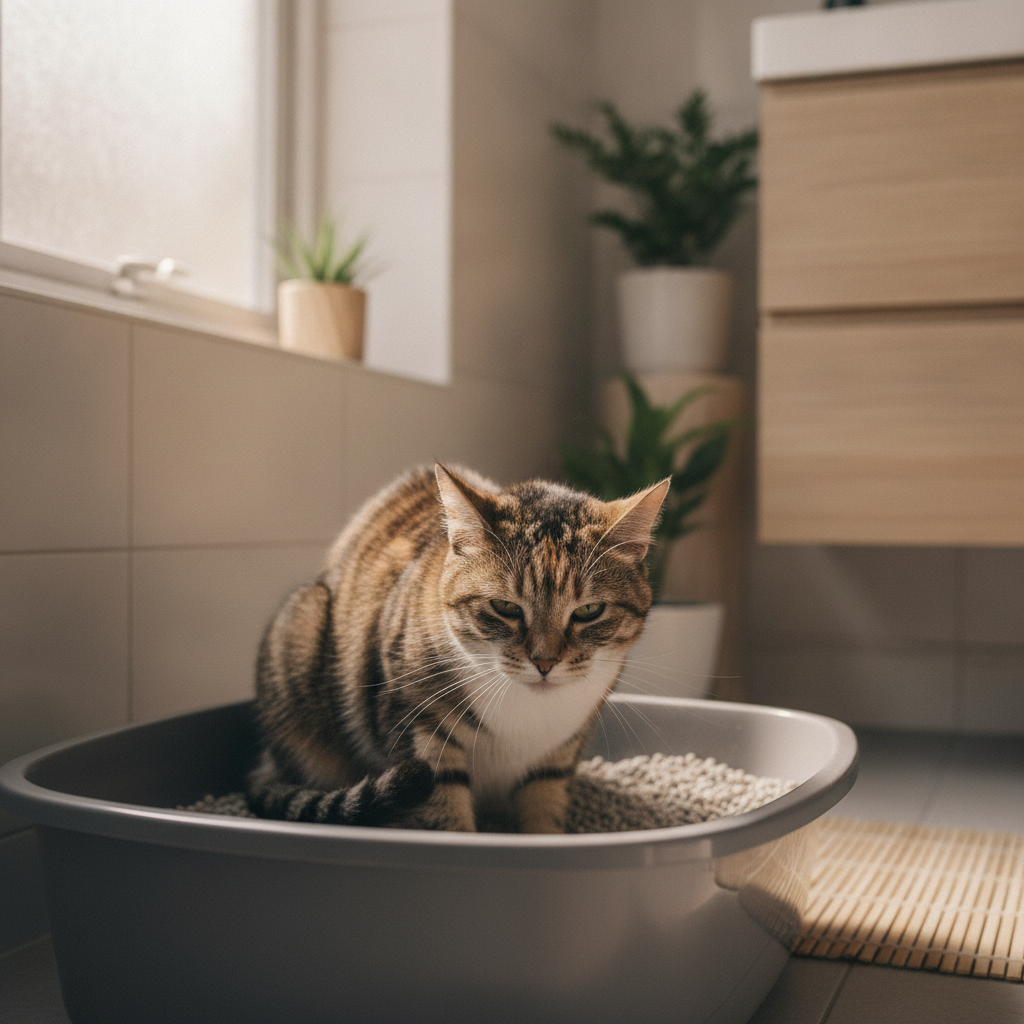
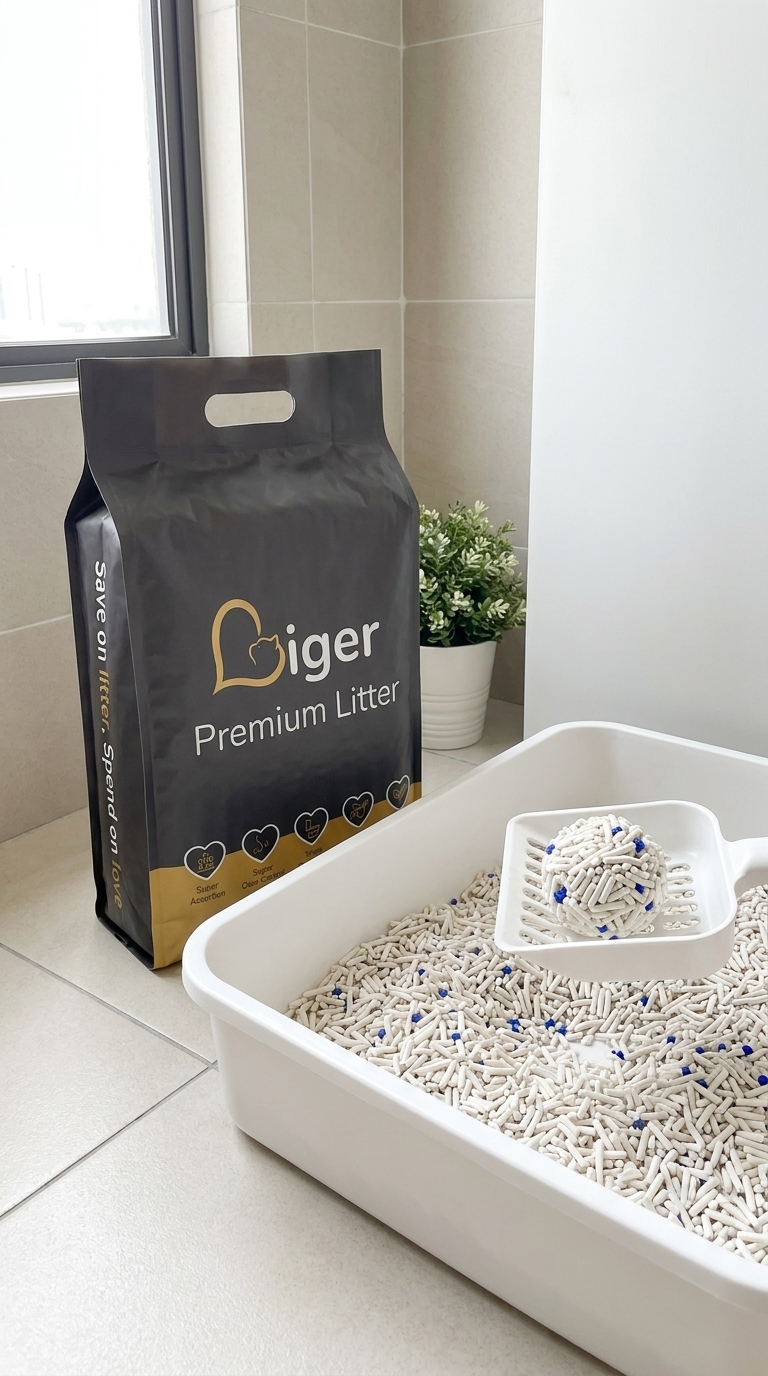
- Watch the litter box. The box is your daily readout of gut health — stool frequency, consistency, blood or mucus are exactly the data your vet wants. A clean, easy-to-read setup makes changes obvious. Our cat poop health guide shows what to look for, and the poop frequency checker helps you log it.
This is where a low-dust, low-fuss litter earns its keep. Liger Premium Tofu Cat Litter is a soy-based tofu litter that's low-dust (kinder to a cat already feeling rough), clumps firmly so you can actually see stool changes, and is flushable for quick daily clean-outs — Halal-certified and priced from RM21.90 for a 2 kg pack down to RM8.45/kg on the 10-pack. None of that treats IBD, but a clean box you check daily turns you into your vet's best early-warning system. Size your supply with the litter calculator.
The outlook is genuinely fair-to-good with committed care — an estimated 60–70% of cats reach long-term remission. But because IBD can shadow (or progress toward) lymphoma, ongoing vet monitoring is non-negotiable. For the wider context of feline illness here, see our overview of common cat diseases in Malaysia, and if your cat's vomiting, loose stools or weight loss have run for weeks, book that work-up.