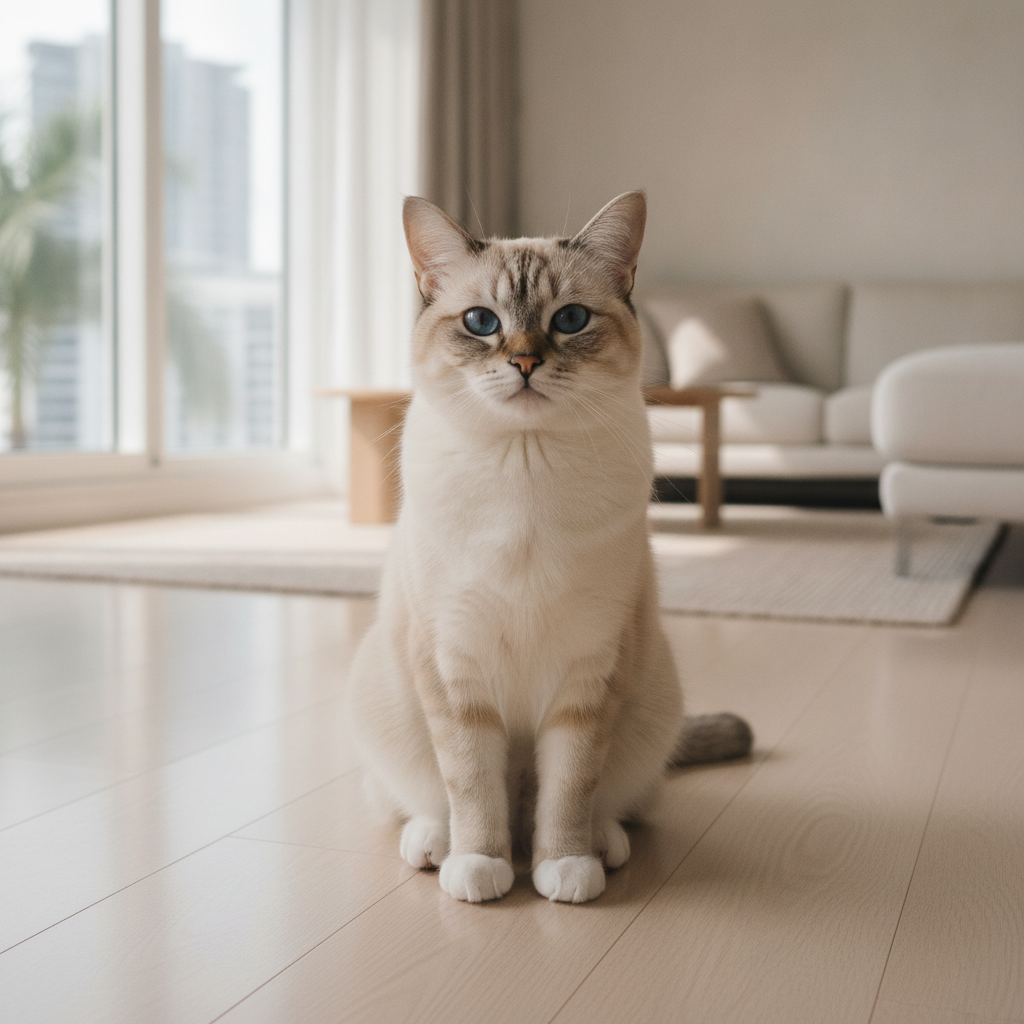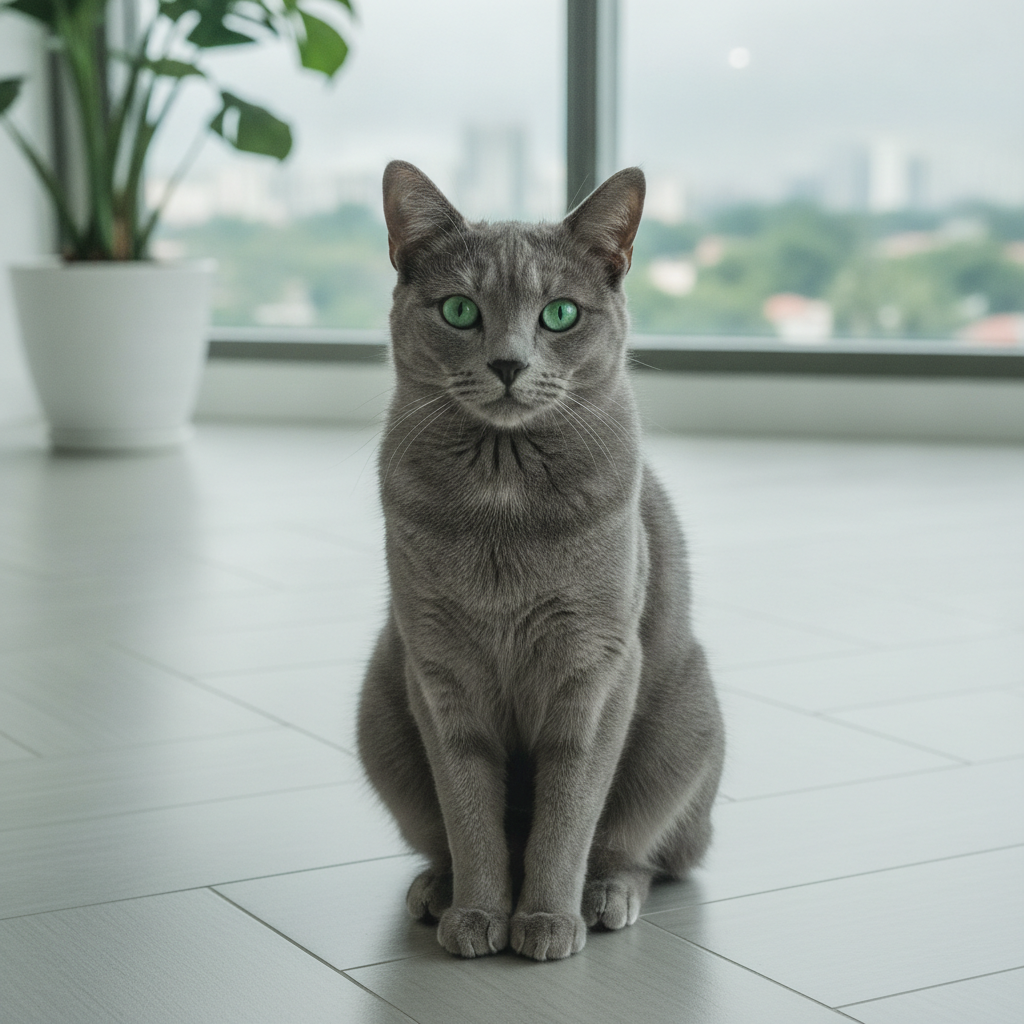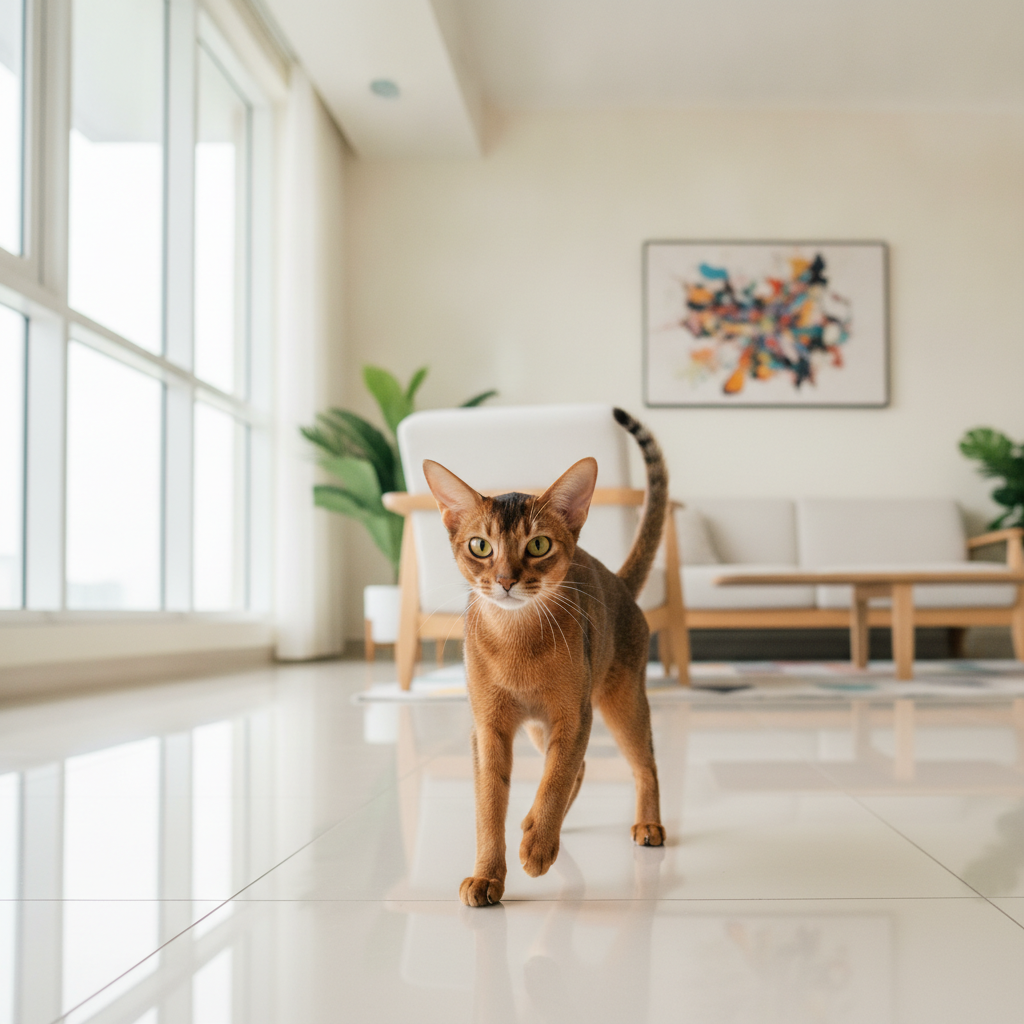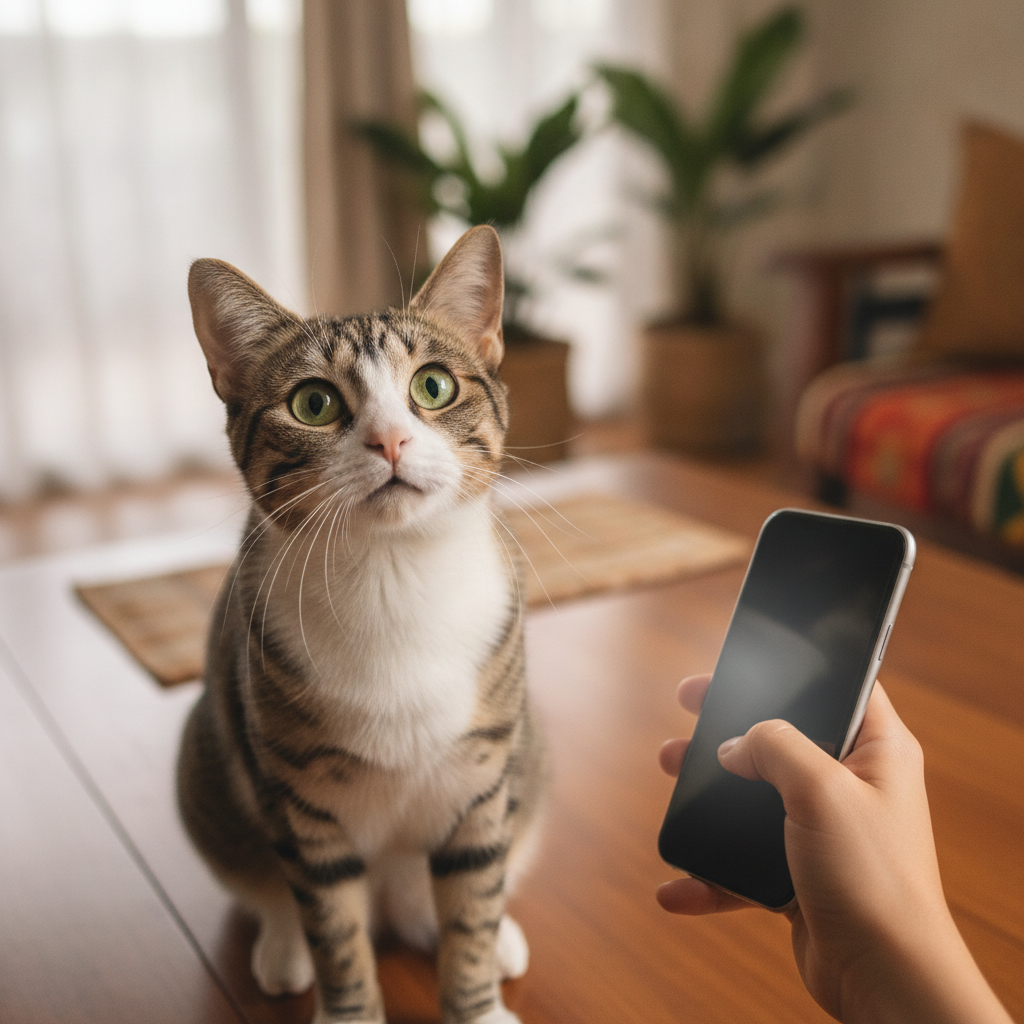
You adopted a kitten, and now everyone's asking: "What breed is it?" Maybe it has Siamese-ish blue eyes, a fluffy Persian-like coat, or big tufted Maine-Coon ears, and you're itching to put a proper name to it. Here's the honest, slightly surprising answer this guide will walk you through: most cats aren't any breed at all — and even the experts get visual breed ID wrong a lot. But there's still a satisfying, methodical way to read the clues in your cat's body, face and coat, and a handy free tool to help you do it without fooling yourself. Let's decode your cat, step by step.
First time down the breed rabbit hole? Our complete cat breeds in Malaysia guide is the perfect companion to this one.
The First Thing to Know: Most Cats Aren't a "Breed" at All
Brace yourself: roughly 98% of the world's cats are not pedigreed. They're domestic shorthairs, longhairs and mediumhairs — what we lovingly call the kucing kampung here in Malaysia — carrying a rich, mixed genetic heritage that doesn't match any single breed standard. The whole idea of formal "breeds" is barely 150 years old, dating to the first organised cat show at London's Crystal Palace in 1871, as the history of the cat fancy records. So before you hunt for a breed label, accept the most statistically likely truth: your cat is probably a gorgeous moggie, and that's a wonderful thing, not a disappointment. The term vets and shelters use for these cats — Domestic Shorthair or Longhair — isn't a breed at all but a catch-all for cats of mixed, undocumented ancestry, as the domestic shorthair entry explains.
Start With the Body Type
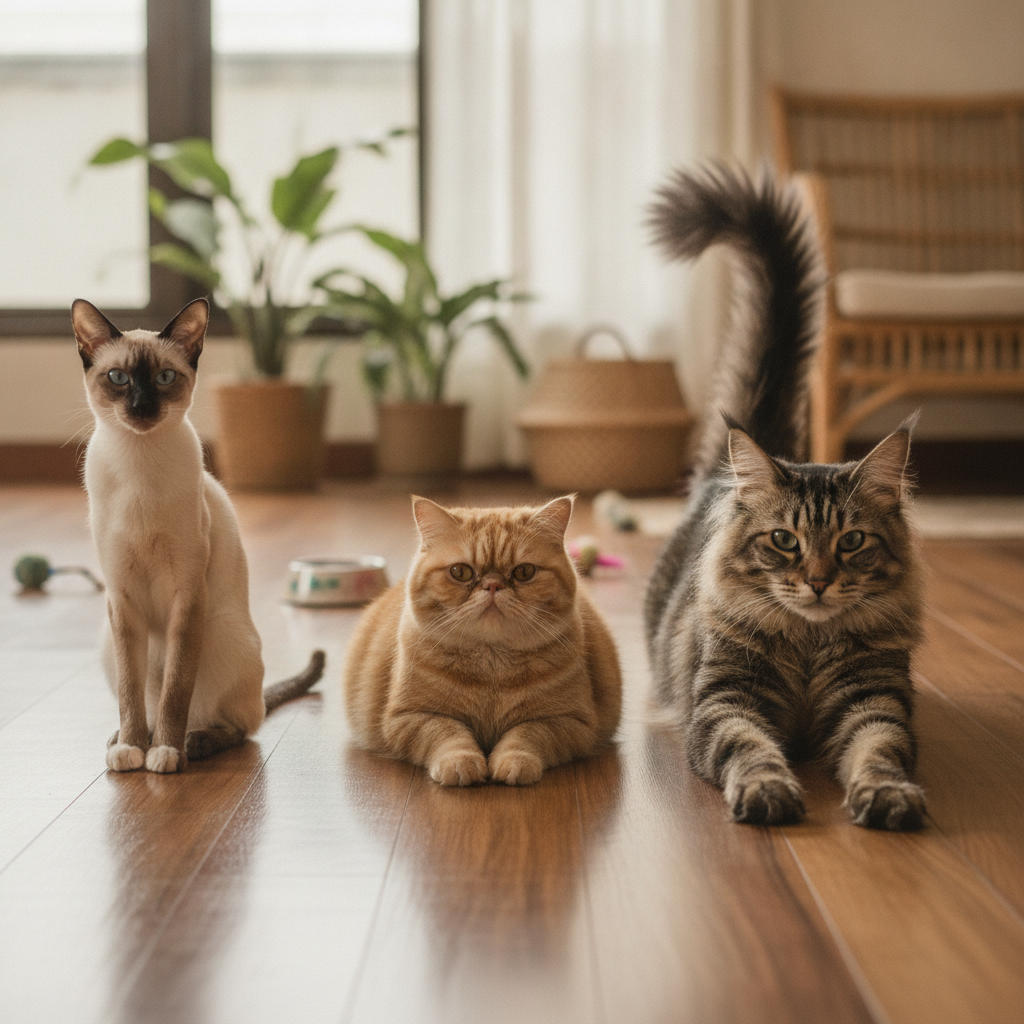
If you do want to read the clues, professionals start not with colour but with build. Cat registries sort body conformation along a spectrum:
- Cobby — short, stocky, heavy-boned and muscular. The Persian is the classic cobby cat.
- Substantial — large, powerful and rectangular, but not rounded. Think Maine Coon.
- Foreign — long, slender, fine-boned and athletic with long limbs. The Siamese is the textbook example.
There are in-between categories too (semi-cobby, semi-foreign, oriental). Body type is the foundation because it's far harder to fake than coat colour — a stocky little tank and a long elegant athlete are clearly different cats before you've even looked at the face. These conformation categories come straight from official breed standards: registries like the Cat Fanciers' Association publish a detailed blueprint for every breed they recognise, defining the ideal body, head, coat and more, which is exactly what show judges measure a cat against.
Read the Head, Ears and Eyes
Head shape usually tracks the body, and it's one of the most telling features. A Persian pairs its cobby body with a round, massive head, a short snub nose and full cheeks. A Siamese matches its slender frame with a long, triangular wedge-shaped head and big pointed ears. A Maine Coon shows a squarish muzzle and high cheekbones. Ears and eyes add detail: oversized ears suggest an Oriental or Siamese line; deep round copper eyes lean Persian; almond-shaped blue eyes hint at a colorpoint breed. None of these alone proves anything — but together they build a picture.
A practical way to do this at home: photograph your cat in profile and head-on in good light, then compare it methodically against breed-standard photos, feature by feature, rather than reacting to a single "that looks like a..." impulse. The brain loves to latch onto one striking trait — those blue eyes, that fluffy tail — and leap to a conclusion. Slowing down and checking whether the whole set of features lines up is exactly what separates a real assessment from wishful thinking.
Decode the Coat: Length, Pattern and Colour
Coat is the most eye-catching clue and, frustratingly, the least reliable. Coat length helps a little (a dense, flowing double coat points toward Persian or Maine Coon lineage; a short, close coat toward the shorthairs). But colour and pattern rarely settle the question, because the most common pattern of all — the tabby — appears in countless pedigree breeds and across the entire moggie population. A tabby coat tells you almost nothing about breed. Certain patterns are more meaningful: the dark-extremities "colorpoint" is a Siamese hallmark, and the flecked "ticked" coat is the signature of the Abyssinian. Treat coat as supporting evidence, never the verdict. It's worth remembering that the earliest breed definitions, back in the 1800s, actually leaned heavily on colour and pattern — and the cat fancy has spent the century-plus since learning that structure (body and head) is a far more reliable guide to lineage than coat. So when a seller insists a kitten is a rare "breed" purely because of an unusual colour, be sceptical: colour is the easiest thing to find in a random litter and the weakest evidence of pedigree.
The Dead Giveaways: Unique Breed Markers
A few traits are strong enough to genuinely point to a specific lineage, because they come from distinctive genetic mutations:
- Hairlessness — the unmistakable Sphynx.
- Folded ears — the Scottish Fold (a trait sadly tied to a painful skeletal condition; Cats Protection explains why the fold itself signals a welfare problem, so admire it but understand the cost).
- A bobbed or kinked tail, curled-back ears, or extremely short legs — markers of specific breeds like the Manx, American Curl or Munchkin.
Even so, a single standout trait isn't proof. A mixed-breed cat can easily inherit Siamese-blue eyes or a Persian-fluffy coat without being remotely purebred — it just won't carry the entire matching set of features.
Why Your Eyes (and Even DNA Tests) Can Fool You
Here's the reality check the science insists on: visual breed identification is genuinely unreliable. In studies on dogs, shelter staff misidentified the primary breed about a third of the time, and cats are likely harder still given their more recent, looser breeding history. The only definitive proof a cat is purebred is official pedigree paperwork from a registry like the CFA or TICA — without papers, a cat that looks like a Siamese is just a "look-alike". Even feline DNA tests, which assign purebred cats to a breed with up to 92% accuracy, become far fuzzier for mixed cats, where results are a probabilistic estimate limited by reference-database size. (DNA testing's real superpower is health screening — detecting disease-risk markers — not satisfying breed curiosity.) Bottom line: be humble about breed labels, and never let a guessed "breed trait" excuse a real health symptom. As PetMD notes, that last point isn't pedantry — dismissing a genuine illness as "just how this breed is" can delay treatment, which is why responsible vets increasingly avoid slapping speculative breed names on cats of unknown origin. Your cat's individual health and temperament matter far more than the label, and International Cat Care echoes that focus on the individual animal over the pedigree guess.
Try It Yourself: Use the Cat Breed Identifier
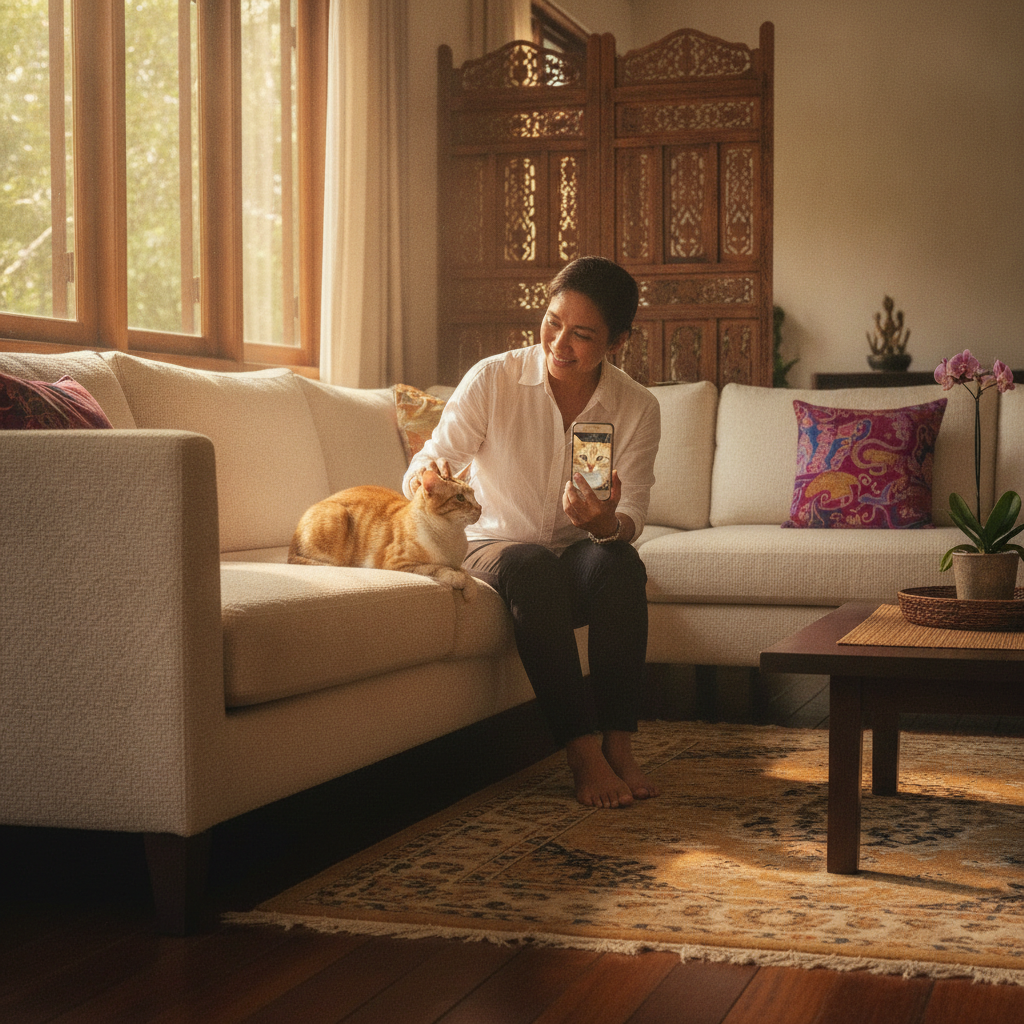
Want a structured, fun way to weigh all these clues without the guesswork bias? Run your cat through our free cat breed identifier tool. It walks you through the same features the pros use — body type, head shape, coat, ears and eyes — and gives you the most likely possibilities rather than a falsely confident single answer. Pair it with the cat breed cost calculator if you're researching a specific breed before adopting, so you go in with realistic expectations on care and budget. Treat the result as an informed best-guess and a fun conversation starter, not a birth certificate — and remember that only registry pedigree papers, not any tool or photo, can ever truly confirm a purebred.
Most Likely? A Magnificent Kucing Kampung — Care for It Like One
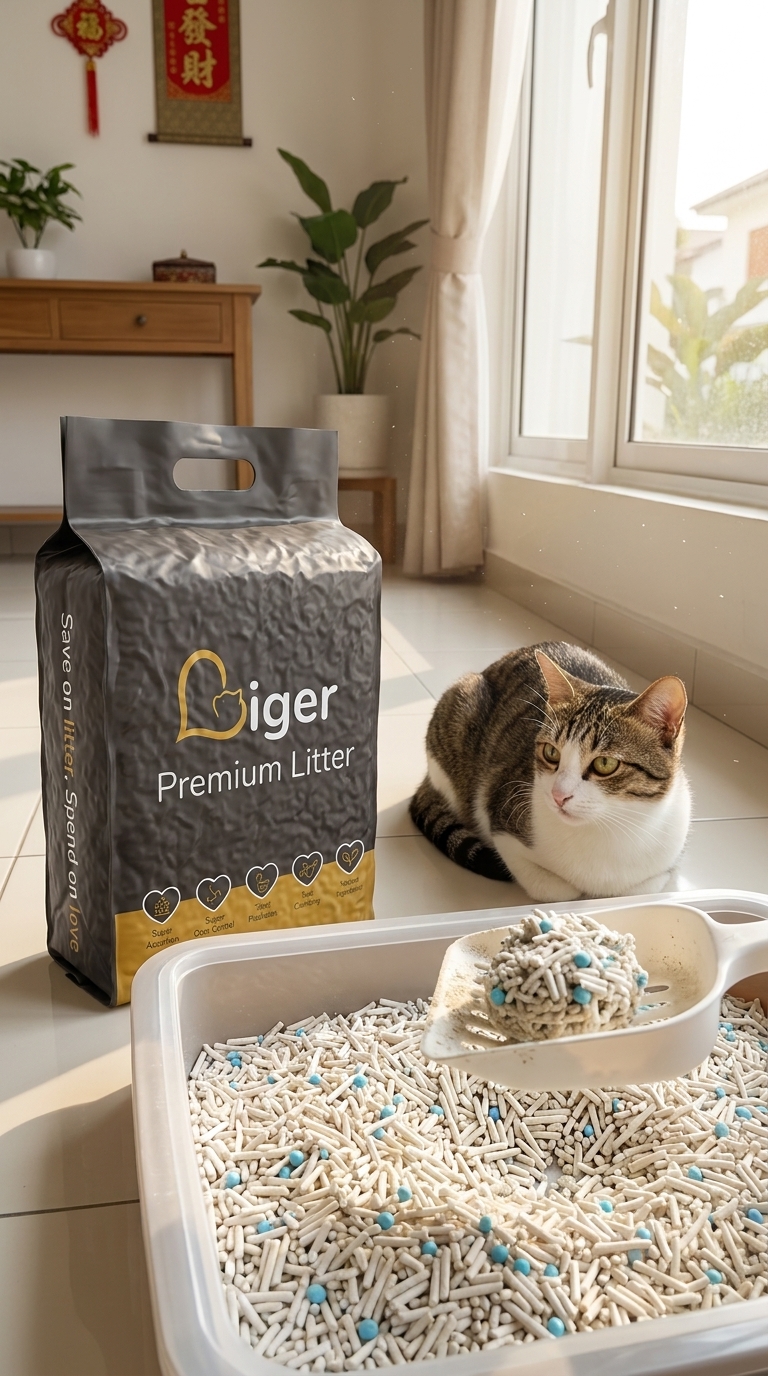
If the trail leads back to "domestic shorthair", celebrate it. The Malaysian kucing kampung is hardy, climate-adapted and gloriously individual — no two are ever quite alike, and their broad mixed heritage tends to mean fewer inherited diseases than many highly-bred pedigrees. Whatever your cat turns out to be, the day-to-day care that matters most is the same: good food, fresh water, play, and a clean litter tray. On that last point, a quality litter makes a real difference to your home. Liger Premium Tofu Cat Litter is made from natural plant starch, clumps firmly, controls odour, and is low-dust and flushable — kinder on your cat's nose and your cleaning routine, and Halal-friendly too.
The maths is friendly: a single 2 kg pack is RM21.90, while the 10-pack (20 kg) works out to RM8.45/kg — about 23% cheaper per kilo, with free shipping across Peninsular Malaysia (current Liger pricing, as of 2026). Whatever breed (or beautiful mix) your cat is, work out your monthly usage with the litter calculator. Because in the end, your cat doesn't care what label it wears — purebred, look-alike or proud kucing kampung — it just wants a clean box, a full bowl and your company.