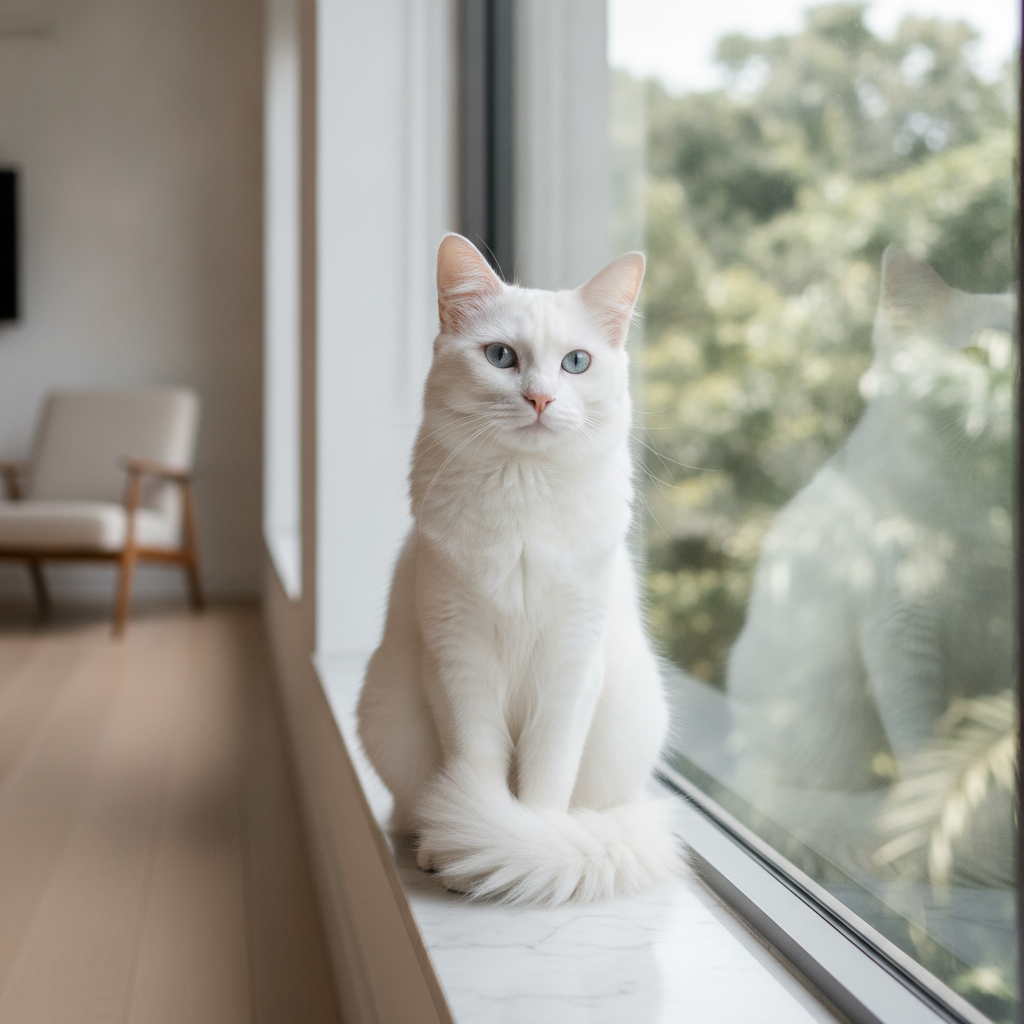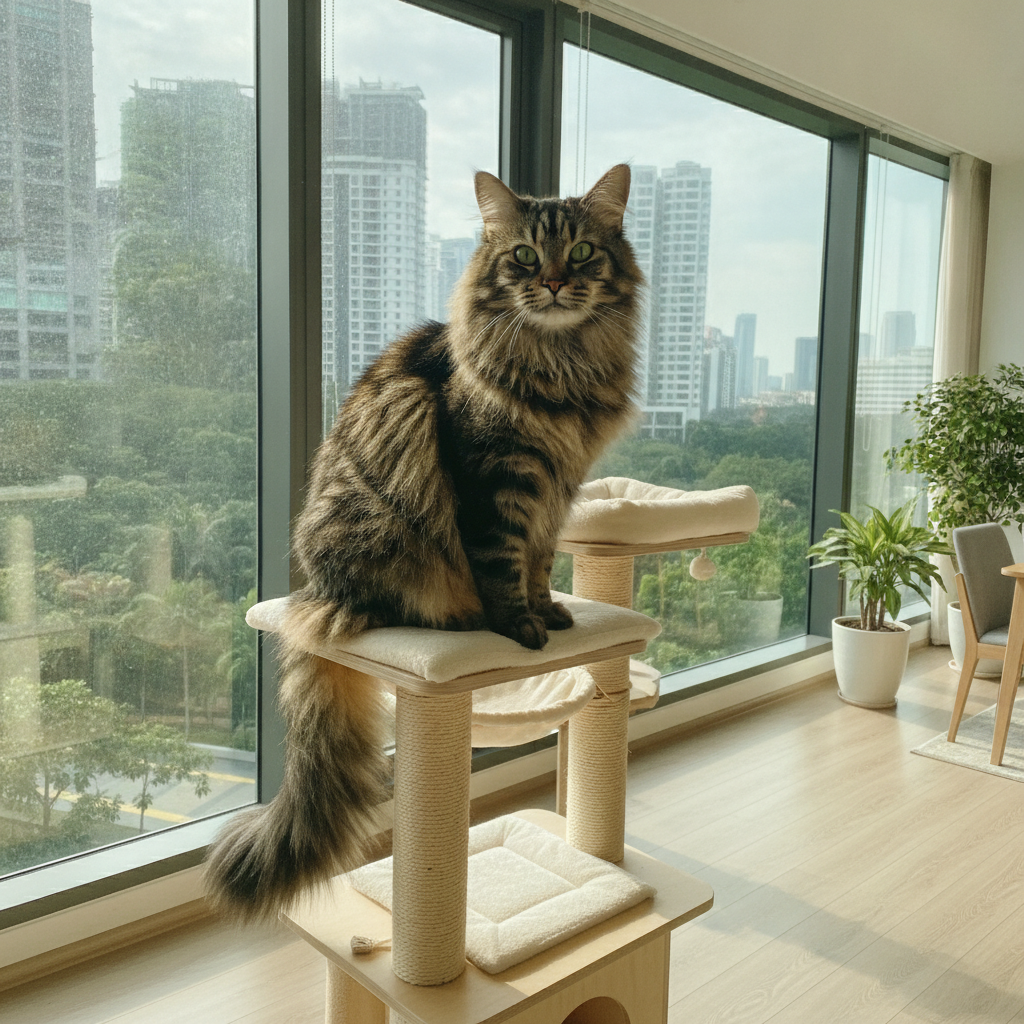
Somewhere between Viking legend and your KL condo, there is a cat that looks like it wandered straight off a Norse longship: enormous, fluffy, and utterly magnificent. The Norwegian Forest Cat, known in its homeland as the Norsk Skogkatt or simply "the Wegie" to fans, is one of the most striking longhaired breeds in the world. It is also, if you live in Malaysia, one of the most demanding to keep properly. That spectacular double coat that kept its ancestors alive through Scandinavian winters? In our humidity, it becomes the cat's biggest enemy.
This guide covers everything a Malaysian owner needs to know before committing to this breed. If you are still comparing options, start with our complete 2026 guide to cat breeds in Malaysia first, then come back here for the full Norwegian Forest Cat deep-dive.
From Viking Ships to Norse Legend: The Skogkatt Origin Story
The Norwegian Forest Cat's history reads like something out of a mythology textbook, because in many ways it is. The breed's ancestors most likely arrived in Norway around 1,000 AD, brought by Vikings as working mousers on their longships to protect grain stores during long sea voyages. According to the Cat Fanciers' Association (CFA), these early cats then adapted over centuries to Norway's brutal climate through natural selection, developing the robust physique and layered waterproof coat you see today. As Wikipedia's Norwegian Forest Cat article notes, the breed's origins remain debated, with some historians suggesting long-haired cats from Russia or Turkey may also figure in the ancestry.
In Norse mythology, the skogkatt was no ordinary cat. Legends described a "mountain-dwelling fairy cat" with the supernatural ability to climb sheer rock faces. Most famously, the Norse goddess Freyja's chariot was said to be pulled by two enormous cats so powerful that even the god Thor could not lift them from the ground. For hundreds of years the Wegie thrived as a natural farm cat, valued for its hunting ability. By the early 20th century, however, crossbreeding with free-roaming domestic cats threatened to dilute the breed out of existence.
Norwegian enthusiasts formed the first Norwegian Forest Cat Club in Oslo in 1938, but World War II halted those efforts and pushed the breed close to extinction. A dedicated revival in the 1970s finally secured its survival, and King Olav V eventually declared it Norway's official national cat. The breed earned championship status with FIFe in 1977, TICA in 1984, and the GCCF in the UK in 1997. The first pair of Norwegian Forest Cats did not arrive in the United States until November 1979, making them genuinely rare outside Europe even today, and a premium rarity in Malaysia.
Size, Slow Maturity and That Legendary Lifespan
Do not let kitten photos fool you. The Norwegian Forest Cat is one of the largest domestic cat breeds, and it takes an unusually long time to get there. According to PetMD, adult males typically weigh between 5.4 and 9 kg (12 to 20 lbs), with some exceptional males reaching 10 kg. Females are smaller at 3.6 to 7.3 kg (8 to 16 lbs). That alone puts them in a different weight class from the average Malaysian house cat.
What surprises most new owners is the pace of that growth. Unlike most breeds that are considered fully grown at one year, the Wegie does not reach its full size, muscle mass, and coat development until it is four to five years old. That kitten you buy at three months will keep physically maturing for years. The payoff is a genuinely long lifespan: with proper care, Norwegian Forest Cats typically live 12 to 16 years, and well-cared-for individuals can reach their late teens. For a size and lifespan comparison across breeds popular in Malaysia, see our cat lifespan by breed guide.
The breed also has one genuinely unique physical party trick: it is widely cited as the only domestic cat that confidently climbs down a tree headfirst, thanks to unusually strong, thick claws and hind legs that are slightly longer than its front legs. That same build makes tall cat trees and climbing shelves an absolute necessity indoors, not a nice-to-have.
The Gentle Giant Temperament and Family Life
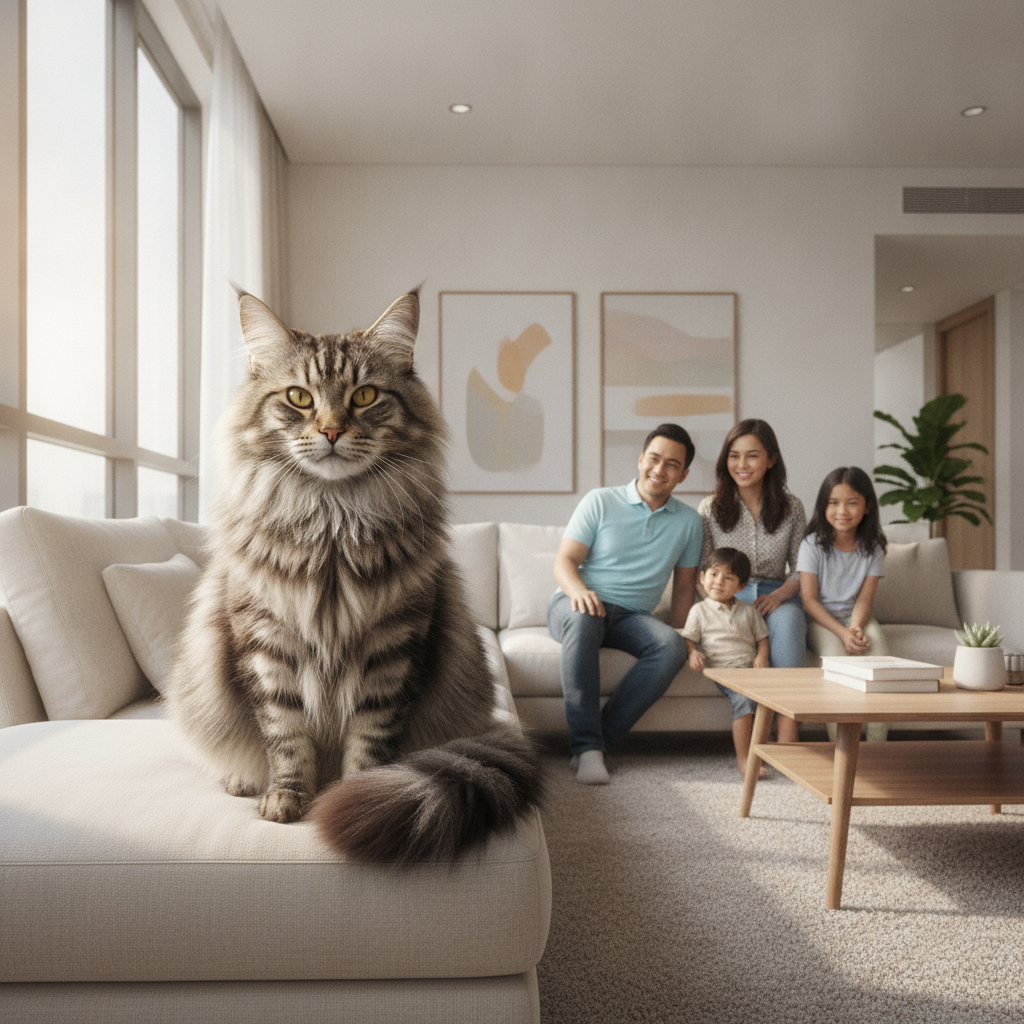
The Norwegian Forest Cat's reputation as a "gentle giant" is well-earned and codified by the major breed associations. The Royal Canin breed profile describes the Wegie as patient, intelligent, and family-oriented, while the CFA characterises it as companionable, robust, and playful. These are not clingy, demanding cats. They form strong bonds with their families but are not perpetually underfoot; they prefer to be near you rather than on you, supervising from a cat tree or the top of the bookshelf.
For Malaysian families, the temperament ticks a lot of boxes. Norwegian Forest Cats are patient and gentle with children, coexist well with other cats and cat-friendly dogs, and handle the background noise of a busy multi-generational household without becoming anxious. They are also quietly intelligent, responding well to their names, learning tricks, and enjoying puzzle feeders and wand toys to keep that sharp working-cat mind engaged.
One thing to note: their natural hunting instinct is strong. A Wegie in a home with hamsters, birds or other small animals needs careful management. They are initially reserved with strangers but warm up quickly once they have assessed the situation. Vocally, they are relatively quiet, communicating with soft chirps and trills rather than the full Siamese broadcasting service. Compare how their temperament stacks up against other large longhaired breeds in our Maine Coon Malaysia guide, which covers another gentle giant that faces similar heat challenges here.
A Double Coat in 33 Degrees: Why Air-Con is Non-Negotiable
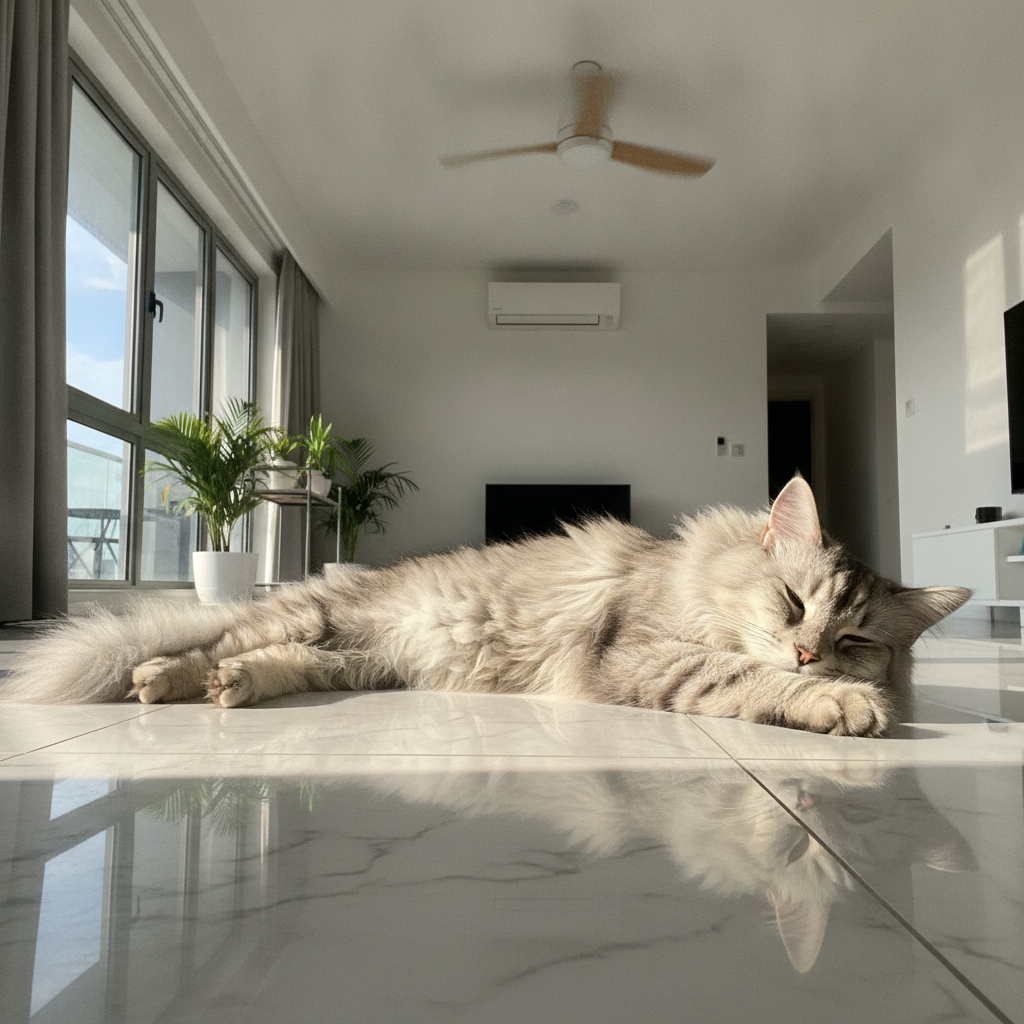
This is the single most important section in this entire article, and it is not close. If you take nothing else away from this guide, take this: a Norwegian Forest Cat in Malaysia without round-the-clock air-conditioning is a welfare failure, full stop. The research is unambiguous on this.
The breed's coat is a two-layer engineering marvel designed for Scandinavian winters. The inner woolly undercoat traps body heat like a thermal sleeping bag. The outer layer of long, glossy guard hairs is naturally oily and water-resistant, causing rain and snow to bead and roll off without soaking through to the insulating layer beneath. This system is brilliant in a Norwegian winter. In a Malaysian condo averaging 28 to 33 degrees C with humidity above 80%, it becomes a heat trap the cat cannot escape from.
Cats have very limited cooling mechanisms: panting, releasing heat through their paw pads, and evaporative cooling from grooming. The Wegie's thick coat severely impedes heat dissipation from the skin, and Malaysia's humidity makes evaporative cooling nearly useless because the air is already saturated with moisture. The result is a cat at constant risk of heat stress and, if left in a hot room, life-threatening heatstroke, which can cause irreversible organ damage once body temperature climbs above 40.5 degrees C. Early warning signs include excessive panting, drooling, and seeking any cool surface it can find. That is a veterinary emergency.
The practical requirements for responsible ownership in Malaysia: a dedicated air-conditioned room maintained cool throughout the day and night, fans for air circulation, shaded windows during peak sun hours, cool resting surfaces like marble or ceramic tiles, and cooling mats as backup. Note that shaving the double coat is actively discouraged by veterinary experts, as the coat also provides a natural shield against ambient heat and sunburn. The correct approach is diligent grooming to remove the shed undercoat. See our roundup of best cat breeds for Malaysia's hot climate for context on how the Wegie compares to breeds naturally built for heat. Air-conditioning is not a luxury for this breed; it is the baseline requirement for ethical ownership.
Litter and Daily Care for an Indoor Malaysian Wegie
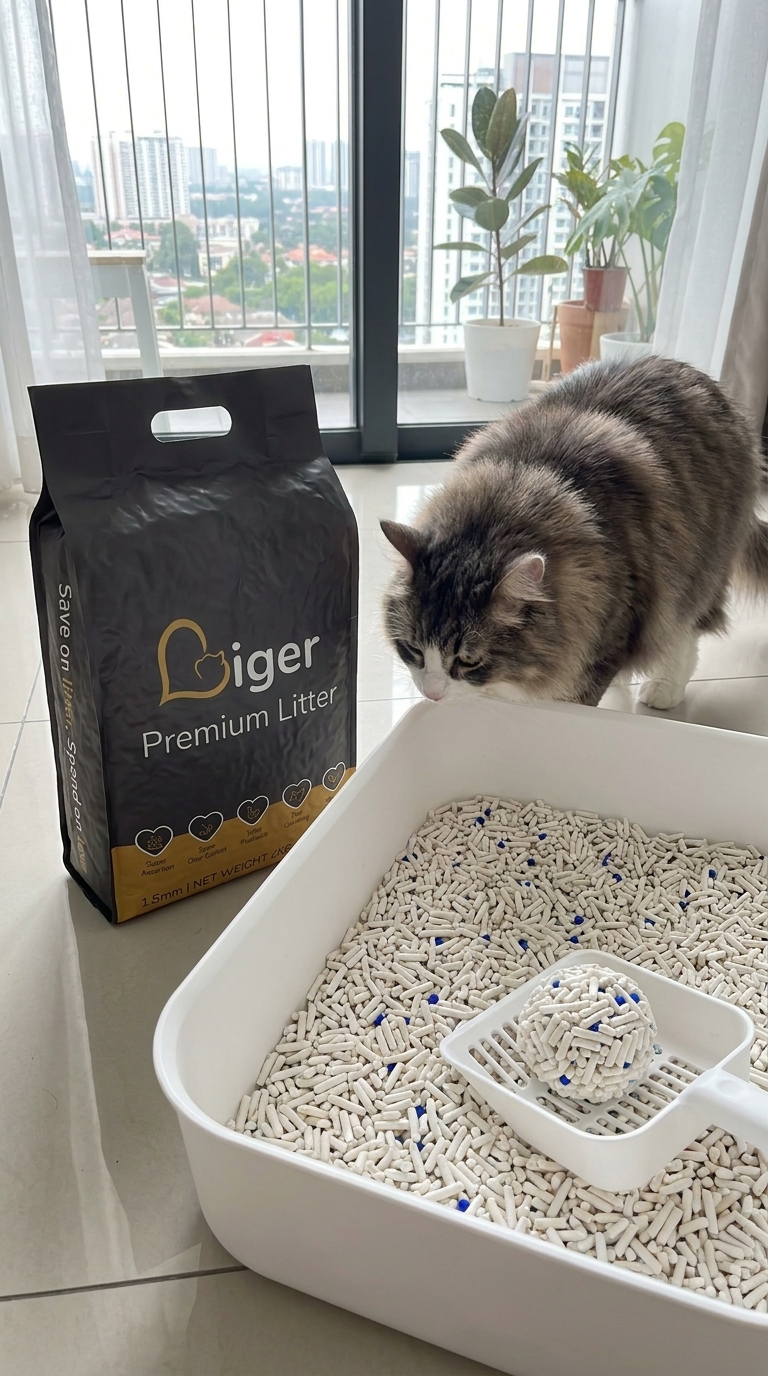
An indoor-only Wegie in a sealed, air-conditioned Malaysian condo is using the litter box multiple times a day in a small, enclosed space. That makes litter choice far more consequential than it might seem. Fine airborne litter dust is a respiratory irritant, and for a large, long-coated cat that also generates a lot of loose hair in the environment, you want litter that clumps cleanly, minimises dust, and controls odour without heavy synthetic fragrance.
Liger Premium Tofu Cat Litter is the litter we use and recommend for exactly this scenario. It is low-dust, naturally clumping, and flushable, made from compressed soybean fibres. It clumps firmly around waste so you can scoop quickly and completely, keeping the tray fresh in a sealed room. For a large Wegie producing generous deposits, the tight clumping matters more than with a smaller cat.
Current 2026 pricing: RM21.90 for a single 2 kg pack, RM53.90 for 3 packs, RM89 for 5 packs, and RM169 for the 10-pack (20 kg total), which works out to just RM8.45 per kg with free shipping throughout Peninsular Malaysia. A single Wegie will typically go through a 5-pack across roughly 8 to 10 weeks, depending on usage and how frequently you scoop. Use our litter calculator to size your monthly order accurately.
Hydration is equally important in our climate. Keep multiple water sources, consider a fountain to encourage drinking, and lean on wet food to boost fluid intake. Our guide to whether your cat is drinking enough water covers the warning signs to watch for.
Grooming the Double Coat in Malaysian Humidity
The Norwegian Forest Cat's semi-longhaired coat is a two-tier system: a dense, woolly undercoat for insulation and a long, glossy, water-resistant topcoat of guard hairs. In Norway this coat looks after itself reasonably well through seasonal shedding. In Malaysia's year-round heat and humidity, it needs deliberate human management to stay in good condition and, critically, to avoid creating heat-trapping mats.
Brushing two to three times a week is the minimum year-round baseline. Norwegian Forest Cats undergo two shedding seasons triggered by daylight cycles. The main spring shed, when the heavy winter undercoat "blows," is the most intense, with fur coming out in large clumps. Even indoor cats on artificial lighting follow a version of this cycle, so expect a moderate year-round shed with periodic heavy spurts. During those heavy periods, upgrade to daily brushing. The areas most prone to matting are the thick ruff around the neck and the britches on the hind legs; mats there trap moisture against the skin, the exact environment bacteria and fungi love in Malaysia's heat and humidity.
The temptation for Malaysian owners is to shave the coat to help the cat stay cool. This is strongly discouraged by veterinary experts. The coat acts as a natural insulator against ambient heat and shields the skin from sunburn. Shaving it disrupts the thermoregulation system entirely and makes things worse, not better. The correct approach is diligent brushing to remove the loose undercoat, which is the primary heat-trapping layer. A well-brushed coat has better airflow against the skin than a neglected one. Professional grooming every six to eight weeks is a worthwhile investment in this climate, particularly for cats resistant to home brushing.
Health Risks Every Norwegian Forest Cat Owner Must Know
Norwegian Forest Cats are a robust, naturally evolved breed, but like all pedigrees they carry specific inherited health risks. There are four conditions every prospective owner and buyer should understand before signing anything.
Hypertrophic Cardiomyopathy (HCM) is a thickening of the heart's muscular walls that reduces its pumping efficiency. It is the most commonly diagnosed cardiac disease in cats, and the Norwegian Forest Cat is among the affected breeds. The cruel reality, as VCA Hospitals explains, is that many cats show no symptoms until the disease is advanced, with a heart murmur caught during a routine check-up often being the first clue. Diagnosis requires an echocardiogram, and while there is no cure, medication can improve quality of life and longevity. Ask any breeder for documentation of cardiac screenings on their breeding cats.
Glycogen Storage Disease Type IV (GSD IV) is breed-specific and fatal. It is an inherited metabolic disorder caused by a defective enzyme that prevents normal glucose metabolism, leading to a harmful accumulation of abnormal glycogen in cells throughout the body. According to the Labogen genetic disease database, most affected kittens are stillborn or die within hours of birth. In a rarer presentation, a kitten may appear healthy for five to seven months before developing severe neuromuscular degeneration including muscle weakness and tremors, rarely surviving beyond 15 months. The disease is autosomal recessive, meaning a kitten needs two copies of the defective gene to be affected. Critically, a reliable DNA test exists, and responsible breeders who test their breeding cats can eliminate GSD IV from their lines entirely. If a breeder cannot show you GSD IV test results, walk away.
Hip Dysplasia is a degenerative malformation of the hip's ball-and-socket joint, and the Wegie's large, heavy frame makes it susceptible. The improper joint fit causes pain, inflammation, and progressive osteoarthritis. Signs include reluctance to jump, lameness, and reduced hind-leg mobility. Reputable breeders screen for hip dysplasia via X-rays before breeding.
Pyruvate Kinase (PK) Deficiency is an inherited enzyme deficiency that shortens the lifespan of red blood cells, causing regenerative anaemia. Many affected cats live relatively normal lives with only mild intermittent anaemia, but genetic testing is available and conscientious breeders use it to avoid producing affected kittens. This combination of known, testable conditions is why sourcing from a health-screening breeder is not optional for this breed.
What a Norwegian Forest Cat Costs in Malaysia in 2026
Norwegian Forest Cats are genuinely rare in Malaysia. Unlike British Shorthairs or Persians, they are not widely bred locally, and import costs from European or Scandinavian breeders are substantial. As rough 2026 market guidance (not Liger figures), expect to pay somewhere in the region of RM3,000 to RM8,000 for a registered kitten from a reputable source, with show-quality lines and imported pedigrees pushing toward the upper end of that range or beyond. Be very cautious of cheap "Wegie" kittens, which are almost certainly unregistered longhaired mixed breeds.
The acquisition price is actually the smaller number. Factor in the lifetime cost: quality food for a large cat, year-round flea and parasite prevention (Malaysia's warmth means this is a monthly commitment, not a seasonal one), regular cardiac and hip screening, grooming tools and professional grooming when needed, and the ongoing electricity bill for that 24/7 air-conditioning. Budget carefully using our cat breed cost calculator and compare against other premium breeds in our 2026 cat breed price guide. If you want a large, gentle, longhaired cat but are weighing up the options, our Maine Coon guide covers a comparable breed that faces many of the same Malaysian climate challenges. For the full breed shortlist across all categories, the Malaysia cat breeds guide 2026 is where to start.
The Norwegian Forest Cat is one of the most rewarding cats you can own: mythic in appearance, gentle in character, and genuinely intelligent. In Malaysia it demands more than most breeds, specifically a permanently cool indoor environment, diligent double-coat grooming, and a breeder who does their health homework. Get those things right and you have a magnificent, loyal companion for 12 to 16 years. Get them wrong and you have a very uncomfortable cat and very high vet bills. The Wegie deserves better than that, and so do you.