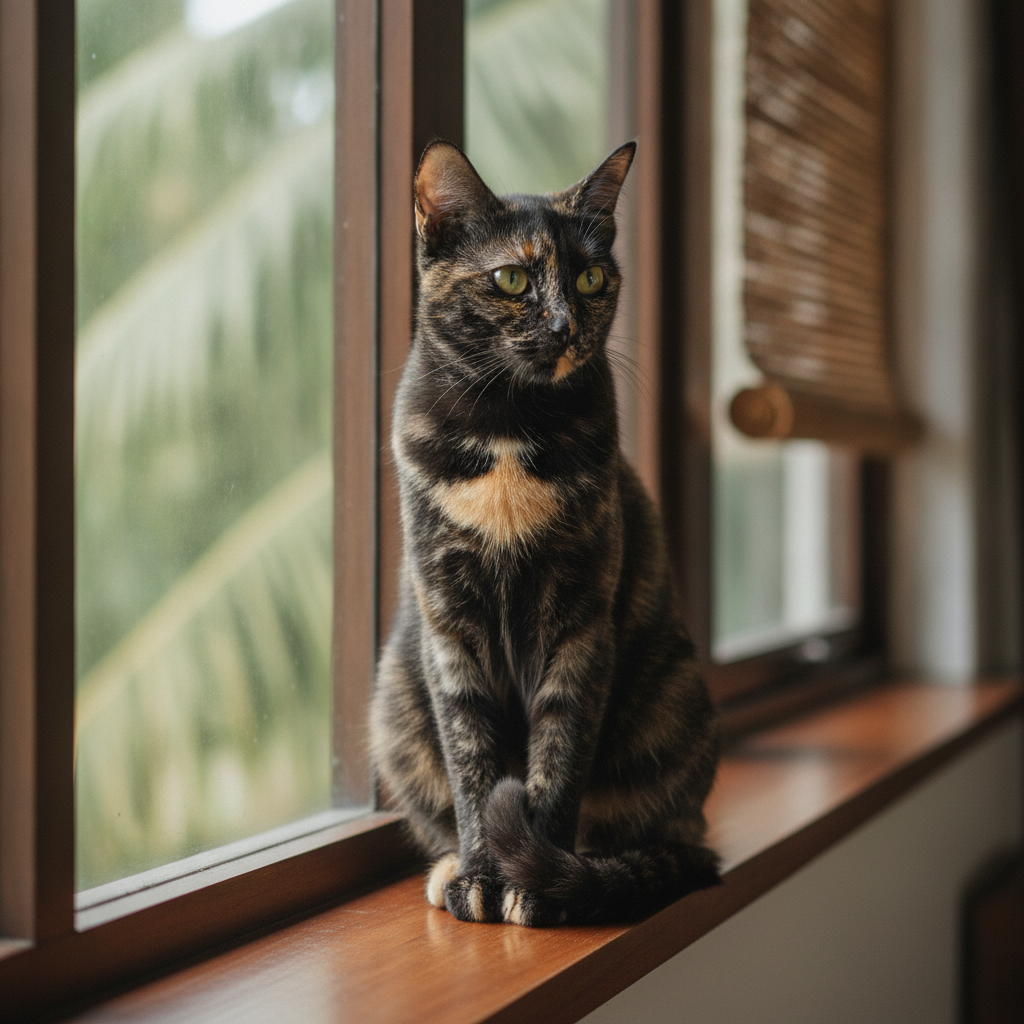
Few cats turn heads like a tortoiseshell. That swirled, brindled coat of black and orange — no two ever quite the same — looks almost hand-painted. And if you ask any tortie owner, they'll swear their cat's personality is just as bold as her coat. So what's actually going on under that gorgeous fur? The genetics are rock-solid science; the famous "tortitude" is a different story. Let's separate the two, honestly.
This is part of our cat colours and coat patterns guide. A quick note up front: tortoiseshell is a colour pattern, not a breed — you'll find torties among many breeds and, very commonly, among Malaysia's beloved kampung cats.
What Makes a Cat a Tortoiseshell?
A tortoiseshell ("tortie") has a coat that blends two pigments — black (eumelanin) and orange/red (phaeomelanin) — into a marbled, brindled mosaic with little or no white. The patches can be finely peppered or bold and blocky. Because the pattern can appear in almost any breed or in a moggy, a tortie isn't a type of cat so much as a coat a cat happens to wear. If you're trying to pin down your cat's actual breed underneath that coat, our cat breed identifier and the cat breeds guide are the place to start.
The two pigments doing all the work are the same ones behind nearly every cat coat: eumelanin, which produces black and brown tones, and phaeomelanin, which produces the reds and oranges. In a tortie they appear side by side instead of blended evenly, which is why the coat reads as patches rather than a single muddy colour. The amount, size and crispness of those patches varies wildly from cat to cat — one reason no two torties on earth look alike, and why owners get so attached to their cat's particular swirl.
The Genetics: Why Torties Are Almost Always Female
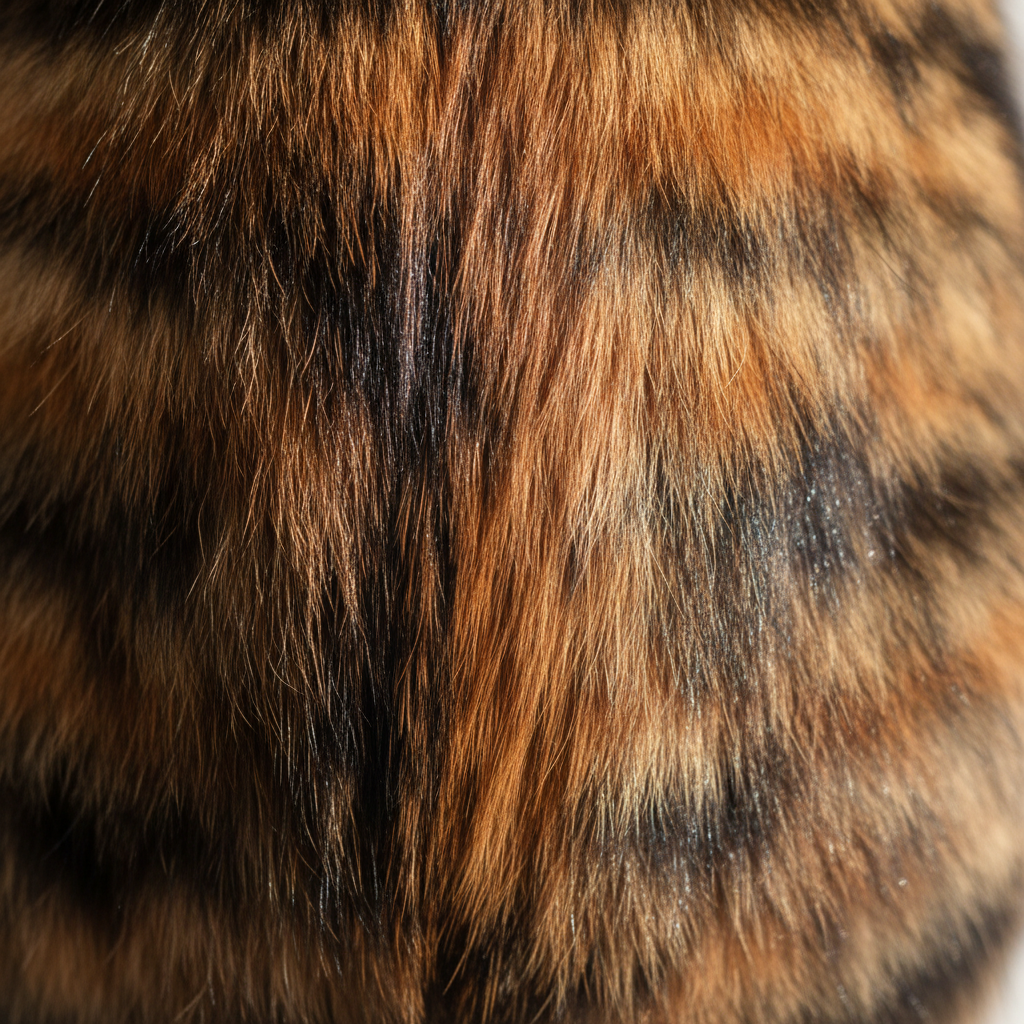
Here's the beautiful part. The gene that decides orange-versus-black sits on the X chromosome. Females have two X chromosomes (XX); males have one X and one Y (XY). A female can carry the orange instruction on one X and the black instruction on the other — and that's the recipe for a tortie.
But how do both colours show up at once? Through a remarkable process called X-inactivation (or lyonisation, after geneticist Mary Lyon). Very early in a female embryo, every cell randomly switches off one of its two X chromosomes — permanently. Cells that silenced the "black" X grow orange fur; cells that silenced the "orange" X grow black fur. As those cells multiply into patches, they paint a one-of-a-kind living mosaic, as explained in detail by the science of X-inactivation. The switch-off is driven by a gene called Xist, which coats the doomed X chromosome and compacts it into an inert little bundle called a Barr body. The timing matters too: when inactivation happens early in development you get big bold colour blocks; later, and you get a finer pepper-and-salt brindle. A male, with just one X, can only be orange or black — never both. That single genetic fact is why an estimated 99.9% of tortoiseshell cats are female. The same orange gene, by the way, is what determines the rainbow of feline coat colours — tortie is simply the most dramatic way it can show up.
The Rare Male Tortie (1 in 3,000)
Almost — but not quite — never. Roughly 1 in 3,000 tortoiseshells is male, and it takes a genetic quirk to make one. Most male torties carry an extra X chromosome (XXY, a feline version of Klinefelter syndrome), which lets X-inactivation happen just as it does in females. The catch: these males are almost always sterile. Rarer routes include chimerism (two embryos fused into one cat). So a male tortie is a genuine genetic curiosity — historically rare enough that folklore credited him with magical powers. If someone tells you they have a male tortie, they may well be right; just know it's a one-in-thousands roll of the genetic dice, and a vet can confirm it with a quick chromosome check if you're curious.
Tortie, Calico or Torbie? Telling Them Apart
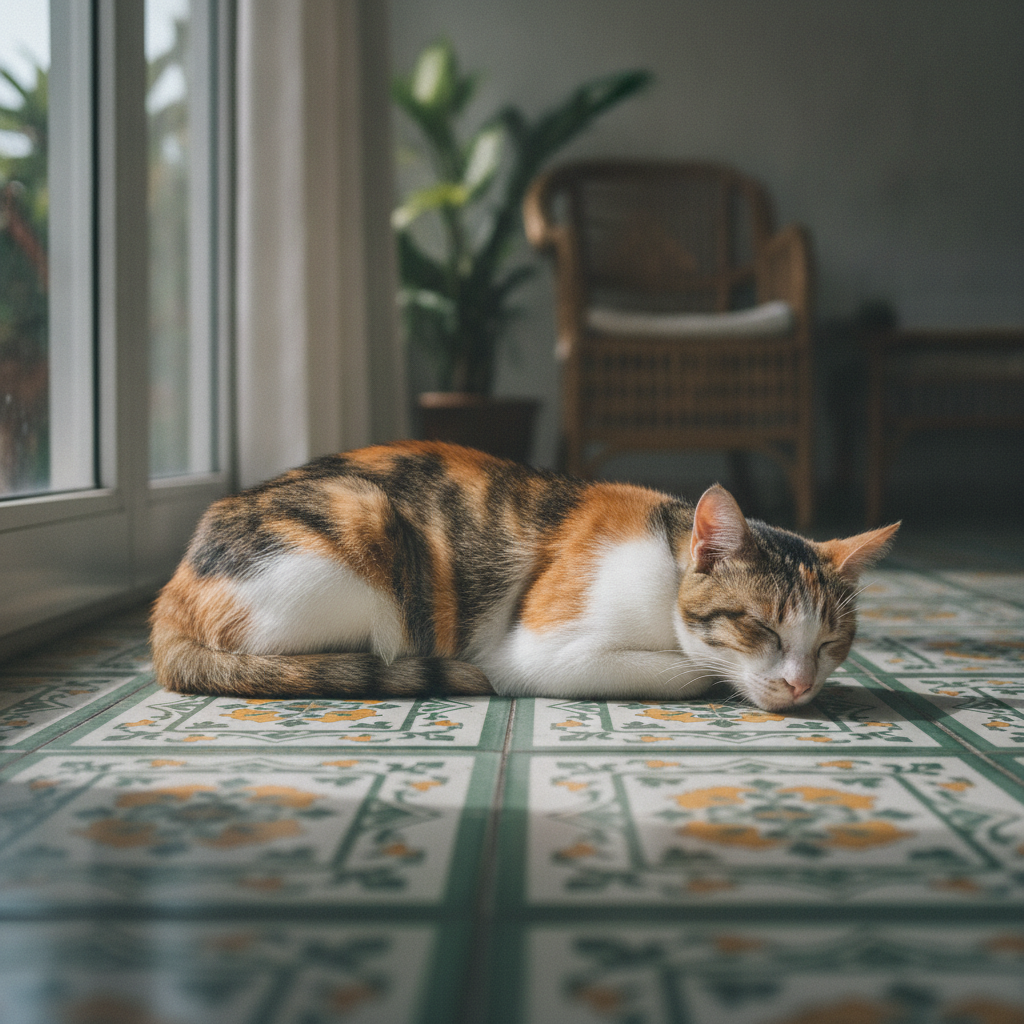
These three get muddled constantly. The dividing line is simple once you know it:
- Tortoiseshell: black and orange marbled together, little to no white.
- Calico: genetically a tortie plus the white-spotting gene (S), which adds bold white patches and tends to break the colour into distinct blocks. More white usually means more separated patches. (Full story in our calico cats guide.)
- Torbie ("tabby tortie"): a tortie whose coat also shows tabby striping within the colours.
There's also the gorgeous dilute tortie or "blue-cream," where a separate dilution gene (you need two copies) softens black into grey ("blue") and orange into a pale cream — same mosaic, pastel palette. Stack the dilution and white-spotting genes together and you get a dilute calico: soft blue, cream and white. It's worth saying again, because it's the single most common mix-up: calico and tortie are the same orange-black mosaic underneath — white is the only thing that separates them.
Tortitude: Fact or Folklore?
Ask the internet and you'll be told torties are feisty, sassy, strong-willed divas with a fierce loyal streak — a personality so distinct it's earned the nickname "tortitude." Even some vets and behaviourists say they see it. Here's the honest answer: tortitude is folklore, not established science.
The one study people cite is a 2015 University of California, Davis survey of 1,274 cat owners, which found tortoiseshell and calico females were reported as slightly more aggressive toward humans (a mean score of 2.5 versus 2.0 out of 20). But the researchers themselves urged caution: it measured owners' perceptions, not observed behaviour, the differences were tiny, and a correlation is not proof that a colour gene causes a personality. Owners who've heard of "tortitude" may simply notice and report it more — classic confirmation bias.
The broader veterinary consensus, including International Cat Care, is firm: a cat's temperament is shaped mainly by genetics (and the father's friendliness), early socialisation between 2 and 7 weeks, and environment — not by coat colour. Researchers even map feline personality with a model called the "Feline Five" (covering traits like extraversion and agreeableness) precisely because colour is an unreliable guide. By all means enjoy your tortie's spicy reputation — just don't pick or pass over a cat because of it. There may even be a kernel of truth dressed up as magic: if you expect a diva and interpret every loud meow as "attitude," you'll find it. And because torties are nearly always female, some of what gets called "tortitude" may simply be ordinary feline behaviour filtered through a colourful legend. The cat in front of you is an individual first and a colour second.
Tortoiseshell Cats in Luck and Legend
If the science deflates the personality myth a little, the folklore more than makes up for it — torties are considered lucky almost everywhere. In Japan they're believed to protect sailors and ships from storms; in Ireland and Scotland a tortie wandering into your home is a fine omen; in the United States they're nicknamed "money cats" for the wealth they supposedly attract. A Khmer legend from Southeast Asia even tells that the first tortie sprang from the blood of a lotus-born goddess. English folklore even claimed the rare male tortie could cure warts. Whatever you believe, a tortie's coat is genuinely one in a million — quite literally unrepeatable, since the random X-inactivation that made it can never happen the same way twice. That blend of hard genetics and global good-luck legend is a big part of why torties are so adored by the people lucky enough to share a home with one.
Caring for Your Tortoiseshell
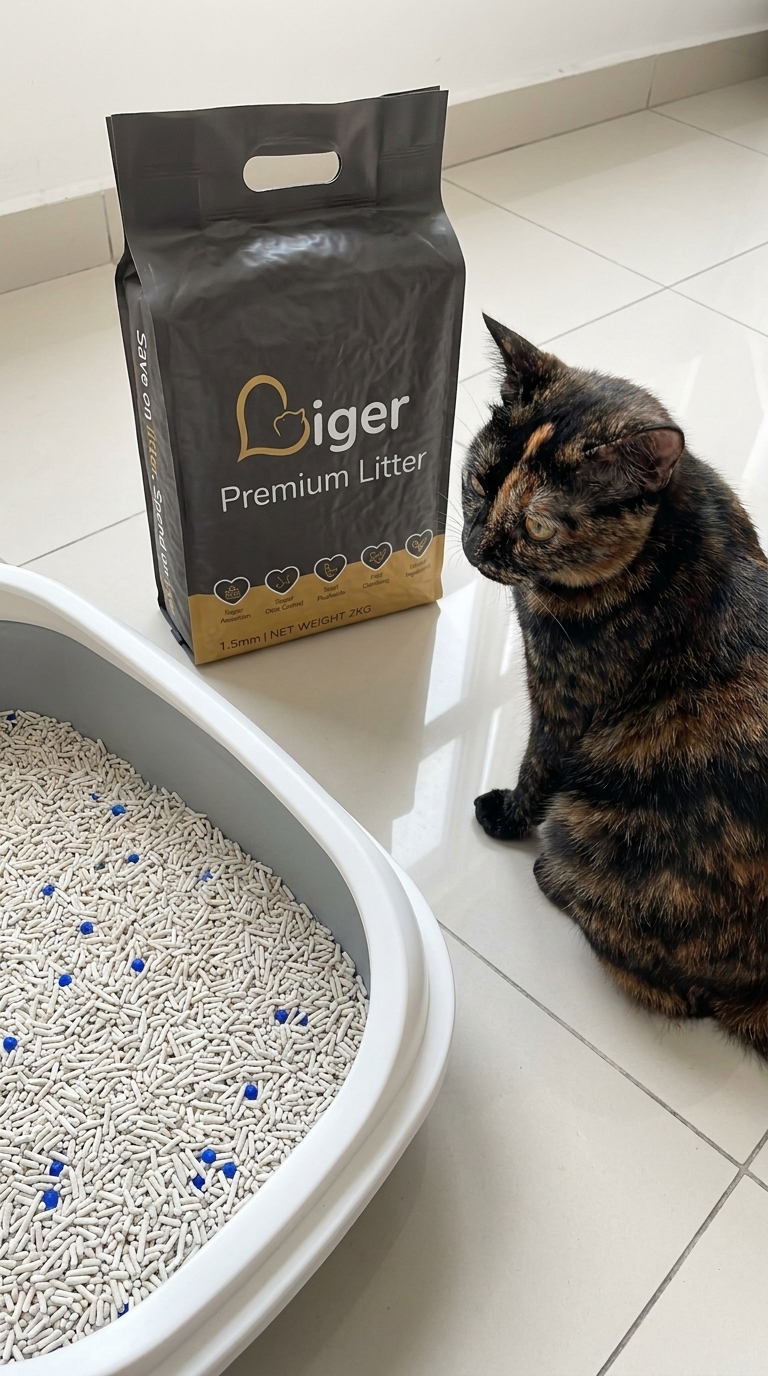
Here's the reassuring bit: a tortie needs exactly the same care as any other cat — her dazzling coat doesn't come with special requirements. Good nutrition, regular vet checks, enrichment, and a clean litter box are all it takes to keep that mosaic glossy. One small myth to retire: coat colour tells you nothing about a cat's health needs, grooming difficulty or lifespan — a tortie ages and thrives exactly like any other cat of her breed and build. A coat this striking does deserve to be seen at its best, and a tidy, low-dust set-up helps: a natural, food-grade litter like Liger Premium Tofu Cat Litter keeps fine dust off her fur and the box fresh between scoops. It runs from RM21.90 for a single 2 kg pack to RM169 for the 10-pack (about RM8.45/kg), free shipping in Peninsular Malaysia (current Liger pricing, as of May 2026); size your supply with the litter calculator.
Want to keep exploring coats? Meet her close cousins in our calico and orange cat guides, or head back to the colours and patterns hub. And if your new tortie still needs a name worthy of that coat, try our cat name generator.
Curious what colours your two cats could produce? Try our kitten coat colour predictor — it shows the genetic odds of a tortoiseshell kitten.