Ask most cat parents about household dangers and they will name two things: poisonous plants and the foods cats cannot eat. Both matter — we cover them fully in our guides to toxic and safe plants and human foods that are toxic to cats. But the injuries that actually send Malaysian cats to the emergency vet are usually far more ordinary: a chewed charger cable, a Panadol that rolled under the sofa, a hair tie swallowed during play, a nap inside the washing machine.
This guide is about those hidden, everyday hazards — the ones that are not plants and not food. It is part of our cat home safety guide for Malaysian homes. The scale of the problem is real: the Pet Poison Helpline reports that around 40% of all cat poisoning calls involve human or veterinary medicines, with household cleaners and insecticides adding more on top.
Electrical Cords and Chargers
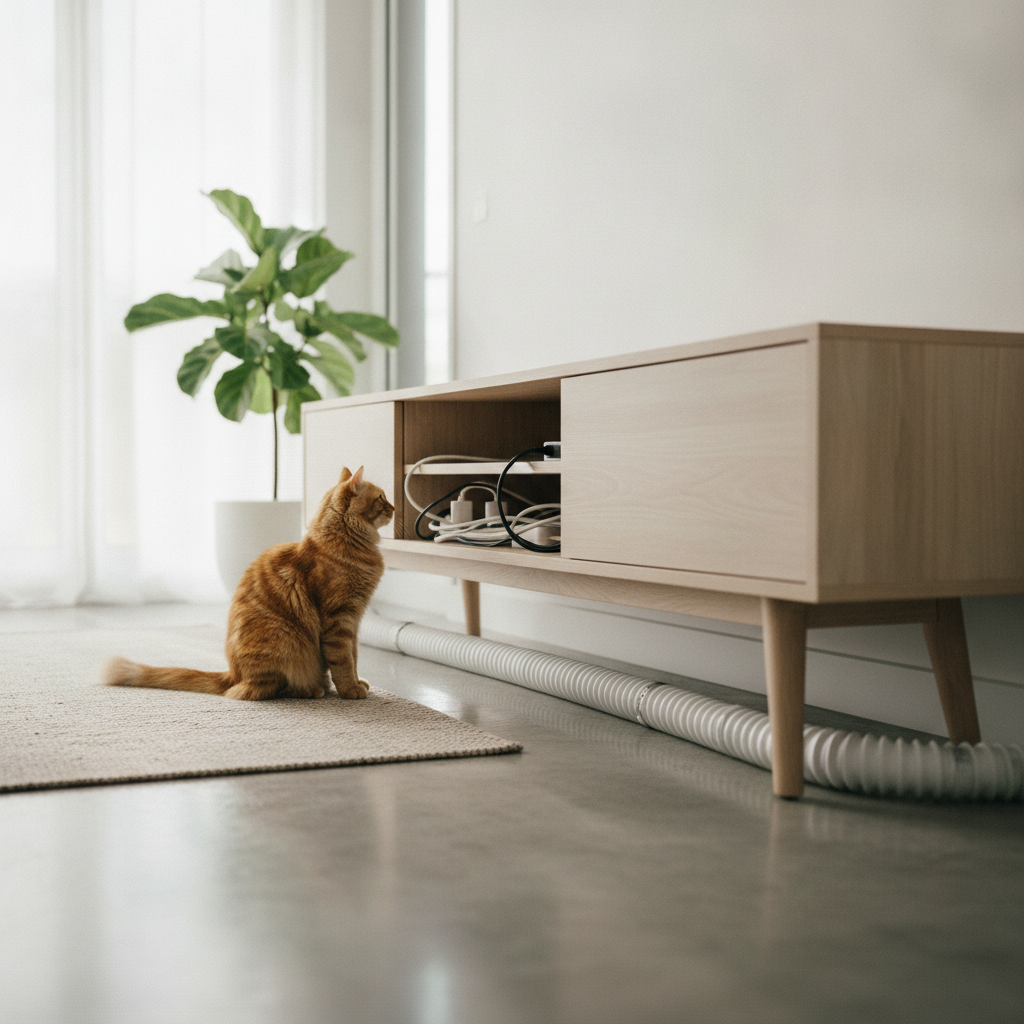
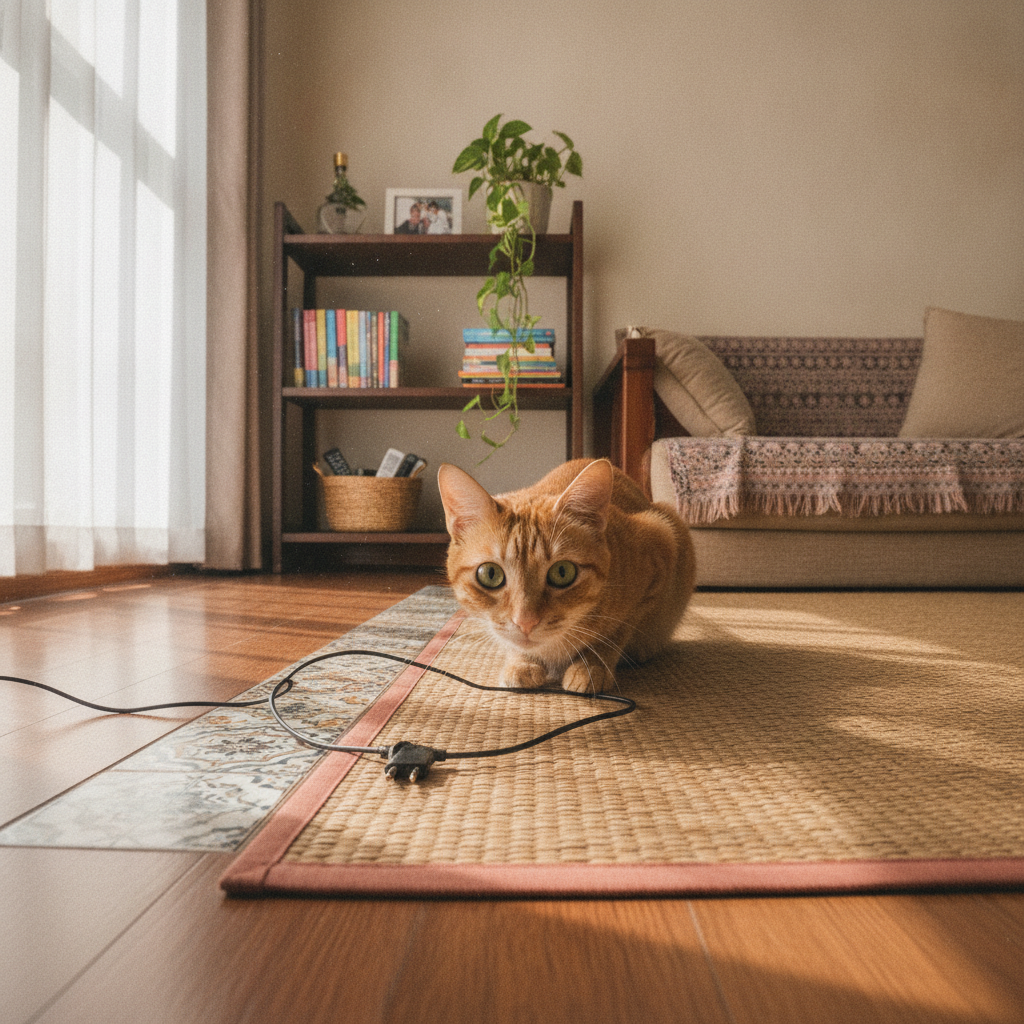
Kittens and young cats chew, and a phone charger or fan cord on the floor is an irresistible target. The danger is not just a scare. Biting a live cord can cause oral burns — pale, dead patches on the lips and tongue — and full electrocution, with collapse, tremors and dangerous heart rhythms. According to PetMD, the cruellest part is a delayed complication: fluid can build up in the lungs (pulmonary edema) up to 36 hours after the shock, even in a cat that seemed fine. That alone is why any cat suspected of chewing a cord needs to see a vet, not be "watched at home."
Prevention is cheap: run cords behind furniture, bundle them in cord protectors or PVC tubing, unplug chargers when not in use, and coat stubborn targets with a non-toxic bitter spray. Most importantly, give a chewer better outlets — chew toys, scratching posts and daily play. A bored cat chews; an enriched one does not. Kittens usually grow out of cord-chewing, but the riskiest months are exactly when they are smallest and most fragile.
Cleaning Chemicals: Phenols, Bleach and Pods
Here is the bit of feline biology every cat owner should know: cats lack a liver enzyme (glucuronyl transferase) that humans and dogs use to break down certain chemicals. The Merck Veterinary Manual explains that this makes phenols especially dangerous to them — and phenols are exactly what give many disinfectants their cleaning power. That pine-scented floor cleaner and some antiseptic disinfectants common in Malaysian homes can poison a cat through ingestion, inhalation, or just walking across a wet floor and licking its paws.
- Phenolic cleaners (pine-scented and some medicated disinfectants) — never let a cat onto a freshly mopped floor until it is fully dry; rinse and ventilate. Signs of phenol poisoning include drooling, tremors, wobbliness and breathing trouble.
- Bleach (sodium hypochlorite) is corrosive to skin, eyes and gut. Oddly, some cats are drawn to its smell, so never leave a bleach-water bucket standing where a cat can reach it.
- Laundry and dishwasher pods are a modern trap: bite one and it bursts, firing concentrated detergent into the mouth and airway. The ASPCA flagged this risk years ago — store pods like you would medicine, in a sealed container up high.
The fix is simple: keep all cleaners in a latched cabinet, rinse surfaces, and let floors dry before the cat returns.
The Essential-Oil Diffuser Trap
Diffusers are everywhere now, and "natural" makes them sound harmless. For cats, they are not. Because of that same missing enzyme, many essential oils — tea tree, eucalyptus, citrus, pine, wintergreen, pennyroyal — are toxic to cats. An active diffuser sprays microdroplets that a cat inhales and also licks off its fur while grooming, a double dose. The Merck Veterinary Manual documents hundreds of recorded oil-toxicosis cases in cats and dogs. Signs include drooling, wobbliness, tremors and breathing trouble. If you love your diffuser, run it only in a room your cat cannot enter, or skip it — a fresh, low-odour home is better achieved by managing the litter box anyway (more below).
The Medicine Cabinet: Why Panadol Is a Killer
This is the most important paragraph in this article. Paracetamol — the active ingredient in Panadol — is lethal to cats. A single tablet can kill one. The Pet Poison Helpline ranks human medicines as the number-one feline toxin precisely because they are in every home. In cats, paracetamol causes methemoglobinemia — the red blood cells can no longer carry oxygen — leading to brown gums, facial swelling, breathing distress and liver failure within hours.
Other human painkillers (NSAIDs like ibuprofen and naproxen) cause kidney failure and stomach ulcers in cats, even in small doses. Cats are so much more sensitive than us because they metabolise drugs differently — a dose that barely touches a human can overwhelm a cat's liver. The rules are absolute: never give a cat any human medicine unless a vet prescribes it, store every blister pack in a closed drawer (not loose on a bedside table), and pick up dropped tablets immediately — cats are oddly attracted to them and will bat one around like a toy. If your cat ever swallows a tablet, that is an emergency vet visit, right now, not in the morning. Bring the packaging so the vet knows exactly what and how much.
String, Hair Ties and the Silent Surgery
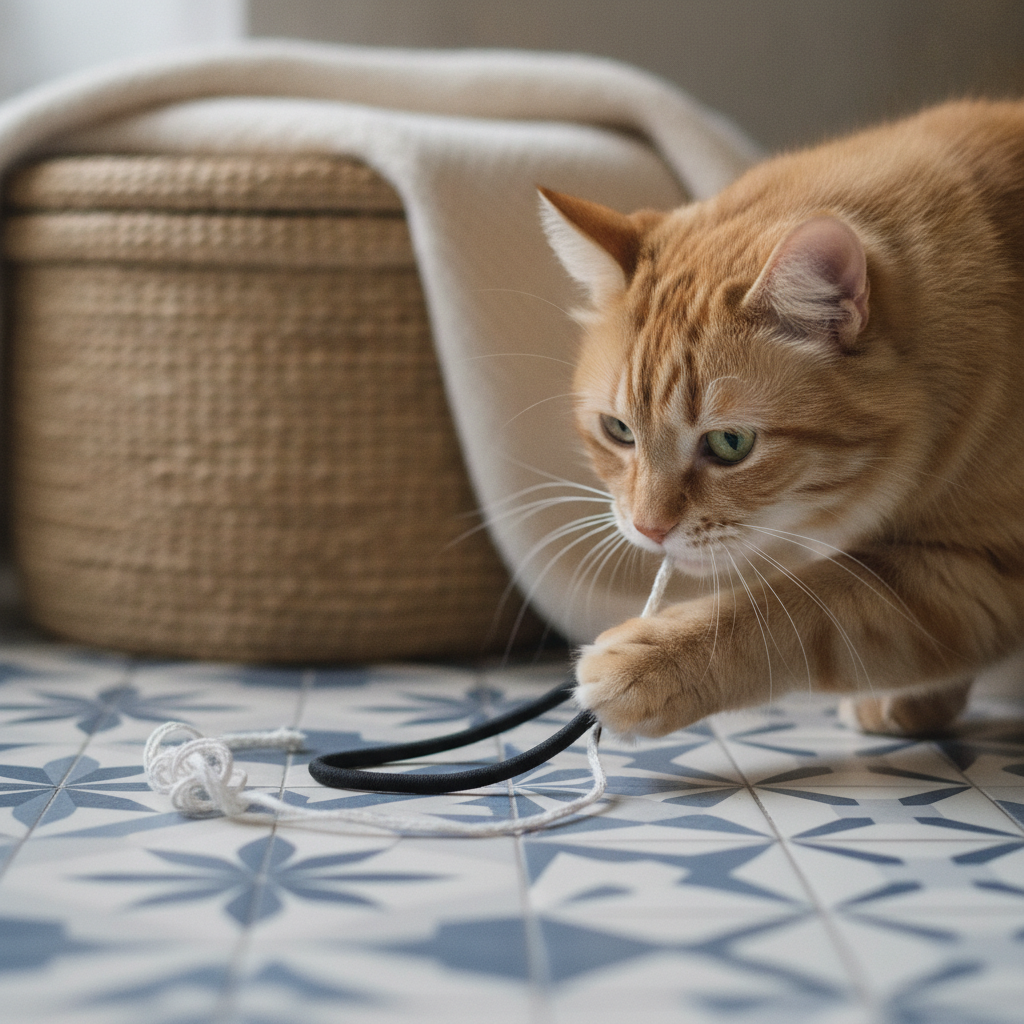
A loose hair tie, a length of sewing thread, the ribbon off a parcel, dental floss from the bathroom bin — these are some of the deadliest things in your home, and they look like toys. When a cat swallows a long thin object, it becomes a linear foreign body. As Cornell's Feline Health Center describes, one end snags — often around the base of the tongue — while the gut keeps trying to push the rest along. The intestines bunch up along the string like fabric on a drawstring and the taut thread literally saws through the intestinal wall, causing leakage, infection and a major surgical emergency.
One critical thing every owner must know: if you ever see string hanging from your cat's mouth or backside, do not pull it. Pulling can saw through the intestines internally. Cut what is visible if it is loose, and get to a vet. Better still, prevent it: keep hair ties, rubber bands, thread, ribbon and floss in closed drawers and covered bins, and supervise string-toy play, putting the toy away afterwards.
Appliances, Recliners and Hidden Gaps
Cats love warm, dark, enclosed spaces — which is exactly what makes our appliances so dangerous. A few habits prevent tragedy:
- Washing machines and dryers: always check inside — and keep the door shut — before starting a cycle. A cat in a running dryer faces burns, broken bones and heatstroke; in a wash, drowning and chemical injury. Our heatstroke guide covers how fast feline overheating turns critical.
- Recliner chairs and sofa beds: a cat can hide in the mechanism. Know where your cat is before you push the footrest down.
- Stoves and kettles: a cat may jump onto a cooktop that is still hot. Use back burners and never leave a hot hob unattended with a cat around.
- Gaps behind appliances and on balconies: seal narrow gaps a cat could fall into or get stuck behind, and keep windows secured — an open high-rise window is its own emergency, which we cover in detail in our high-rise and window safety guide.
Your Room-by-Room Cat-Proofing Sweep
The best way to catch all of this is to do what vets at the American Veterinary Medical Association recommend: get down on your hands and knees and look at each room from your cat's eye level. Kitchen and bathroom — lock away cleaners and medicines, close the toilet lid, use covered bins. Living room and bedroom — protect cords, stash hair ties and floss, secure window screens. Utility area — check appliances every time, lock up any car fluids (antifreeze is deadly). For the complete version, work through our home safety checklist, and keep your cat busy with the ideas in our indoor enrichment guide — a stimulated cat investigates fewer dangerous things.
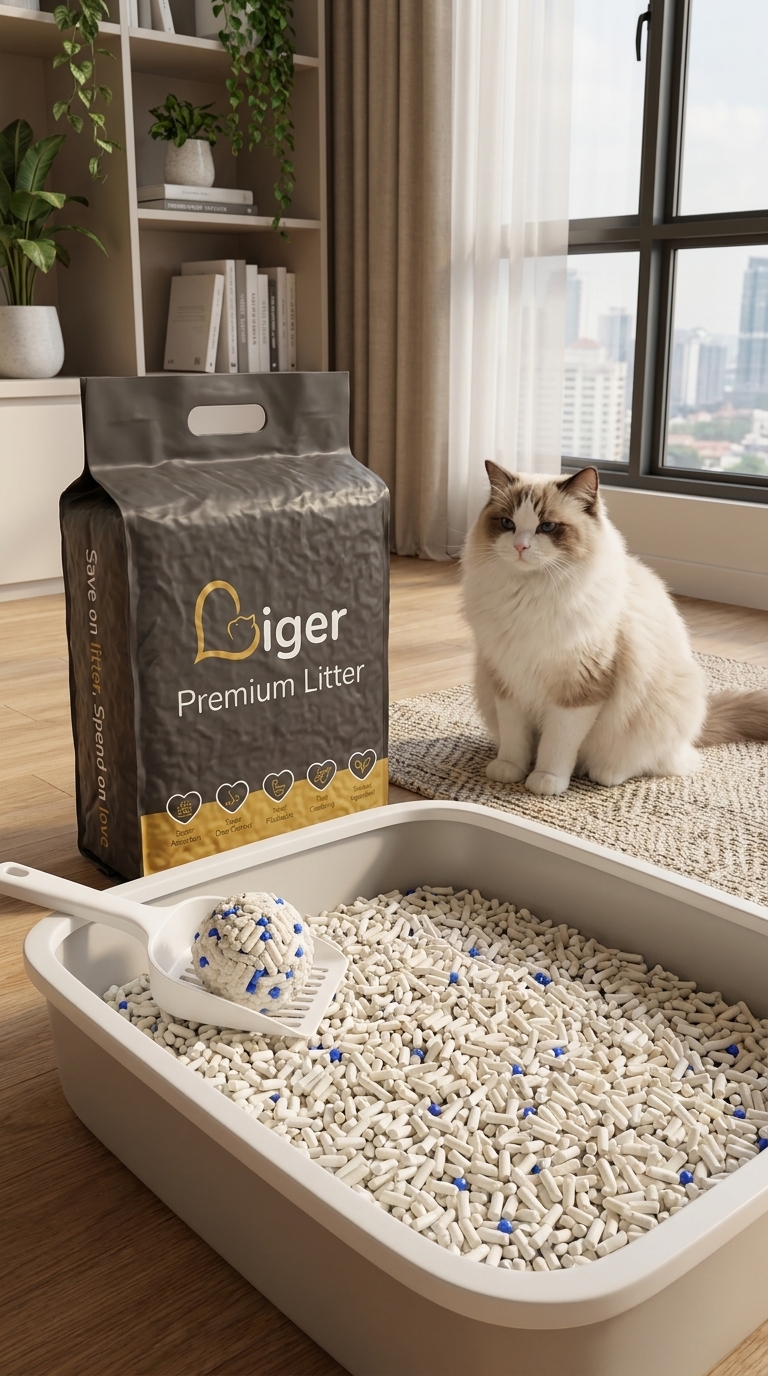
One safe corner deserves special mention: the litter box. It is the one spot your indoor cat uses every single day, so what goes in it matters for a healthy home. We use Liger Premium Tofu Cat Litter for our own four cats — it is low-dust (gentler on feline lungs in a closed condo), made from natural soy rather than harsh chemicals, naturally clumping, flushable, and lightly milk-scented so you are not tempted to mask smells with a cat-toxic diffuser in the first place. Pricing is local and honest — from RM21.90 for a 2 kg pack up to RM169 for a 10-pack (20 kg), about RM8.45/kg, with free shipping in Peninsular Malaysia (current Liger pricing, as of May 2026). Our litter calculator works out exactly how much your household needs. Cat-proof the hazards, keep the box clean, and your home becomes the safe place it is meant to be.