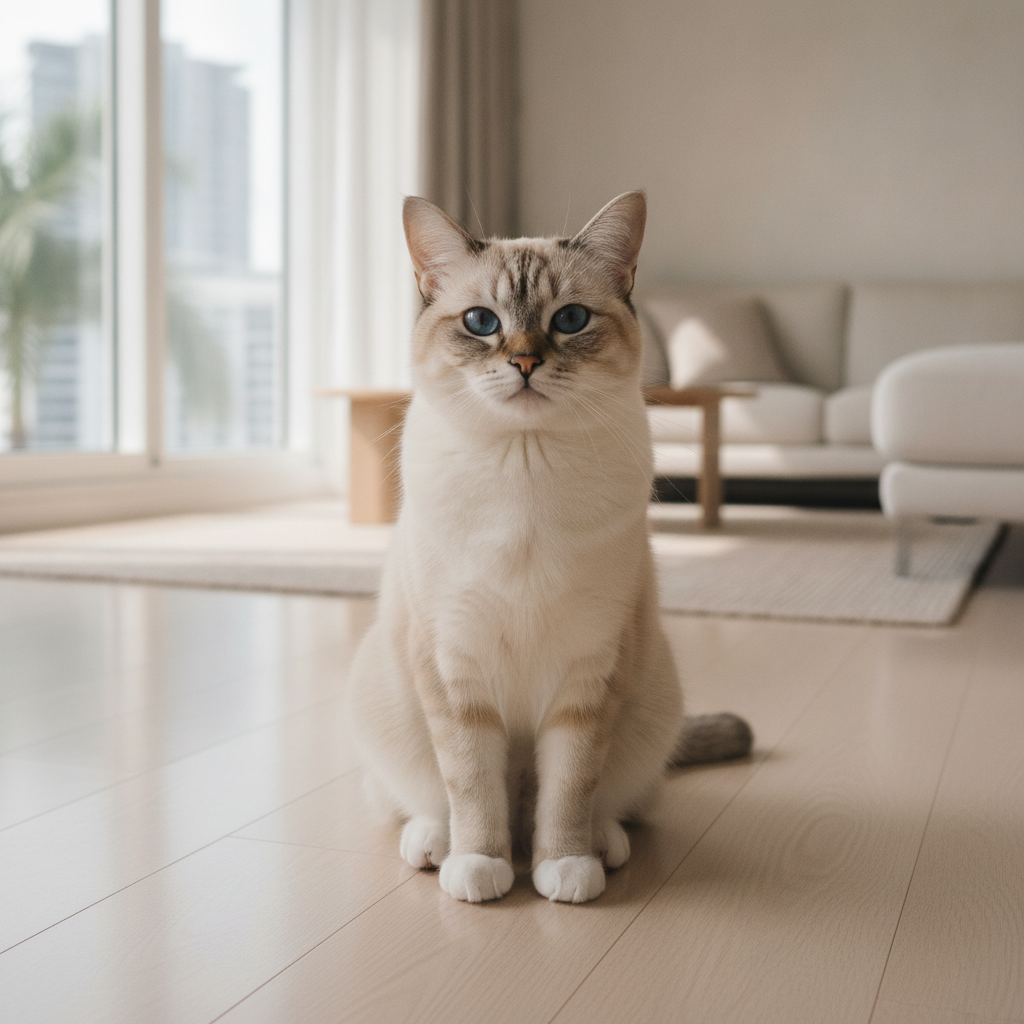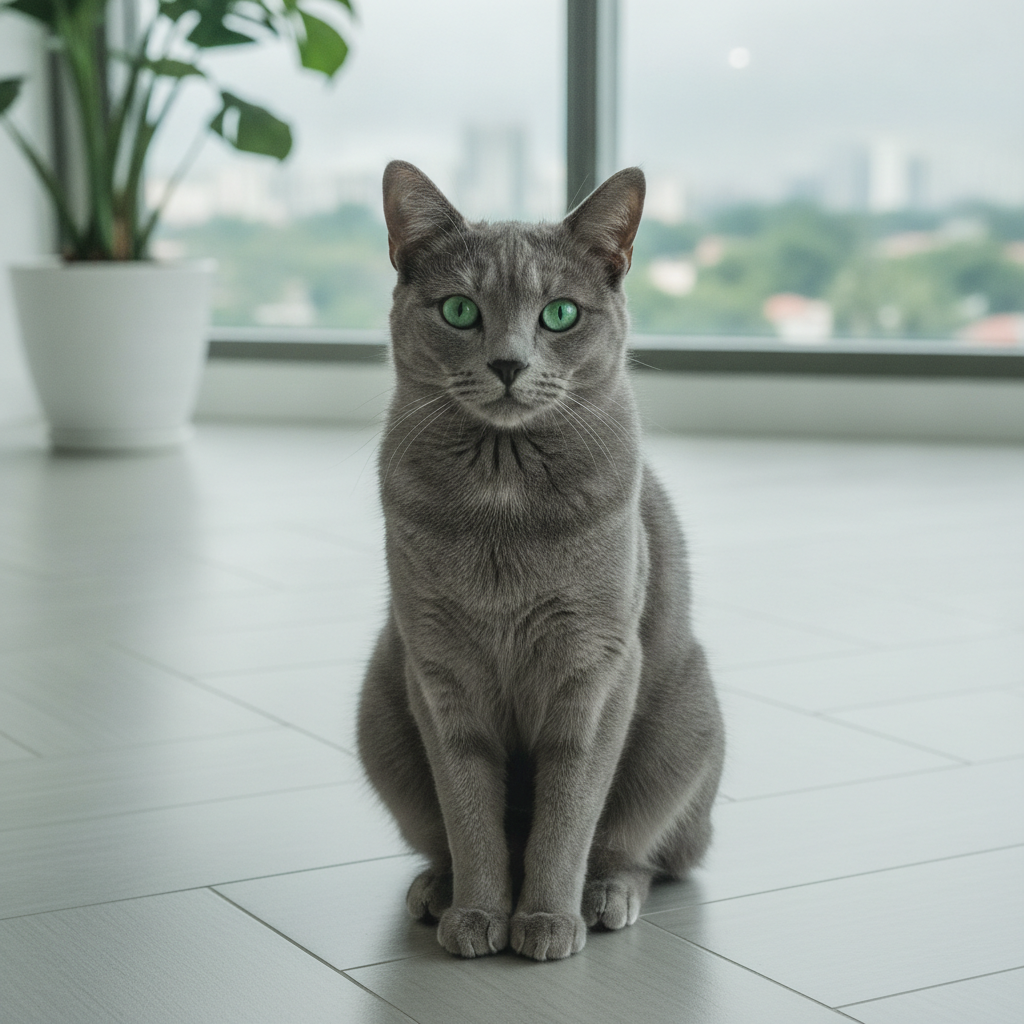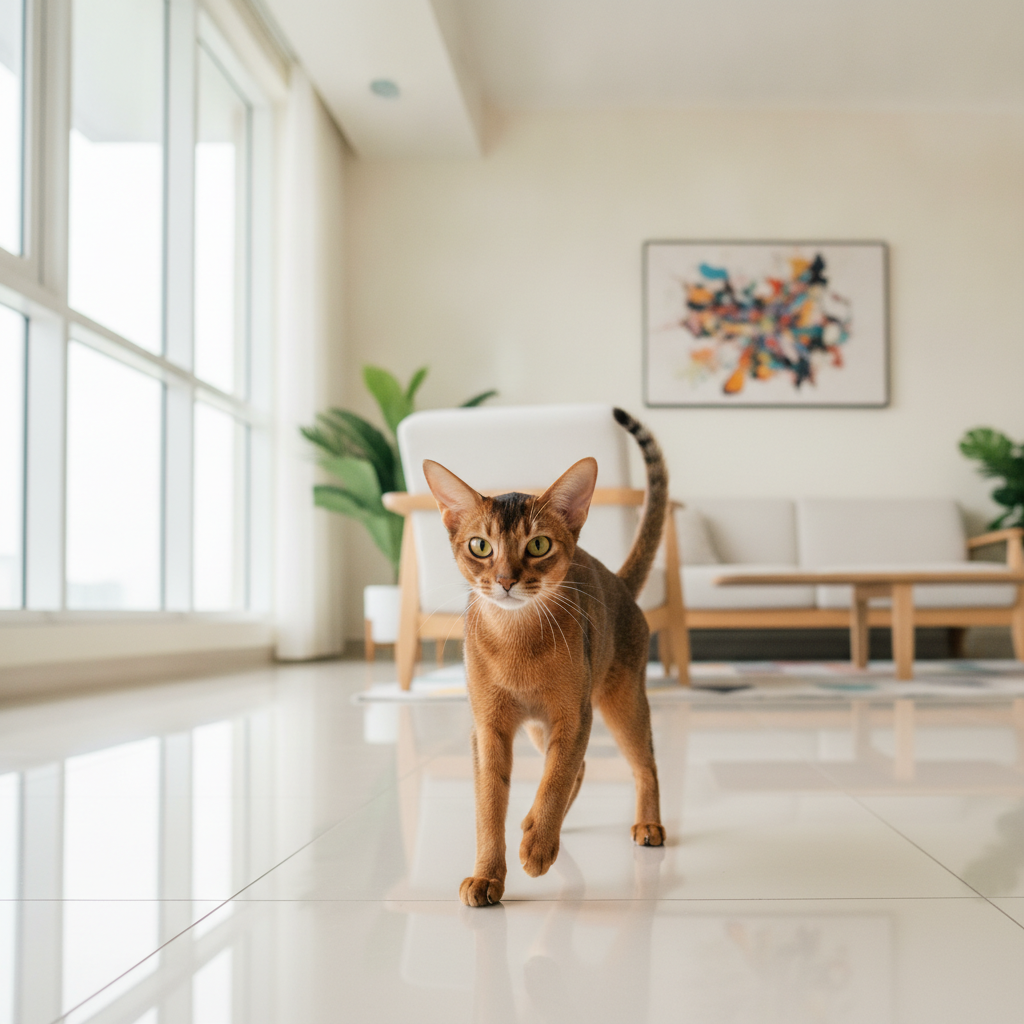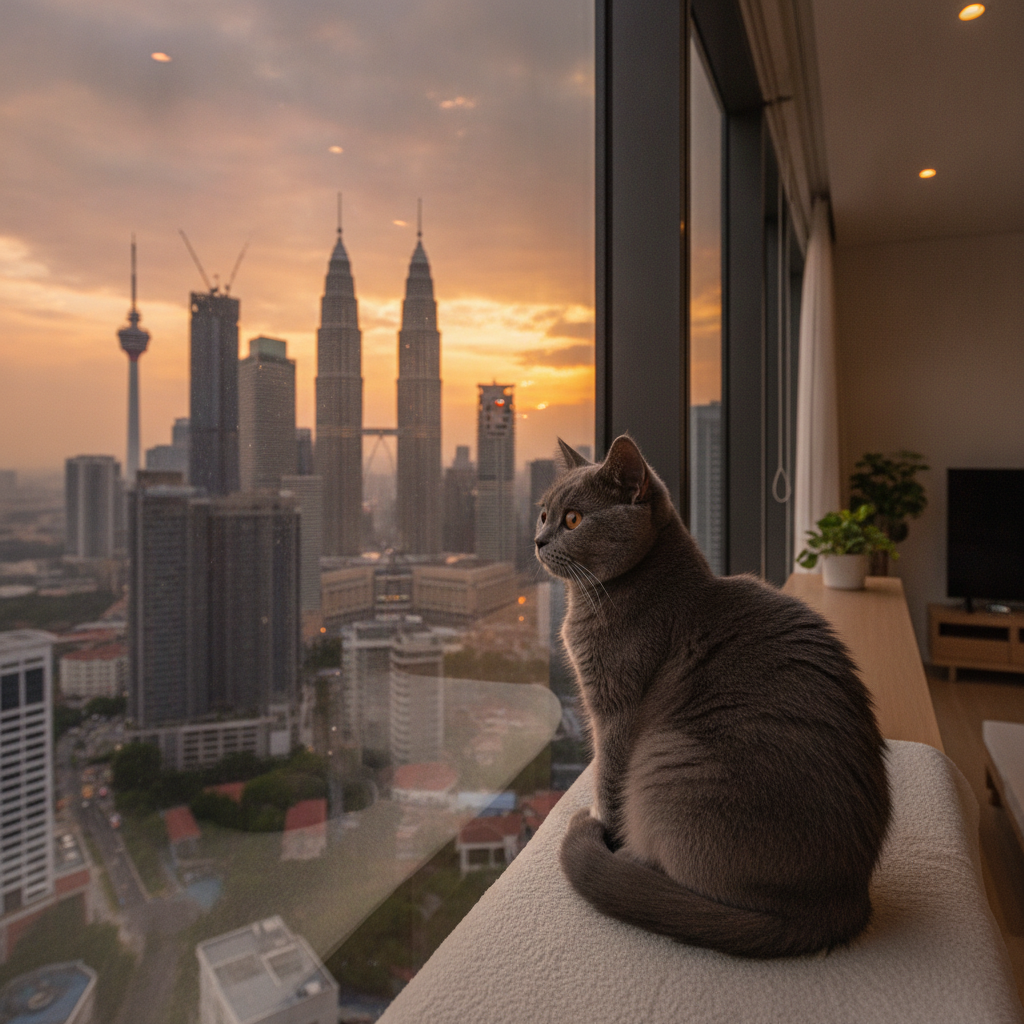
Most Malaysians who want a cat live in a flat — a condo in Cheras, an apartment in Petaling Jaya, a high-rise in JB. The good news: cats are brilliant apartment animals, far better suited to vertical living than dogs. The catch is that "apartment cat" is less about the breed on the pedigree paper and more about temperament, noise, heat tolerance and — the part nobody warns you about — your building's by-laws. This guide covers all of it: the breeds that genuinely thrive in a small tropical unit, the ones that struggle, and the boring-but-critical legal and litter details that decide whether your neighbours file a complaint.
If you're comparing breeds from scratch, open our complete cat breeds in Malaysia guide alongside this one.
What Actually Makes a Good Apartment Cat
Forget square footage for a second. Feline behaviour experts are consistent on this: a cat's happiness in a small home depends on enrichment and temperament, not floor area. The traits that matter in a high-rise are calmness, a low-to-moderate energy level, quietness (you share walls), and a personality that's affectionate but independent enough to cope while you're at work. Size is almost a red herring — a placid 9 kg Ragdoll can do better in a condo than a frantic, under-stimulated kitten, as long as it has things to climb. Hold every breed below up against that checklist.
The other half of the equation is vocalisation, and it varies more than people realise. The Persian sits at the quiet end (rated about 1 out of 5), while a Siamese is famously chatty and will hold full conversations through the night — charming if you live alone, less so when a light-sleeping neighbour shares your wall. In a high-density building, a naturally quiet cat saves you a surprising amount of grief.
The Best Breeds for Malaysian Condo Living
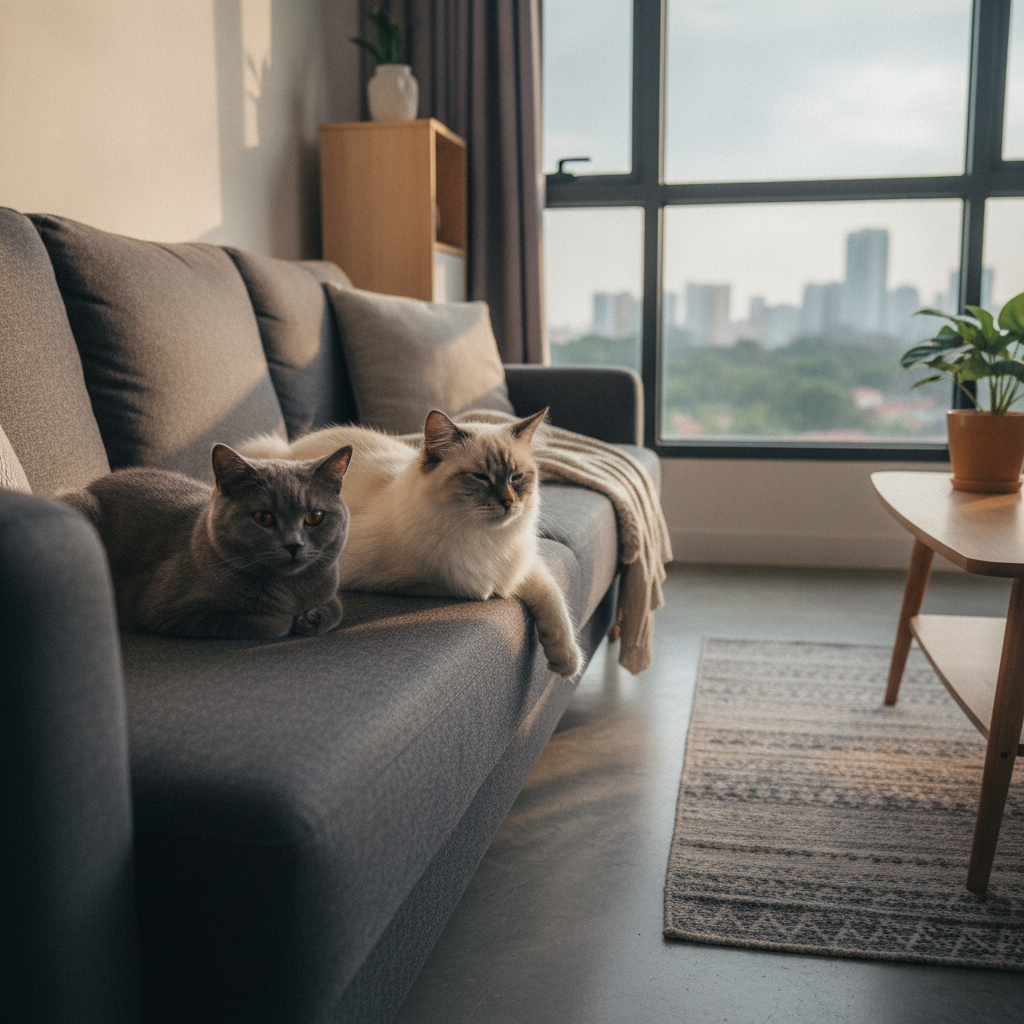
These are the breeds whose temperament fits compact living, ranked with our climate in mind:
- Kucing kampung (domestic shorthair) — the smartest pick for most people. Heat-adapted, hardy, low-grooming, and freely available from shelters like SPCA Selangor and PAWS. Adoption runs from free to about RM500, and shelter staff can tell you a cat's exact personality before you commit — a luxury you don't get with a kitten.
- British Shorthair — the classic condo cat: calm, quiet, low-to-moderate energy, happy to entertain itself all day. Royal Canin's breed profile describes it as easygoing and undemanding — ideal for owners working long hours. The one caveat is its dense plush coat, which means it really needs an air-conditioned room in our heat.
- Ragdoll — docile, affectionate "gentle giant" that flops into your arms and tolerates indoor life beautifully. Big but mellow. Also prefers air-con.
- Exotic Shorthair — the low-energy, quiet charm of a Persian without the daily grooming marathon, though it shares the flat-faced heat sensitivity below.
Breeds That Struggle in a Small Unit
Two groups to think hard about. First, the high-energy athletes: the Bengal and Maine Coon are wonderful cats but need serious space, climbing and interactive play; bottle that energy up in a studio unit and you get boredom, yowling and shredded furniture. Second, the flat-faced Persian: gloriously quiet and low-energy (a perfect 1-out-of-5 on vocalisation), but its brachycephalic face makes it genuinely vulnerable to our heat, and its coat demands daily grooming. None of these are impossible in a condo — they just demand a much more committed owner and, usually, full-time air-conditioning.
The Legal Bit: Can You Even Keep a Cat in Your Condo?
This trips up more Malaysian cat owners than any health issue. Under the Strata Management Act 2013, By-Law 14 means your management body cannot impose a blanket "no pets" rule by default — you're allowed to keep a cat unless it causes an "annoyance or nuisance" to other residents. "Nuisance" in practice means persistent meowing or, very commonly, litter-box smell drifting into the corridor. A management corporation can only enforce a full ban by passing a special by-law at a general meeting, and where a genuine nuisance is proven they can issue a written notice and levy fines up to RM200. If a complaint is filed, the process runs in steps: the management investigates, issues a written notice to rectify, and only escalates — to the local council or ultimately the Strata Management Tribunal — if the problem isn't fixed. In other words, you almost always get a chance to put things right before anything drastic happens. The practical takeaway: read your building's house rules before you adopt, and then make sure your cat is never the reason for a complaint — which comes down mostly to noise and odour control, both of which are entirely within your power to manage.
Beating the Heat in a High-Rise
A flat under a hot Malaysian roof can climb to uncomfortable temperatures, and indoor cats here shed and feel the heat year-round rather than seasonally. Short-coated, lean breeds cope best; long-haired and flat-faced cats may need air-con running through the worst of the afternoon. Keep curtains drawn against direct sun, leave cool tile floors accessible, and put out multiple water sources — a fountain or several bowls — because cats on dry-only diets tend to run mildly dehydrated, which over time invites urinary and kidney trouble. Watch for panting or open-mouth breathing; in a cat that's always an emergency sign, not normal cooling. Wet food is an easy win here — it carries far more moisture than dry kibble and quietly tops up a cat that won't drink enough on its own.
This is also where breed choice and floor plan interact. A west-facing unit that bakes all afternoon is a tough home for a Persian or Maine Coon no matter how much you love the look; the same flat is perfectly comfortable for a short-coated kucing kampung. Be honest about your unit's actual conditions before you fall for a fluffy face — the cat lives with that decision every single day.
Build Up, Not Out: Enrichment in Small Spaces
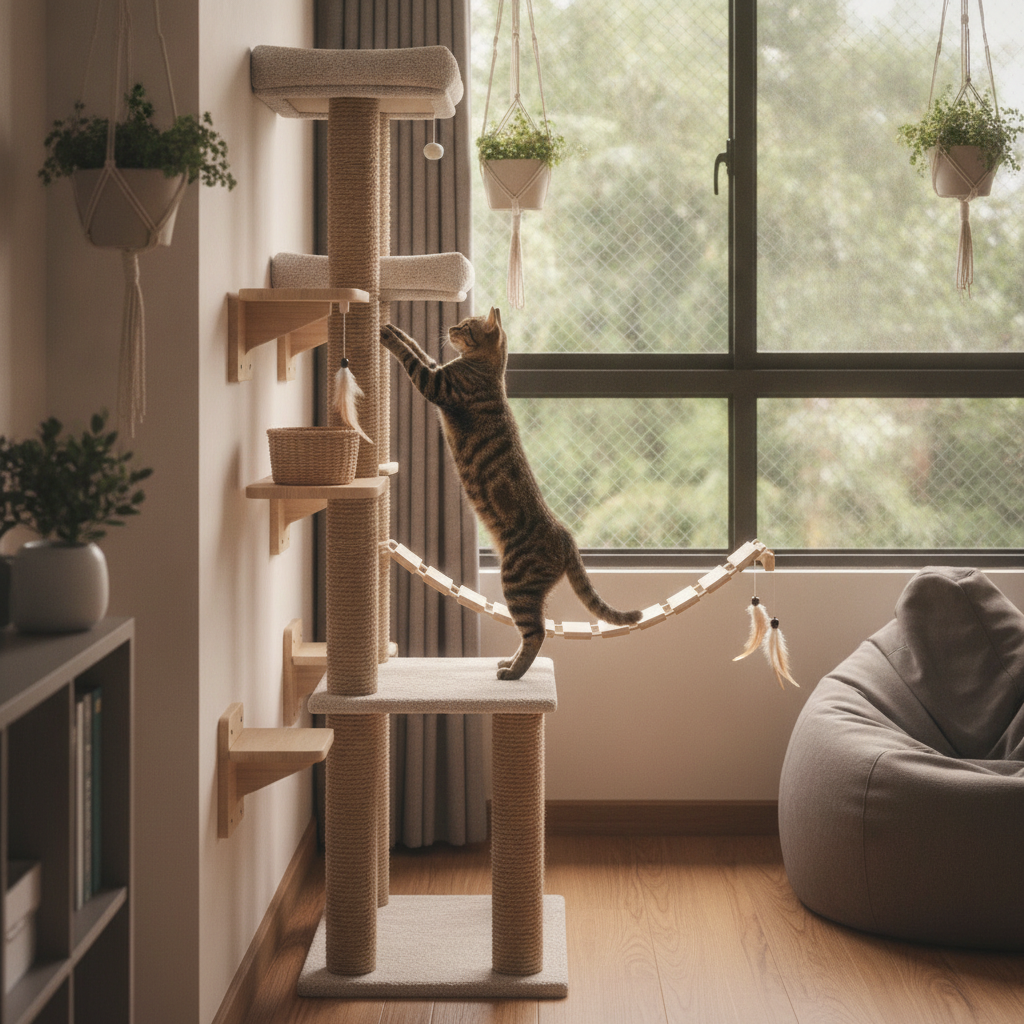
Here's the move that turns a cramped unit into a great cat home: expand vertically. Cats are climbers that feel safest up high, so a tall cat tree, a few wall-mounted shelves forming a "cat highway", and a secure window perch (free cat TV) add more usable territory than any amount of floor space. The veterinary view, summed up well by VCA Hospitals' enrichment guidance, is that indoor cats need outlets for natural behaviours — climbing, scratching, "hunting". Add a scratching post or two, rotate a few interactive wand toys, and give 15–20 minutes of daily play that ends with a real "catch". One non-negotiable safety note: secure every window and balcony with sturdy screens. Cats fall from high-rises more often than people expect — vets call it "high-rise syndrome", and both International Cat Care and PetMD document just how serious those falls can be, even from a few storeys up. A cat doesn't need to be suicidal to fall — it just needs to misjudge a lunge at a passing bird from an open ledge.
The Detail That Keeps the Peace: Litter and Odour Control
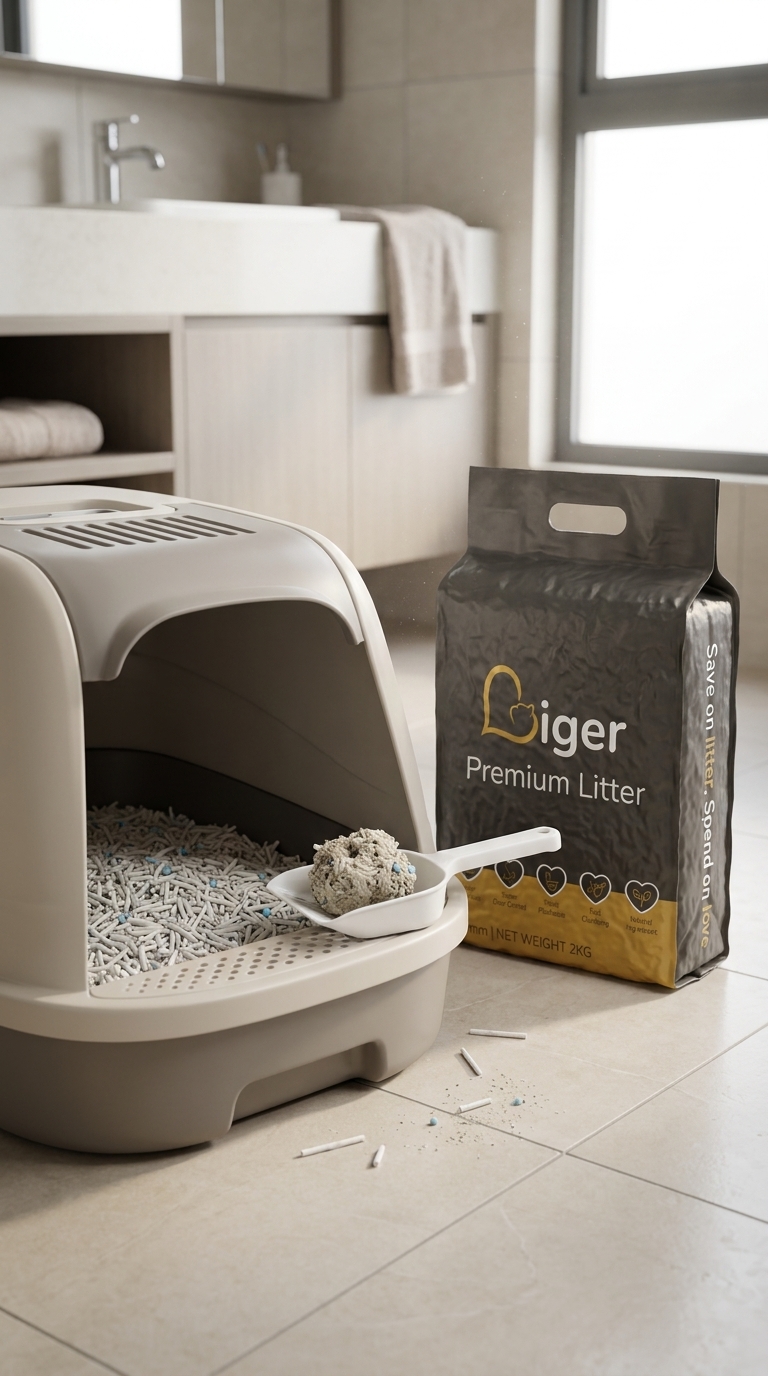
In a shared-wall building, litter management isn't just hygiene — it's neighbour diplomacy, because odour is one of the few things that can actually get your cat declared a "nuisance". A tight, low-dust, high-absorbency litter is your best friend here. Liger Premium Tofu Cat Litter is made from natural plant starch: it clumps firmly so you can scoop waste out cleanly before it smells, locks down ammonia odour rather than letting it spread down the corridor, and produces very little airborne dust — a real plus in a sealed, air-conditioned unit where dust just recirculates. It's also flushable, which spares you hauling smelly rubbish through a shared lift, and Halal-friendly for Muslim households.
For a small flat, the economics are kind too: a single 2 kg pack is RM21.90, but the 10-pack (20 kg) drops to RM8.45/kg — roughly 23% cheaper per kilo, with free shipping across Peninsular Malaysia (current Liger pricing, as of 2026). One cat or three, work out exactly how much you'll need with the litter calculator before you stock up, so you're not storing more than your unit has room for.
Beyond the Breed: Adopt the Cat, Not the Label
The honest conclusion from all the research: breed is a guideline, not a guarantee. An unusually placid Bengal might out-suit your condo than a hyperactive moggie, and the only way to know is the individual cat. That's the quiet superpower of adopting — shelter staff have lived with these cats and can match a temperament to your lifestyle and your building's tolerance. For the majority of Malaysian high-rise dwellers, a calm adopted kucing kampung, a tall cat tree, secured windows and a litter that doesn't announce itself to the neighbours is the whole recipe for a happy apartment cat. Sort the enrichment and the odour, and almost any gentle cat can thrive twelve floors up — no landed house required, just a bit of vertical thinking and a litter tray your neighbours will never know exists.